
United States

Flags of the United States line both side of a road.
“The diversity of America is a strength of the country, and I don’t think that we use that. We don’t talk about our strengths. I mean, having so many diverse people in this country from all aspects of all over the world, and we don’t use that. I think we should talk about who we are – that melting pot that we’ve become.”
–Steve Stoute
The lyrics in the anthem America the Beautiful expresses it best–the United States of America really is beautiful.
O beautiful for spacious skies…For amber waves of grain…For purple mountain majesties…Above the fruited plain!…America! America!…God shed His grace on thee…And crown thy good with brotherhood…From sea to shining sea!
The United States really is a beautiful and wonderfully diverse country. When you travel to each of the 50 States and even within each State you will feel as if you’re traveling to another country.
The United States is a country built by immigrants and each corner of this country is influenced by a variety of cultural diasporas including former enslaved people from Africa and the West Indies. Even traces of Native American culture can be found despite earlier efforts to erase them from the narratives of American history.
The United States has not always been the land of the free but it has always been the home of the brave.
As Paul Tsongas said, “America is hope. It is compassion. It is excellence. It is valor.”

Walt Disney World really is one of the happiest places on earth so, arguably, anytime is the best time to visit Disney! The yummy food you won’t normally have on a regular day, kids dressed up in their favorite Disney characters, thrilling rides, and an explosive sight of fireworks to end the perfect day! It is no wonder that over 58 million people visit Disney World each year. However, a few things can put a damper on any vacation: long lines, crowds, and bad weather. So, when will be the best time to visit Disney?

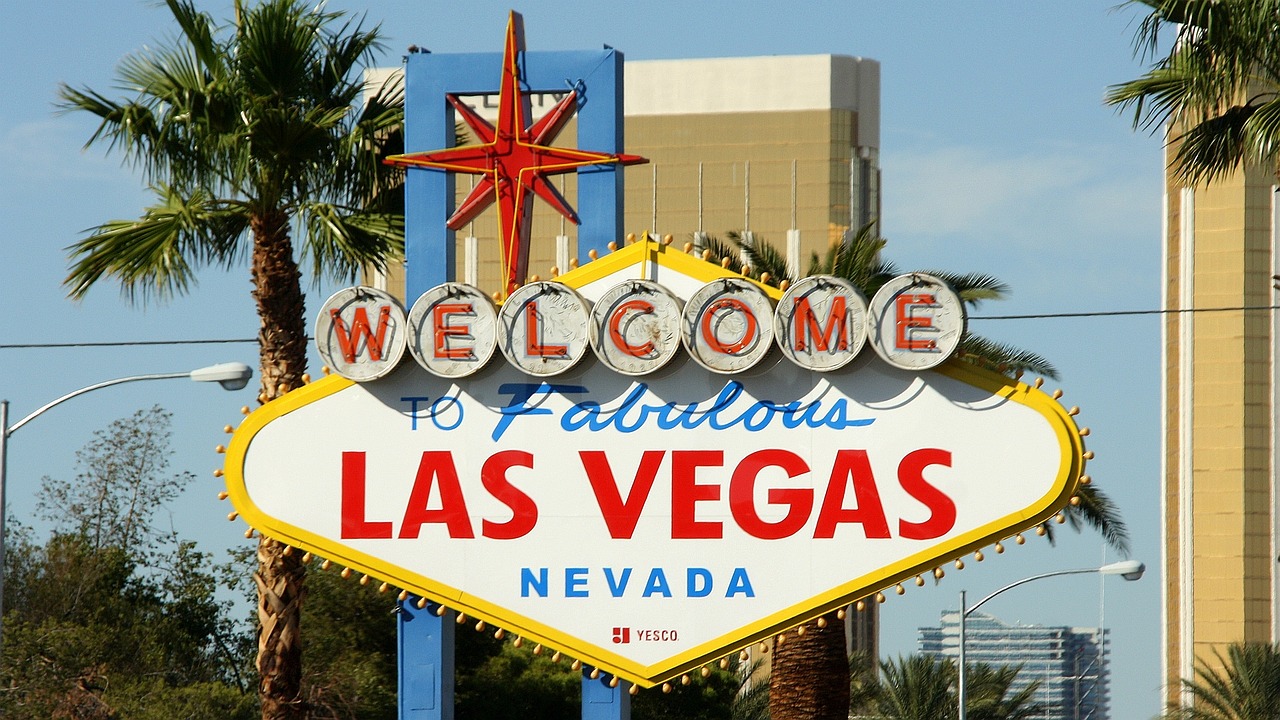
There are plenty of reasons to visit Las Vegas, though it is a city that’s most famous for being the casino capital of the United States - and the world. Its entire existence is owed to the casino industry which evolved in Vegas to serve the crowds of workers involved in the construction of the nearby Hoover Dam. For a long time, the state of Nevada was the only place in North America where it was possible to play games like blackjack, baccarat, and slots. However, other parts of the country and the world have begun to offer up alternatives In the US, Atlantic City has established itself as a rival to Vegas, while many other states have also allowed casinos to open up within their borders. In other parts of the world, Singapore, Macau, and Monaco have become recognised as great destinations for those that want to [...]

On this day in 1513, Ponce de Leon set sail from Puerto Rico to find the fabled Fountain of Youth. Caribbean Indian legends spoke of waters, a drink of which would guarantee a life free from the worries of old age.

It was 1902 and automobiles were quickly becoming the vehicle of choice. Road conditions, however, were deplorable. The relatively small number of drivers had to fight for the right to even use some roads in favor of horse drawn carriages. Small groups of drivers had formed clubs across the country to exchange driving and automobile tips. AAA logo The Founding of AAA On March 4, 1902 a group of approximately 1000 automobile enthusiasts and members of these clubs joined forces in Cleveland, Ohio to form a not-for-profit lobbying organization. Over time, the AAA enhanced membership benefits. The first road maps were published in 1905 and hotel guides followed in 1917. Today, the not-for-profit organization provides emergency roadside assistance to members, and has expanded its offerings to include various financial and travel-arrangement services. AAA offers credit cards, insurance, and vehicle financing, and it operates travel agencies and publishes [...]

Birth of a future Global Citizen On this Labor Day season in history, World Footprints host Tonya (Johnson) Fitzpatrick was born. Having grown up as a "Trekkie", thanks to her late father, today also carries another special memory. Live Well and Prosper Star Trek is an American science fiction media franchise created by Gene Roddenberry, which began with the eponymous 1960s television series and quickly became a worldwide pop-culture phenomenon. The franchise has expanded into various films, television series, video games, novels, and comic books. With an estimated $10.6 billion in revenue, it is one of the most recognizable and highest-grossing media franchises of all time. The franchise began with Star Trek: The Original Series, which debuted in the US on September 8, 1966 and aired for three seasons on NBC. It was first broadcast on September 6, 1966 on Canada's CTV network. It followed the voyages of the starship USS Enterprise, a space exploration vessel built by the United Federation of Planets in the 23rd century, on a mission "to explore [...]

On April 28, 1988, Aloha Airlines Flight 243 took off from Hilo International Airport at 1:25 PM for the short flight to Honolulu. On board were 90 passengers and five crew members. At approximately 1:48 the aircraft reached its flight altitude of 24,000 feet when a section of the hull on the forward left side of the plane ruptured. The aircraft suffered an immediate and explosive decompression, ripping away a large section of the hull along the roof of the plane.

Driving east on I-40 toward the Great Smoky Mountains, a huge golden ball known as the Sunsphere guides you into downtown Knoxville, Tennessee.

Birmingham, Alabama - the Magic City - saw events and courageous people who played a central role in the Civil Rights struggle. World Footprints goes on a walking tour through history along the Civil Rights Heritage Trail as we step onto the grounds where African Americans confronted Jim Crow era voilence with non-voilent civil disobedience.

A friend invited me to share a house with her and a few other friends in Martha’s Vineyard over the Fourth of July weekend last year. Hearing stories of the Kennedys and the Obamas vacationing there, I assumed it would be a stuffy, pretentious community for the rich and famous. This was not the case.

Americans have recognized black history annually since 1926, first as "Negro History Week" and later as Black History Month and we greatly owe the celebration of this month of Black Heritage, more so, the study of black history to Dr. Carter G. Woodson.

Enjoy the historic opening ceremonies surrounding the opening of the MLK Memorial in Washington, DC
Beaufort is a gorgeous coastal town filled with beaches, local shops, and even diving experiences. With so much to explore in Beaufort, this coastal gem is packed with an interesting history and some amazing activities.