
Cultural Heritage

World Footprints was invited to attend the GirlUp Leadership Summit in Washington, DC. GirlUp is an innovative campaign of the United Nations Foundation that gives American girls the opportunity to become global leaders and channel their energy and compassion to raise awareness and funds for United Nations programs that help some of the world’s hardest-to-reach adolescent girls.

On the occasion of International Press Freedom Day, World Footprints was invited by the UN Foundation to attend a powerful event sought to change the narrative and examine women's voices in fragile states and why those voices matter. The UN Foundation co-hosted a distinguished panel which was led by Ambassador Melanne Verveer of the Georgetown Institute for Women, Peace and Security. She was joined by Krista Hendry from The Fund for Peace, Amy Slaughter and Yar Ayuel with RefugePoint and award-winning filmmaker Elaisha Stokes. The panel discussed the challenges that women face in fragile states and areas where women are taking the lead in reconciliation. They also examined what happens to girls and women as the most vulnerable and neglected victims in conflict afflicted states, and why telling these stories is important. In fragile states, women can be agents of change, leading the way in promoting development and achieving social [...]

Following the 1908 legislation President Theodore Roosevelt signed giving the Grand Canyon status as a National Monument, the United States Congress signed an act on February 26th, 1919, making Grand Canyon National Monument a National Park. The Grand Canyon National Park hosts over 4 million visitors each year who explore sections of its 1.2 million acres. Today, the National Park is also recognized as a UNESCO World Heritage site. The size of the National Park is vast and equals the land mass of the state of Delaware. Its depth and width are inspiring--going over a mile deep and spreading from a quarter mile to 18 miles wide in certain places. At Point Imperial the Grand Canyon's elevation stretches 9,000 feet exposing rock layers that display over two billion years of geologic history. The different elevations offer a variety of temperatures. During the summer months the North Rim is generally 30 [...]

When planning a trip to Asia, not many people consider Taiwan as part of their itinerary. But this small island off the coast of China has a lot going for it, in particular, the capital city Taipei. For a relatively small capital city – it has a population of just over 2.5 million – you can pack a lot into a trip here. Here are five reasons why you should book that flight to Taipei.

On this day in 1809, the sixteenth President of the United States, Abraham Lincoln was born in a one-room log cabin on Sinking Spring Farm in Hardin County, Kentucky. His education consisted of little more than 18 months of formal schooling, but he was an avid reader and focused on the law as a course of study.

The couple that travels together stays together so in the spirit of Valentine’s Day we found a few gifts for traveling couples. If you’re tied to giving traditional gifts like chocolate and flowers just attach them to a travel gift below. This will make your Valentine’s that much sweeter.

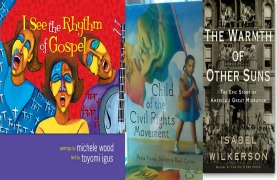
Step into the words and paintings of award-winning writers and artists as we celebrate black history in literary color. Award-winning artist Michele Wood’s work reflects a deep sense of history and place.

Lisbon, Portugal is a beautiful, warm, affordable place to visit. Think of breathtaking views of red rooftops for miles on end, watching the sun set over the wide river Tagus while sipping a beer, perusing the streets of the old town and admiring the mosaic walls. Lisbon possesses so much beauty and character in its heart, it's tempting to not want to venture further afield. But if you do, an exciting city break can be extended into a activity packed, architecturally appealing European holiday with both town and sea.

On this day, the Beatles take the airwaves in the U.S. with their first appearance on The Ed Sullivan Show.
When I first visited Zimbabwe ten years ago, hyperinflation had sent the entire country into a controlled state of panic. While there was no specific ‘danger’ of which to speak, tourists were still frightened by the actions of President Robert Mugabe and the prospect of visiting a country in the midst of so much turmoil.

I first learned of Guy Fawkes when I moved to London and was invited to a Guy Fawkes celebration that was full of fun, fireworks and libation. Only later did I learn more about the man that the British recognize today with fanfare.

Sydney comes to life in summer. It is a glorious city, no matter what time of year but in the summer, we have long days, warm nights, hot beaches, and the biggest party in all of Australia: The Sydney Festival.