
Cultural Heritage

General Robert Edward Lee commanded the Confederate Army of Northern Virginia during the American Civil War. When Lee took command in 1862 he emerged as a shrewd tactician and battlefield commander and won most of his battles against superior Union armies.

The Irish Government Bill of 1886 was the British parliament's first substantial attempt to create home rule for Ireland. It was introduced on April 8, 1886 by Prime Minister William Gladstone for the purpose of creating a devolved Irish assembly. The Irish Parliamentary Party under Charles Stewart Parnell had been campaigning for home rule for Ireland since the 1870s. The bill, like his Irish Land Act 1870, was very much the work of Gladstone, who excluded both the Irish MPs and his own ministers from participation in the drafting.

The World Health Organization (WHO) was established by the United Nations to act as an international coordinating authority on April 7, 1948. Headquartered in Geneva, Switzerland, WHO succeeded the role of the Health Organization, its predecessor under the League of Nations.

The Games of the I Olympiad were held from April 6 to April 15, 1896 in Athens, Greece, the first Olympic Games in modern times. The first Olympics, or "I Olympiad" also established the International Olympic Committee.

Young men once rode horses to carry mail from Missouri to California in the unprecedented time of only 10 days! This relay system along the Pony Express National Historic Trail crossing eight states was the most direct and practical means of east-west communications in 1860. From Missouri to California the Pony Express riders could deliver a letter faster than ever before.

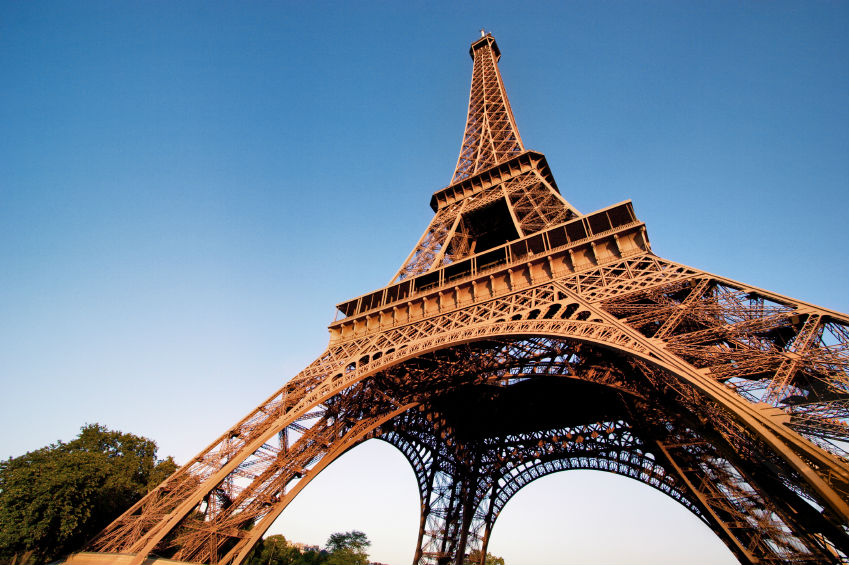
Along with the Sphinx and the Great Pyramid, there may be no more instantly recognizable man-made structure than the Eiffel Tower, inaugurated on this date in 1889. The grand tower was built for the Universal Exhibition held that year in celebration of the French Revolution.

Today on World Footprints we celebrate Canada’s Francophone roots in the Quebec region as we walk in the footsteps of history at the New France Festival in Quebec City. Plus, we’ll visit an Augustinian Monastery turned holistic spa and we’ll talk to an Old World wine merchant.

When The Slave Trade Act passed in Parliament on March 25, 1807, the United Kingdom effectively abolished the slave trade throughout the British Empire, but slavery continued.

When Buenos Aires became the capital of Argentina in 1880, the mayor, Torcuato de Alvear, decided to modernize the city in order to leave its Spanish colonial past behind. People of his generation and social class – the upper crust— venerated European powerhouses like England and France and looked down on the local criollo culture, the mix of Spanish and indigenous cultures.

On this day in history, the 23rd and last official Grand Master of the Knights Templar, Jacques de Molay and a few other Templars, were sent to their death after enduring years of torture and other humiliations. The Knights Templars were Crusades warrior monks. The Roman Church granted the Knights Templar with near autonomous power, answering to no one other than the Pope. But it was the Order's enormous power that eventually led their downfall. Over the years, the Order became extremely wealthy and at times acted as a bank throughout Europe. King Phillip IV of France became financially indebted to the Templars. On Friday, October 13, 1307 (the origin of the "Friday the 13th" bad luck date), Phillip, who because of his indebtedness to the Order, demanded the arrest of all Templars. They were tortured into false confessions of heresy and eventually forced to disband. However, Jacques de Molay [...]

We explore points around the globe from London and the Jewish contributions to British society to America as we explore it’s history on the back of a Harley Davidson. We’ll stop at places in between and spend time remembering Anthony Bourdain.

The reddish-pink ramparts around the Marrakech medina enclose a thousand years of history. The Almoravids, a confederation of Berber tribes, conquered North Africa and Muslim Spain in the 11th and 12th centuries and established Marrakech as their capital. The new city became a thriving political and economic center, as well as a multicultural and multiethnic crossroads.