
Cultural Heritage

Founded on October 7, 1919, KLM is the oldest airline in the world operating under its original name. The first flight was on May 17, 1920 from London Croydon to Amsterdam on a press flight.

Little recognized by most people, Jason Lewis on October 6, 2007 became the first human to circumnavigate the planet entirely under his own power, using no motors and no sails.

On October 6, 1889, the famous Moulin Rouge opened its doors in Paris’s 18th district. The Eiffel Tower was constructed the same year, showcasing the cultural pioneering that dominated Paris at the time.

Following the collapse of the Soviet Union in 1989, East Germany began facing mass emigration and protests, which eventually led to holding free elections and negotiations with West Germany regarding unification.

On October 2, 1950 seven newspapers, including the Seattle Times, the Washington Post and the Chicago Tribune ran the very first Peanuts comic strip written and illustrated by Charles M. Schulz. The strip and its associated books, merchandise and television specials earned its creator over one billion dollars. Lucy, Linus, Snoopy and, of course, Charlie Brown are American icons. The comic strip ran until February 13, 2000, the day after Shultz died. Schulz was posthumously given the Congressional Gold Medal, the body's highest honor given to a civilian. In the Peanuts comic strip, Charlie Brown walks by two friends, one of whom remarks, "Well! Here comes 'ol Charlie Brown! Good 'ol Charlie Brown ... yes, sir! Good 'ol Charlie Brown ... how I hate him!" By the end of the decade, Peanuts comic had been picked up by hundreds of newspapers and had won Schulz a Reuben award, the highest honor given [...]

Walt Disney World Resort opened on this date near Orlando, Florida in 1971. As the largest recreational resort in the world, Disney World Resort now consists of four theme parks, two waterparks and 23 hotels. Walt Disney began looking for an appropriate location as early as 1959. Unhappy with the many businesses that had cropped up around the Anaheim Disneyland, Walt Disney wanted a much larger parcel of land to control the development in the immediate vicinity of his project.

Construction on the Washington National Cathedral was begun on this date in 1907. Located at Wisconsin and Massachusetts Avenues in Washington, DC, the National Cathedral is a Gothic edifice belonging to the Episcopal Church USA. President Theodore Roosevelt presided over the laying of the foundation stone and construction continued for 83 years. The Catheral is listed on the National Register of Historic Places.

The 1859 Yellowstone Expedition first reported the find of an amazing rock formation, know by local Native Americans as the "Bear's Lodge". It was during this expedition that the name "Devils Tower" originated.

Setting off on August 31, 1803, Meriwether Lewis and William Clark explored the lands west of St. Louis acquired by the United States in the Louisiana Purchase from France. Commissioned by President Thomas Jefferson, the expedition sought to explore the Missouri River and the Indian tribes, flora and fauna of the region.

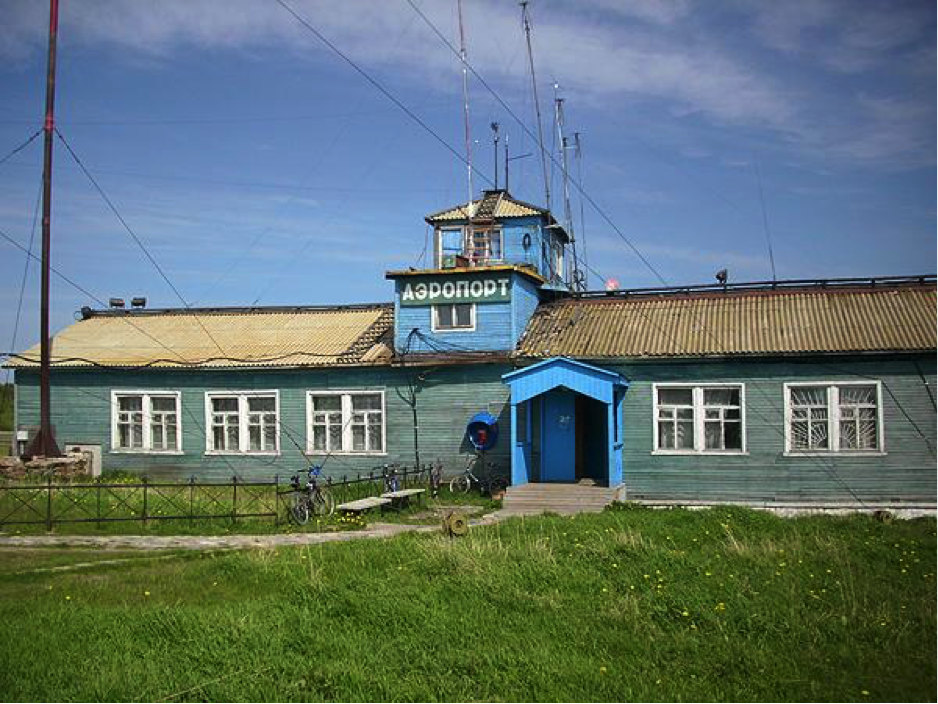
For constant travellers airports are an unavoidable part of their world-exploring experience but it is not the most enjoyable part of traveling. Airports around the world are generally overcrowded, chaotic and stressful environments packed within a generic structure. However, there are a few airports throughout the former Soviet Union that are aesthetically and conceptually different. They are repurposed military bases that were used during WWII. The wooden airports in Russia are still mostly functional and surprisingly beautiful, however it takes a grain of courage to fly into such places. Solovetsky Islands For those seeking an adventurous trip to the Solovetsky Islands in Russia, an archipelago located at the White Sea, the Solovetsky Airport offers a beautify gateway to the destination. Visitors to the Solovetsky Islands can discover one of the most important holy cities for the Russian Orthodox Church. The UNESCO World Heritage site holds a 5th century Monastery built [...]

On September 20, 1967, Queen Elizabeth II launched the RMS Queen Elizabeth 2, fondly known as the "QE2". The gold scissors she used to cut the ceremonial ribbon was the same pair used by her mother and grandmother to launch the Queen Elizabeth and Queen Mary. The QE2 was built and operated by the Cunard Line from 1969 to 2008. Queen Elizabeth was retired after her final crossing to New York, on 8 December 1968.

On this day in history, September 19, 1991, two German tourists were hiking through the Otzal Alps on the border between Austria and Italy. In a receding glacier, the couple spotted the body of a man, now known as - Otzi, The Iceman (named after Otzal Alps).