
Europe

Rome's Trevi Fountain is a tourist favorite in Italy. Europe travel.
“He who is outside his door already has the hardest part of his journey behind him.”
— Dutch proverb
Travel Europe and fall in love with its beautiful landscapes and rich cultural heritage. From Europe‘s largest country (Russia) to its small one (Vatican City) and the additional 49 countries in between, the continent of Europe is a vast landmass in the northwestern part of Eurasia. The most visited European country is France followed by Spain, Italy, United Kingdom and Germany but each of the 51 independent states hold a rich history, unique cultures and traditions, delicious food, beautiful landscapes and other gems that make each country worth visiting.
Europe‘s border is delineated by the Ural Mountains in Russia, the Caspian Sea and Caucasus Mountains and the following countries (listed in alphabetical order) comprise the continent: Albania, Andorra, Armenia, Austria, Azerbaijan, Belarus, Belgium, Bosnia and Herzegovina, Bulgaria, Croatia, Cyprus, Czech Republic, Denmark, Estonia, Finland, France, Georgia, Germany, Greece, Hungary, Iceland, Ireland, Italy, Kazakhstan, Kosovo, Latvia, Liechtenstein, Lithuania, Luxembourg, Macedonia, Malta, Moldova, Monaco, Montenegro, Netherlands, Norway, Poland, Portugal, Romania, Russia, San Marino, Serbia, Slovakia, Slovenia, Spain, Sweden, Switzerland, Turkey, Ukraine, United Kingdom (UK) and Vatican City (Holy See).
Travel Europe – explore it’s lands from north to south and east to west and take delight in its different food flavors and learn more about it’s rich history & culture.

Lisbon, Portugal is a beautiful, warm, affordable place to visit. Think of breathtaking views of red rooftops for miles on end, watching the sun set over the wide river Tagus while sipping a beer, perusing the streets of the old town and admiring the mosaic walls. Lisbon possesses so much beauty and character in its heart, it's tempting to not want to venture further afield. But if you do, an exciting city break can be extended into a activity packed, architecturally appealing European holiday with both town and sea.

One of our favorite spots offering an extraordinary view is located on the west coast of Ireland—the Cliffs of Moher. These almost vertical cliffs drop sheer into the heaving Atlantic Ocean, creating a haven for seabirds. From the top, you can see the Aran Islands, Galway Bay, the Twelve Pins, and the Maum Turk Mountains to the north in Connemara, as well as Loop Head to the south. The breathtaking panorama from the Cliffs of Moher never gets tiresome.

I first learned of Guy Fawkes when I moved to London and was invited to a Guy Fawkes celebration that was full of fun, fireworks and libation. Only later did I learn more about the man that the British recognize today with fanfare.

Sir Hans Sloane was a naturalist who had managed to amass an enormous collection of books, manuscripts, dried plants and antiquities from his travels. As he neared his death, he did not wish to see his collection broken up or, worse yet, forgotten. Sloane bequeathed his collection to King George II who, in turn, gave his royal assent to an Act of Parliament to establish the British Museum using Sloane's collection as a foundation. Two large libraries of books, one of which included the only surviving copy of Beowulf, were added to the Sloane materials. The concept for the British Museum was unique - it was owned by the government, but not by the king, and was freely open to the public. First situated in the Montagu House, the exhibition galleries and a reading room opened on January 15, 1759. The gallery was first situated in Montagu House in Bloomsbury. [...]
On January 10, 1863' the London Underground (a.k.a. the Tube) became the first underground rail system in the world. In 1890 the world's first electric trains began operating there as well. The original track ran between London Paddington station and Farringdon station. Many more lines would be added to the Underground railway network over the years, but most of it was developed over the next 50 years.

The Cunard Line, then known as the Cunard White Star Line launched the RMS Queen Elizabeth in 1938. Named for Queen Elizabeth (not the current Queen but her mother) the RMS Queen Elizabeth was the largest passenger liner ever built, a record she held for 56 years.

The cathedral in Pisa has a free-standing bell tower on which construction began August 9, 1173 and took 117 years to complete. The development of the Tower started in 1173. Initially intended to be a bell tower, it stood upright for more than 5 years, yet when the third floor was finished in 1178 it started to lean.
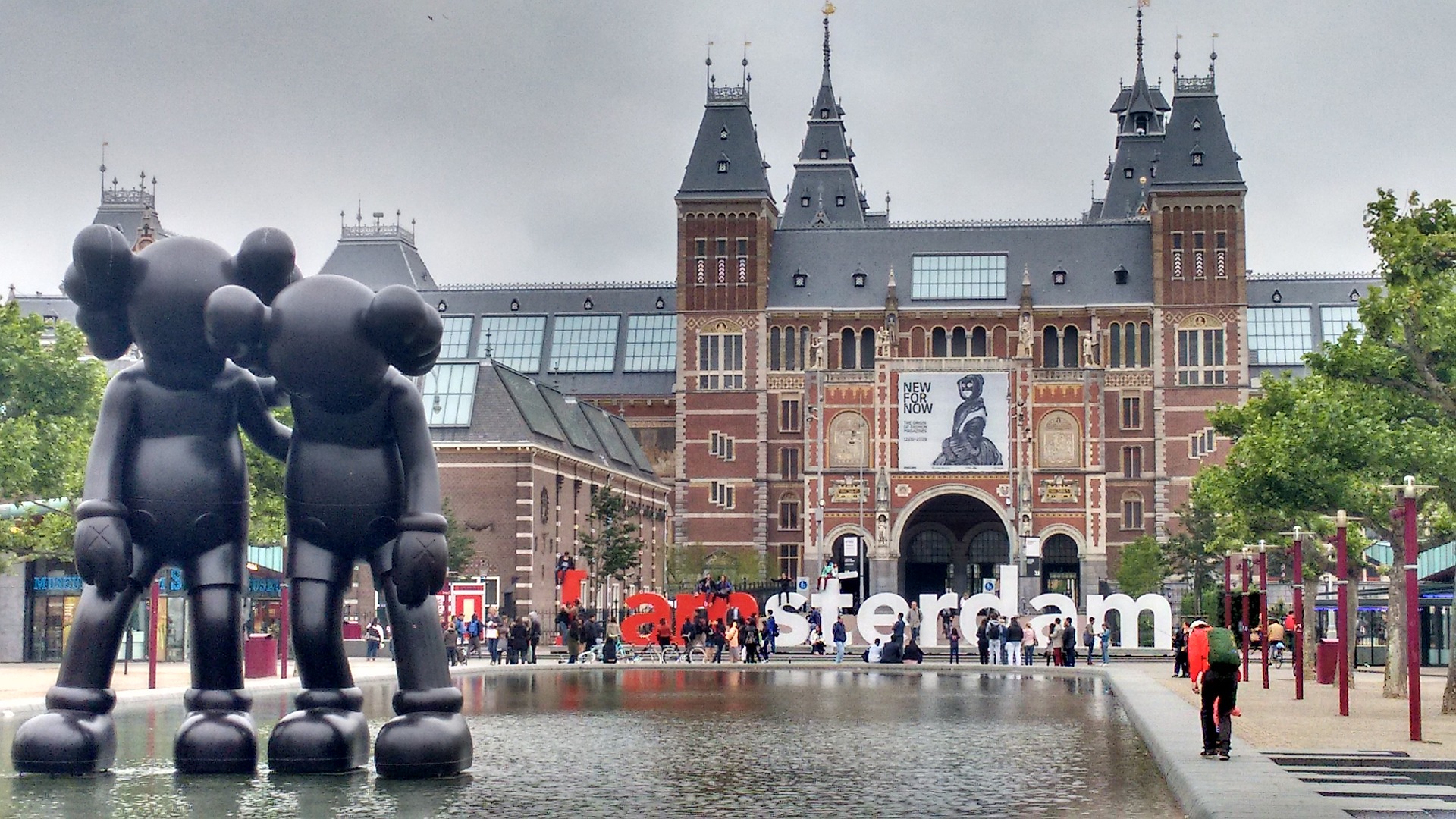
In the Netherlands, cycling is somewhat of a national obsession, and Amsterdam lies deep in the cycling whirlwind. Amsterdam is referred to as the bicycle capital of the world and as of next year, it will make its mark as one of the most cycling-friendly cities. From spring of 2019, mopeds and scooters will be banned from all the bike lanes.
Just after midnight on Christmas morning, Allied and German troops engaged in World War I put down their weapons to sing Christmas carols. Soldiers exchanged presents of cigarettes, plum puddings, and even played friendly games of soccer. The so-called "Christmas Truce of 1914" was one of the last examples of the outdated notion of chivalry between enemies in warfare.

rom colorful buildings to canal-lined streets, Amsterdam is a city that tourists travel from far and wide to photograph. However, one of its most photographed spots has most recently been brought down.
Since 17th November, there has been unrest as anti-government protestors have taken to the streets of France’s capital demonstrating against high costs of living and spike in the diesel prices. The demonstrations in Paris also attacked Macron’s presidency and shed light on the mass public’s belief that his regime only favored the rich and was trying to modernize the French economy at a rate that was far from realistic.

ON THIS DAY IN HISTORY, in 1901, The first Nobel Prizes were awarded in Stockholm, Sweden, in the fields of physics, chemistry, medicine, literature, and peace. The ceremony came on the fifth anniversary of the death of Alfred Nobel, the Swedish inventor of dynamite and other high explosives.