
Europe

Rome's Trevi Fountain is a tourist favorite in Italy. Europe travel.
“He who is outside his door already has the hardest part of his journey behind him.”
— Dutch proverb
Travel Europe and fall in love with its beautiful landscapes and rich cultural heritage. From Europe‘s largest country (Russia) to its small one (Vatican City) and the additional 49 countries in between, the continent of Europe is a vast landmass in the northwestern part of Eurasia. The most visited European country is France followed by Spain, Italy, United Kingdom and Germany but each of the 51 independent states hold a rich history, unique cultures and traditions, delicious food, beautiful landscapes and other gems that make each country worth visiting.
Europe‘s border is delineated by the Ural Mountains in Russia, the Caspian Sea and Caucasus Mountains and the following countries (listed in alphabetical order) comprise the continent: Albania, Andorra, Armenia, Austria, Azerbaijan, Belarus, Belgium, Bosnia and Herzegovina, Bulgaria, Croatia, Cyprus, Czech Republic, Denmark, Estonia, Finland, France, Georgia, Germany, Greece, Hungary, Iceland, Ireland, Italy, Kazakhstan, Kosovo, Latvia, Liechtenstein, Lithuania, Luxembourg, Macedonia, Malta, Moldova, Monaco, Montenegro, Netherlands, Norway, Poland, Portugal, Romania, Russia, San Marino, Serbia, Slovakia, Slovenia, Spain, Sweden, Switzerland, Turkey, Ukraine, United Kingdom (UK) and Vatican City (Holy See).
Travel Europe – explore it’s lands from north to south and east to west and take delight in its different food flavors and learn more about it’s rich history & culture.

Italy’s Cinque Terre coastline holds a nearly mythic status for travelers, as most have never seen pictures of the pastel-colored homes tucked in the area’s rugged cliffs with the bright blue sea surrounding them.

On May 12, 1820, Florence Nightingale, the pioneer of modern nursing was born into privileged English society. From the beginning of her life, Florence felt a calling for the nursing profession and this posed a scandal with her privileged family because nursing was considered a profession for the poor and ill-educated.

In 1922, the nation known as the Irish Free State came into existence when 26 counties on the island of Ireland seceded from the United Kingdom. The remaining six counties, having a larger Protestant, pro-British or Loyalist population, remained within the United Kingdom as Northern Ireland. During the following 27 years, the King George VI of the United Kingdom continued to exercise formal diplomatic relations on behalf of Ireland.

On April 10, 1912 the RMS Titanic set sail on its maiden voyage. The ship departed Southampton, England, bound for New York City, New York, with Captain Edward J. Smith in command and 2,223 people aboard. The Titanic stopped in France and Ireland to pick up additional passengers. Among the passengers were many famous names: John Jacob Astor and his wife; Denver millionairess Margaret "Molly" Brown; Benjamin Guggenheim; Macy's owner Isidor Straus along with the White Star Line's director J. Bruce Ismay and the ship's builder Thomas Andrews. In the Titanic, there were three classes of passengers; many in third class were Irish and British immigrants looking to a new life in America. On Sunday, April 14, the ship altered course slightly south in response to iceberg warnings. A number of subsequent warnings from other ships were received, but not acted upon. At 11:40 pm, lookouts spotted an iceberg directly [...]

The Irish Government Bill of 1886 was the British parliament's first substantial attempt to create home rule for Ireland. It was introduced on April 8, 1886 by Prime Minister William Gladstone for the purpose of creating a devolved Irish assembly. The Irish Parliamentary Party under Charles Stewart Parnell had been campaigning for home rule for Ireland since the 1870s. The bill, like his Irish Land Act 1870, was very much the work of Gladstone, who excluded both the Irish MPs and his own ministers from participation in the drafting.

The World Health Organization (WHO) was established by the United Nations to act as an international coordinating authority on April 7, 1948. Headquartered in Geneva, Switzerland, WHO succeeded the role of the Health Organization, its predecessor under the League of Nations.

The Games of the I Olympiad were held from April 6 to April 15, 1896 in Athens, Greece, the first Olympic Games in modern times. The first Olympics, or "I Olympiad" also established the International Olympic Committee.

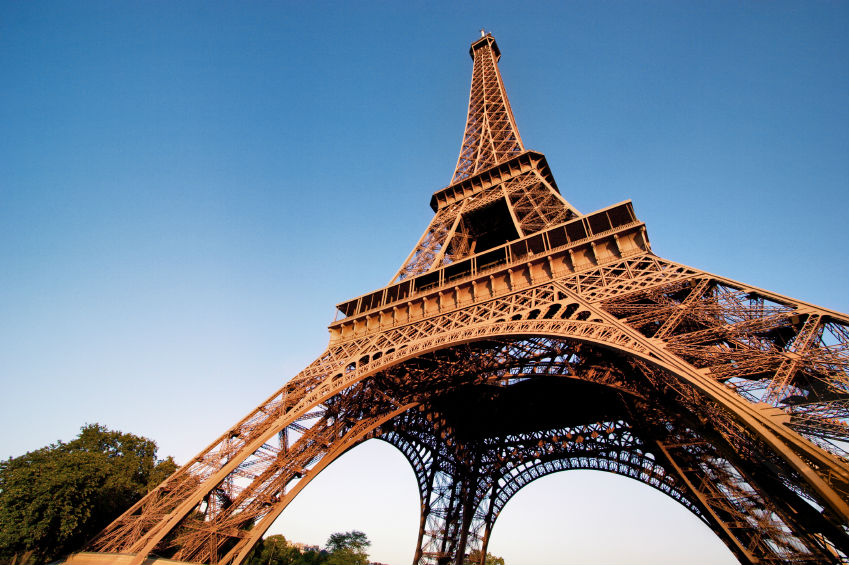
Along with the Sphinx and the Great Pyramid, there may be no more instantly recognizable man-made structure than the Eiffel Tower, inaugurated on this date in 1889. The grand tower was built for the Universal Exhibition held that year in celebration of the French Revolution.

The Georgian capital Tbilisi’s name derives from a word that means warm place. The word applies to both the glorious sulfur baths on which the city was founded, as well as the generosity and warmth of the Georgian people. A trip to the baths allows visitors a chance to luxuriate in the soothing hot waters, which are part of the centuries-old history of this Caucasus city.

When The Slave Trade Act passed in Parliament on March 25, 1807, the United Kingdom effectively abolished the slave trade throughout the British Empire, but slavery continued.

Americans interested in visiting Europe may want to do so before 2021. According to a report, the European Union said any U.S. travelers coming to the European Schengen area will need another kind of visa for entrance.

On this day in history, the 23rd and last official Grand Master of the Knights Templar, Jacques de Molay and a few other Templars, were sent to their death after enduring years of torture and other humiliations. The Knights Templars were Crusades warrior monks. The Roman Church granted the Knights Templar with near autonomous power, answering to no one other than the Pope. But it was the Order's enormous power that eventually led their downfall. Over the years, the Order became extremely wealthy and at times acted as a bank throughout Europe. King Phillip IV of France became financially indebted to the Templars. On Friday, October 13, 1307 (the origin of the "Friday the 13th" bad luck date), Phillip, who because of his indebtedness to the Order, demanded the arrest of all Templars. They were tortured into false confessions of heresy and eventually forced to disband. However, Jacques de Molay [...]