
Europe

Rome's Trevi Fountain is a tourist favorite in Italy. Europe travel.
“He who is outside his door already has the hardest part of his journey behind him.”
— Dutch proverb
Travel Europe and fall in love with its beautiful landscapes and rich cultural heritage. From Europe‘s largest country (Russia) to its small one (Vatican City) and the additional 49 countries in between, the continent of Europe is a vast landmass in the northwestern part of Eurasia. The most visited European country is France followed by Spain, Italy, United Kingdom and Germany but each of the 51 independent states hold a rich history, unique cultures and traditions, delicious food, beautiful landscapes and other gems that make each country worth visiting.
Europe‘s border is delineated by the Ural Mountains in Russia, the Caspian Sea and Caucasus Mountains and the following countries (listed in alphabetical order) comprise the continent: Albania, Andorra, Armenia, Austria, Azerbaijan, Belarus, Belgium, Bosnia and Herzegovina, Bulgaria, Croatia, Cyprus, Czech Republic, Denmark, Estonia, Finland, France, Georgia, Germany, Greece, Hungary, Iceland, Ireland, Italy, Kazakhstan, Kosovo, Latvia, Liechtenstein, Lithuania, Luxembourg, Macedonia, Malta, Moldova, Monaco, Montenegro, Netherlands, Norway, Poland, Portugal, Romania, Russia, San Marino, Serbia, Slovakia, Slovenia, Spain, Sweden, Switzerland, Turkey, Ukraine, United Kingdom (UK) and Vatican City (Holy See).
Travel Europe – explore it’s lands from north to south and east to west and take delight in its different food flavors and learn more about it’s rich history & culture.

Scientists from the University of Portsmouth have created a vodka using ingredients from the Chernobyl exclusion zone, insisting that it is completely safe to drink. As most people know, Chernobyl is the location of one of the worst nuclear disasters in world history. In April 1986, the number four reactor at the power plant exploded, resulting in the deaths of thousands of people and the evacuation of a whole region.

It may be seen as one of the last bastions of adventure travel, but the recent boom in tourists travelling to the Arctic Circle is having a devastating effect on its environment, being damaging to both the local landscape and its inhabitants.
In recent years, Venice has introduced a number of laws and regulations in order to crack down on the large number of tourists that flock to the city every year, including a tourist tax of up to €10 for day trippers which caused controversy at the beginning of this year. The Italian government has now gone a step further by announcing plans for large cruise ships to no longer be allowed to dock in the city’s historic center, instead being rerouted to the Fusina and Lombardia terminals outside of the city center.

Amsterdam is a city with many recognizable features like winding canals and famous historic buildings such as the Anne Frank House. It’s also one of the world’s most bikeable places, and it’s renowned for its cafe and coffee house culture. But in December 2018, Amsterdam lost one of its most iconic symbols – the I amsterdam sign.

Barcelona Mayor Ada Colau is promising a crackdown on the number of cruise ships that can dock in the popular Mediterranean city. According to Colau, the city doesn’t have a lot of capacity. However, she also promised citizens that they would have better air quality. Barcelona’s air quality levels often go beyond the regulations set forth by the World Health Organization. Colau said she wants the city to work on every front. Barcelona will also be declaring a climate emergency, and putting forth ideas such as banning highly-pollutive vehicles from coming into the city and boosting low-emission zones. She also wants to decrease plastic use, improve the recycling efforts, reduce speed limits and boost the number of car-free zones. The city of Barcelona is a hot spot cruise destination spot in Europe with over 2.5 million visitors coming here in just 2018. However, cruise ships are also the biggest cause [...]

If your goal is to enjoy Vienna, it’s time you stop following online review advice – that’s the message the city’s new tourism campaign.

As the birthplace and childhood home of Queen Victoria and the current home of the Duke and Duchess of Cambridge and their children, Kensington Palace is a place of fascinating insight into the British Royal Family.

Coventry doesn’t feature much on most people’s travel bucket lists. It’s a city that is known predominantly for being razed to the ground during the Second World War and then rebuilt in questionable design.

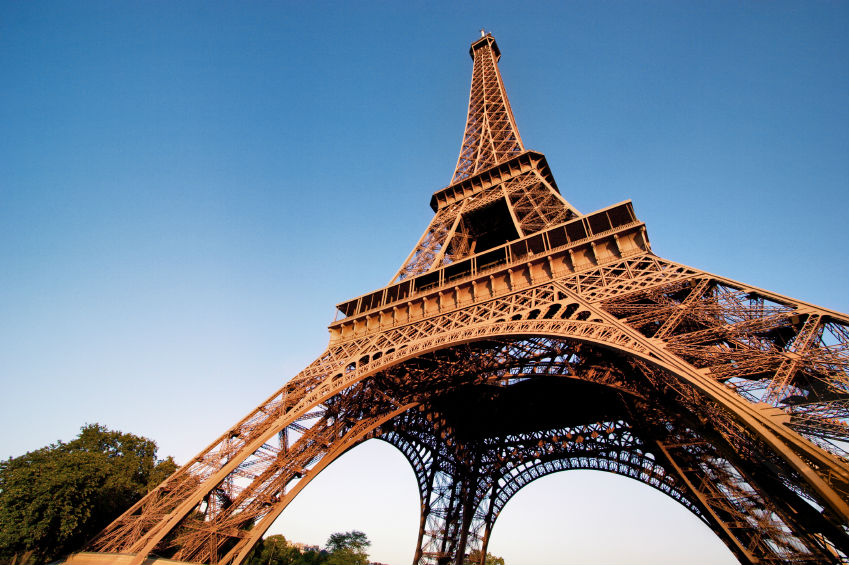
People visiting Paris and the Eiffel Tower can now take a zip line. It’s a second time in three years that Perrier, the French mineral water brand, has put up the zip line on the 1,063-foot tall iconic feature.
On this day in history, more than 160,000 Allied troops landed on the beaches in Normandy, France marking a critical turning point in World War II. Gen. Dwight D. Eisenhower called the operation a crusade in which, “we will accept nothing less than full victory.”
Big Ben, the tower clock in St. Stephen's Tower that looks out over the Houses of Parliament in Westminster, London began keeping time on May 31, 1859. Designed by Edmund Beckett Denison, the clock was completed in 1854. Five years later, the tower was finished. The name "Big Ben" is of uncertain origin. The clock is highly accurate and regulated by a stack of coins balancing and weighting the clock pendulum.
Due to an “insurance crisis,” a popular Ireland tourist attraction in Ballingarry, North Tipperrary has closed its doors. According to its Facebook page, the Bike Park Ireland will stay closed until the insurance crisis is addressed. Graham Kenny with his family runs the park said the company would have celebrated its fifth year in business, but with everything going on, it was better to shut down.