
Compass

Construction on the Washington National Cathedral was begun on this date in 1907. Located at Wisconsin and Massachusetts Avenues in Washington, DC, the National Cathedral is a Gothic edifice belonging to the Episcopal Church USA. President Theodore Roosevelt presided over the laying of the foundation stone and construction continued for 83 years. The Catheral is listed on the National Register of Historic Places.

The 1859 Yellowstone Expedition first reported the find of an amazing rock formation, know by local Native Americans as the "Bear's Lodge". It was during this expedition that the name "Devils Tower" originated.

Setting off on August 31, 1803, Meriwether Lewis and William Clark explored the lands west of St. Louis acquired by the United States in the Louisiana Purchase from France. Commissioned by President Thomas Jefferson, the expedition sought to explore the Missouri River and the Indian tribes, flora and fauna of the region.

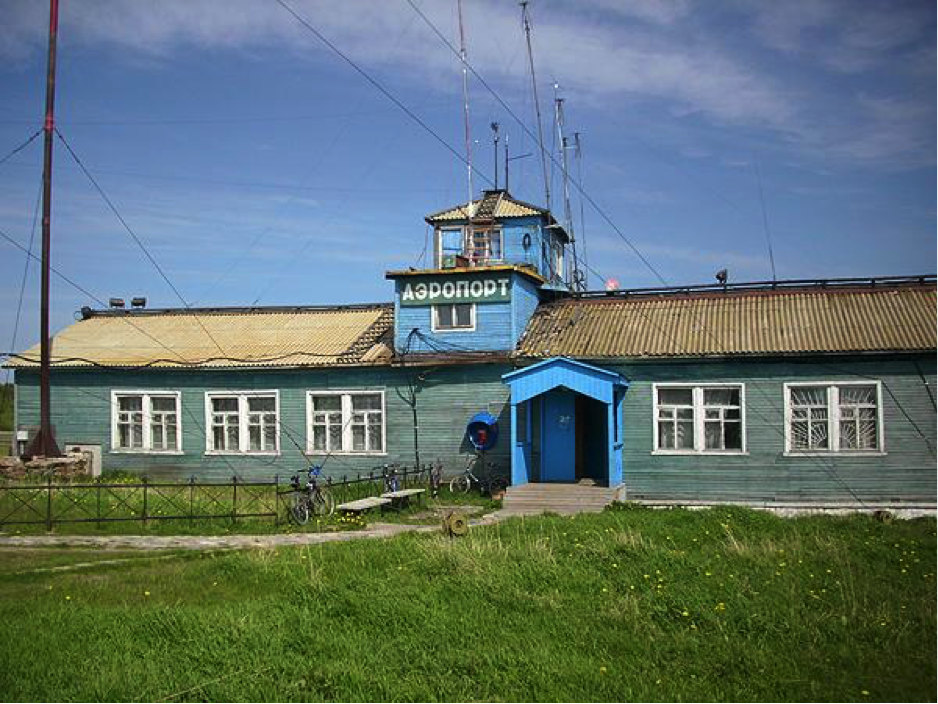
For constant travellers airports are an unavoidable part of their world-exploring experience but it is not the most enjoyable part of traveling. Airports around the world are generally overcrowded, chaotic and stressful environments packed within a generic structure. However, there are a few airports throughout the former Soviet Union that are aesthetically and conceptually different. They are repurposed military bases that were used during WWII. The wooden airports in Russia are still mostly functional and surprisingly beautiful, however it takes a grain of courage to fly into such places. Solovetsky Islands For those seeking an adventurous trip to the Solovetsky Islands in Russia, an archipelago located at the White Sea, the Solovetsky Airport offers a beautify gateway to the destination. Visitors to the Solovetsky Islands can discover one of the most important holy cities for the Russian Orthodox Church. The UNESCO World Heritage site holds a 5th century Monastery built [...]

On September 20, 1967, Queen Elizabeth II launched the RMS Queen Elizabeth 2, fondly known as the "QE2". The gold scissors she used to cut the ceremonial ribbon was the same pair used by her mother and grandmother to launch the Queen Elizabeth and Queen Mary. The QE2 was built and operated by the Cunard Line from 1969 to 2008. Queen Elizabeth was retired after her final crossing to New York, on 8 December 1968.

In 1791, the French National Assembly was seeking a new method of execution. Former methods were considered too inhumane, such as the infamous "breaking on the wheel". Assembly member Joseph-Ignace Guillotin suggested the construction of a device to decapitate the accused with a steel blade.

Settled 100 year earlier by Spain, the territory known as Alta California was rich in natural resources and ocean harbors. In 1846, settled by Europeans moving west,

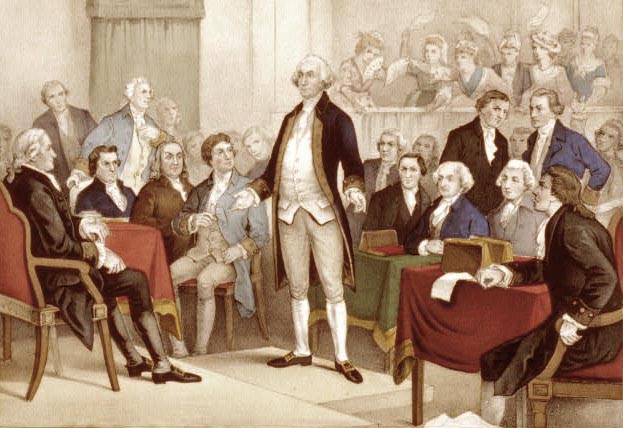
The long-distance relationship between King George III of England and his American colonies was not going well. On September 5, 1774 a convention was held in Philadelphia, attended by 55 members appointed by the twelve of the thirteen British colonies.

On this day in 301 AD, San Marino, one of the world’s smallest and oldest republics, was founded by a stonemason named Marinus from the island of Rab, located in present-day Croatia. Marinus fled persecution and sought refuge in the Apennine Mountains, where he established a small Christian community. This would eventually grow into the nation known as the Republic of San Marino, located within modern-day Italy.

The oldest continuously occupied city in the United States established by Europeans was first sighted on this day in 1565. Explorer Pedro Medendez founded St. Augustine, naming it for St. Augustine of Hippo. He and 600 of his soldiers arrived and settled in an Indian village which they turned into a fortified outpost. In 1566, the first child of European ancestry was born in St. Augustine, some 21 years before the English settlement at Roanoke Island.

On August 25, 1944, Paris celebrated liberation from Nazi occupation—a historic moment that echoed the city’s own revolutionary spirit seen in the Storming of the Bastille over 150 years earlier.

In many ways Uzbekistan is a fantastic country to cycle through – the friendly hospitality, exotic culture, stunning architecture and, of course, the excitement of exploring faraway lands, well away from the beaten tourist trail.