

History
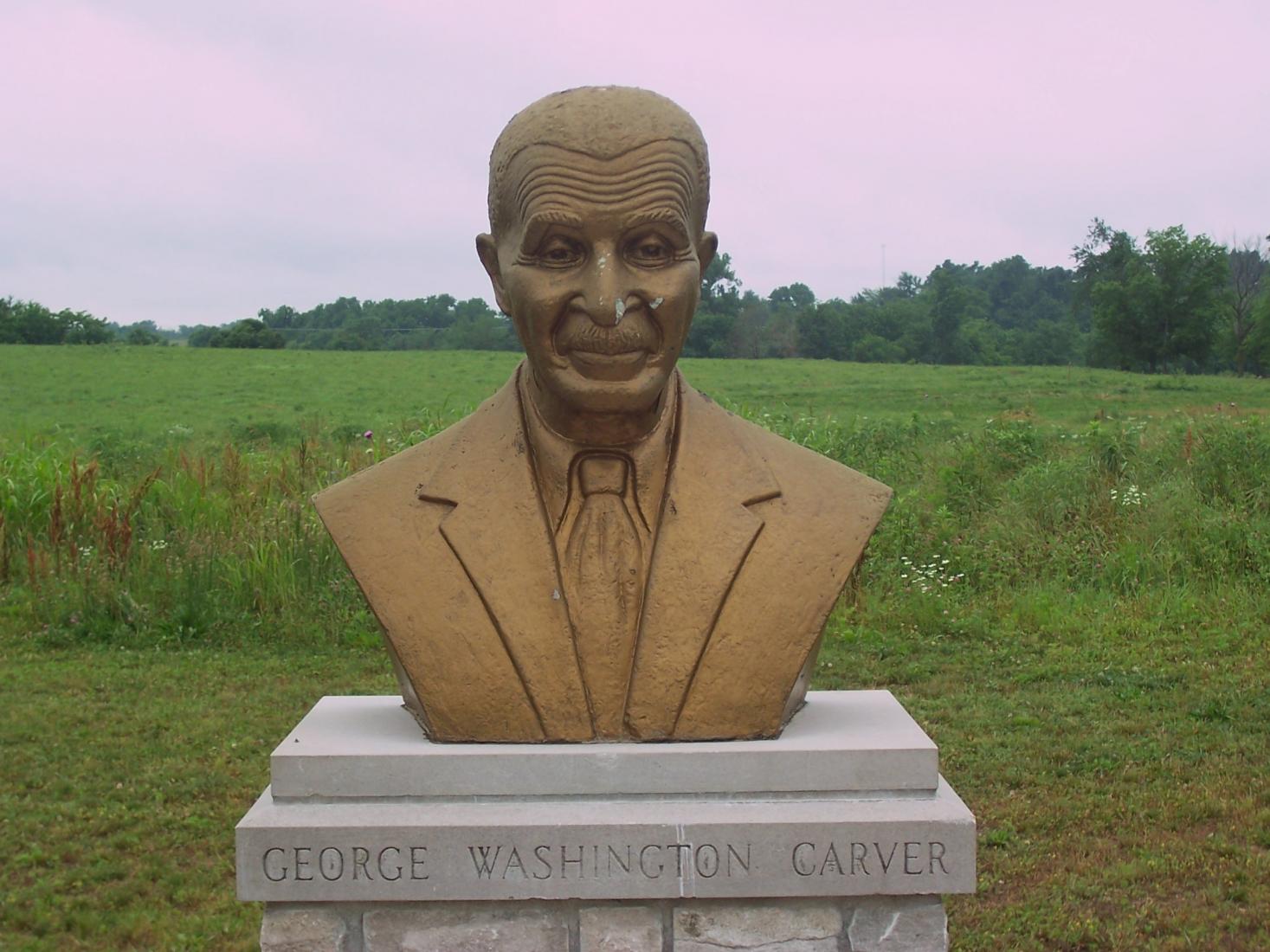
George Washington Carver statute. Photo: Tonya Fitzpatrick
“A traveler without observation is a bird without wings.”
— Moslih Eddin Saadi
No matter where you go, every place has a story and historical travel unpacks those stories.
From great struggles against oppressive forces to human ingenuity, the people and the places who have defined significant eras in human history move many to travel see where history was made. Travel through the historical places, see and observe what was then and how things are now. Every place has evolved over ages and become what it is today , hence you must visit history to understand the struggles and changes that came through with time.
Being able to walk where history was made, seeing the places that shaped legendary figures or experiencing life as our ancestors did, historical travel allows history to come to life in ways that transcend a history book.

On May 22, 1935, Aer Lingus was founded as the flag carrier of Ireland. In Gaelic, Aer Loingeas means "Air Fleet" - the term was anglicized to name the airline. Established as the national carrier owned by the government, the airline today is owned 25% by the government of Ireland and 29% by Ryan Air, with the balance owned by the public on the stock exchanges. It employs more than 4,000 people and is a member of the OneWorld Alliance. Its first chairman was Seán Ó hUadhaigh.Pending legislation for Government investment through a parent company, Aer Lingus was associated with Blackpool and West Coast Air Services which advanced the money for the first aircraft, and operated with Aer Lingus under the common title "Irish Sea Airways". The name Aer Lingus was proposed by Richard F O'Connor, who was County Cork Surveyor, as well as an aviation enthusiast.A DH.84 Dragon, repainted in the livery of Aer Lingus' original aircraft "Iolar". [...]

Birth of a future Global Citizen On this Labor Day season in history, World Footprints host Tonya (Johnson) Fitzpatrick was born. Having grown up as a "Trekkie", thanks to her late father, today also carries another special memory. Live Well and Prosper Star Trek is an American science fiction media franchise created by Gene Roddenberry, which began with the eponymous 1960s television series and quickly became a worldwide pop-culture phenomenon. The franchise has expanded into various films, television series, video games, novels, and comic books. With an estimated $10.6 billion in revenue, it is one of the most recognizable and highest-grossing media franchises of all time. The franchise began with Star Trek: The Original Series, which debuted in the US on September 8, 1966 and aired for three seasons on NBC. It was first broadcast on September 6, 1966 on Canada's CTV network. It followed the voyages of the starship USS Enterprise, a space exploration vessel built by the United Federation of Planets in the 23rd century, on a mission "to explore [...]

On this day in 1994, South Africa officially ended apartheid and elected Nelson Mandela in the country's first multiracial election.

On April 25th, 1792, Claude Joseph Rouget de Lisle composed "La Marseillaise" the song destined to become the French national anthem. Rouget composed the song as a rallying cry as Prussian and Austrian armies marched on France. The song became the French national anthem on Bastille Day, 1795. However, Napoleon I banned it during his reign. It was re-instated in 1879.

On April 28, 1988, Aloha Airlines Flight 243 took off from Hilo International Airport at 1:25 PM for the short flight to Honolulu. On board were 90 passengers and five crew members. At approximately 1:48 the aircraft reached its flight altitude of 24,000 feet when a section of the hull on the forward left side of the plane ruptured. The aircraft suffered an immediate and explosive decompression, ripping away a large section of the hull along the roof of the plane.

Cinco de Mayo ("5th of May") is more than an excuse to drink margaritas. The festival actually commemorates the Battle of Puebla on May 5, 1862 - a victory of Mexican forces led by General Ignacio Zaragoza Seguín over the French. The date is observed as a celebration of Mexican heritage and pride around the world. The Battle of Puebla delayed the French invasion of Mexico City. Five years later, Mexican forces defeated the French and expelled them from Mexico. Cinco de Mayo is a holiday that commemorates a battle fought in Mexico on the fifth of May in 1862—a battle that became an unexpected victory for the Mexican army over the French forces. Mexico was attacked by foreign troops because President Benito Juárez defaulted on his payments to European nations after war had depleted the country’s ability to pay. Mexico had endured three wars that put their country [...]

Birmingham, Alabama - the Magic City - saw events and courageous people who played a central role in the Civil Rights struggle. World Footprints goes on a walking tour through history along the Civil Rights Heritage Trail as we step onto the grounds where African Americans confronted Jim Crow era voilence with non-voilent civil disobedience.

A friend invited me to share a house with her and a few other friends in Martha’s Vineyard over the Fourth of July weekend last year. Hearing stories of the Kennedys and the Obamas vacationing there, I assumed it would be a stuffy, pretentious community for the rich and famous. This was not the case.

Americans have recognized black history annually since 1926, first as "Negro History Week" and later as Black History Month and we greatly owe the celebration of this month of Black Heritage, more so, the study of black history to Dr. Carter G. Woodson.

Enjoy the historic opening ceremonies surrounding the opening of the MLK Memorial in Washington, DC

Jekyll Island today is well known as a Georgia State Park where we can view a preserved piece of the lifestyle of the elite during the time of the robber barons. But did you know it also has a piece of history that was a factor in the Civil War? It was here that an illegal slave ship, The Wanderer, arrived on November 28, 1858, with over 400 people who were sold into slavery.

Located in western Illinois, on a bluff overlooking the Mississippi River, you’ll find my charming and welcoming hometown of Quincy. With a rich history, Midwestern hospitality, and a thriving arts scene, Quincy is Illinois’s best-kept secret.