

History
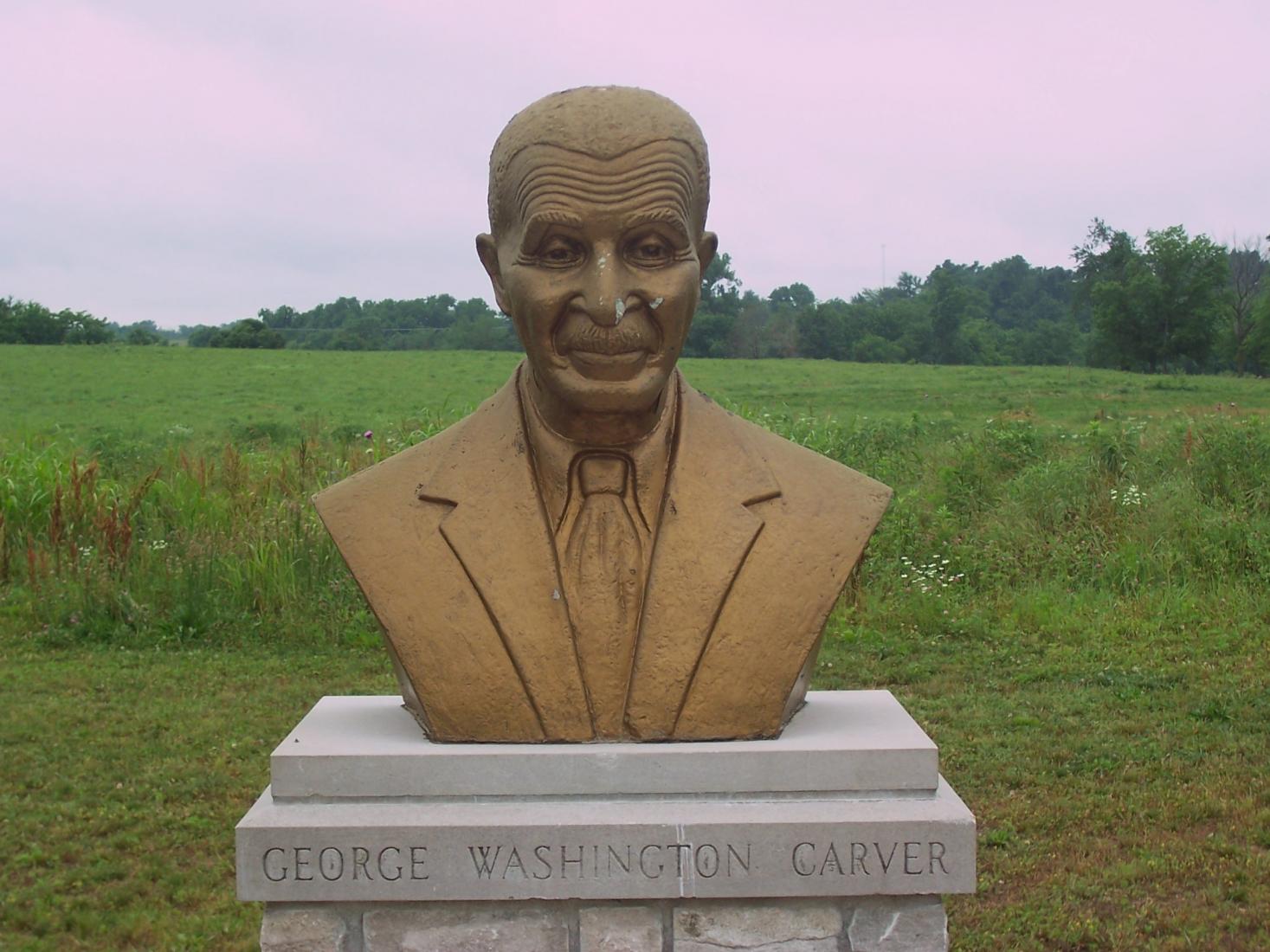
George Washington Carver statute. Photo: Tonya Fitzpatrick
“A traveler without observation is a bird without wings.”
— Moslih Eddin Saadi
No matter where you go, every place has a story and historical travel unpacks those stories.
From great struggles against oppressive forces to human ingenuity, the people and the places who have defined significant eras in human history move many to travel see where history was made. Travel through the historical places, see and observe what was then and how things are now. Every place has evolved over ages and become what it is today , hence you must visit history to understand the struggles and changes that came through with time.
Being able to walk where history was made, seeing the places that shaped legendary figures or experiencing life as our ancestors did, historical travel allows history to come to life in ways that transcend a history book.

On this date in the year 1611, the King James Version of the Bible was first published. The year 2011 thus represents 400 years of the KJV's influence on the English language. The King's Printer, Robert Barker, began the project in 1604 at the command of King who faced the Puritan faction within the Church of England.

New York City's Empire State Building was dedicated on this day in 1931. President Herbert Hoover dedicated New York City’s Empire State Building, pressing a button in the White House that turned on the building’s lights for the first time, 45 five days ahead of its original projected opening date.

President John Adams signed into law an act establishing the Library of Congress on April 24, 1800. The same act transferred of the seat of government of the United States from Philadelphia to the District of Columbia.

Entrance wall to the City of David in Jerusalem, Israel. Photo: Tonya Fitzpatrick World Footprints will explore Biblical history at the City of David, Namibia's political, economic and natural landscape and small town treasures that offer a taste of Sicily and more. According to Hebrew tradition, the area outside of the Old City Walls of Jerusalem is considered to be the center of the world. World Footprints will explore that theory and Biblical history with Zev Orenstein at the City of David. We'll also examine new archaeology discoveries that support the existence of King David. Namibian desert. Photo: Ian Fitzpatrick Namibia is a country is great diversity. The country is home to wildlife that can't be found anywhere else in Africa and it vast desert landscapes. While at the Mount Etjo Safari Lodge, we break bread with Eric Reindhart of Nambia Tracks and Trails to learn more about [...]
On April 22th of each year, millions of people around the world celebrate Earth Day. This day is regarded by many to mark the birth of the modern environmental movement.

In 1922, the nation known as the Irish Free State came into existence when 26 counties on the island of Ireland seceded from the United Kingdom. The remaining six counties, having a larger Protestant, pro-British or Loyalist population, remained within the United Kingdom as Northern Ireland. During the following 27 years, the King George VI of the United Kingdom continued to exercise formal diplomatic relations on behalf of Ireland.

On April 11, 1968, President Lyndon B. Johnson made history by signing the 1968 Civil Rights Act into law.
On April 10, 1912 the RMS Titanic set sail on its maiden voyage. The ship departed Southampton, England, bound for New York City, New York, with Captain Edward J. Smith in command and 2,223 people aboard. The Titanic stopped in France and Ireland to pick up additional passengers. Among the passengers were many famous names: John Jacob Astor and his wife; Denver millionairess Margaret "Molly" Brown; Benjamin Guggenheim; Macy's owner Isidor Straus along with the White Star Line's director J. Bruce Ismay and the ship's builder Thomas Andrews. In the Titanic, there were three classes of passengers; many in third class were Irish and British immigrants looking to a new life in America. On Sunday, April 14, the ship altered course slightly south in response to iceberg warnings. A number of subsequent warnings from other ships were received, but not acted upon. At 11:40 pm, lookouts spotted an iceberg directly [...]

General Robert Edward Lee commanded the Confederate Army of Northern Virginia during the American Civil War. When Lee took command in 1862 he emerged as a shrewd tactician and battlefield commander and won most of his battles against superior Union armies.

The Irish Government Bill of 1886 was the British parliament's first substantial attempt to create home rule for Ireland. It was introduced on April 8, 1886 by Prime Minister William Gladstone for the purpose of creating a devolved Irish assembly. The Irish Parliamentary Party under Charles Stewart Parnell had been campaigning for home rule for Ireland since the 1870s. The bill, like his Irish Land Act 1870, was very much the work of Gladstone, who excluded both the Irish MPs and his own ministers from participation in the drafting.
The World Health Organization (WHO) was established by the United Nations to act as an international coordinating authority on April 7, 1948. Headquartered in Geneva, Switzerland, WHO succeeded the role of the Health Organization, its predecessor under the League of Nations.

The Games of the I Olympiad were held from April 6 to April 15, 1896 in Athens, Greece, the first Olympic Games in modern times. The first Olympics, or "I Olympiad" also established the International Olympic Committee.


