
Cultural Heritage

Melnik, in southwestern Bulgaria, is home to just four hundred people who exist in a historically riveting location that is a huge hit with wine tourism enthusiasts.

Vieux Lille, the capital of French Flanders, is a cultural hotspot that travelers just can’t get enough of. Make sure your visit is more than just for a day, as you’ll want to really explore all the city has to offer.

A mere two hours from Boston, Cuttyhunk island is one of Cape Cod’s Elizabeth Islands, and the one out of the sixteen that is not owned by the Forbes family.

We heard many things about Rio de Janeiro before traveling to the country of Brazil for the Rio 2016 Paralympic Games. Some things we heard were not positive so we were determined to explore the city upon arrival and form opinion. This short reflection segment offers our initial impressions. Rio de Janeiro and São Paulo are two of the most visited destinations in the country, offering visitors (whether in the country on business or pleasure) a fabulous peek into the complex heritage and natural spectacle of Brazil (the largest country in South America). Because of the abundance and accessibility of many of its natural attractions, Brazil has also become acclaimed for its increasing focus on eco-tourism. From the wilderness of the great Amazon rainforests and sun-kissed tropical beaches to the Grand Carnival celebration in Rio, the country has it all. Visit the colonial era towns in the state of Minas [...]

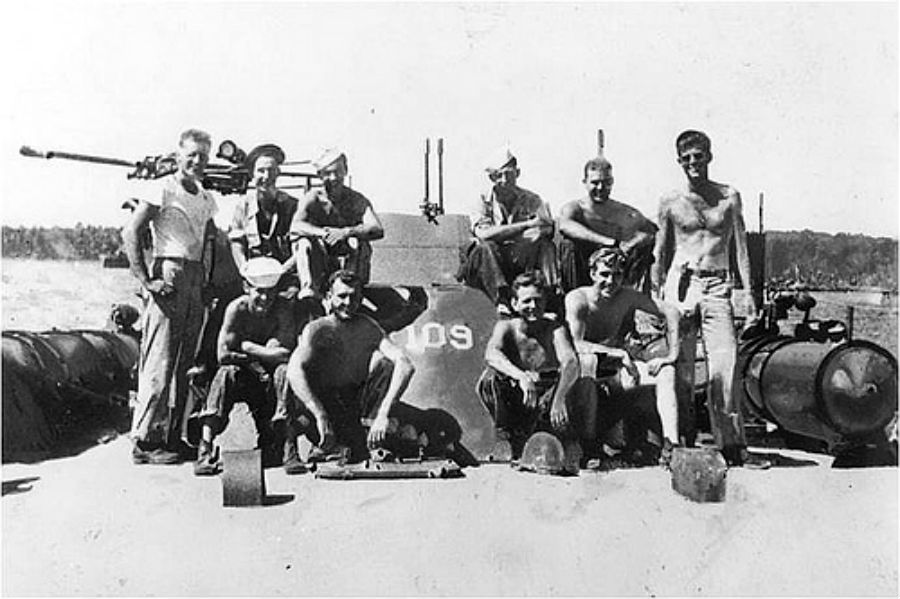
On August 2, 1943, during World War II, the United States Navy boat PT-109, commanded by 26-year-old Lieutenant John F. Kennedy, was struck by a Japanese destroyer in the Pacific Theater. The collision occurred on a moonless night, killing several crew members and leaving the survivors stranded in the water.

When the reclusive Ludwig II of Bavaria built Neuschwanstein Castle, one has to wonder if it was for him, a place of fairytales. Perhaps for the King who was often referred to as the Swan King' or the 'Fairy Tale King', a fairy tale castle would be an appropriate abode.

On May 7, 1718, one of America's most vibrant and culturally rich cities, New Orleans, was founded by the French. Originally known as La Nouvelle-Orléans, the city was named in honor of Philippe II, Duke of Orléans, Regent of France.

Do you love to fish? If so, we’ve discovered a new fishing hotspot that has been under the radar for years...the country of Brazil has been a hidden and treasured angling mecca for those fishermen
In the second hour of our French Quarter Festival 2012 broadcast we will keep the good times rolling, Mark Romig, President of New Orleans Tourism and Marketing Corp (and a member of the famous Romig family) along with Zack Rosenburg, a Washington, DC transplant and very first CNN Hero. Zack will discuss the St. Bernard Project (SBP), a non-profit organization that aims to rebuild one of the most devastated parishes hit by Hurricane Katrina. SBP is also working in others areas around the United States that are in need.
In our first hour of the 2012 French Quarter Festival broadcast we will celebrate our 5th anniversary of LIVE broadcasts from New Orleans by sharing sound bites from the previous years.
Enjoy a taste of New Orleans in this episode of World Footprints. New Orleans has so much to offer and we'll introduce a few more of the New Orleans treasures including indie soul singer/songwriter Theresa Andersson who stops by to talk about how life in New Orleans has influenced her music and how she merged the culture of New Orleans with that of her home country of Sweden. She came to New Orleans in 1990 to play violin with fellow singer-songwriter and Swede, Anders Osborne. Nine years later, she left the band. Since then, Andersson has performed and recorded with several well-known New Orleans musicians
World Footprints continues with its special broadcast from New Orleans during French Quarter Festival 2010. Stevie McKee will talk about the 7th Ward and Faubourg Treme, an historic neighborhood recently made famous by HBO. Then we’ll be rockin’ with the “Mick Jagger of the Marsh” and Rockin’ Dopsie, Jr. Plus Patty Gay from the New Orleans Preservation Resource Center and jazz great Jeremy Davenport.