
North America

Totem Poles of the First Nations in Vancouver Canada. Photo: Tonya Fitzpatrick
“Through travel I first became aware of the outside world; it was through travel that I found my own introspective way into becoming a part of it.”
– Eudora Welty
Explore the history, diverse cultures and traditions of the North American countries of Canada, Mexico and the United States. North American culture reflects both the cultures of its indigenous people- the Native Americans as well as the culture that is influenced by European Colonization.
The United States is the third largest country in the world and one of the most culturally diverse countries of the world. Described as the ‘melting pot‘ of North America , amalgamation of different cultures has given shape to the unique U.S. culture.
Mexico is the most populous state of North America and one of the largest city in the world.
Canada is the largest country of North American region and covering more than half of the continent’s area.

It was about 10:30 pm, the darkness so inky you couldn't see your hand in front of your face. The leafy boughs of late-spring trees blocked even the starlight. My friend whispered, "Do you want to see the blue ghosts? They live near the cemetery up the trail."

One of the best aspects of travel is stumbling on interesting stories. I discovered one highlighting Native American history during a photography tour of Antelope Canyon X with Taadidiin Tours. Antelope Canyon X is one of several slot canyons that inspire millions to visit the Navajo Nation near Page, Arizona, each year.

Let’s face it; travel can be expensive. But, when you know where to go, you can explore new destinations at a fraction of the cost. One of our favorite places, New Orleans (aka The Big Easy), can be pricey to visit but is filled with rich culture, historic buildings and landmarks, and music that will move your soul and justify the travel investment.

Imagine a communal farm founded in 1942, where sustainability is put over profit and a Christian community that welcomes all people of any, or no faith, to join their community. I recently visited Koinonia Farm in Americus, Georgia, and discovered a way of life I thought died in the 19th century.

Even the dogs in Toronto wear coats. Whether you’re shopping on Yonge Street or in Kensington Market, puffers don’t just appear in one-of-a-kind vintage stores or the sprawling Eaton Centre mall. Rather, they also cloak Toronto’s dachshunds and greyhounds, who strut through the city as unphased as their owners. On a weekend in December, a particularly spoiled French bulldog dons an embroidered Maple Leafs jersey, not unlike Carlton — the hockey team’s polar bear mascot.

On April 4, 1968, Dr. Martin Luther King, Jr. was assassinated as he stood on the balcony of the Lorraine Motel in Memphis, TN. Now the home of the National Civil Rights Museum, this historic structure not only immortalizes this unforgettable moment in time but showcases more than 400 years of African American history.

As New Orleans gears up to host Super Bowl LIX on February 9, 2025, the excitement is not just about the big game. One of the week’s most inspirational events, the Super Bowl Soulful Celebration, will take center stage on Wednesday, February 5, at the historic Mahalia Jackson Theater for the Performing Arts.

Situated in the valley below three surrounding mountains, Lookout, Raccoon and Signal, Chattanooga’s natural beauty speaks for itself.
Although I’ve lived in Phoenix, Arizona for twenty years of my life, there are still times I wonder why on earth someone thought it would be a good idea to build a city in the middle of a desert with no water source.

Every year in the autumn, the ground at Custer State Park shakes and the air is filled with clouds of dust. You can hear cheering from crowds of people as they watch almost 2,000 bison being herded into a corral by nearly 60 cowboys and cowgirls on horseback.

Montgomery was the spark that lit the fuse on the long-simmering fight by African Americans for their civil rights. It began a movement that is still ongoing today.

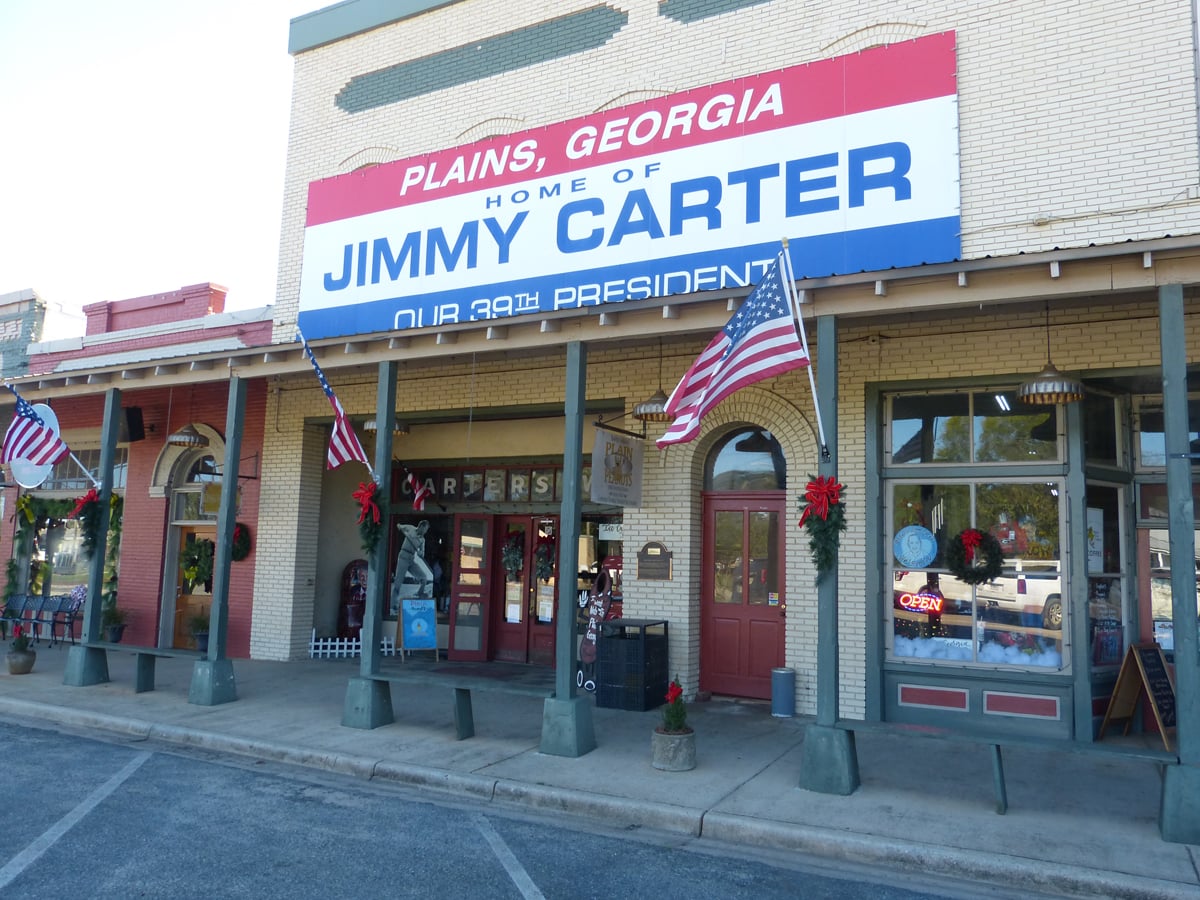
In the town of Plains, Georgia, President Jimmy Carter was affectionally referred to as “Mr. Jimmy.” Everybody in the tiny town was related to or knew him personally. Never before has a president devoted so much of himself to his hometown both before and after his presidency.