
Indigenous

Indigenous workers sailing on Lake Titicaca.
“Through consciousness, our minds have the power to change our planet and ourselves. It is time we heed the wisdom of the ancient indigenous people and channel our consciousness and spirit to tend the garden and not destroy it.”
–Bruce Lipton
With Indigenous Travel, we can learn about indigenous cultures and deepen our understanding for indigenous peoples. Hence, we can truly honor their humanity, our shared humanity and then appreciate the many contributions they’ve made to society.
Despite their rich cultural heritage and traditions, many indigenous peoples are noticeably absent from historical narratives. That historical imbalance must be reconciled.
Indigenous travel offers curious travelers with a great opportunity to contribute to indigenous communities and at the same time experience their culture personally and make a difference to their lives with tourism. The stories below reflect our attempt to educate and restore harmony and accuracy to our collective history.

Few events capture the vibrancy of Indigenous artistry and heritage, like the Annual Indian Market at S'edav Va'aki Museum in Phoenix, Arizona. As a professional photographer and seasoned travel writer, I'm always looking for authentic cultural experiences that tell a story—through people, places, and tradition.

One of the best aspects of travel is stumbling on interesting stories. I discovered one highlighting Native American history during a photography tour of Antelope Canyon X with Taadidiin Tours. Antelope Canyon X is one of several slot canyons that inspire millions to visit the Navajo Nation near Page, Arizona, each year.

Viewing the Northern Lights is a magical experience that tops bucket lists everywhere. It beckons travelers worldwide to frosty destinations. From now until 2026, the aurora borealis activity is expected to reach its highest levels in 11 years. This uptick in solar activity makes the current era a particularly good time for aurora-viewing vacations. This winter, why not combine the experience of searching for this natural phenomenon with a cultural experience in your choice of winter wonderlands?

Most of us probably remember from history class that Spanish explorers brought horses to North America in the 14th century. Many people are surprised to learn native horses existed before the Spanish arrived, at least in Canada. Ojibwe Spirit Horses, also known as Lac La Croix Indigenous Ponies, are the only known indigenous horse breed native to Canada. Thousands of them lived in harmony with Indigenous communities in (mainly) Northern and Western Ontario and roamed the forests that surround Lac Le Croix.

Traveling throughout the Caribbean and especially the West Indies, one can experience the cultural influences of the Garifuna people in the food, music, dance and island traditions.

Since 2008, when the main city George Town was inscribed as a UNESCO World Heritage Site, tourists flocked to Penang to savour the food, see the sites, and indulge in ‘heritage tourism’. Every day, you can see walking tours searching for the Insta-famous street art peppered across the Heritage Zone. However, heritage tourism is a double-edged sword; what they think is cultural heritage is, in fact, a brilliant tourism campaign promoting the historic image of Penang at the cost of the locals who live it.

The cholita indigenous women from Bolivia’s countryside, are an indomitable symbol of resilience. In a country ravaged by colonial greed, ransacked resources, and periods of crippling poverty, the Bolivian people are no stranger to adversity.

I hate to admit it, but when we booked our trip, I didn’t even know where to find Papua New Guinea on the map. Our travel companions had selected the destination. But in the months leading up to our departure, I began to fall in love with a place that was extremely difficult to find accurate information on.

The Enchanted Mountains of Cattaraugus County, New York are the homeland of The Seneca Nation, one of six Native American tribes that formed a confederacy in the region. The largest of the six tribes, The Seneca, who lived in the Western part of the Confederacy, called themselves the Onöndowa’ga,’ or “Keepers of the Western Door,” because they controlled the land foreigners had to cross to gain access to the Confederacy.

In Patagonia, a sub-region of Chile and Argentina, there are many exciting cultural experiences to discover. However, wherever you go, responsible travel is what you should strive for. It is important to understand how your actions impact your destination.

Nancy Gardella, executive director of the Martha’s Vineyard Chamber of Commerce, says that Martha’s Vineyard is so much more than its pretty beaches and famous residents. Among the stories Nancy reveals is the Vineyard’s troubling story of colonization and the island’s surprising legacy of sign language.

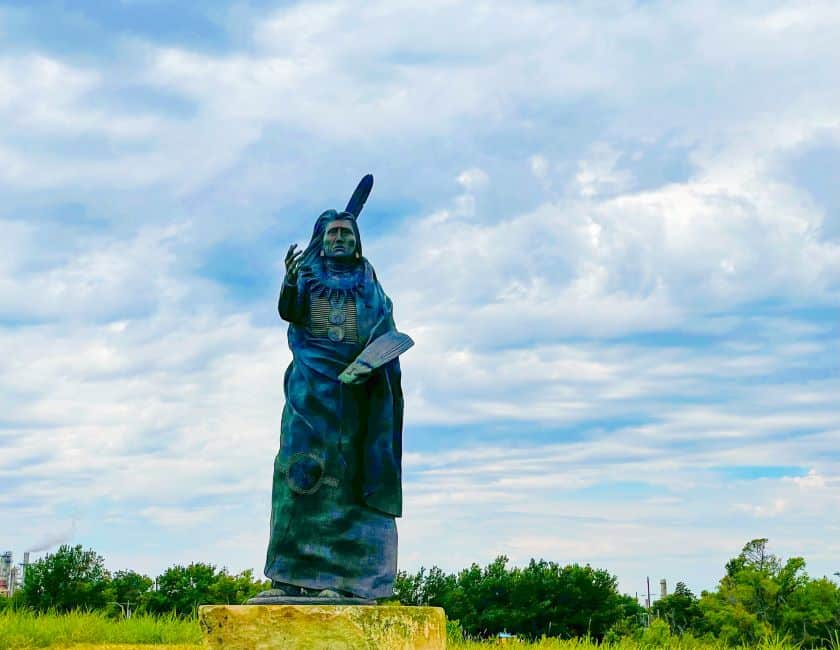
However, there is a lesser-known story. Yet one that exemplifies enormous courage and one which has had an immense impact on our nation. It is a story of forced settlement, death, devotion, and incredible spirit. It is the story of Chief Standing Bear.