
Global Citizenship

On September 23, 1957, Ernest Green and eight other African American high school students, known as the ‘Little Rock Nine’, integrated the all-white Central High School in Little Rock, Arkansas. This event was the first experiment in school integration came three years after the U.S, Supreme Court’s Brown vs. Board of Education landmark ruling that segregation of public schools is unconstitutional.

Many of the places where significant African American history occurred have been neglected and have gone unrecognized for the important role they hold in the fabric of American society.

Kaikoura is a town of 4,000 people located about 110 miles north of Christchurch, on New Zealand’s South Island. It is tucked away on a beautiful peninsula, backed by the snow-capped peaks of the Seaward Kaikoura Range.

Used by Indigenous tribes in the Amazon for medicinal purposes for centuries, it’s only in the last 50 years or so that Westerners have come to learn about ayahuasca

The Crystal River National Wildlife Refuge shelters solitary manatees year-round, but their numbers increase to around 600 individuals from mid-November through March, when they retreat to the Three Sisters and other natural hot springs as ocean temperatures drop.

Irene patiently showed me her technique for rolling clay into beads using a tiny mold. While I needed more practice, the women at Kazuri worked diligently to produce ceramic jewelry. Kazuri, located in Nairobi, employs single mothers. This small business provides a daily income and healthcare in a country where women are often marginalized.

With everything taking place in the world from the coronavirus pandemic, global recession, and America’s racial reckoning, even a brief escape from these problems can be an elixir for the body, mind, spirit, and soul.

The United Kingdom is a country with a long and varied history, so it’s no surprise that it has a significant number of UNESCO World Heritage Sites.

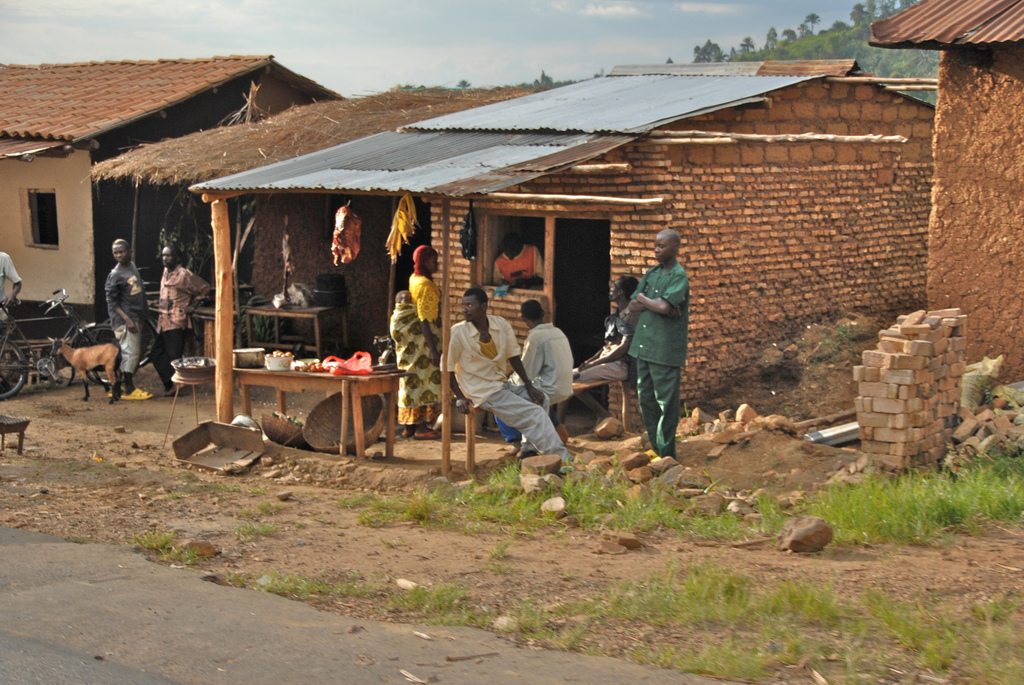
It’s evening in the small African nation of Burundi, and the waning sun throws shadows over the city of Bujumbura.

Aran Mor is arguably the most significant example that comes to mind and an island on which you can learn about the past, while enjoying everything it has to offer in the present.
On January 13, 1888, a small group of explorers and scientists, 33 in all, gathered at the Cosmos Club in Washington, DC. (A place where DC members of the famed Explorers Club, including World Footprints, meet today.) They proposed to organize a society "to increase and diffuse geographic knowledge while promoting the conservation of the world's cultural, historical, and natural resources." Two weeks later, they incorporated the National Geographic Society . Alexander Graham Bell, the Society's second president, proposed a magazine, sales of which would help fund the Society's activities. In 1899, Bell's son-in-law Gilbert Hovey Grosvenor was named the first full-time editor of National Geographic magazine. He served the organization for fifty-five years (until 1954), and members of the Grosvenor family have played important roles in the organization since. Bell and Gilbert Hovey Grosvenor devised the successful marketing notion of Society membership and the first major use of [...]

Islam is the second-most followed religion after Christianity. Out of the 195 countries on Earth, 56 have a Muslim majority and are governed by Muslims.