
Paris

Paris is polarizing. You either love it or you hate it. It’s either cliché or it’s charming. For every romantic who says it’s their favourite city, there is a critic who turns their nose up at its grittier areas, high prices, or crowded tourist attractions. Even Parisians love to complain about Paris (but isn’t that so delightfully Parisian?).

Lyon, France, is the nation’s second-largest city, strategically located between Paris and Marseille. While it is celebrated as the gastronomic capital of France, Lyon offers an abundance of attractions beyond its culinary delights. The city is steeped in history and culture, making it a must-visit destination for travelers seeking a rich and immersive experience.

On April 25th, 1792, Claude Joseph Rouget de Lisle composed "La Marseillaise" the song destined to become the French national anthem. Rouget composed the song as a rallying cry as Prussian and Austrian armies marched on France. The song became the French national anthem on Bastille Day, 1795. However, Napoleon I banned it during his reign. It was re-instated in 1879.

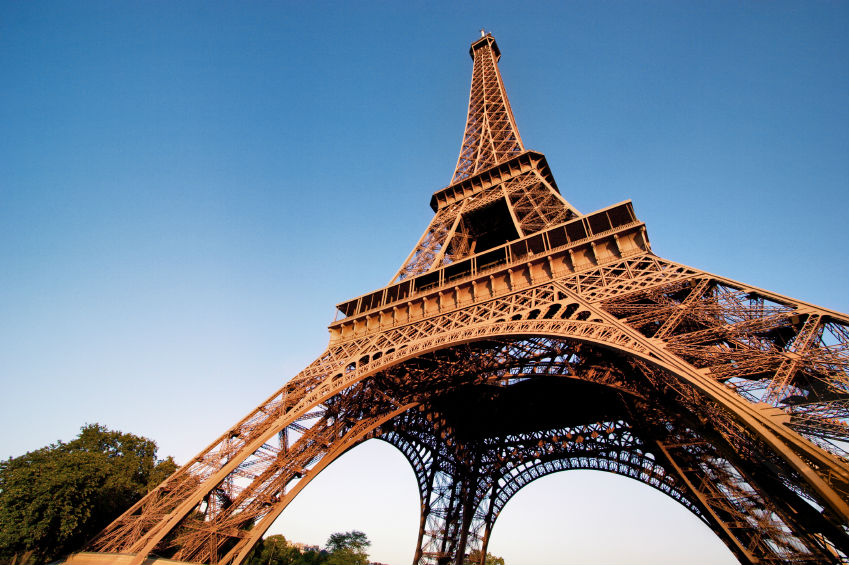
People visiting Paris and the Eiffel Tower can now take a zip line. It’s a second time in three years that Perrier, the French mineral water brand, has put up the zip line on the 1,063-foot tall iconic feature.

The Games of the I Olympiad were held from April 6 to April 15, 1896 in Athens, Greece, the first Olympic Games in modern times. The first Olympics, or "I Olympiad" also established the International Olympic Committee.
Along with the Sphinx and the Great Pyramid, there may be no more instantly recognizable man-made structure than the Eiffel Tower, inaugurated on this date in 1889. The grand tower was built for the Universal Exhibition held that year in celebration of the French Revolution.

Since 17th November, there has been unrest as anti-government protestors have taken to the streets of France’s capital demonstrating against high costs of living and spike in the diesel prices. The demonstrations in Paris also attacked Macron’s presidency and shed light on the mass public’s belief that his regime only favored the rich and was trying to modernize the French economy at a rate that was far from realistic.

On October 6, 1889, the famous Moulin Rouge opened its doors in Paris’s 18th district. The Eiffel Tower was constructed the same year, showcasing the cultural pioneering that dominated Paris at the time.

On August 25, 1944, Paris celebrated liberation from Nazi occupation—a historic moment that echoed the city’s own revolutionary spirit seen in the Storming of the Bastille over 150 years earlier.

On July 14, 1789, an iconic event of the French Revolution took place when revolutionaries stormed the Bastille, a medieval fortress in Paris. At the time, the Bastille was not only a prison but a symbol of the French monarchy's absolute power. Though it held only seven prisoners at the time, its significance lay far beyond the walls—this fortress had come to represent the tyranny and oppression of King Louis XVI's reign.

On June 28, 1919, the Treaty of Versailles was signed in Paris, officially bringing World War I to a close. This landmark agreement was signed by representatives from the Allied powers—Belgium, Britain, France, Italy, the United States—and Germany, with Austria-Hungary already dismantled. The treaty formally ended a devastating conflict that had raged for nearly five years, claiming millions of lives and reshaping the global landscape.

To understand a city one must look through the lens of its artists with open eyes, appreciate the personal stories of locals, and sometimes jump on a fast track to have time at popular attractions. Let's begin with Paris