
Europe

Rome's Trevi Fountain is a tourist favorite in Italy. Europe travel.
“He who is outside his door already has the hardest part of his journey behind him.”
— Dutch proverb
Travel Europe and fall in love with its beautiful landscapes and rich cultural heritage. From Europe‘s largest country (Russia) to its small one (Vatican City) and the additional 49 countries in between, the continent of Europe is a vast landmass in the northwestern part of Eurasia. The most visited European country is France followed by Spain, Italy, United Kingdom and Germany but each of the 51 independent states hold a rich history, unique cultures and traditions, delicious food, beautiful landscapes and other gems that make each country worth visiting.
Europe‘s border is delineated by the Ural Mountains in Russia, the Caspian Sea and Caucasus Mountains and the following countries (listed in alphabetical order) comprise the continent: Albania, Andorra, Armenia, Austria, Azerbaijan, Belarus, Belgium, Bosnia and Herzegovina, Bulgaria, Croatia, Cyprus, Czech Republic, Denmark, Estonia, Finland, France, Georgia, Germany, Greece, Hungary, Iceland, Ireland, Italy, Kazakhstan, Kosovo, Latvia, Liechtenstein, Lithuania, Luxembourg, Macedonia, Malta, Moldova, Monaco, Montenegro, Netherlands, Norway, Poland, Portugal, Romania, Russia, San Marino, Serbia, Slovakia, Slovenia, Spain, Sweden, Switzerland, Turkey, Ukraine, United Kingdom (UK) and Vatican City (Holy See).
Travel Europe – explore it’s lands from north to south and east to west and take delight in its different food flavors and learn more about it’s rich history & culture.

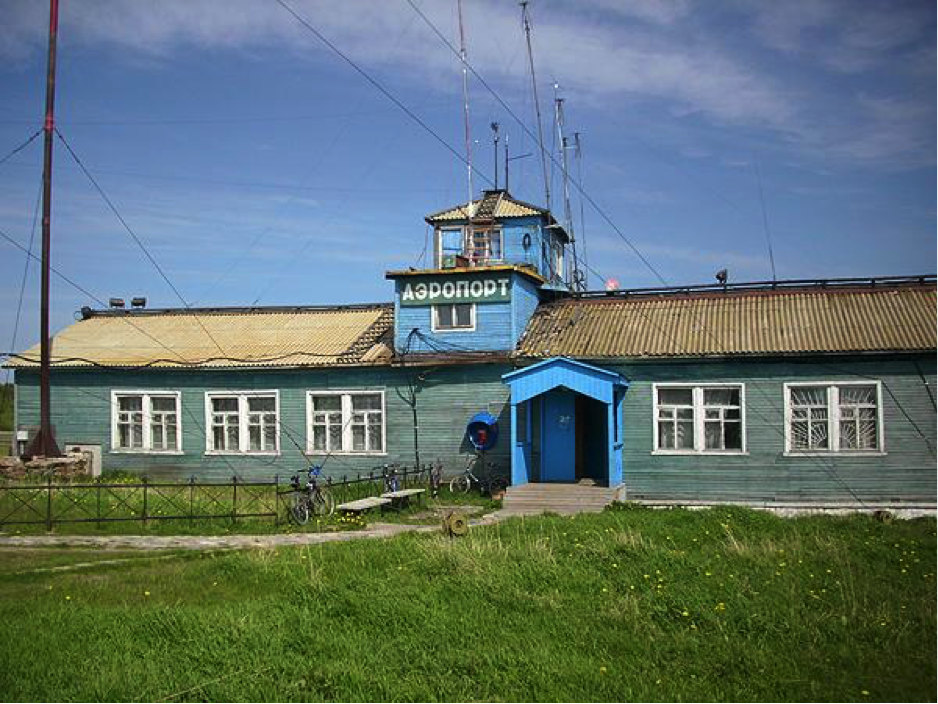
For constant travellers airports are an unavoidable part of their world-exploring experience but it is not the most enjoyable part of traveling. Airports around the world are generally overcrowded, chaotic and stressful environments packed within a generic structure. However, there are a few airports throughout the former Soviet Union that are aesthetically and conceptually different. They are repurposed military bases that were used during WWII. The wooden airports in Russia are still mostly functional and surprisingly beautiful, however it takes a grain of courage to fly into such places. Solovetsky Islands For those seeking an adventurous trip to the Solovetsky Islands in Russia, an archipelago located at the White Sea, the Solovetsky Airport offers a beautify gateway to the destination. Visitors to the Solovetsky Islands can discover one of the most important holy cities for the Russian Orthodox Church. The UNESCO World Heritage site holds a 5th century Monastery built [...]

In 1791, the French National Assembly was seeking a new method of execution. Former methods were considered too inhumane, such as the infamous "breaking on the wheel". Assembly member Joseph-Ignace Guillotin suggested the construction of a device to decapitate the accused with a steel blade.

On this day in 301 AD, San Marino, one of the world’s smallest and oldest republics, was founded by a stonemason named Marinus from the island of Rab, located in present-day Croatia. Marinus fled persecution and sought refuge in the Apennine Mountains, where he established a small Christian community. This would eventually grow into the nation known as the Republic of San Marino, located within modern-day Italy.

On August 25, 1944, Paris celebrated liberation from Nazi occupation—a historic moment that echoed the city’s own revolutionary spirit seen in the Storming of the Bastille over 150 years earlier.

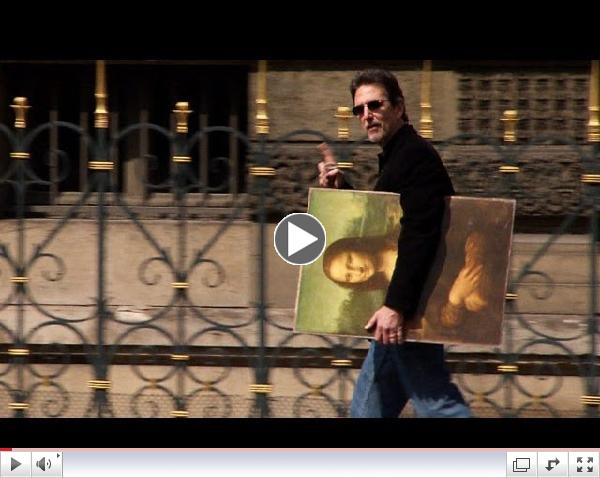
On August 21, 1911 a patron of the Louvre Museum in Paris walked into the Salon Carré where Leonardo Da Vinci's Mona Lisa was on display for all to see. On this day, however, the famous painting was not on the wall where it had hung for the past five years. A search of the museum turned over no clues - the painting had been stolen. The French poet Guillaume Apollinaire came under suspicion; he in turn, tried to implicate Pablo Picasso. Both were exonerated. Two years later, a man approached the directors of the Uffizi Gallery in Florence and tried to sell the Mona Lisa to them. The police were notified and immediately arrested former Louvre employee Vincenzo Peruggia who had stolen the painting by hiding in a broom closet and walking out with it hidden under his coat. Peruggia claimed the painting belonged in Italy and that he had stolen it for [...]

Between July 6, 1942, and August 4, 1944, a teenage Jewish girl named Anne Frank chronicled her life in hiding during one of the darkest periods of history.

On July 18, 64 AD, a devastating fire broke out in the shops and residences surrounding the Circus Maximus in ancient Rome.

In the summer of 1799, during Napoleon Bonaparte's Egyptian campaign, soldiers were demolishing a wall to expand a fort in the Nile Delta when one of them noticed an unusual stone embedded in the debris. This slab, now known as the Rosetta Stone, bore an inscription that intrigued scholars.

On July 14, 1789, an iconic event of the French Revolution took place when revolutionaries stormed the Bastille, a medieval fortress in Paris. At the time, the Bastille was not only a prison but a symbol of the French monarchy's absolute power. Though it held only seven prisoners at the time, its significance lay far beyond the walls—this fortress had come to represent the tyranny and oppression of King Louis XVI's reign.

On June 28, 1919, the Treaty of Versailles was signed in Paris, officially bringing World War I to a close. This landmark agreement was signed by representatives from the Allied powers—Belgium, Britain, France, Italy, the United States—and Germany, with Austria-Hungary already dismantled. The treaty formally ended a devastating conflict that had raged for nearly five years, claiming millions of lives and reshaping the global landscape.

On June 24, 1374, a bizarre and mysterious phenomenon swept through the town of Aix-la-Chapelle, Germany—a sudden outbreak of "dancing mania." Also known as "St. John's Dance," this strange affliction saw people compulsively break into wild, frenzied dancing that could last for hours, even days, until they collapsed from sheer exhaustion. The cause of this unusual epidemic remains a mystery, but the mania quickly spread across Europe, affecting towns in Italy, Luxembourg, and France.

With summer looming, Andalucía should be on top of your potential holiday destinations. Located on the south of Spain, the Andalucía region is renowned for having the hottest average temperatures in Europe. It has a diverse landscape, with a mountainous region on one side and the Mediterranean coast on the other. It is easy to tour the entire region because most of the attractions are 2 to 4-hour-drive apart. Here are the top 6 cities in the south of Spain that should be on the top of your list. Malaga Malaga is the hometown of the world's renowned artist, Pablo Picasso. It’s no surprise that the city has several fascinating galleries and generates an artsy vibe. Historical sites are also in abundance, including the Moorish fortress of Alcazaba, the 11th-century Gibralfaro Castle, and the Roman theatre. The cuisine is just as good as the history and tradition in Malaga. Locals [...]