
Destrehan Plantation: A Complex Tapestry of Southern History, Slavery, and Transformation

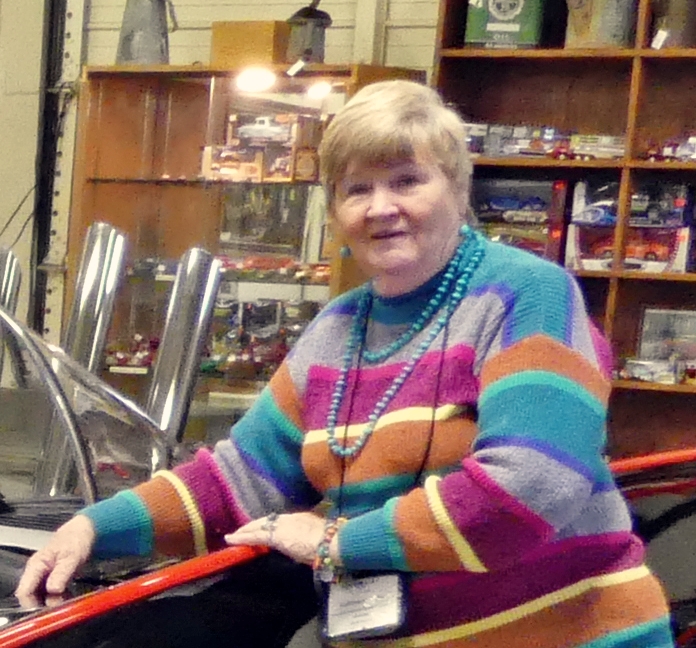
Destrehan Plantation Photo: Kathleen Walls
Posted February 23, 2026
Built in 1782, Destrehan Plantation is the oldest documented plantation still surviving in the Mississippi River Valley. I visited this living history museum and loved that they recognized, not only the story of the owners, but also stories of the over 200 enslaved men, women, and children of West African descent who worked on the plantation. The mansion sits amid ancient oak trees dripping moss. In front, the eight columned, two storied home faces the Mississippi River. In the back, a huge water cistern that supplied water in the home’s plantation era remains.
A Mansion with Mixed Messages
Inside the mansion, mannequins, dressed in period style illustrate their place in the plantation’s hierarchy. My tour began in the basement where we saw the mannequin of the builder. The contradiction of culture was clear: the mansion was built for a wealthy white man by a free man of color, Charles Paquet. Mr. Paquet was paid with money, a cow, corn, rice, and one enslaved man. Paquet, himself once enslaved, was a slave owner upon completion. It was not uncommon in Louisiana for free people of color to own slaves, with estimates suggesting as many as 25% did. Paquet later purchased at least four carpenters for his construction business, none of whom he freed, yet he was fined three times for helping runaway slaves escape. I find it hard to understand such a mixed message.
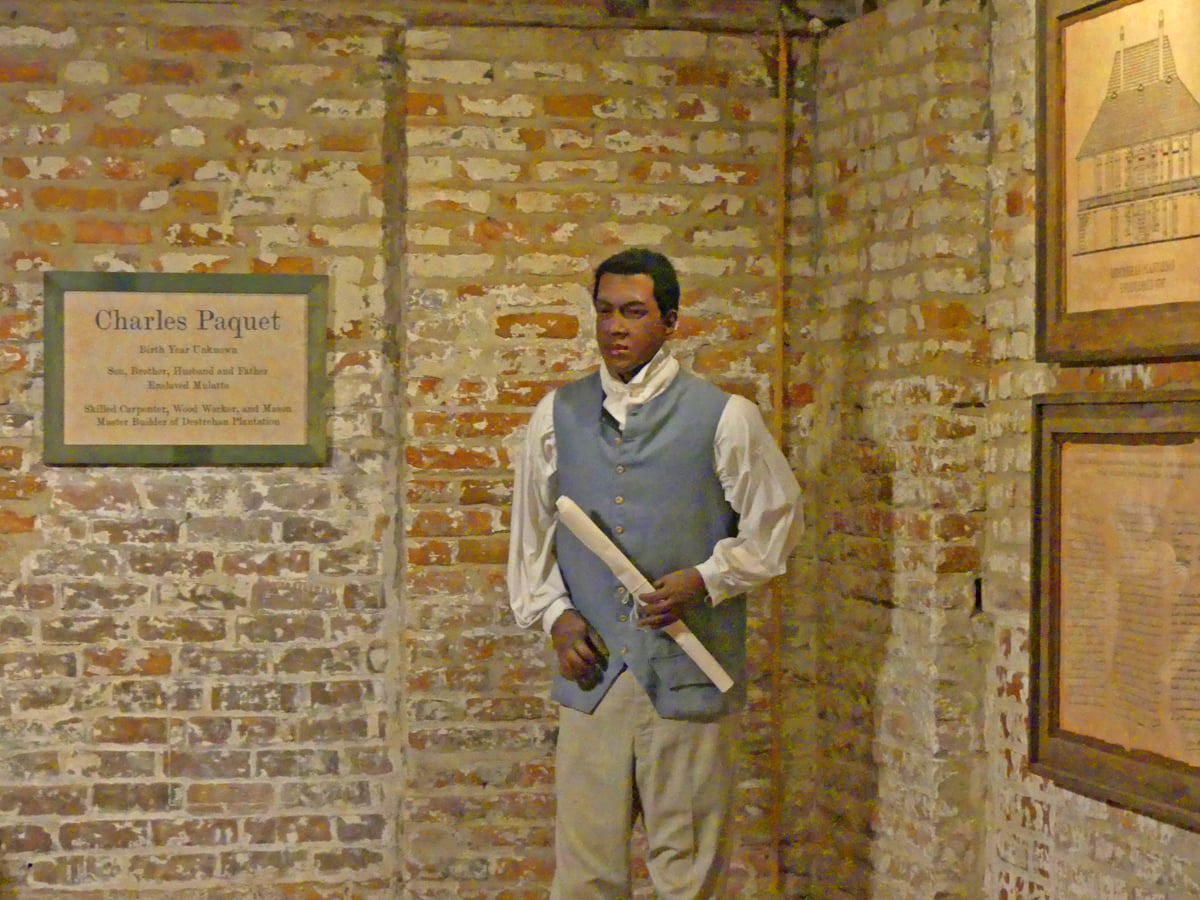
Charles Paquet Mannequin Photo: Kathleen Walls
Destrehan Plantation’s Varied History
The Destrehan family owned this plantation from 1782 until 1910. When the last family member sold the plantation to a company that would become Amoco. An enormous oil refinery was built by Amoco on the property, and the house became office space, the refinery manager’s residence, and a clubhouse for employees. When Amoco tore down the outdated refinery in 1958, the property was abandoned for 13 years. Vandals devastated it. The restoration today shows it as it would have been during the sugarcane period.
Destrehan Plantation’s first successful cash crop was indigo; a plant used for making blue dye. However, in the 1790s, a disease began killing indigo plants across Louisiana. The plantation experimented with growing sugar cane imported from the Caribbean. The favorable climate allowed sugarcane to thrive, making it a highly profitable crop known as “white gold.” By 1805, Destrehan Plantation had become one of the largest sugar producers in the region.
Among the interesting artifacts in the mansion are the original papers from the Louisiana Purchase with two presidents’ signatures, Thomas Jefferson and his then vice president, James Madison.
In 1803, when Jefferson purchased the Louisiana Territory, the local aristocrats, mostly French, were horrified. They considered Americans as barbarians. Aware of this, Jefferson enacted damage control. He appointed four prominent local men to an advisory board so locals would feel like they had a voice in the transition to American ownership.

Slave Cabin Photo: Kathleen Walls
Slave Cabins
There were originally twenty slave cabins about a quarter mile upriver from the main house, dating from the 1830s. When I toured, there were two cabins, similar to the original cabins, showing how enslaved families lived.
The cabins were doubles, housing two families in each building. The left side of one cabin is now arranged to show how a family would have lived, while the right side depicts the Cooper shop as it appeared in the 1800s. Coopers, who were the barrel makers, were important on sugar plantations since they produced shipping containers for the sugar harvest.
Outbuildings
Among the property’s outbuildings, the kitchen supported the owner’s house, and the laundry, located nearby, was a particularly grueling workplace because of the use of lye and boiling water. The farm barn now hosts agricultural exhibits.

Displays inside the Destrehan Plantation mansion Photo: Kathleen Walls
From Revolts to the End of the Civil War
The Miller-Haydel Museum features exhibits about the experiences of the enslaved. A highlight, the Miller-Haydel Museum features a self-guided experience sharing the story of the 1811 slave revolt. The largest in American history, the revolt involved 400 to 500 enslaved people.
On January 8, 1811, the slave revolt led by Charles Deslondes began at the plantation of Manuel Andry in St. John the Baptist Parish. The determined enslaved people marched downriver, recruiting as they moved toward New Orleans. On January 10, General Wade Hampton and his troops confronted them at Fortier Plantation (now part of Kenner, Jefferson Parish). Charles was captured and killed. The revolting enslaved people were tried at trials held in three locations—included Destrehan. Jean Noel Destrehan was involved in overseeing the trials at Destrehan.
Another section of the museum tells later history. At the end of the Civil War, the Union Army occupied Destrehan Plantation for two years. Ironically, the plantation functioned as the Rost Home Colony, funded by the Freemen’s Bureau, and was the temporary home of about 2000 formerly enslaved people.
A Place of Education and Remembrance
Today, Destrehan Plantation serves as a place of education and remembrance. Through its exhibits and preserved buildings, visitors gain insight into the lives of those who lived and labored there, as well as the significant events that shaped its legacy. The stories shared at Destrehan honor both the hardships and the resilience of the people connected to its past, ensuring their history is not forgotten.
Click here for discounted accommodations in New Orleans, Louisiana
Join the community!
Join our community to receive special updates (we keep your private info locked.)