
Oak Alley – A Look Into History
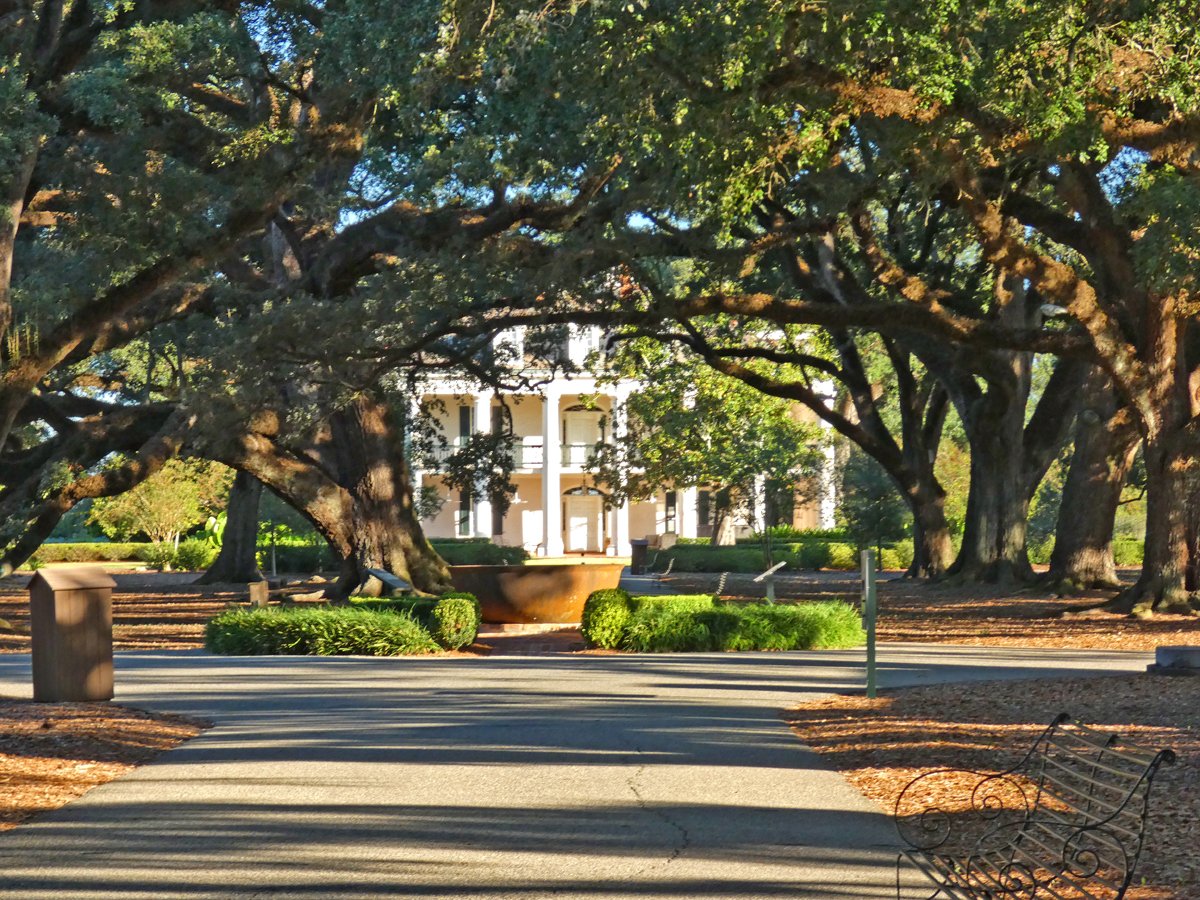
Oak Alley Plantation Photo: Kathleen Walls
Posted January 25, 2026
Named for the 150 to 200-year-old Virginia live oak trees lining the path from the Mississippi River to the entrance of the plantation home, Oak Alley is a national landmark. Here you’ll hear the stories of some of the enslaved people who lived here, as well as the many owners over the years.
The History of Oak Alley Plantation
Construction on Oak Alley Plantation began in 1836, and in 1839, the first family, Jacques and Celena Roman, along with approximately 220 enslaved people. David, the house manager, walked our group through the plantation, sharing the history of the house from 1836, when Jacques and Celina Roman moved into their “Big House,” to 1971, when the last owner, Josephine Stewart, died and left the house to the Oak Alley Foundation.
“Every brick was hand-formed from clay from the Mississippi River and fired in a large kiln. The exterior walls are 20 to 22 inches,” explained David. “It is due to the craftsmanship of those enslaved men and women that we actually are able to step through this home where other houses made of different materials would have deteriorated.”

Formal Dining Room Photo: Kathleen Walls
Built to Impress
The youngest of 12 siblings, Jacques Roman built this house to impress people with elaborately designed rooms, including a formal dining room featuring a large table for hosting guests. The family typically dined in the hall to enjoy the river breeze.
Most of the home’s furniture dates back 150 to 200 years, with some pieces from the Roman family. The dining room table sat as it would for guests, with a strange object hanging above it. David explained its purpose, “It’s an original 185-year-old ceiling fan, known locally as a shoe fly fan and originally called a punka in India. The family would sit and talk while enslaved individuals refilled drinks and operated the fan by pulling a rope in the corner.”
The fireplaces are notable for their cypress mantels painted to resemble marble. David had us compare the wood and stone by touch; the stone felt significantly cooler.
In the upstairs bedrooms, the furnishings, although elegant, are less elaborate than downstairs. The first bedroom at the top of the stairs to the left was the children’s bedroom. At the center stood a cradle hand-carved from rosewood.
Jacques and Celena had 18 enslaved men and women working the home specifically. A list of these men and women cited their names, ages, skills, and the duties they performed. Jacques only lived in the home for about nine years. After his passing, Celina took over, hiring overseers and engineers. After the Civil War, which brought an end to slavery, there was nothing being produced on this land. The debts accumulate, and the house and 1200 acres of farmland are foreclosed on and sold at public auction in 1866 for $32,800.

Josephine’s Sick Room Photo: Kathleen Walls
Oak Alley’s Owners Through the Years
Oak Alley went through seven owners, some owners from up north, and some from the south. Each of the owners wanted to use the farmland and were not interested in living in the home. Leaving it for storage. The only people living on the property were the formerly enslaved men and women. After the Civil War, these poverty-stricken families were trying to provide for themselves and fall back on the skill they knew best, farming. They were hired as tenant farmers and sharecroppers.
The last owners, the Stewarts, bought Oak Alley as their retirement home in 1925. They renovated it after the house sat in storage for about 60 years, and the staircase had begun to warp and rot. Since the Stewarts were older, they needed a chairlift, so they added the two straightforward staircases. They added a bathroom and a closet.
The other bedroom we visited was the Stewarts’ bedroom. It still has Spanish moss mattresses on a beautiful four-poster canopied bed. After Andrew passed in 1946, Josephine moved into a smaller bedroom, later used as her sick room, where there were two beds: hers and one for her live-in nurse. She started giving tours to local schoolchildren, leading them through the house and sharing some of the property’s history.

Sugarcane Production Tank Photo: Kathleen Walls
Plantation Grounds
The plantation, like most in the area, originally grew indigo and later switched to sugarcane. Some of the original land not belonging to the Oak Alley Foundation is still growing sugarcane. You can tour Oak Alley grounds separately from the Big House tour. The most commanding feature is the 28 live oaks leading to the home. On the grounds by the house, there are 1920s gardens. There’s a small cemetery where the Stewarts, their pet cat, Batman, and their dog, Sandy, are buried.
Sugarcane Theater
The Sugarcane Theater features a three-dimensional map of the Roman family’s empire and explains how sugarcane was grown and processed during the plantation era and how it is still grown here today.

Slave Cabin Photo: Kathleen Walls
Cabins Share Stories of the Enslaved
Besides the Big House, we visited the slave cabins, which tell the stories of some of the enslaved people, like Meanna, a seamstress born in 1818. Thomas was a blacksmith. You can visit the blacksmith shop. There once were 20 cabins, but now there are six, each telling part of the story of the people who lived in them.
Where to Dine and Stay
Oak Alley Plantation Restaurant serves typical Louisiana dishes. The plantation and outbuildings are part of the Oak Alley foundation, but the restaurant and cottages are privately owned. We enjoyed a delicious breakfast at the Oak Alley Restaurant, which also serves lunch. My choice was the Plantation Breakfast, which included two eggs, bacon, a biscuit, and cheese grits. The restaurant is conveniently located next to the general store, where visitors can purchase a variety of souvenirs.
My friend Kat and I stayed at Milk Shed, a cottage that visitors can rent. This unique cottage, designed to look like a small barn, is located next to the stables, where the original milk shed from the Stewart era once stood.
Click Here for Discounted Accommodations in New Orleans
Join the community!
Join our community to receive special updates (we keep your private info locked.)