
Global Citizenship

This show illuminates the intersection of the California winegrowing industry and environmental activism.

My nephews don’t know it, but we’re engaging in a resurging travel trend: agritourism. This type of tourism involves visiting any local agricultural setting, including farmers markets, U-pick farms, and fun activities like corn mazes.

Explore Norfolk’s hidden role in the Underground Railroad, get essential travel safety tips for student travelers, and gain insights into autism with expert Dr. Stephen Shore.

Out of view, built into the hill above, rises Arcosanti, a prototype of arcology. Arcology, a concept coined by Soleri himself by combining “architecture” and “ecology,” is the idea that architecture can be in harmony with the landscape.
Travel used to be slow. Granted, it was slow because there was no other way...Somewhere along the way, we got (very) lost.

Imagine a communal farm founded in 1942, where sustainability is put over profit and a Christian community that welcomes all people of any, or no faith, to join their community. I recently visited Koinonia Farm in Americus, Georgia, and discovered a way of life I thought died in the 19th century.
Every year in the autumn, the ground at Custer State Park shakes and the air is filled with clouds of dust. You can hear cheering from crowds of people as they watch almost 2,000 bison being herded into a corral by nearly 60 cowboys and cowgirls on horseback.

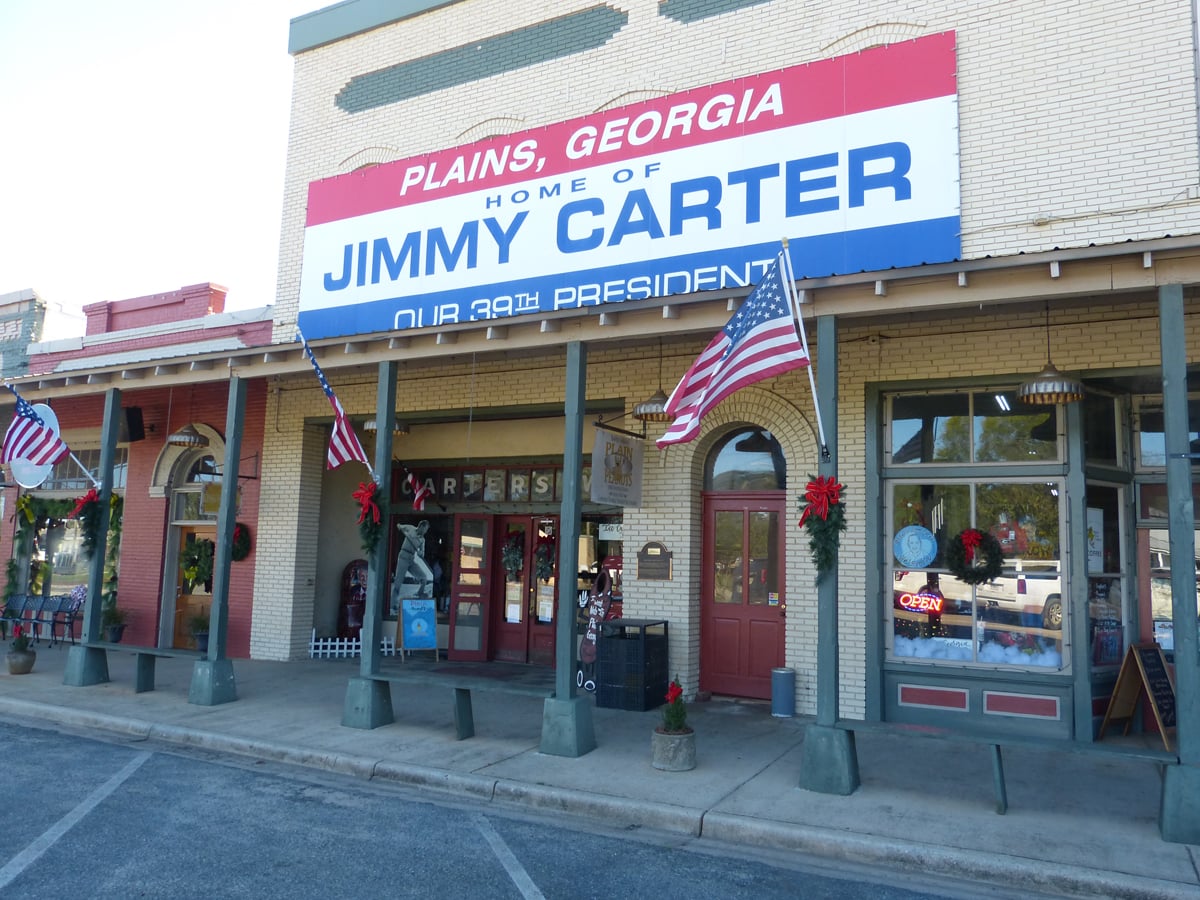
In the town of Plains, Georgia, President Jimmy Carter was affectionally referred to as “Mr. Jimmy.” Everybody in the tiny town was related to or knew him personally. Never before has a president devoted so much of himself to his hometown both before and after his presidency.
Creating 19 prosthetic limbs for 13 children in under a week might seem like a daunting task, but Robert Schulman has never shied away from a challenge. The certified prosthetist and founder of US-based nonprofit Limb Kind Foundation arrived in Davao City, Philippines in September with a team of 11 and a big goal. And he definitely delivered.

In this powerful episode of World Footprints, Tonya and Ian Fitzpatrick take listeners on a deeply personal and historic journey to Pulaski, Tennessee—a town known as the birthplace of the Ku Klux Klan but now undergoing a transformation. Their guest, Miss Vivian Leigh Battle Sims (96), an educator, artist, and community leader, has dedicated her life to uplifting the stories of marginalized voices, including the unsung Black Union soldiers who fought bravely during the Civil War.

The husband and wife duo behind this Tennessee-based distillery are redefining whiskey, community, and the legacy of Uncle Nearest one sip at a time.

Looking back, I remember the joy of those gatherings and the abundance of food. But I also wonder how much went to waste. As someone now mindful of the environmental impact of our choices, I’ve started rethinking how we can celebrate Thanksgiving with the same warmth and abundance while taking care of the planet.