

Holiday Travel Tips for Staying Healthy and Less Stressed

Holiday travel can bring crowded airports, delays and unexpected changes to even the best-laid plans. Photo by Anete Lūsiņa
Posted November 7, 2026
Editor’s Note: Originally published on November 24, 2024, this article was updated with refreshed holiday travel advice, verified resources and additional cultural context.
Holiday travel can be a wonderful experience. There’s the anticipation of reconnecting with family and friends, enjoying favorite traditions, and perhaps visiting somewhere new. But there’s also the other side of the season: crowded airports, unpredictable weather, shopping, family obligations, and the pressure to fit everything into a few short weeks.
Before you know it, you’re exhausted, and the celebrations haven’t even started!
I’ve always believed in the power of breaking bread together, especially with people whose backgrounds and traditions differ from our own. Some of the best connections happen when we put aside our schedules long enough to share a meal and a conversation. That’s one of the things I love about travel, and it’s something the holidays offer in abundance.
But we can’t fully enjoy those experiences when we’re running on empty.
Whether you’re heading across the country for Thanksgiving, spending Christmas overseas, or staying close to home, a few practical holiday travel tips can help reduce stress and make the season more enjoyable.

Taking a few quiet moments for yourself can help ease the pressures of a busy holiday season. Photo by Nubelson Fernandes
Give Yourself Some Breathing Room Before Traveling
Let’s face it. Holiday travel isn’t always pleasant. Even the most carefully planned trip can go sideways because of a weather delay, a canceled flight, or traffic that seems to stretch on forever.
I’ve learned that preparation can make a big difference, but so can flexibility.
If you’re flying to an important family gathering, try to arrive a day early when your schedule and budget allow. Give yourself extra time at the airport, download your airline’s app to monitor flight changes, and keep essential items in your carry-on.
Medications, chargers, travel documents, and a change of clothes can make an unexpected overnight delay considerably less stressful.
It’s also worth packing a few snacks and carrying an empty reusable water bottle that you can fill after going through airport security. Airport meals can be expensive, and dining options aren’t always convenient when flights are delayed.
For international travel, take a few minutes to review the CDC’s holiday travel health recommendations. Depending on your destination, you may need to consider vaccinations, medications, and other health precautions before leaving home.
And don’t overlook the value of having a backup plan. Knowing your alternatives won’t prevent a cancellation, but it can keep you from feeling completely helpless when something goes wrong.
For additional advice on dealing with crowded airports and flight disruptions, see our World Footprints guide to surviving Thanksgiving travel.
Enjoy the Holiday Food Without the Guilt
Food is one of my favorite ways to experience a destination. It tells us about a place’s history, its people, and the traditions that have survived through generations.
The holidays are no exception.
Think about the tamales served during Christmas celebrations in Mexico, the gingerbread and bratwurst found at German Christmas markets, or the dishes that appear on your own family’s holiday table year after year.
These foods are part of the experience, and I see no reason to approach every holiday meal with a list of restrictions.
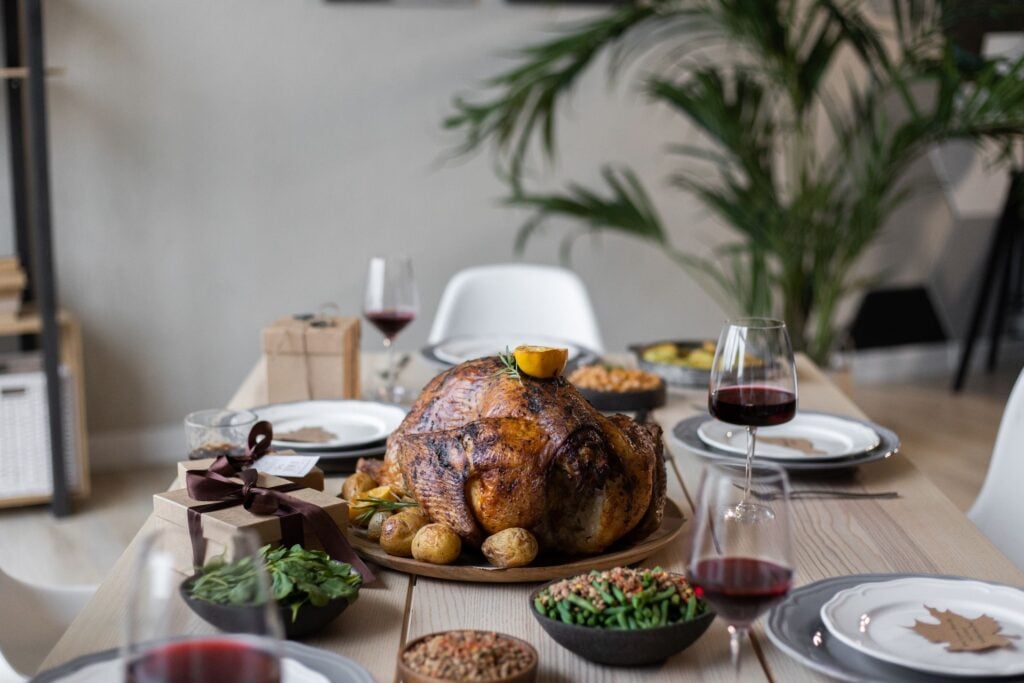
A traditional Thanksgiving dinner brings family, food and familiar traditions together. Photo by Monstera Production.
Of course, spending hours on the road or in the air can throw off our normal eating habits. That’s where a little planning helps.
Pack nuts, granola bars, or other travel-friendly snacks so you’re not entirely dependent on airport restaurants or convenience stores. Fresh fruit can also be useful for domestic trips, although travelers crossing international borders should check agricultural restrictions before packing it.
Drink water throughout the day, particularly when flying or enjoying holiday cocktails. And when you have the opportunity, balance heavier meals with foods that leave you feeling comfortable and energized.
But please, enjoy that special family recipe or local holiday delicacy.
I’m a firm believer that sharing food is one of the simplest ways to connect with people. Whether it’s a cherished family dish or something you’ve never tasted before, there’s often a story behind what’s being served. Take time to hear it.
Don’t Let Holiday Celebrations Steal Your Sleep
Between early-morning flights, late-night gatherings, and unfamiliar sleeping arrangements, getting enough rest can become a challenge.
Throw a few time zones into the mix, and the situation gets even more complicated.
Jet lag isn’t simply a matter of feeling tired. It can affect your concentration, mood, and ability to enjoy the activities you’ve planned. According to the CDC’s guidance on jet lag, gradually adjusting your sleep schedule before departure may help, especially when you’re crossing several time zones.
Spending time in daylight after arriving at your destination can also help your body adjust to its new schedule.
A few simple items can make sleeping away from home more comfortable. I recommend packing a sleep mask, earplugs, and perhaps a travel pillow if you’re facing a long flight.
Be mindful of how much caffeine or alcohol you’re consuming late in the day, since both can interfere with a good night’s sleep.
And here’s something worth remembering: you don’t have to attend every gathering or squeeze another activity into every available hour.
Sometimes an extra hour of sleep is more valuable than another stop on the itinerary.

Making time for rest is especially important during a busy holiday travel schedule. Photo by David Mao
Keep Moving, But Leave Room to Slow Down
I’m a big advocate of exploring places on foot. Walking gives you a different perspective on a destination. You notice the neighborhood bakery, the architecture, the small shops, and the everyday routines that are easy to miss when you’re rushing from one attraction to another.
It’s also a good way to stay active while traveling.
During long flights or road trips, take opportunities to stand, stretch, and move around when it’s safe to do so. Once you arrive, a neighborhood walk or a visit to a local park can be a welcome change after hours of sitting.
Of course, not every holiday needs to be an active adventure.
We sometimes make the mistake of treating a vacation like another assignment, with a list of places to see and things to accomplish. Before long, the itinerary starts resembling a work schedule.
Give yourself permission to slow down.
Spend an afternoon reading, enjoy a leisurely breakfast, or sit at a café and watch the world go by. If you’re traveling with others, don’t feel that everyone needs to participate in every activity together.
There is nothing wrong with allowing some unscheduled time into your holiday.
Recognize That the Holidays Can Be Emotionally Draining
Not everyone approaches the holidays with the same excitement.
For some, the season brings wonderful memories. For others, it can be a reminder of loved ones who are no longer here, family relationships that are difficult to navigate, or financial pressures that make celebrating stressful.
Then there’s the expectation that the holidays must be perfect.
We see beautifully decorated homes, elaborate family gatherings, and picture-perfect vacations on social media. But those images rarely tell the whole story.
Sometimes the most meaningful holiday experiences are the simplest ones: a quiet dinner with a friend, a conversation with someone you haven’t seen in years, or an afternoon spent doing something you genuinely enjoy.
If you’re visiting family, leave room for those smaller moments. If you’re traveling alone, seek out activities that interest you, whether that’s a museum, a cultural event, or a community gathering where visitors are welcome.
And if you need some time alone, take it.
There’s no rule that says you must spend every minute entertaining others or participating in holiday activities.
Being present matters much more than being everywhere.
Look Beyond the Decorations and Discover the Traditions
One of the things I appreciate about holiday travel is discovering the history behind celebrations that many of us take for granted.
Consider Germany’s famous Christmas markets. Today, they’re known for handcrafted ornaments, gingerbread, mulled wine, and festive decorations. But their roots go back centuries.
Dresden’s Striezelmarkt, first documented in 1434, began as a market where residents could purchase meat for their Christmas meals. Over time, it grew into a seasonal gathering that became part of the city’s cultural identity.
That history adds another dimension to the experience. You’re not simply visiting a collection of holiday stalls. You’re participating in a tradition that generations of residents have helped preserve.
We explore more of that history in our article on German Christmas markets and their enduring traditions.
In Mexico, the celebration of Las Posadas, held from December 16 through 24, has roots in the colonial period and earlier Indigenous traditions. The festivities commemorate Mary and Joseph’s search for lodging, bringing communities together through processions, music, food, and shared celebrations.
Kwanzaa offers another example of the importance of community and cultural identity. Established in 1966 by Dr. Maulana Karenga, the weeklong celebration from December 26 through January 1 honors African heritage and emphasizes seven principles, including unity, self-determination, and cooperative economics. The Smithsonian’s National Museum of African American History and Culture provides an excellent introduction to its history and traditions.
These celebrations have different origins and meanings, but each offers a window into the people and communities who observe them.
When traveling during the holidays, take time to learn about the traditions around you. Visit a local market, attend a public cultural celebration, or talk with an artisan about the work they create.
Buying locally made gifts, when possible, can also help support the people whose creativity and craftsmanship give a destination much of its character. Ask about the maker and the origins of the product rather than assuming everything sold at a holiday market is handmade or locally produced.

Small, thoughtfully chosen gifts can carry more meaning than last-minute purchases. Photo by Kristina Balić
Those conversations can be every bit as memorable as the gifts themselves.
The holidays don’t need to be an exhausting race from one activity to another. Weather delays may happen. Plans may change. Someone will probably forget something important.
And that’s okay.
What stays with us long after the season has passed is rarely whether everything went according to plan. It’s the laughter around the dinner table, the stories we shared, and the unexpected connections that made the journey worthwhile.
Planning a holiday getaway? Compare hotels for your trip.
Join the community!
Join our community to receive special updates (we keep your private info locked.)