

How Writing Destination Stewardship Became a Creative Journey
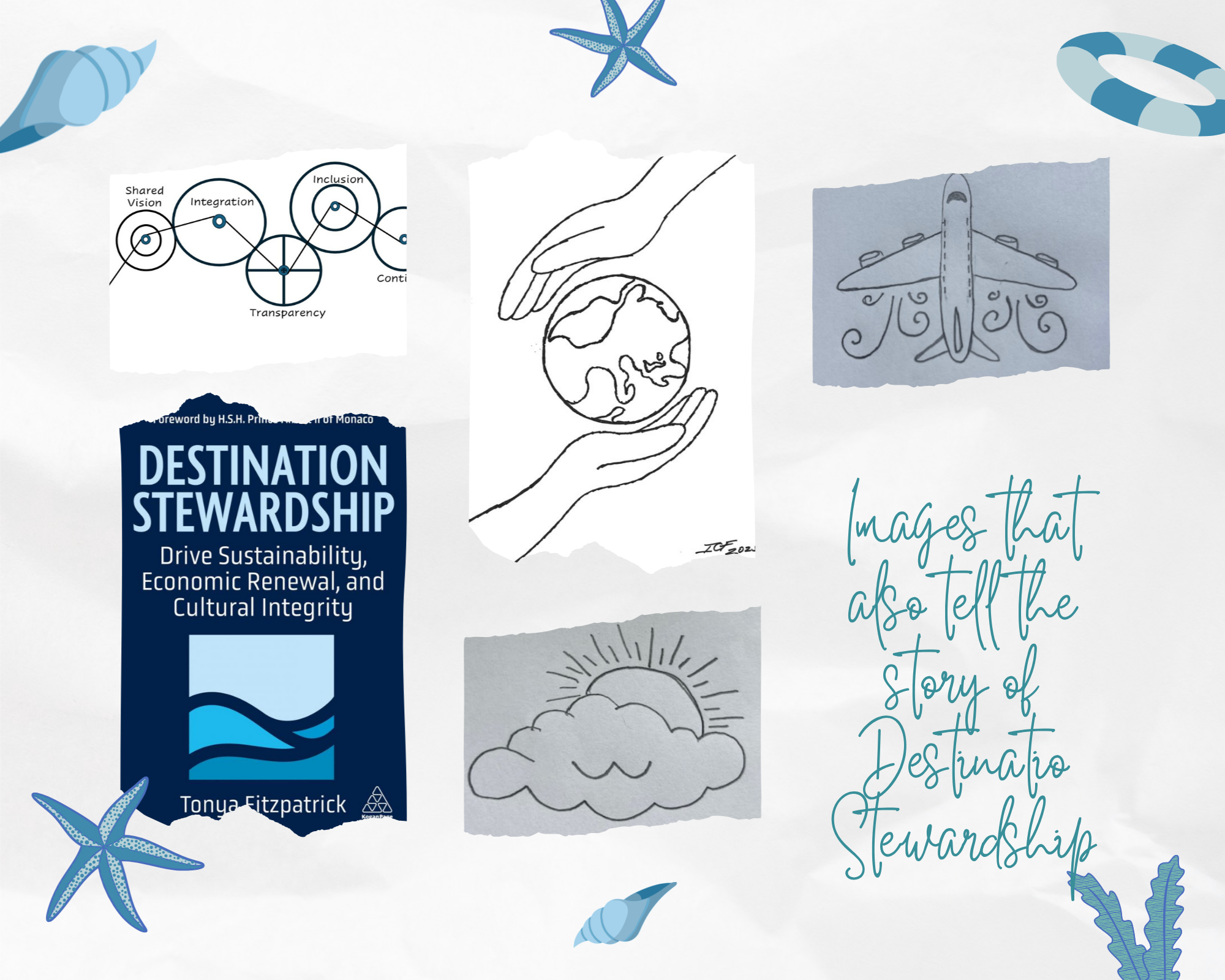
Destination Stewardship Photo Collage
Posted May 9, 2026
I recently watched a CBS Sunday Morning television segment on overtourism and found myself saying, “Yes, and…”
That phrase comes from my improv training, but it captured exactly what I was thinking. The segment did a good job showing the visible strain tourism can place on destinations: crowded streets, frustrated residents, and communities pushing back after years of being told that more visitors automatically meant more success.
But overtourism is only part of the story. Yes, and… (from my Improv days)
The deeper conversation is stewardship.
In many ways, destination stewardship is the antidote to overtourism, but it is also much bigger than managing crowds or reducing visitor numbers. Stewardship asks harder questions. Who gets to shape tourism decisions? Who benefits economically? Who absorbs the burden when growth outpaces infrastructure, planning, culture, or community trust? And who is accountable when tourism promises more than it delivers?
Those questions became central to my book, Destination Stewardship: Drive Sustainability, Economic Renewal, and Cultural Integrity.
Ironically, when I first started writing the book, I questioned whether I should be writing a business book at all. I’m a creative. Storytelling comes naturally to me. Sitting down to write a tourism business book initially felt a bit like trying to fit a hexagon into a square box. I worried the process would feel too rigid and disconnected from the way I naturally communicate.
Instead, the book became something I didn’t expect.

Tonya working her laptop keyboard to write Destination Stewardship
Writing a Business Book as a Creative
Early in the writing process, I realized I didn’t want Destination Stewardship to read like an industry manual filled with abstract theories and corporate language. Stewardship is deeply human. It affects culture, identity, communities, local economies, and people’s quality of life.
So I leaned into storytelling.
I incorporated personal experiences from my travels, observations from communities I’ve visited, and reflections that shaped how I think about tourism and responsibility. Once I gave myself permission to write that way, the book started taking shape.
But my creative instincts were not the only part of me that showed up in the writing.
My legal background shaped the process too.
As a young lawyer, I learned early that facts alone rarely move people. Whoever tells the clearest and most convincing story usually wins the argument. I approached this book much like I used to approach writing legal briefs. I checked and double-checked the storytelling, the sourcing, and the structure. If a question came up for me while writing, I assumed it would come up for readers too, so I answered it in the book.
I wanted the research to be solid, the examples to be credible, and the arguments to hold up under scrutiny. Stewardship is too important, and too often misunderstood, to approach casually.
Bringing Family, Art, and Photography Into the Book
I also wanted the book to have personality visually, not just editorially.
So I invited the artists in my family to contribute artwork for possible chapter openings. My husband, my two sisters, and my 12-year-old niece all went to work creating graphics for the book. Watching them interpret stewardship through their own artistic lens became one of the most meaningful parts of the process for me.
Publishing realities and editorial decisions meant that most of the artwork did not make the final cut, but my niece’s artwork did.
And I love that.
Her image gives the book a bit of personality and warmth. It also reminds me that stewardship is ultimately about the future. It is about the places, cultures, communities, and natural resources we are responsible for protecting, not just for ourselves but for the generations coming behind us.
My brother also became part of the project through a licensed drone image that accompanies one section of the book. Some of my own photography appears throughout as well. Those details matter to me because they quietly weave family, travel, and lived experience into the pages.
Even the artwork that did not make the editorial cut is still part of the book’s story. It shaped the spirit of the project, and it reminded me that a business book does not have to feel lifeless to be useful.

Ian creating a graphic image for Destination Stewardship
How the Interviews Changed the Book
The more interviews I conducted, the more the book evolved.
I spoke with remarkable thought leaders, destination professionals, academics, and changemakers who are rethinking tourism in meaningful ways. Every conversation expanded the scope of the project. I would finish one interview and realize there was another voice, another case study, or another perspective I needed to include.
That changed the book.
What I originally envisioned became much broader and more connected. The book became less about simply defining stewardship and more about helping tourism leaders understand how stewardship actually works in practice. Governance, accountability, measurement, community engagement, cultural integrity, and long-term resilience all became essential parts of the conversation.
Some destinations are making meaningful progress. Others are using stewardship language without fully understanding what stewardship requires. And some destinations are struggling because tourism growth outpaced planning and governance long before anyone stepped back to ask whether local communities were actually benefiting.
I share those examples in the book because stewardship is not branding. It is not a slogan. It is not a marketing campaign.
It is a responsibility.

Tonya preparing for an interview for her book Destination Stewardship
When the Book Became Bigger Than I Expected
At one point during the writing process, including the months after knee surgery, I became so immersed in the research, interviews, and writing that I exceeded my manuscript word count by nearly 30 pages.
Apparently, I had more to say than I realized.
Some of what did not make it into this edition may find its way into future editions, articles, talks, or social media posts because there is so much happening in the world of stewardship right now. Destinations are beginning to rethink success. Communities are asking tougher questions. Travelers are becoming more aware of tourism’s impact. And more people are recognizing that visitor volume alone is not a measure of success.
Some people call stewardship a movement.
I call it an imperative.
What I thought might become a dry business book ultimately satisfied my creative side in ways I never expected. It became a work shaped by interviews, family contributions, travel experiences, legal discipline, difficult questions, and a belief that tourism should serve communities as much as visitors.
The book turned out very different from what I first imagined. It tells a story. It puts the pieces of the stewardship puzzle together. And it was written to help tourism leaders understand not only what stewardship is, but how they can create a meaningful stewardship strategy for their own destinations.
For me, that made the process personal.
I am glad readers will get a small glimpse into my life through the stories, artwork, photographs, and perspective woven into the book. But more than that, I hope they see the larger purpose behind it.
Tourism can do good, but only when it is planned, governed, measured, and managed with care.
That is the work of stewardship.
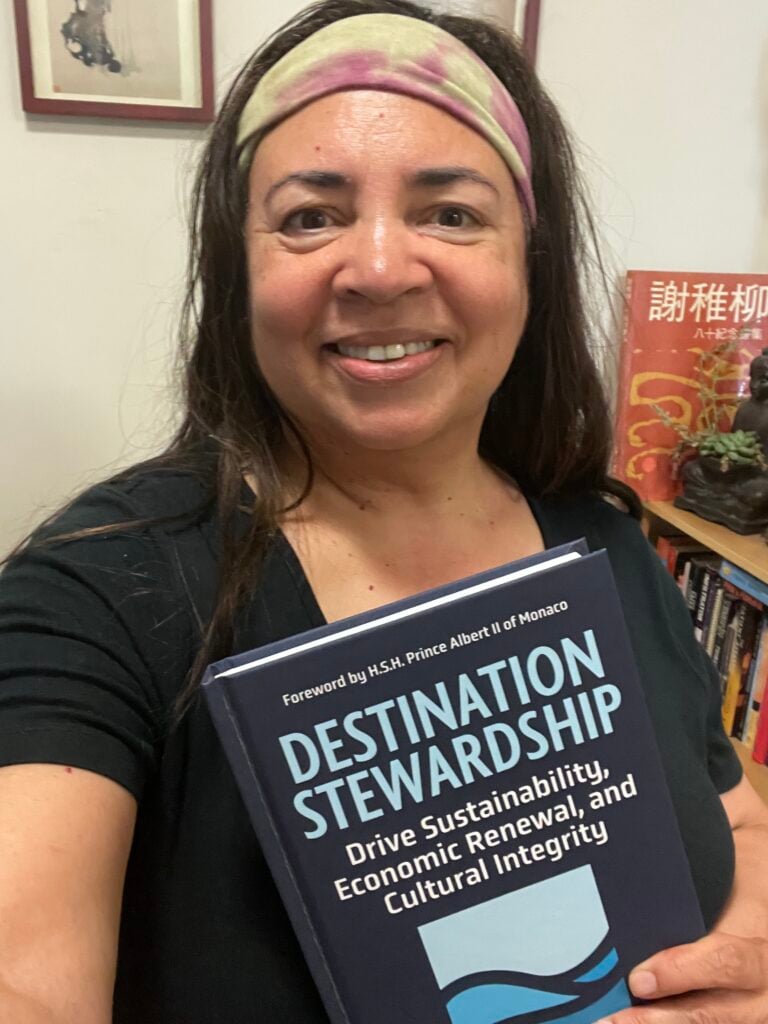
Tonya with her advanced copy of her book Destination Stewardship
About the Book
Destination Stewardship: Drive Sustainability, Economic Renewal, and Cultural Integrity explores how destinations can move beyond “heads in beds” tourism models toward strategies rooted in governance, accountability, cultural integrity, community well-being, and long-term resilience.
The book includes global case studies, interviews with leading tourism voices, and practical insights for destination leaders, tourism professionals, policymakers, academics, and anyone interested in the future of travel.
Learn more or order the book from the publisher site: Destination Stewardship by Tonya Fitzpatrick
Destination Stewardship is also available on Amazon, Barnes and Noble, and major book selling outlets.
Looking for discounted hotel rates?
Click HERE to find and book accommodations anywhere.
Join the community!
Join our community to receive special updates (we keep your private info locked.)
