

Iran War 2026: Global Travel Disrupted, Tourism Diplomacy Paused

Azadi (Shahyad) Tower in Iran. Photo by Alena Vavrdova
Posted March 2, 2026
There are few countries in the world whose very name evokes both ancient civilizations and modern geopolitical fault lines. Iran, cradle of the Achaemenid Empire and home to Persepolis, Golestan Palace, and the Silk Road’s eastern reaches, has long intrigued travelers including me. Cultural heritage exhibitions from the National Museum of Iran have drawn crowds abroad — like the 2024 “Glory of Ancient Persia” tour that attracted tens of millions of visitors in China — and locals often speak proudly of these legacies. Yet today, the idea of visiting Iran sits in limbo because of a war that has reshaped regional mobility and frozen tourism ambitions in the dust of airspace closures and safety warnings.
In late February 2026, United States Central Command announced Operation Epic Fury, and within hours Iran’s airspace and parts of the surrounding region became zones of restricted flight, reroutes, and uncertainty for airlines and travelers alike. This is a conflict with immediate implications for mobility: not months or years of policy reform, but a sudden, unplanned stoppage of scheduled routes, stopover tourism, and cultural exchange.
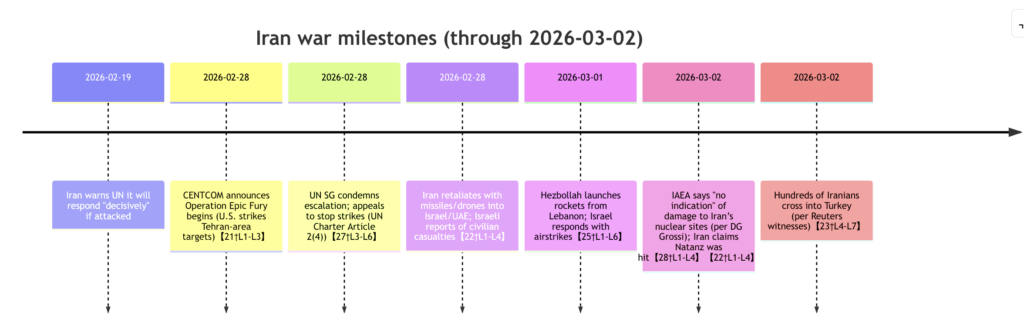
Iran war timeline through March 2, 2026
Tourism Diplomacy Once Part of the Narrative
It’s important to recall that Iran’s engagement with international tourism was not always so interrupted. In the years before the current hostilities, Iranian tourism authorities sought to re-introduce their cultural wealth to the world and, for a time, to American travelers in particular. Even though the United States and Iran have not had formal diplomatic ties since 1979, and the U.S. State Department maintained a Level 4 “Do Not Travel” advisory, there were explicit efforts by Iran’s tourism ministry to market the country’s sites and experiences abroad. I saw many of these efforts, first hand.
Trade shows, cultural exchange events, and campaigns such as “Majestic Iran” appeared in international tourism forums. Iran’s Ministry of Cultural Heritage, Tourism, and Handicrafts invested in multilingual digital content, global influencer collaborations, and now-paused regional tourism events designed to invite visitors into a narrative of culture and historical continuity.
For U.S. travelers, the regulatory barriers were real but not impermeable: special visa processes and arrangements via approved hosts or tour operators made independent travel possible in the late 2010s and early 2020s. Guides and blogs documented the profound hospitality and rich material culture encountered on the ground. A few of articles like this one about bicycling through Iran and a podcast discussing women’s voices in Iran were even featured here on World Footprints.
Yet because these outreach efforts occurred against the backdrop of longstanding political tensions and official travel warnings, the diplomacy never matured into sustained market growth. Still, there was a phase when the international travel trade and specialized tour operators spoke of a curiosity gap — the idea that perceptions about Iran’s safety diverged sharply from the experiences travelers had on arrival.
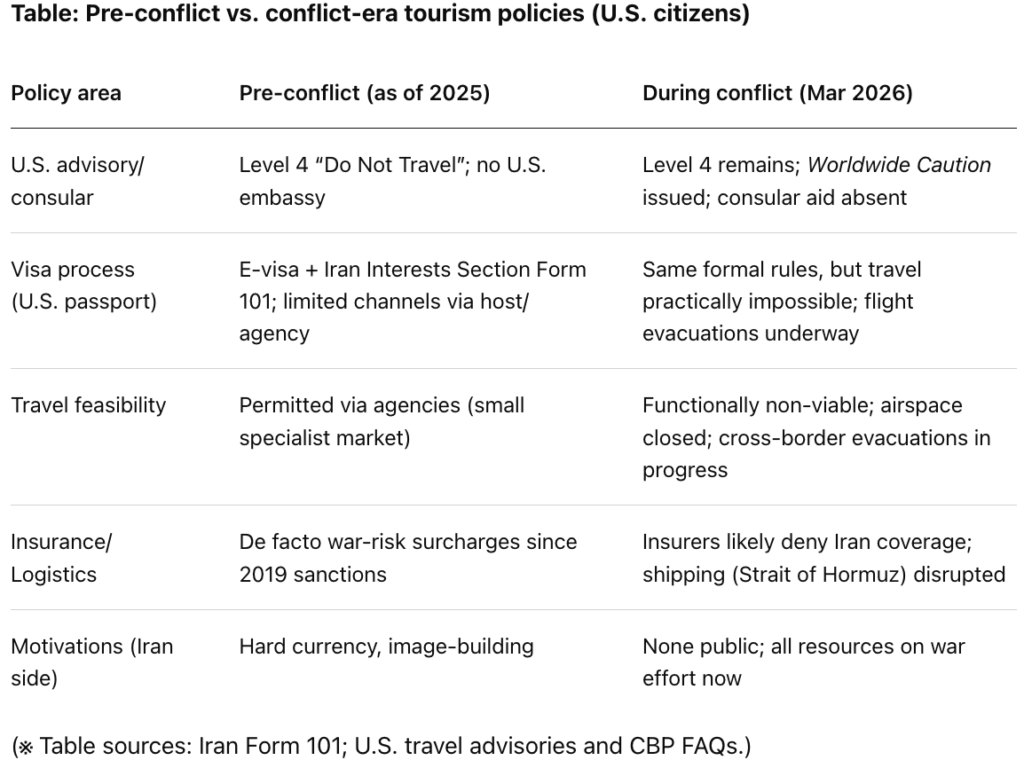
Iran war pre conflict vs conflict era tourism policies
From Human Mobility to Suspension
All of that changed abruptly with the outbreak of hostilities on February 28, 2026. Confirmed strikes by U.S. and allied forces were met with retaliatory missiles and drones from Iranian forces across Israel and Gulf targets. Parallel escalation drew Hezbollah into exchanges from Lebanon. Casualty numbers were still provisional by early March: Iran’s Red Crescent reported at least 555 killed (with no civilian–military breakdown); Israeli authorities confirmed six deaths in central Israel; and Lebanon’s health ministry and emergency services reported dozens more fatalities plus many displaced. Reports also flagged the deaths of several U.S. military personnel. (These figures came from official and high-reputation media sources at the time.)
Against this backdrop, aviation authorities around the world issued notices to airmen (NOTAMs), and airlines rerouted flights around the Middle East. Gulf hubs long used by carriers connecting Europe, Asia, and Africa became unreliable, and the cascading effect was immediate: longer flights, fewer efficient routings, rising fuel and insurance costs, and a collapse of stopover tourism that had become central to many carriers’ business models.
When Borders Close, Mobility Dies First
Tourism does not happen in a vacuum; it happens across borders. When one link in an international network closes — here, transparent, usable airspace — the consequences are felt far beyond that territory. The International Air Transport Association has emphasized that when conflict pushes traffic away from a key corridor, all alternative corridors must absorb the load, with logistical knock-on effects on schedule integrity, pricing, and traveler confidence.
In practical terms, that means:
-
Gulf stopover promotions — once a competitive advantage — now lie dormant.
-
Cruise embarkations in Persian Gulf ports are adjusted or canceled.
-
Travel trade operators shift itineraries to Europe, Africa, or Asia rather than risking Middle East legs.
-
Corporate travel managers tighten restrictions; insurers exclude war zones from coverage.
Meanwhile, government travel advisories maintain, or in some cases escalate, warnings. The U.S. advisory for Iran remained at Level 4 with the conflict, urging U.S. citizens not to travel and highlighting risks of civil unrest and detention.
Deep History, Interrupted Routes
For those of us — and there are many — drawn to ancient civilizations precisely because of their depth and complexity, Iran’s pause in international tourism is a poignant example of how culture and conflict intertwine. Travelers who once dreamed of walking the ruins of Persepolis or conversing with local artisans about centuries-old handicrafts now see those experiences reframe through the lens of advisories, evacuations, and suspended cultural outreach.
Yet even in crisis eras, tourism’s deeper currents do not vanish forever. They go subterranean. They transform. Cultural festivals like the Fajr International Handicrafts & Traditional Arts Festival and international museum collaborations attest to a persistent value placed on Iran’s heritage — deep reservoirs of soft power that long preceded the 2026 crisis.
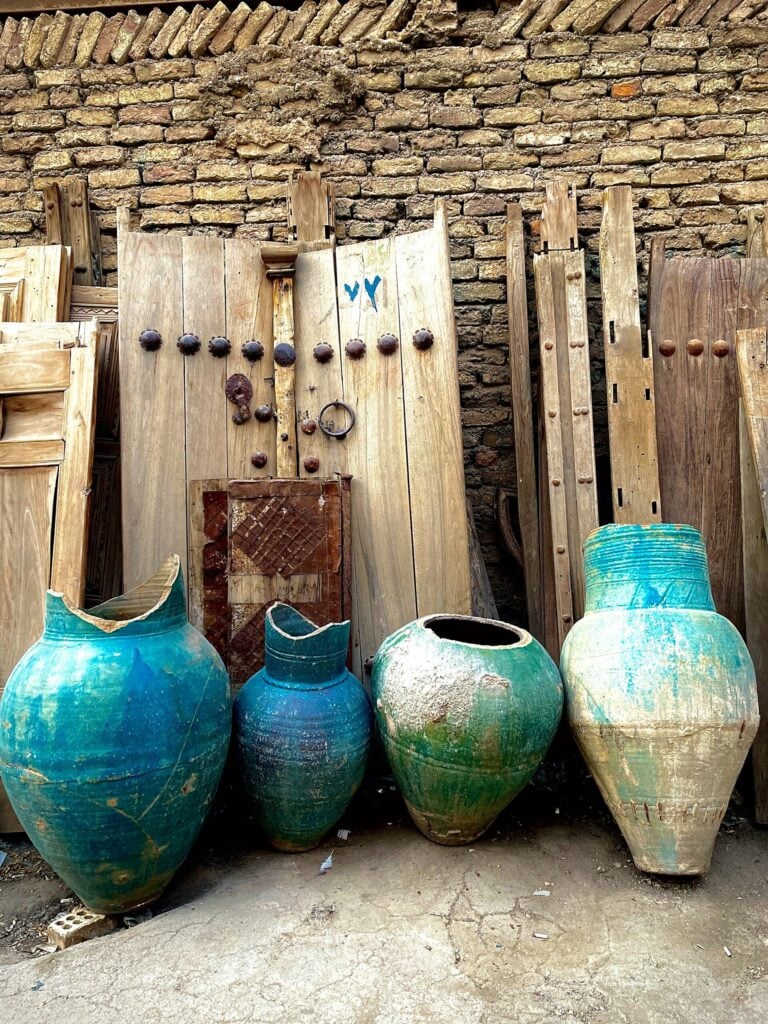
Photo by Mehran Rahbar
A Tourism Pause — and a Structural Shock to Global Travel
The war of 2026 is not just a pause in visitation. It is a structural shock to a region that serves as connective tissue in global travel networks.
It is also, first and foremost, a human tragedy. Civilians and service members have lost their lives. Families have been displaced. Communities have been destabilized. Tourism cannot be discussed without acknowledging that reality.
At the same time, the conflict has exposed how fragile international mobility remains. When a major air corridor closes, airlines reroute. Fuel and insurance costs rise. Cruise itineraries shift. Corporate travel policies tighten. Traveler confidence weakens.
Iran’s tourism diplomacy — limited but deliberate — is now suspended. Cultural outreach, trade show appearances, and tightly managed visa pathways cannot function in an environment of airspace restrictions and security alerts.
Even if hostilities subside, recovery will be gradual. Tourism demand does not return immediately after conflict. Confidence rebuilds through stable airspace, consistent advisories, and visible security normalization.
For the global travel industry, the Iran war 2026 tourism impact extends beyond one destination. It reshapes how risk, routing, and resilience are measured across regions.
This is not simply a temporary disruption. It is a reminder that tourism depends on stability — and that restoring trust takes longer than reopening airports.
Search for Discounted Hotels Anywhere in the World
Join the community!

Join our community to receive special updates (we keep your private info locked.)
