
The Forgotten Town of Sidhpur
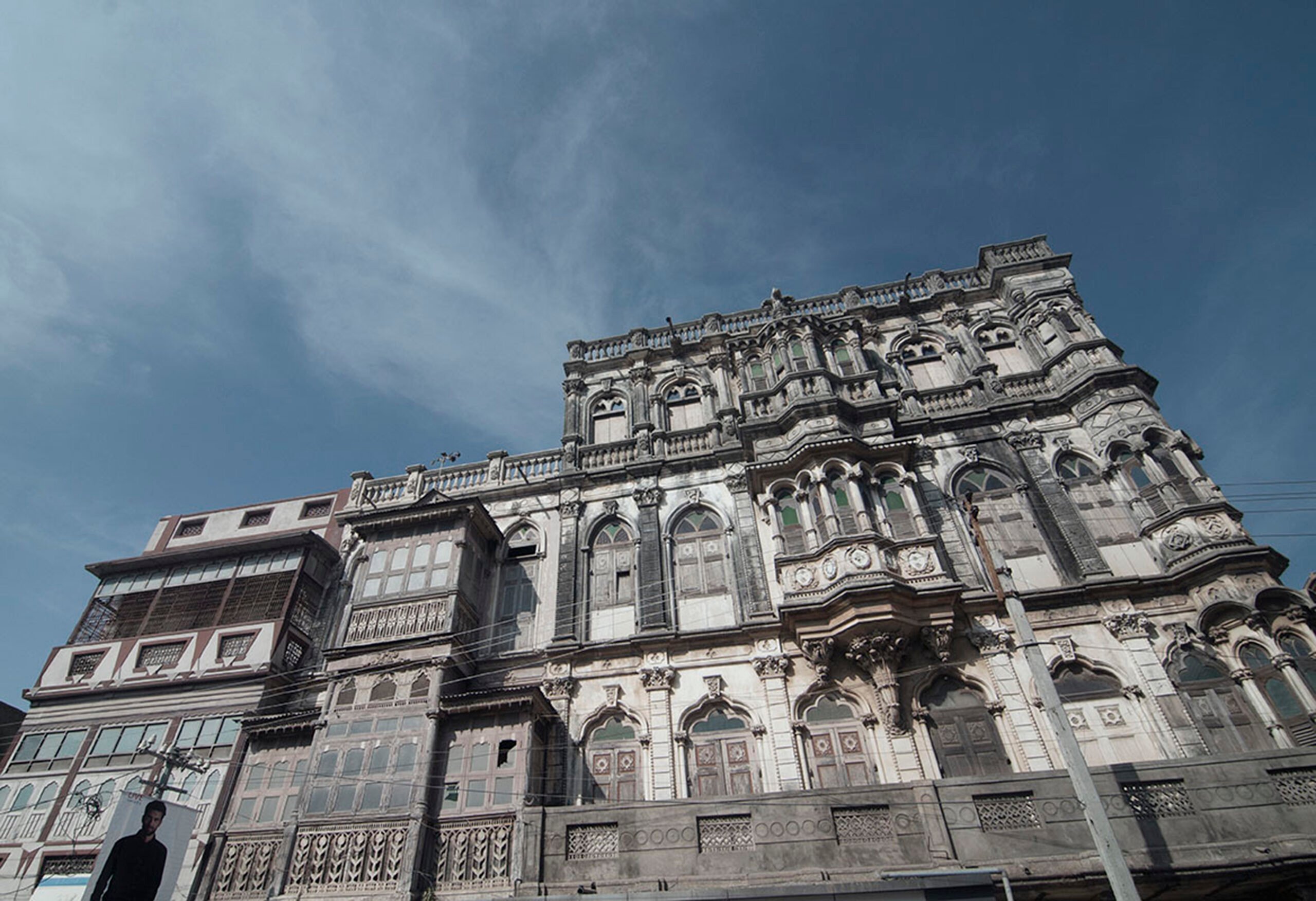
European in provenance, the Vohrawad houses belong to the wealthy Dawoodi Vohra community Photo: Sugato Mukherjee
Posted July 11, 2025
Sidhpur is deeply rooted in both history and Hindu mythology. Since ancient times, the sleepy little town in North Gujarat, India, has been a sacred pilgrimage site among Hindu devotees who honor their maternal ancestors. The town rose to prominence during the rule of the Solanki Dynasty when it became the capital of the state and was named after the famous king Siddhraj Jaisingh.
But today, Sidhpur’s crowning glory is the gorgeous European-styled architecture built over a century ago in the Muslim neighbourhood of Najampura, the ancestral place of the Dawood Vohras. A prosperous trading community and a close-knit clan, the Vohras maintain a significant presence in the cities of Mumbai, Ahmedabad, and Calcutta. As successful migrants to larger cities have often done, the non-resident Vohras built magnificent mansions in their hometown, Sidhpur.
The Magic of Sidhpur
The listless highway from Ahmedabad to Sidhpur, cutting through the semi-arid countryside, does not prepare you for the magic of Sidhpur. The new part of the town looks drab and dusty with its ubiquitous trading shops and nondescript residences. At a roadside sweet shop, we stopped for a break. The elderly owner responded to our query with a single word. “Vohrawad” – he smiled and explained the route to reach the famous neighborhood.
Five minutes later, we got out of the car at the entrance of a small street. We looked in amazement at the unbroken line of delicately ornamented wood-brick-and-plaster houses lining both sides of the street. Similar in design and architecture, the elegant facades of the homes resembled magnificently decorated walls flanking the street, protecting it from the scorching mid-morning sun. In the diffused shadow, the cool pastel shades of the century-old mansions looked almost chimerical. We felt as though we stepped into a time warp. We were walking down a surreal street in a 19th-century Parisian neighborhood, with perfectly aligned building blocks rising on either side, their scale and height immaculately synchronized.
With a closer and more attentive inspection, the strong European influence in the architecture of Vohrawad homes became more evident, particularly in their gabled roofs, ornate banisters, pilasters, columns, and decorated doors and windows. The street plan also loosely resembled that of old urban neighborhoods of European cities. It appeared as a well-planned grid, organized around a main street that veered off into narrow side streets. Each either terminates in a blind alley or loops back to rejoin the main thoroughfare at another point.

The elegant facades of the houses are similar in design and architecture Photo: Sugato Mukherjee
A Contrasting Message
Amid all the subtle splendor, we felt an overpowering sense of desolation. The streets wore a deserted look, with only an occasional passerby here and there, casting a curious look at our motley group, and smiling faintly before going off. Evidently, Vohrawad rarely sees visitors. I remembered that just before we left Ahmedabad, the owner of our hotel had jokingly referred to Sidhpur as a ‘ghost town’.
As we wandered deep through the settlement, a singular thing continued to pique us – the heaps of rubble piled not so neatly on the streets. At a street corner, we stared disapprovingly at a rotting heap and our collective mutter of disappointment brought an elderly bearded man out of a finely carved wooden door – the main entrance to an exquisitely beautiful house. He introduced himself as Mir Asgar Ali and explained: “ours is a dry country, but we face occasional cloudbursts.” With an elaborate sweep of his frail hand around he added “these houses are quite vulnerable to torrential rains. Some parts break off and result in this rubble.” He politely asked if we would come inside. And in we went.

The grand residences stand in majestic melancholy, stolid but forlorn, as sad reminders of a forgotten past. Photo: Sugato Mukherjee
A Step Back in Time
As soon as the door closed behind us with a rusty creak, we plunged into tobacco-colored semi darkness, moving back one and a half century. If the facades bear brilliant testimony of fantastically intricate and symmetric architecture, the ornate interiors speak an intimate oriental language in its dainty motifs and designs. A feast for the eyes, finely carved wooden arcs and garlands decorated the rims of the veranda ceiling. Each wooden pillar holding the roof had been molded into a curvy move forming a buckle. The meticulous craftsmanship can deceive the onlooker to believe that he is looking at a real creeper!
While the flowers and the creepers are the prime motifs of the expansive veranda, the balustrades form ornamental parapets resembling geometric designs. And synchronised with the archaic charm, the rosewood and mahogany furniture appeared to be preserved from a bygone era. The dark brown cabinets and cupboards, exquisitely designed corner pieces and majestic four-posters told of a quiet grandeur. The painted Belgian glasses stood out among the brightly polished furniture reflecting the glory of yesteryears.

The ornate and symmetric interiors speak an intimate oriental language with their beautiful motifs and designs Photo: Sugato Mukherjee
The Rise and Fall of Vohrawad
Alisaab explained the rise and fall of Vohrawad. His baritone voice gently reverberated in the large room where we sat. Migration of the Dawoodi Vohra community in search of greener pastures in big cities began about 150 years ago. The first-generation migrants, after setting up their trade successfully in their adopted cities, built most of Vohrawad’s majestic houses. In some cases, their sons built them with their father’s remittances. Family ties had been strong, and the merchants regularly visited their hometown and invested in it. With the passing of every generation, the migration included the women and children of the families to the adopted cities and old ties to the native land weakened. The grand residences stood in majestic melancholy, stolid but forlorn, as sad reminders of a forgotten past.
“Now these houses are either in the hands of caretakers or people like us, relatives of the original owners.” – Mir Asgar Ali concluded. We finished our tea and prepared to leave. As we bid farewell to our affable host, Alisaab showed us an adroitly carved monogram on the wall beside the front door. A whimsical extravaganza of artistry, the monogram bore the initials of the family name, H and K.
We retraced our steps through the grid-like maze of Vohrawad lanes. For the last time, we marveled at the subtle and graceful architectural drama around us. In the illuminated glow of the mid-afternoon sun that filters through the century-old mansions, Vohrawad looked more like the grand set of a period drama that was never dismantled.

The interiors are often warped in a time capsule Photo: Sugato Mukherjee
Click Here for Discounted Accommodations in Sidhpur, India
Join the community!
Join our community to receive special updates (we keep your private info locked.)