
Five Lesser-Known Polish Cities Worth A Visit

Beyond Warsaw and Krakow, Poland’s regional cities reveal industrial heritage, medieval history and centuries of cultural exchange.
By Ali Jennings
Posted August 12, 2026
Warsaw and Krakow usually dominate first-time trips to Poland. Warsaw offers museums, nightlife and a reconstructed Old Town. Krakow draws visitors with its medieval center and serves as a base for visits to Auschwitz-Birkenau and the Wieliczka Salt Mine.
Yet Poland has much more to offer. These five lesser-known Polish cities reveal industrial reinvention, medieval trade, Jewish heritage, border politics and the nation’s early history. Each city suits a weekend break or a longer rail journey.
Lodz: From Textile Capital to Creative City
Lodz does not resemble a traditional European city break. It has no royal castle or medieval market square at its center. Instead, textile mills and industrial wealth transformed a small settlement into one of Poland’s largest cities.
Factories Reimagined
Manufaktura shows how Lodz has repurposed its industrial past. Textile magnate Izrael Poznanski once owned the vast red-brick complex. Today, restaurants, museums, shops and cultural spaces fill the former factory buildings. His Neo-Baroque palace now houses the Museum of the City of Lodz.
Ksiezy Mlyn, or Priest’s Mill, offers another view of industrial life. Karol Scheibler developed this “city within a city” with mills, workers’ homes and a school. Cafes, studios and residences now occupy many restored buildings.
A City Shaped by Film
Piotrkowska Street forms Lodz’s social spine. Restaurants, courtyards and ornate buildings line the long avenue. Its Walk of Fame honors major figures in Polish cinema.
The National Film School helped establish Lodz as a center of filmmaking. The city is also a UNESCO City of Film. Visitors can explore that legacy at the Film Museum and National Centre for Film Culture.
Lodz rewards travelers who appreciate industrial history, contemporary art and creative reuse.
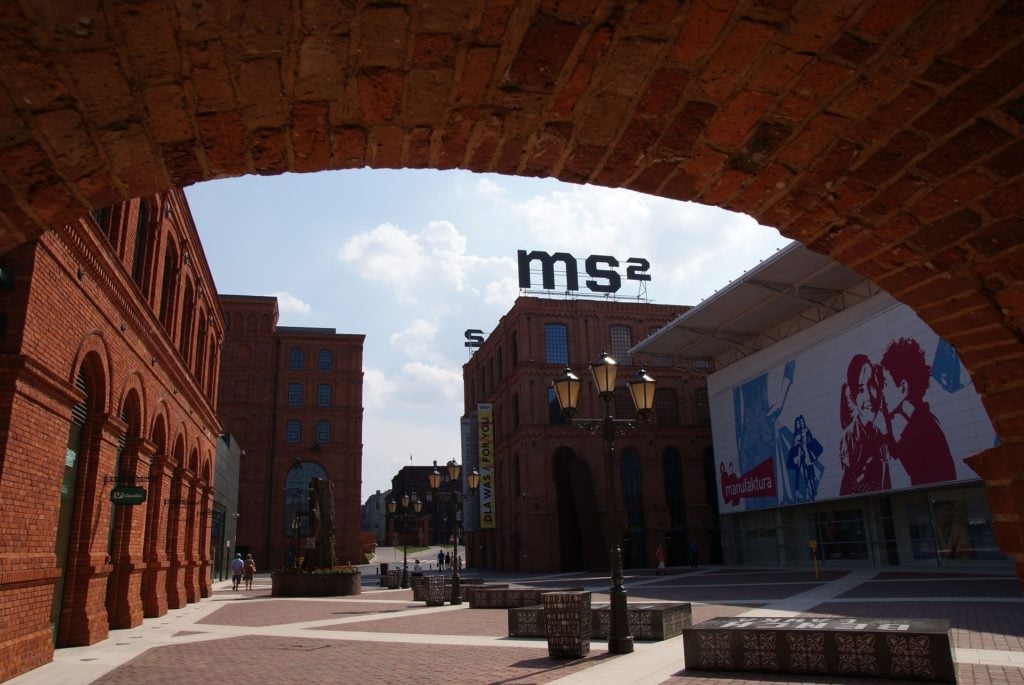
The Manufaktura complex reflects Lodz’s transformation from a 19th-century textile center into a modern cultural and entertainment district.
Lublin: A Crossroads of Cultures and Memory
Lublin sits in eastern Poland near the Ukrainian border. Polish, Jewish, Ukrainian, Belarusian and Lithuanian traditions have all shaped the city.
Gates, Streets and Sacred Art
The compact Old Town invites exploration on foot. Renaissance townhouses and medieval defenses surround Krakowska Gate, Grodzka Gate and the former Crown Tribunal.
Krakowska Gate marked the historic road toward Krakow. Grodzka Gate once separated Lublin’s Christian and Jewish quarters. Today, the NN Theatre Center occupies the gate. It documents Lublin’s multicultural past and honors Jewish residents murdered during the Holocaust.
Lublin Castle stands just beyond the Old Town. Its Holy Trinity Chapel contains striking Russo-Byzantine frescoes commissioned by King Wladyslaw Jagiello. The paintings bring eastern Christian imagery into a western Gothic setting.
Remembering Majdanek
The State Museum at Majdanek preserves the former German Nazi concentration and extermination camp. The site lies within modern Lublin. Visitors should approach it as a place of remembrance, not a conventional attraction.
Meanwhile, Lublin’s restaurants, students and cultural life keep the city firmly connected to the present.
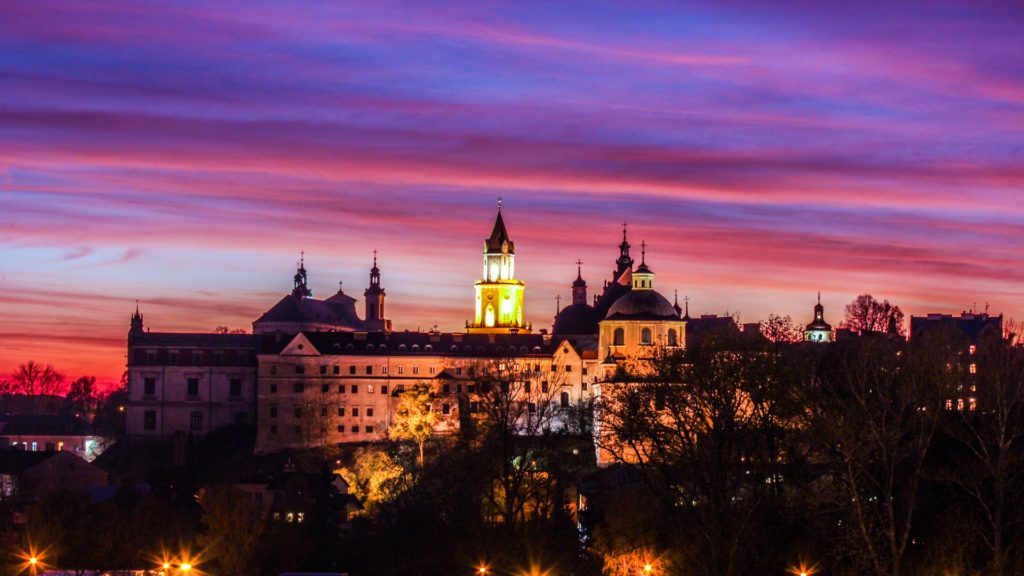
Lublin Castle rises above the city, connecting Lublin’s medieval history with its complex multicultural past.
Torun: Gothic Architecture, Copernicus and Gingerbread
Torun ranks among Poland’s best-preserved medieval cities. Its Old Town, New Town and Teutonic Castle ruins form a UNESCO World Heritage Site beside the Vistula River.
A Medieval Trading Center
The Teutonic Order developed Torun during the 13th century. The city later joined the Hanseatic League, a powerful network of European trading centers. Trade financed brick churches, defensive walls, granaries and a grand Gothic town hall.
Torun also gave the world Nicolaus Copernicus. A museum occupies two Gothic houses associated with his family. Nearby, the Cathedral of St. John the Baptist and St. John the Evangelist contains a baptismal font linked to the astronomer.
The cathedral also holds Tuba Dei, or Trumpet of God, a massive medieval bell.
The Tradition of Pierniki
Local bakers have made pierniki, or Polish gingerbread, for centuries. Imported spices helped turn the sweet into a local specialty. The Museum of Torun Gingerbread explores this tradition through historic molds, exhibits and baking demonstrations.
Torun’s compact center, riverfront and pedestrian streets make it ideal for a short stay.
-

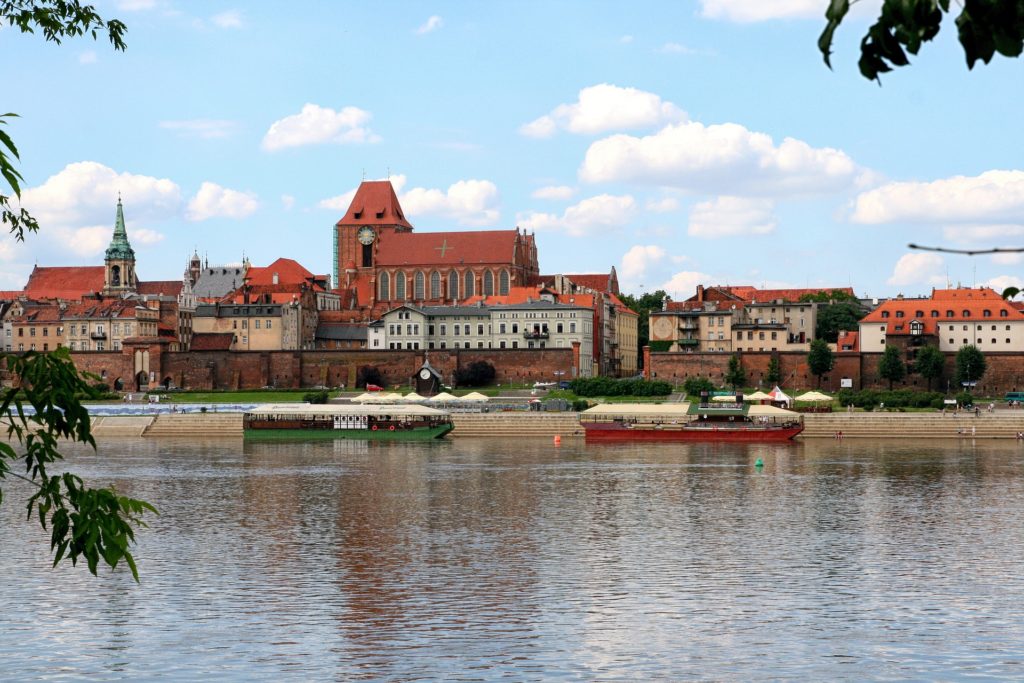
- Torun’s Gothic churches, defensive walls and red-tiled roofs line the banks of the Vistula River.
-

- Torun’s monumental Old Town Hall anchors the medieval Market Square in the city’s UNESCO-listed historic center.
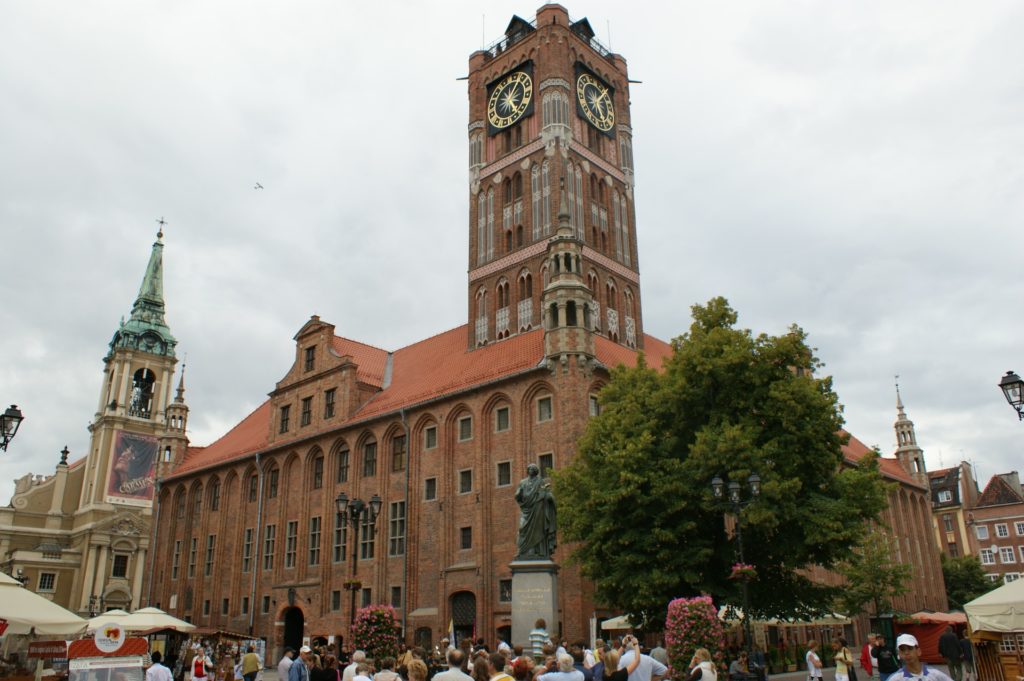
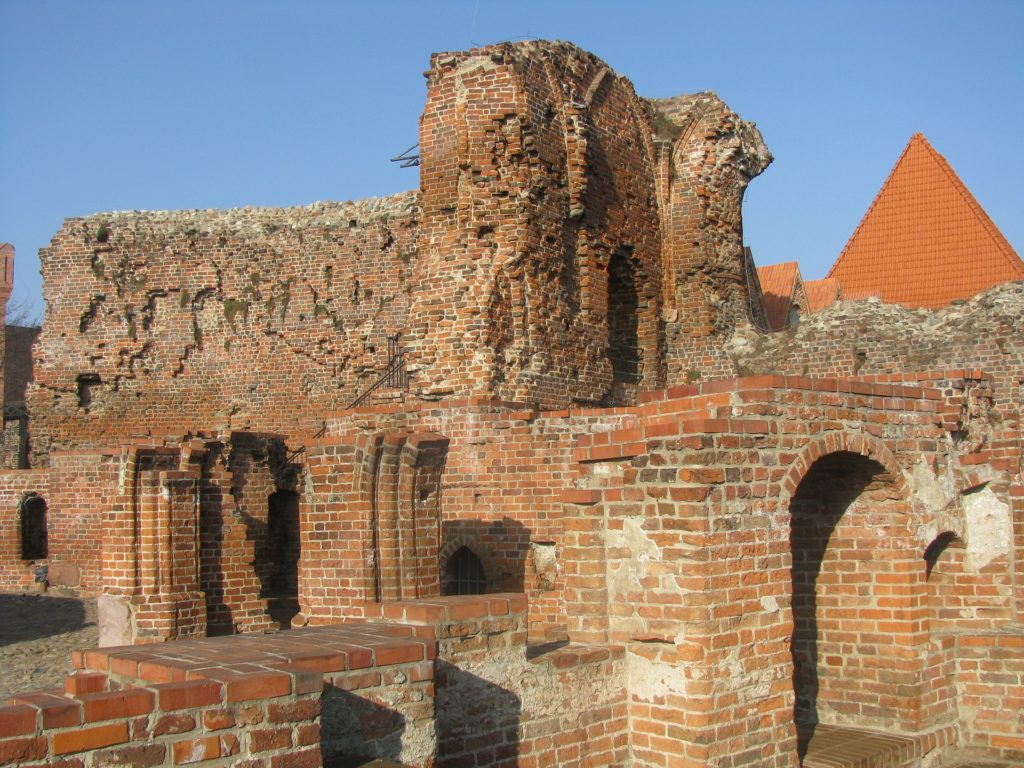
The ruins of Torun’s Teutonic Castle recall the military order that helped establish the medieval city during the 13th century.
Poznan: Where Poland’s National Story Began
Poznan receives fewer international visitors than Warsaw or Krakow. Yet few Polish cities carry greater historical importance.
Cathedral Island and Early Poland
Poznan’s early story centers on Ostrow Tumski, or Cathedral Island. Poland’s first rulers made this area one of their principal seats. The Cathedral of St. Peter and St. Paul contains tombs associated with the Piast dynasty, including Mieszko I and Boleslaw the Brave.
The Piasts became Poland’s first ruling dynasty. Their leadership helped shape the medieval Polish state. Nearby, Porta Posnania, or Gateway to Poznan, explains this history through multimedia exhibits.
Goats, Codes and Croissants
Poznan’s Old Market Square offers a lighter tradition. At noon, two mechanical goats emerge above the Renaissance Town Hall clock and butt heads. A local legend traces the spectacle to two goats that escaped from a cook.
Fighting in 1945 badly damaged the square. Later reconstruction restored its colorful merchant houses and civic landmarks.
Beyond the Old Town, the former Imperial Castle now serves as a cultural center. The Enigma Cipher Centre tells how Polish mathematicians helped break Germany’s Enigma code before World War II.
Poznan also celebrates St. Martin’s croissants. Bakers fill the pastries with white poppy seeds, nuts and dried fruit. The city celebrates the tradition each November.
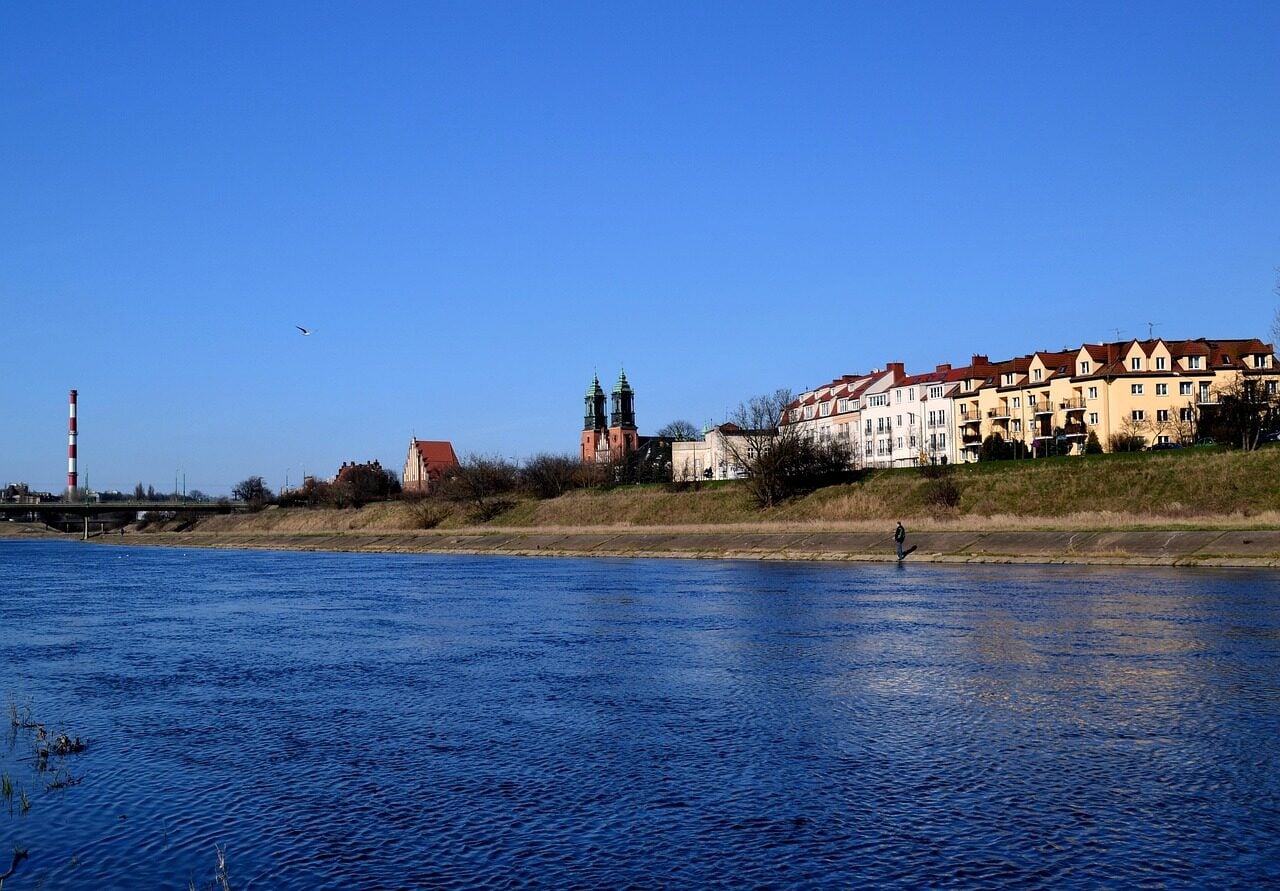
Poznan Cathedral rises above Cathedral Island, one of the principal centers of Poland’s early state and the seat of its first rulers.
Cieszyn: A City on the Polish-Czech Border
Cieszyn offers one of Poland’s most unusual urban experiences. The Olza River now separates the Polish city from Cesky Tesin, or Czech Cieszyn.
One Town, Two Countries
A new international border divided the historic town in 1920. Cieszyn remained in Poland. The district across the river became part of Czechoslovakia and later the Czech Republic.
Today, visitors can cross the border during a casual walk. That easy journey hides a complicated history. Polish, Czech, German, Austrian and Jewish communities all helped shape the region.
Castle Hill holds two major landmarks. The 14th-century Piast Tower overlooks both sides of the border. Nearby, the Romanesque Rotunda of St. Nicholas dates to the 11th century.
The rotunda’s image appears on Poland’s 20-zloty banknote. The word zloty loosely means golden.
Legends Along the Market Square
Historic townhouses and the Baroque-Classical Town Hall surround Cieszyn’s Market Square. Nearby, a narrow canal and old buildings form the Venice of Cieszyn.
The Three Brothers’ Well recalls the city’s founding legend. According to the story, Bolko, Leszko and Cieszko reunited there after a long separation. The name Cieszyn relates to cieszyc sie, meaning to rejoice or to be happy.
Cieszyn suits travelers who enjoy borderlands and layered identities. A walk into Czech Cieszyn reveals how one divided town developed into two neighboring communities.
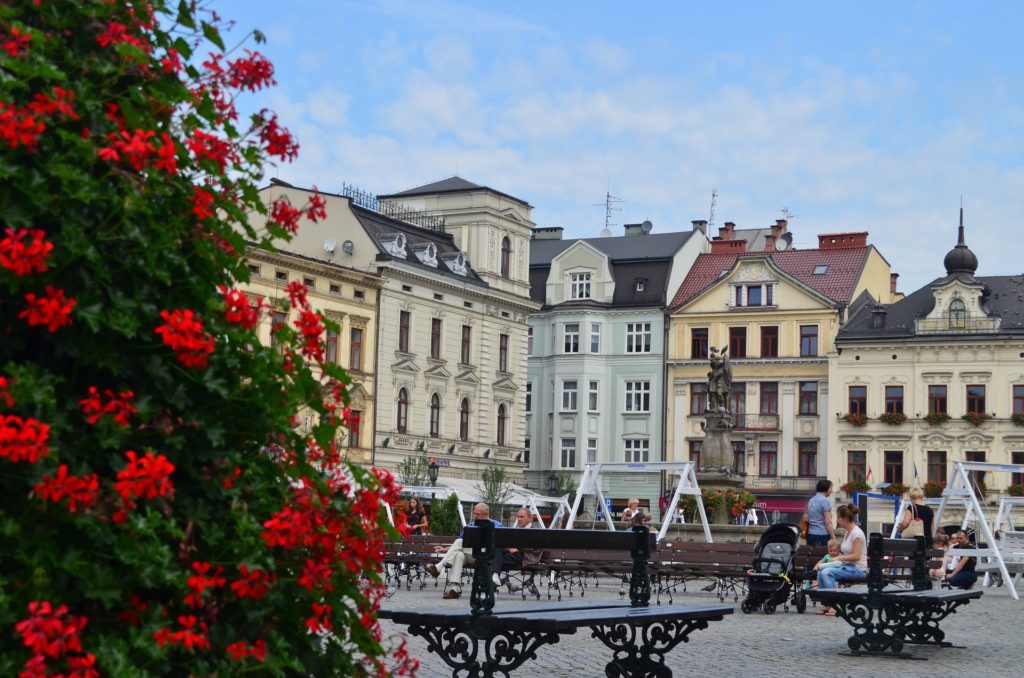
Cieszyn’s Market Square reflects the architectural heritage of a border city shaped by Polish, Czech, Austrian and German influences.
Discovering a Different Side of Poland
Each city reveals a different part of Poland. Lodz highlights industrial reinvention. Lublin brings multicultural history and remembrance together. Torun preserves medieval trade and scientific heritage.
Poznan connects visitors to the nation’s beginnings. Cieszyn turns an international border into part of the journey.
These cities do not replace Warsaw or Krakow. Instead, they expand the story of Poland beyond its most famous destinations.
CLICK to Book a Stay in Poland
Join the community!
Join our community to receive special updates (we keep your private info locked.)