

Discover Lanzarote – The Popular Spanish Island Designed by One Artist With Nature at the Forefront
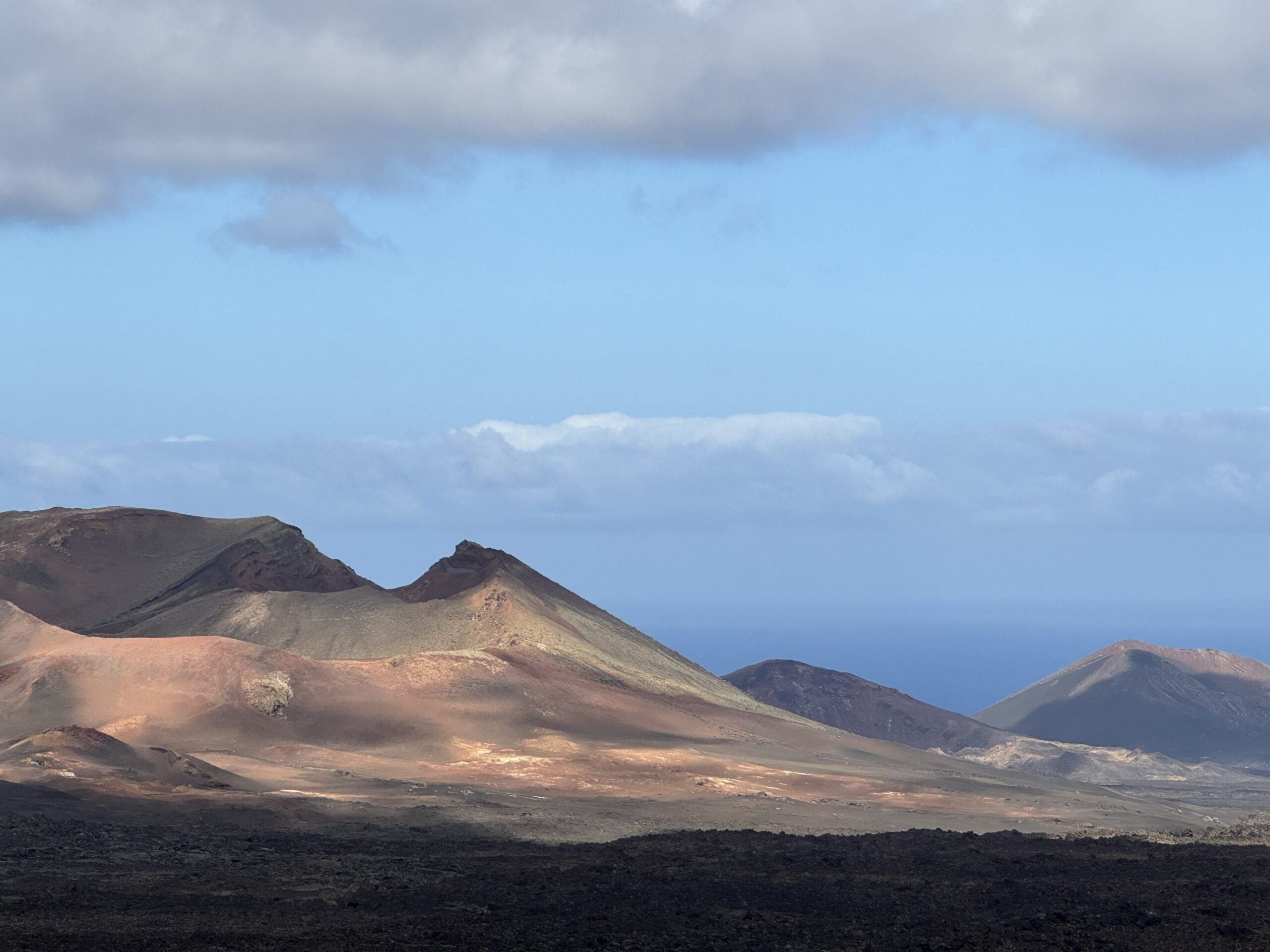
Timanfaya National Park on the island of Lanzarote Photo: Anna Staropoli
Posted April 19, 2026
You can barely see the roads within Lanzarote’s Timanfaya National Park—and that’s intentional. When local architect and artist César Manriche designed projects for Lanzarote, one of Spain’s eight Canary Islands, in the 1960s, he homed in on nature, with a clear aim to preserve the island’s landscapes.
Created By Landscape-Centric Wisdom
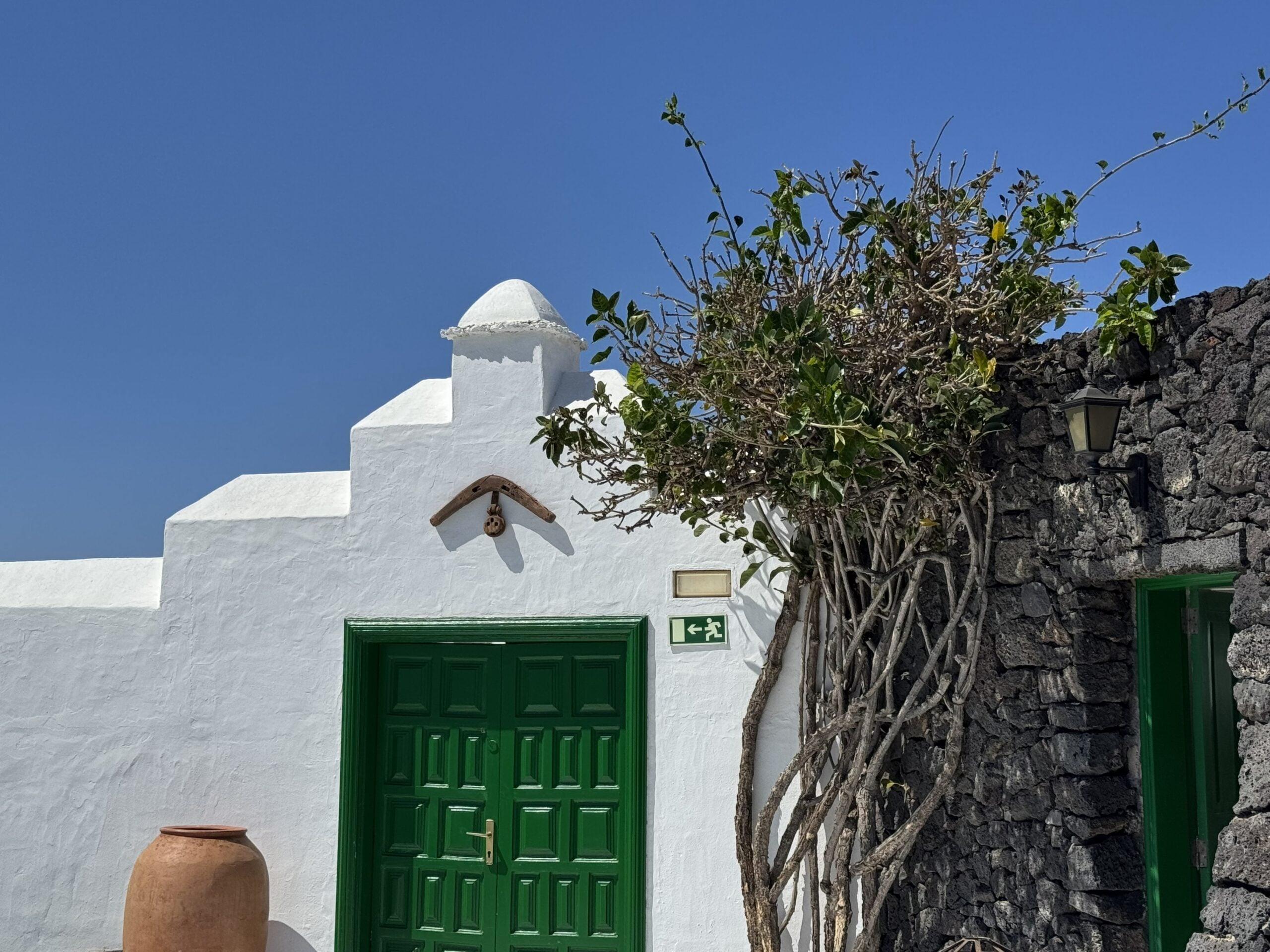
Manrique House Museum Photo: Anna Staropoli
“My great master has been my continued wonder when observing nature, whose great creative secret I could never grasp,” Manrique said in 1988, according to the wall text of his 20-year Lanzarote home-turned-museum, César Manrique Foundation. “My wonder continues to grow each day, as I gain a clearer understanding of the infinite wisdom [of nature].”
Landscape-centric wisdom and Manrique’s idea of art-nature, or nature-art, have shaped Lanzarote’s past and present, as both Manrique’s projects and principles materialize throughout the island today. During his creative heyday from the 1960s through the ‘90s, the artist spearheaded a spate of designs to blend the liveable city with its raw features. He encouraged the removal of all billboard ads and criticized high-rises, neither of which appear in Lanzarote today. Meanwhile, in his own work, Manrique developed for residents rather than for mass tourism, preserving nature rather than overriding it.
The result? An island of artful whimsy, where ashy, almost mystical terrain and endless lava fields converge with the Atlantic Ocean and Timanfaya’s otherworldly Montañas del Fuego. Lanzarote likewise harbors The Janubio Salt Mines, the region’s largest salt mines, and more than 100 beaches, creating a varied landscape of natural wonders.
Within this environment, Manrique’s imaginative forms of infrastructure, from a one-of-a-kind cave restaurant to a sunstruck cactus oasis, have established a long-term home. Now, both Lanzarote visitors and residents must not only fly through César Manrique-Lanzarote Airport but also inevitably encounter the innovator’s impact in everything from craft workshops to underground concerts.
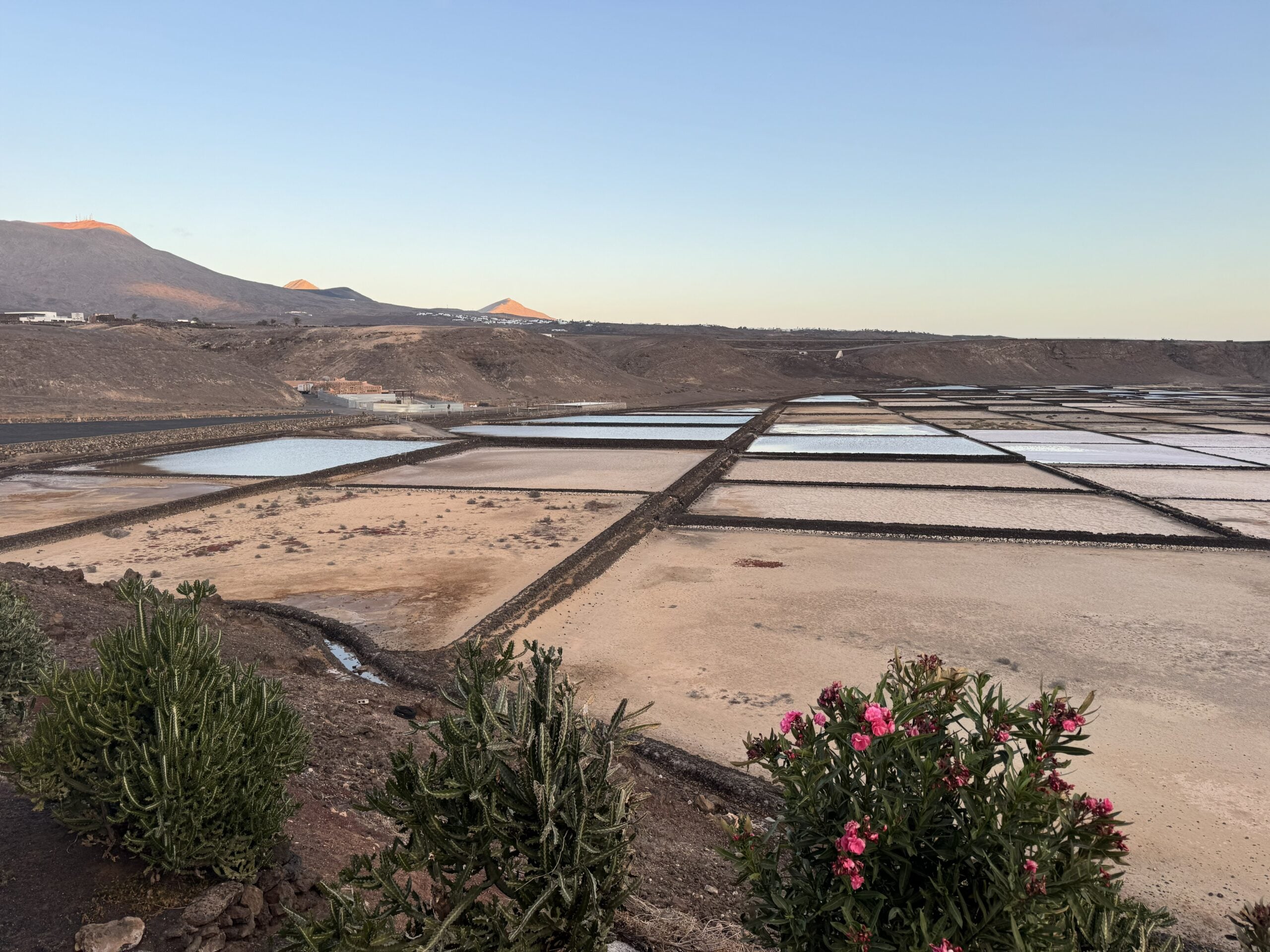
The Janubio Salt Mines Photo: Anna Staropoli
Lanzarote’s Natural Wonders
As a UNESCO-recognized biosphere reserve, Lanzarote is inextricable from its origins. The product of volcanic eruptions, Lanzarote stands out from its Canary neighbors, each of which boasts a distinct identity as one of the region’s oldest islands.
With longevity practically in its DNA, Lanzarote has undertaken efforts to maintain its environment. The island earned a Biosphere Responsible Tourism certification in 2015. Manrique’s nature-based architecture, likewise, has withstood the test of time, working in tandem with the island’s delicate landscapes and preexisting features.
Examples of the artist’s work include Manrique’s own homes—the aforementioned foundation, as well as the César Manrique House Museum—and the Castillo de San Jose, a Manrique-renovated castle that became the Canary Islands’ first-ever contemporary art museum. The latter, alongside a handful of other Manrique-influenced projects, comprises Lanzarote’s Centers of Art, Culture, and Tourism, a framework for more intentional travel.
Ahead of His Time
Manrique finished his first Lanzarote public project, the enchanting Jameos Del Agua cave, in 1977. His philosophy for the island’s development feels surprisingly timely as the Canary Islands and Spain at large grapple with overtourism.
In a 1985 manifesto detailing concerns regarding Lanzarote’s exploitation, expansion, and overdevelopment, Manrique wrote: “The question is: Who is responsible? We believe that any government is under the obligation to protect the space that serves as the medium for life, education, culture, wealth, and, above all, the ‘endurance of that wealth.’” Similarly, at the Manrique Foundation, a video plays in a loop in which the artist criticizes new buildings for attracting cheap tourism, citing a fear that excessive growth would diminish the prestige of locals.
Today, the island seems to be addressing these timeless concerns. As Timanfaya National Park deals with problems of traffic and overcrowding, community leaders have proposed initiatives for carpooling and vehicle restrictions. The park, as well as other Lanzarote hot spots, has also experimented with prebooking systems, car limitations, and visitation caps.
That’s not to say Manrique was against all forms of tourism. Rather, intentional travel and more responsible sightseeing may better align your Canary Islands trip with the artist’s vision. Below, you’ll find recommendations for Lanzarote’s Centers of Art, Culture, and Tourism. All of these keep the island’s innate environment, natural resources, and local heritage at the forefront.
Timanfaya National Park
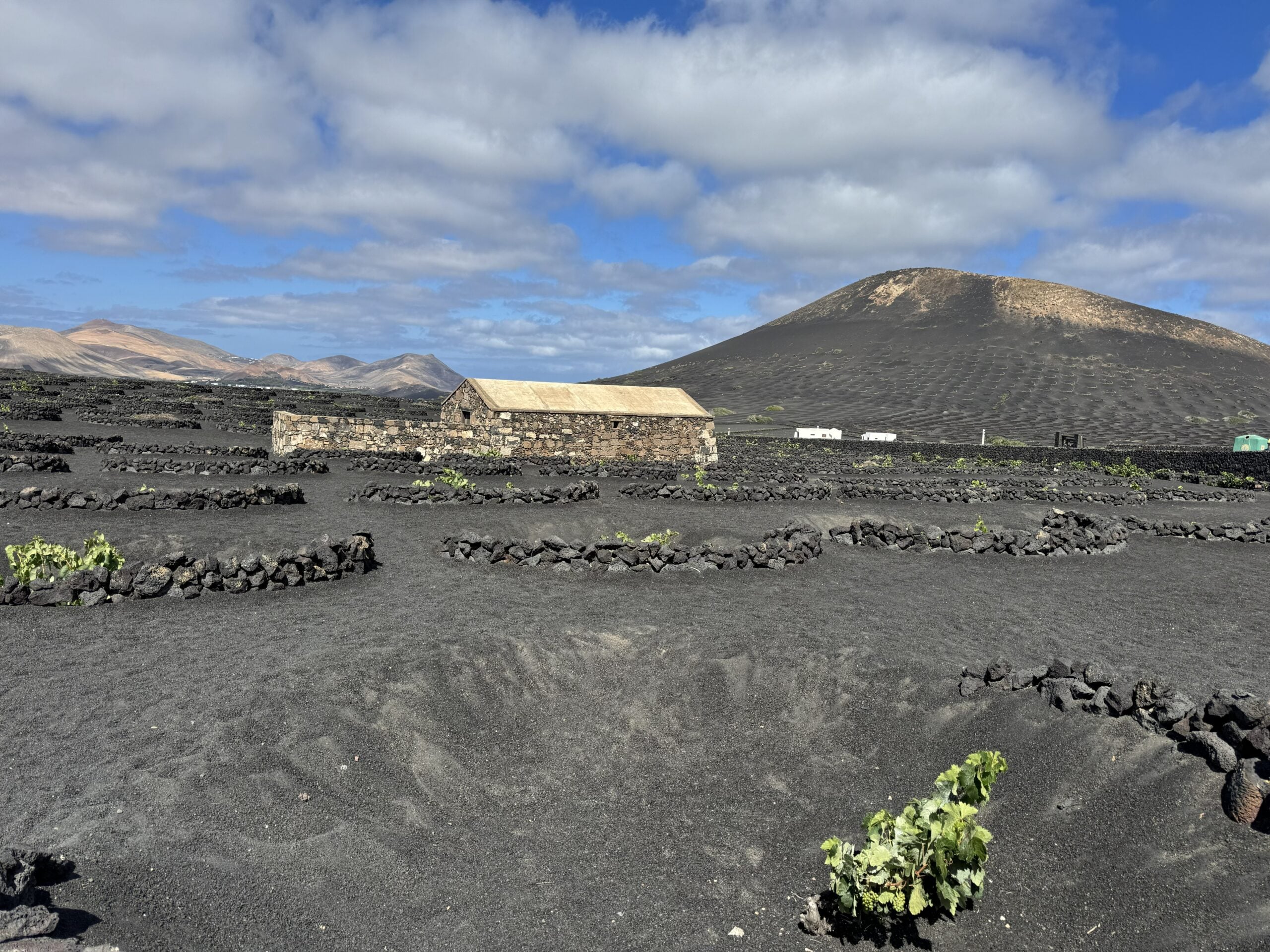
Lanzarote Volcanic Terroir Photo: Anna Staropoli
Craters and volcanoes create the unique terrain of Timanfaya, Europe’s only geological national park. Here, Manrique’s influence arises in the park’s roads. Some 50 years ago, the artist designed Timanfaya’s winding streets to hide in plain sight, blending into the land rather than distracting from its beauty. Beyond its aesthetic allure, the park grounds also include a restaurant, whose chefs leverage naturally occurring volcanic heat to cook chicken, pork, and beef. What better way to connect with your surroundings and appeal to simultaneous senses?
Cactus Garden
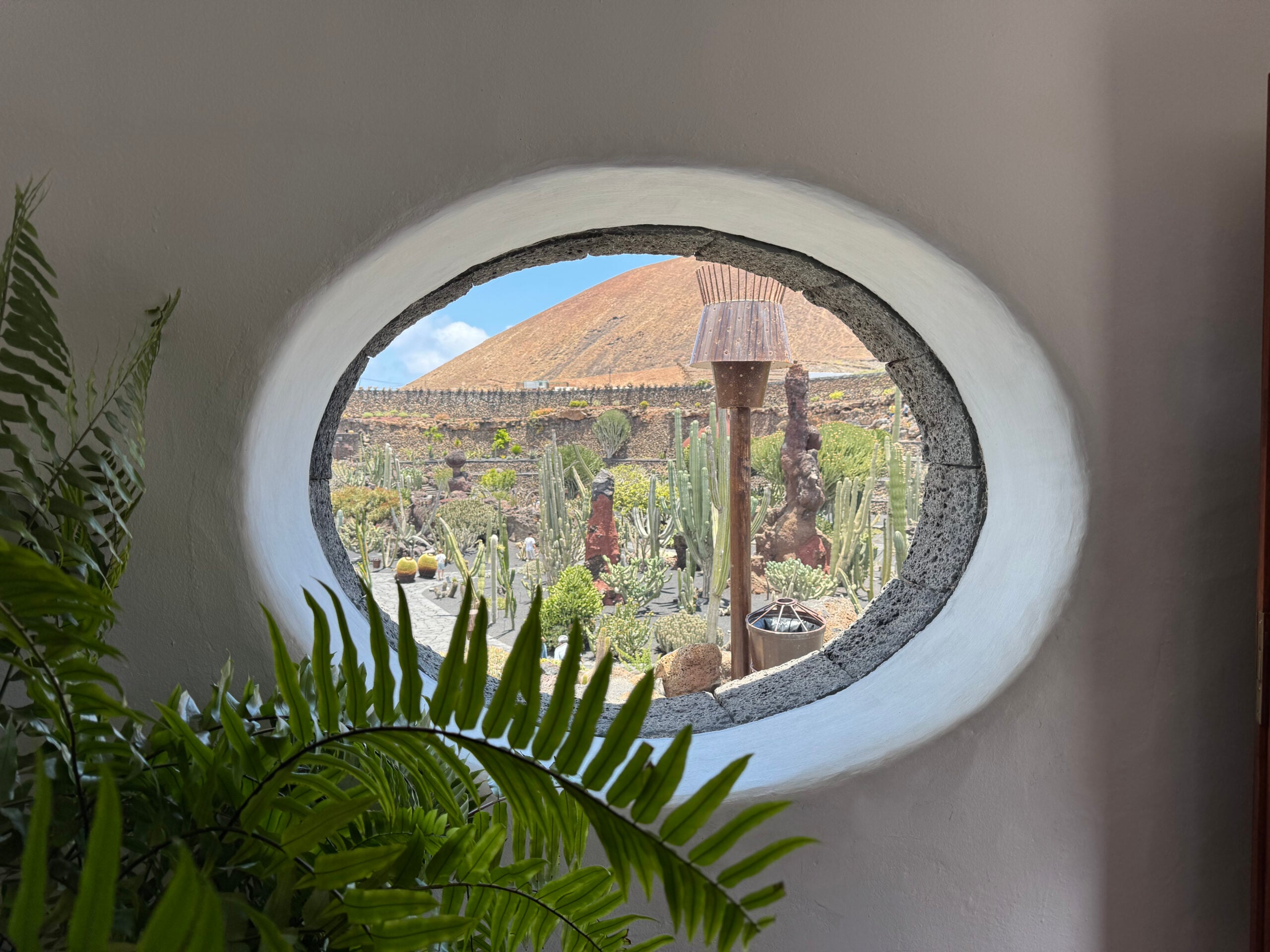
Cactus Garden Photo: Anna Staropoli
From one nature-framed meal to another, Manrique’s Jardín de Cactus preserves more than 500 cacti species in an artfully decorated and carefully curated garden. More than an impeccable greenhouse, however, this garden harbors an on-site cafe, allowing visitors to taste its trademark plant in any and all forms. Menu highlights include cactus croquettes—the perfect take on a tapa favorite—cactus burgers, and more.
Cueva de Los Verdes and Jameos del Agua
If you’ve ever wanted to eat inside a cave or attend a concert with unprecedented acoustics, these neighboring caves check all the boxes. Extending for nearly five miles, the sprawling Cueva de Los Verdes melds nature with culture and uses Lanzarote’s natural features as an amphitheater. Inside, you’ll find a makeshift auditorium that seats 250 people for the annual Escena Lanzarote.
On a larger scale, the same concert series takes place at the Manrique-designed Jameos del Agua cave (among other venues), which seats 500 people. On a daily basis, Jameos del Agua maintains this theme of entertainment. The cave’s restaurant transitions into a nightclub, taking advantage of its unique lava tube setting.
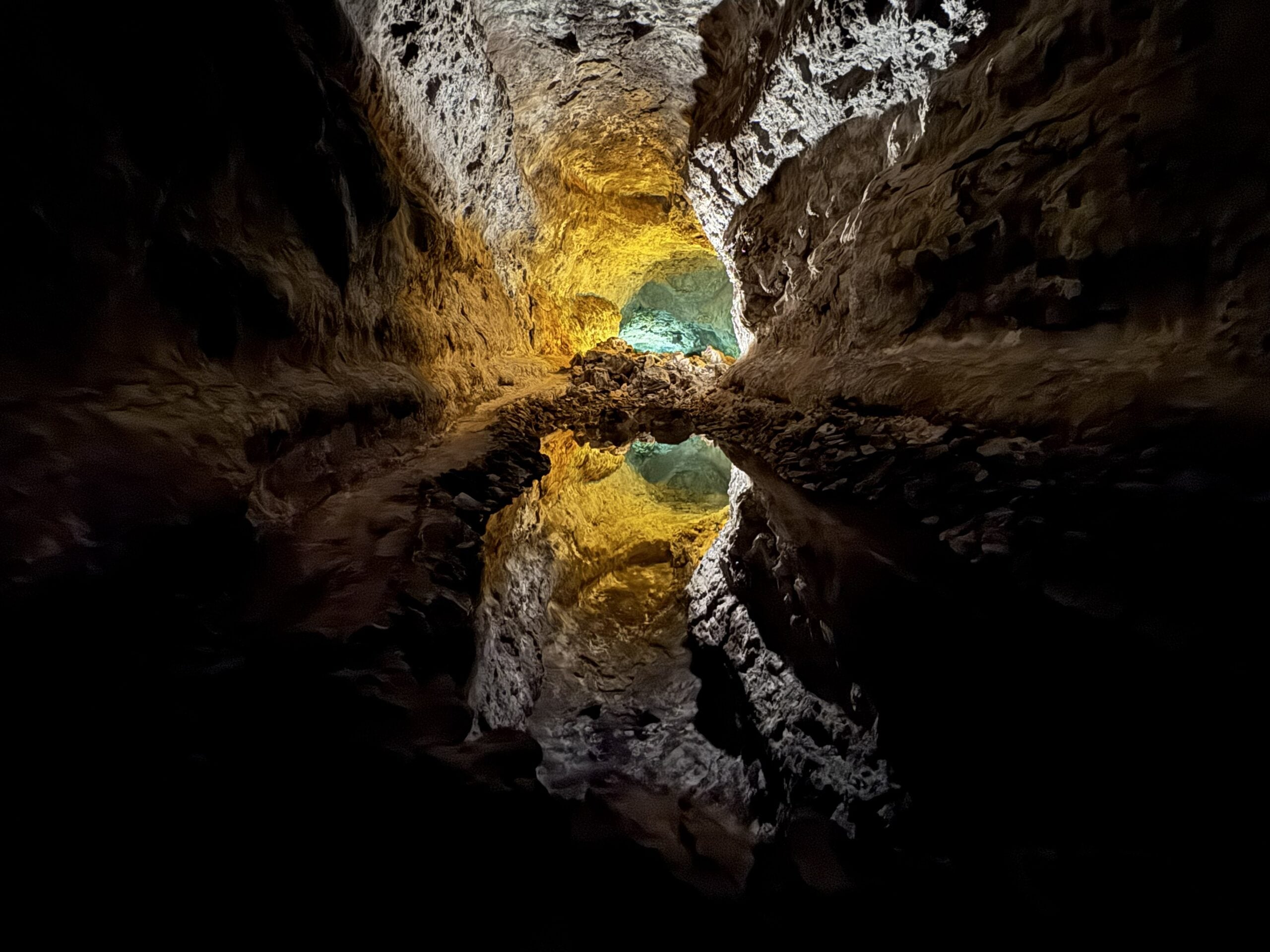
The Cueva de Los Verdes Photo: Anna Staropoli
Casa Museo del Campesino
A campus of whitewashed buildings with striking green details, the Manrique-designed Casa Museo del Campesino combines traditions. Translating to “House Museum of the Peasant Farmer,” the complex consists of all kinds of artisan stores and workshops, helmed by Lanzarote experts. At one studio, a longtime artisan collects palm tree fronds, which she weaves into intricate hats. Visitors learn directly from such artisans, making everything from keychains to red and green mojos: the Canary Islands’ signature sauces.
How to Visit
You can fly to Lanzarote from mainland Spain in less than three hours. Madrid operates consistent routes, as do additional cities across both Europe and Spain. In total, Lanzarote directly connects with more than 50 European airports and 30 airlines. You can also reach the island from other Canary Islands, like Gran Canaria, a lush and diverse paradise.
Click here for discounted accommodations in the Canary Islands
Join the community!
Join our community to receive special updates (we keep your private info locked.)

