

Europe’s Best-Kept Secret? Serbia, Where Cuisine and Community Share the Spirit of the Balkans
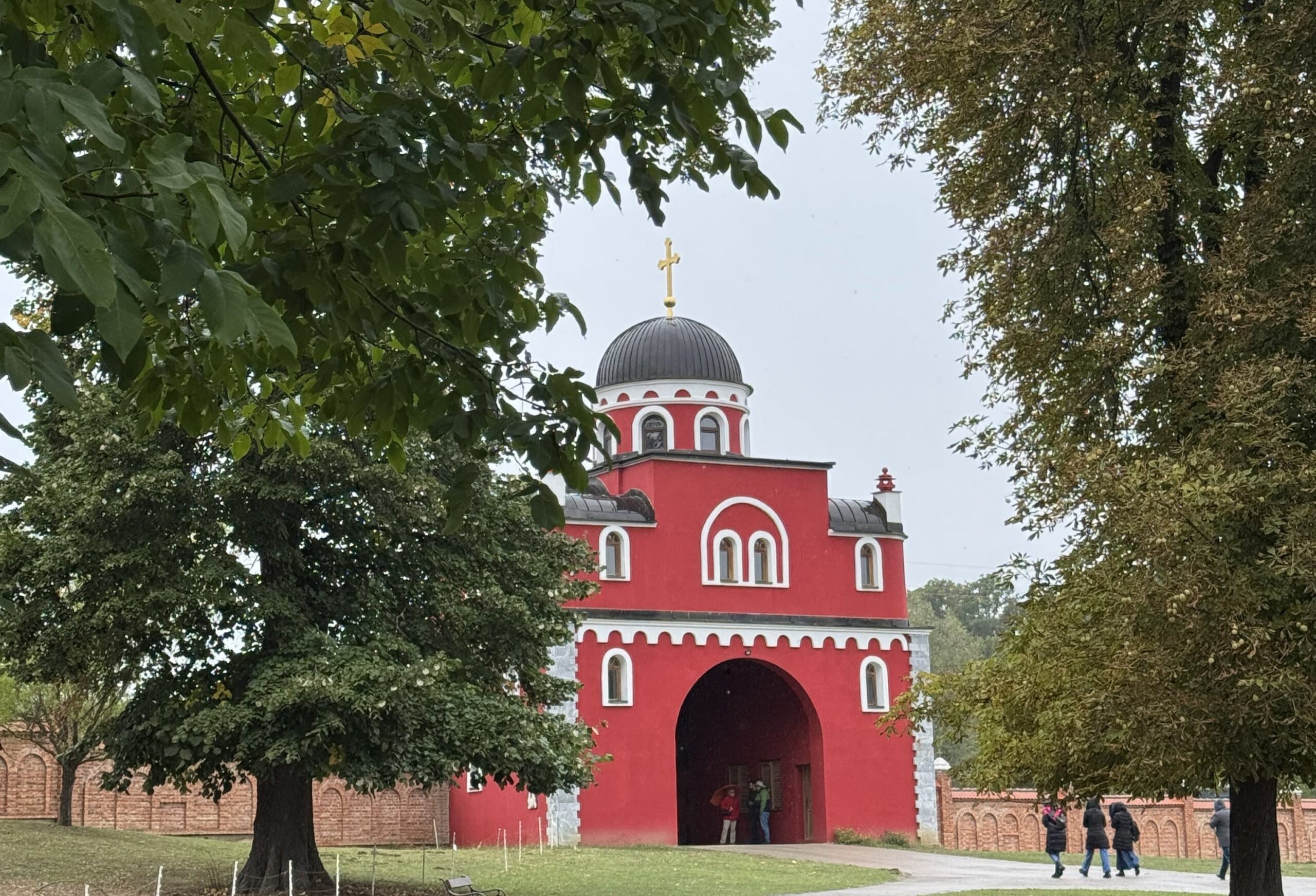
Serbia Architecture Photo: Anna Staropoli
Posted May 1, 2026
I know what Belgrade sounds like before Serbia reveals anything else.
Whenever I travel, I tie my memories to senses, grounding myself in whatever I see, smell, hear, or taste most palpably. Buenos Aires, to me, is the perfume of blooming jacarandas, while Sicily is the clatter of market carts over cobblestones, and Cape Town, the cardamom and turmeric punch of Cape Malay spices.
Sometimes, I can’t pinpoint a place’s resounding sense until the end of a trip. But on my first night in Serbia, I discover its song immediately. I’m having dinner at Restoran Velika Skadarlija, a traditional tavern—known as a Serbian “kafana”—that’s deceivingly spacious, with white tablecloths and a bright interior. As I settle in for dinner, the folk band Tamburica 5 forms a semi-circle around my table, and I hear Serbia’s trademark tamburica before I learn its name.
Balkan’s Traditional Instrument – Tamburica
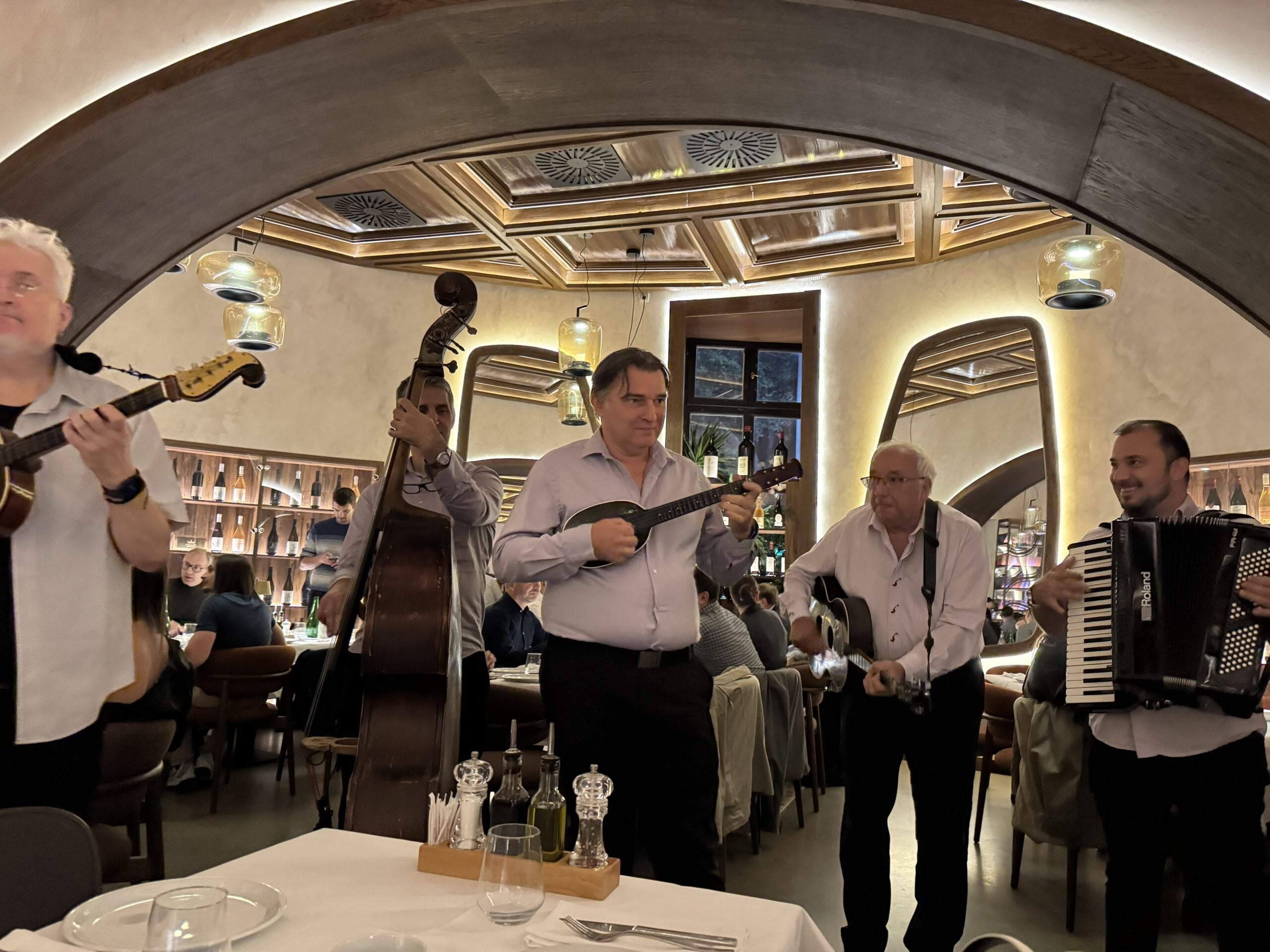
Serenading our table with the Balkan tamburica Photo: Anna Staropoli
A traditional Balkan instrument in the lute family, the tamburica creates an infectious, plucky melody, complemented by the band’s accordion and other string instruments. When the song finishes, a sesame-crusted loaf of Pogača bread arrives at my table. And although Tamburica 5 shifts to another group, they’re not done with us yet. Right before dessert, they return with a folk rendition of “Country Roads,” serenading us Americans with a tune that straddles our two cultures.
Over the next week, “Country Roads” sticks in my head and follows me from Belgrade to the mountain village of Zlatibor, the wineries of Fruška Gora, and the Danube city of Novi Sad. What resounds most of all, however, isn’t the catchy chorus, but the energy of this surprising country. Serbia’s stories surpass its complex reputation and dark history through songs, meals, and moments of in-between connection.
Multifaceted Meals
Part of the former Yugoslavia, Serbia lives at the intersection of influences in more ways than one. On a geographic level, eight countries, including Croatia and Hungary, frame Serbia, though cross-cultural reflections likewise materialize in the country’s varied architecture and range of cuisine.
At every meal, my guide, Bojana, would survey our table of family-style dishes before heaping spoonfuls of absolutely everything—from flaky cheese pies to whole grilled fish, cucumber and tomato salads, and baked brie—onto my plate. “Try this,” she’d repeat, a mantra of sorts.
Serbian Gastronomy’s Blended Cultures
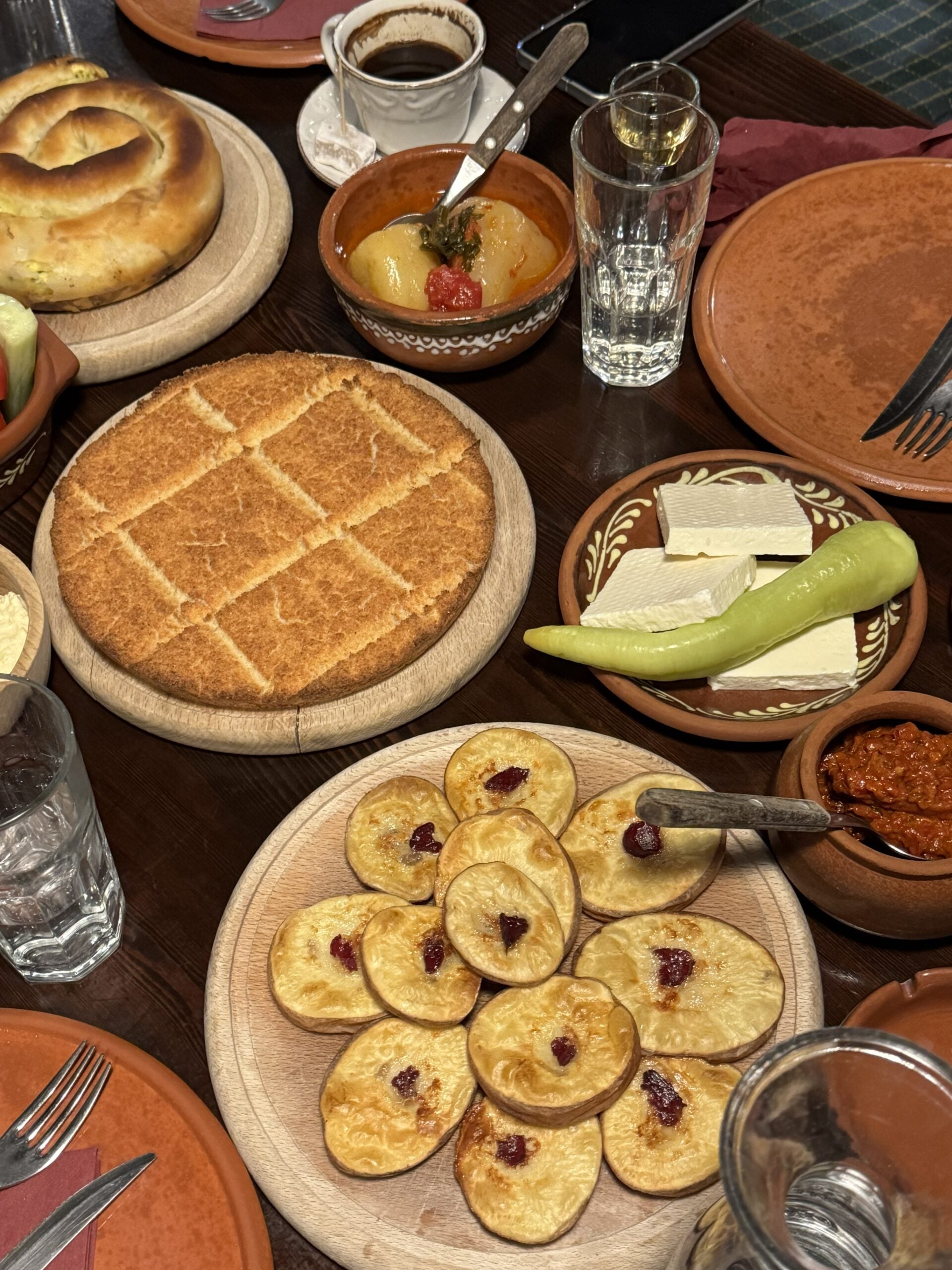
A sample of Serbian gastronomic splendor Photo: Anna Staropoli
Anchored by meats and cheeses rather than any one dish, Serbian gastronomy blends Arab, Mediterranean, and Eastern Europe influences, among those of other places. Throughout my week in Serbia, I sample cold starters and small plates reminiscent of Greek and Turkish mezze; thick and dark Serbian-Turkish coffee served with ratluk, a take on Turkish delight; and the Balkans’ beloved ajvar, a red pepper dip so flavorful I check a bag just to bring a jar home.
As we feast through meal after meal, splitting bites of Reform Torta cake and spiced, sausage-like ćevapi, Bojana fills me in on why Serbia has adopted such a strong culture of sharing food. Not only is food a means of connection. It’s also a way to combat the country’s history. After enduring a long period of poverty and war, we don’t want anyone to go hungry, Bojana says. At one meal, even Zoran, my group’s driver, starts to serve our table savory pies, passing around plates to ensure I’ve tried every last dish.
This sentiment of sharing extends even to the dead. It’s customary for Serbians to deliver food to the tombstones of their loved ones, setting up makeshift picnics in honor of the deceased—proof, I suppose, that something as simple as borek and a glass of plum brandy can bring people together.
Heart With History
Food may ease connection, but Serbians share their culture in more ways than one. In Belgrade, I spend a few nights at Mama Shelter, a modern hotel with Looney Toons designs, whose signature restaurant transforms into a routine nightclub. Belgrade’s club scene parallels Berlin, with a rhythmic nonchalance and well-dressed partygoers.
After a long day of sightseeing, my friends and I are nursing gin and tonics—out of place for nightlife in our jeans, sweaters, and sneakers—when one of those ultra-chic women beelines toward us. Unphased, she reaches for my friend’s hand. “Do you trust me?” she asks, and, without waiting for an answer, the stranger twirls my friend, dipping her new dance partner with a dramatic flair. With a laugh, the stranger lets go. “Welcome to Belgrade!” she exclaims.
This openness appears and reappears throughout Belgrade and its surroundings. There’s a hunger among Serbians to share their home rather than keep visitors on the periphery. Their eagerness contradicts the country’s facade of gruffness, revealing a softer self.
On my flight to Belgrade, an elderly Serbian woman who speaks no English saves me snacks while I’m sleeping. Later, on my flight home, a Serbian man wordlessly hoists my suitcase into the overhead. On the way to the mountain haven of Zlatibor, Zoran, my driver—a burly, quiet man—giggles as he shows me pictures of his daughter’s pet hedgehog. Serbian people, a microcosm of the place, contradict expectations, and look out for visitors with micro-moments of camaraderie.
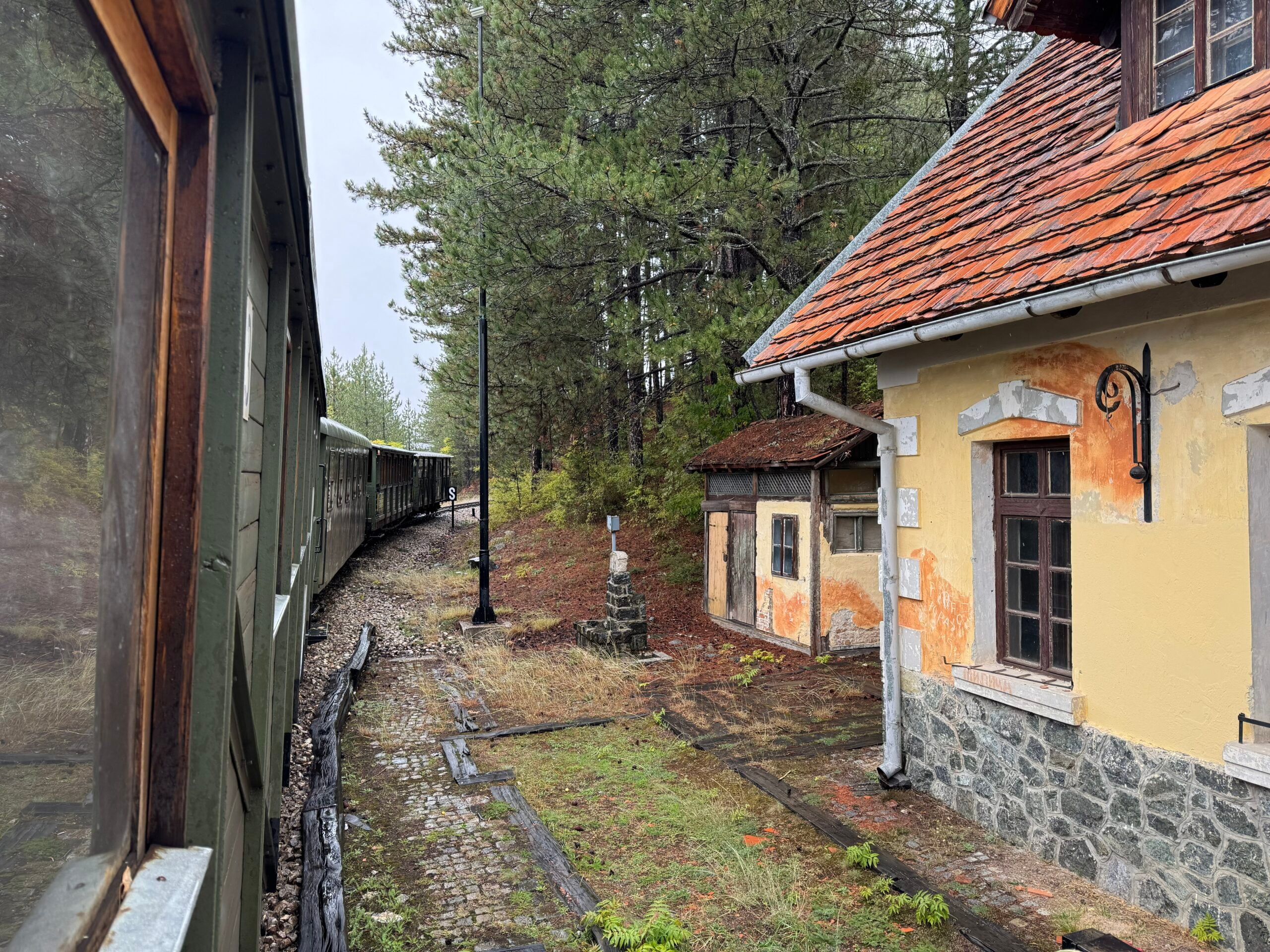
Zlatibor Scenic Train Photo: Anna Staropoli
Back To the Place I Belong
On my second night in Belgrade, still at the start of my trip, I take a scenic walk along the Danube River before snagging a table at Restoran Venecija, another quintessential restaurant overlooking the water. As the waiter sets down trays of grilled meats and salty cheeses, a familiar instrument sends a serenade through the restaurant. I whip my head around to see Tamburica 5 just behind my table, delivering yet another perfect soundtrack for dinner.
As the band strummed the last notes of their song, they recognized my table and marched over in beat. With a surge of energy, they erupted into “Country Roads,” and this time, we sang along.
My fork hovering midair—my bite of steak forgotten—I tried to process how, in just two nights, I’d created a routine. I could not only recognize familiar faces but be recognized myself, utterly immersed in a sense of community that, 24 hours ago, didn’t exist for me at all. About five miles separated the two restaurants of the last two nights, and yet, the band and I found ourselves in the same place, kindred spirits and, seemingly, old friends.
I can’t tell, then, if the sound of Serbia is Tamburica 5’s acoustic “Country Roads” or the traditional tamburica folk song whose name I don’t know. Regardless, both use the same instrument and tether me to the same place.
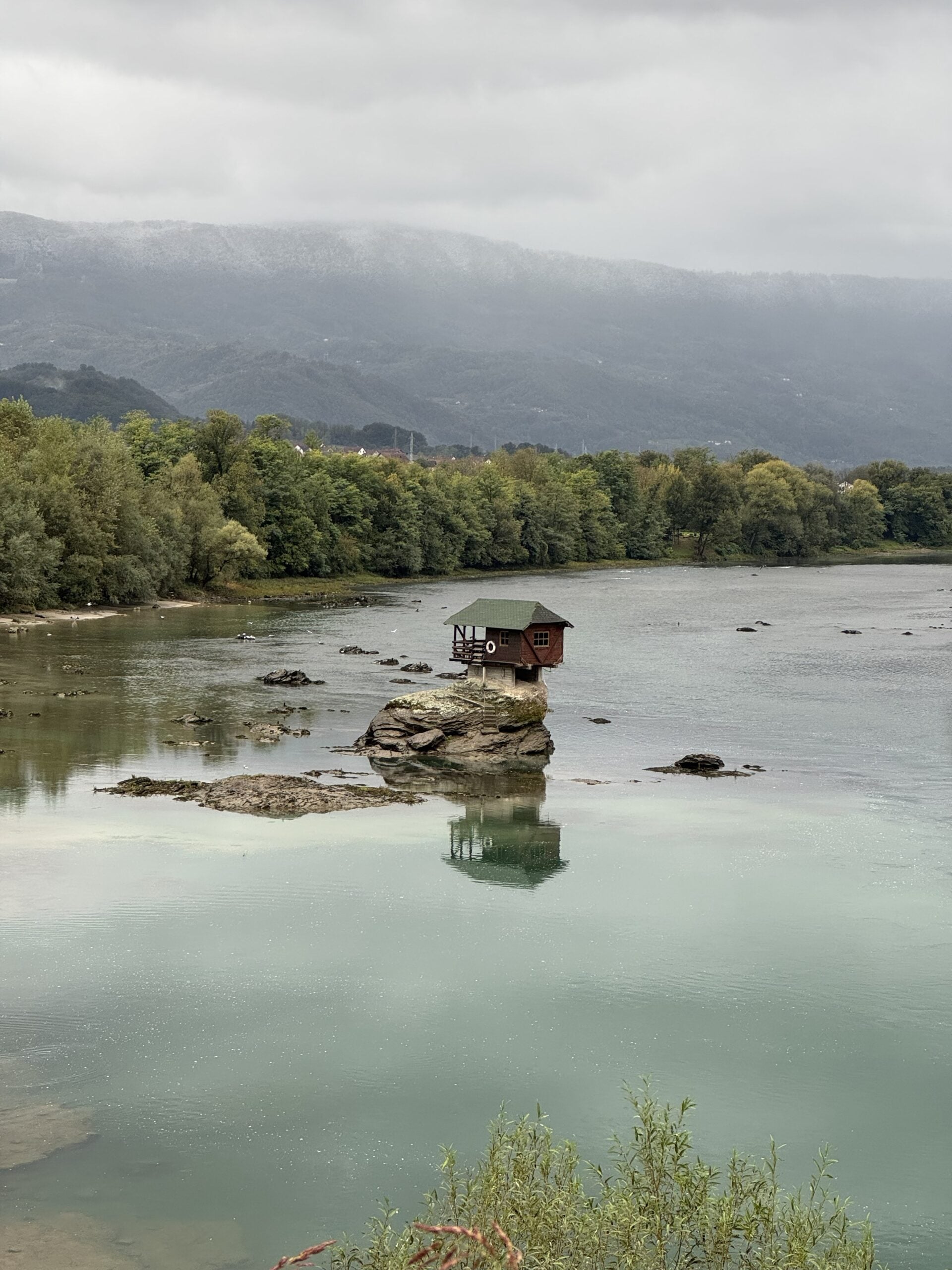
Serbia’s inviting landscapes Photo: Anna Staropoli
How to Visit:
Belgrade’s Nikola Tesla Airport operates daily flights to and from international destinations, with both direct and connecting flights to major United States cities. Air Serbia, in particular, runs nonstop Belgrade-New York and Belgrade-Chicago flights.
Once in Serbia, give yourself at least a few days in Belgrade. Next year, Belgrade will host the World Expo, though the city center always teems with cultural and historic attractions. These include the Nikola Tesla Museum, the mosaic-adorned Church of Saint Sava, and the Belgrade Design District, a shopper’s treasure trove.
Not far from Belgrade, Novi Sad and the Fruška Gora wine region also make for easy day trips, both about an hour from the city. For a longer detour, Zlatibo—known for its year-round outdoor activities—sits about three hours away, easily reached by train or bus. For maximum flexibility, rent a car to explore harder-to-access attractions, such as the Krušedol Monastery.
Click here for discounted lodging throughout Serbia
Join the community!
Join our community to receive special updates (we keep your private info locked.)

