

A Zapotec-Led Tour Company in Oaxaca Putting Its People First
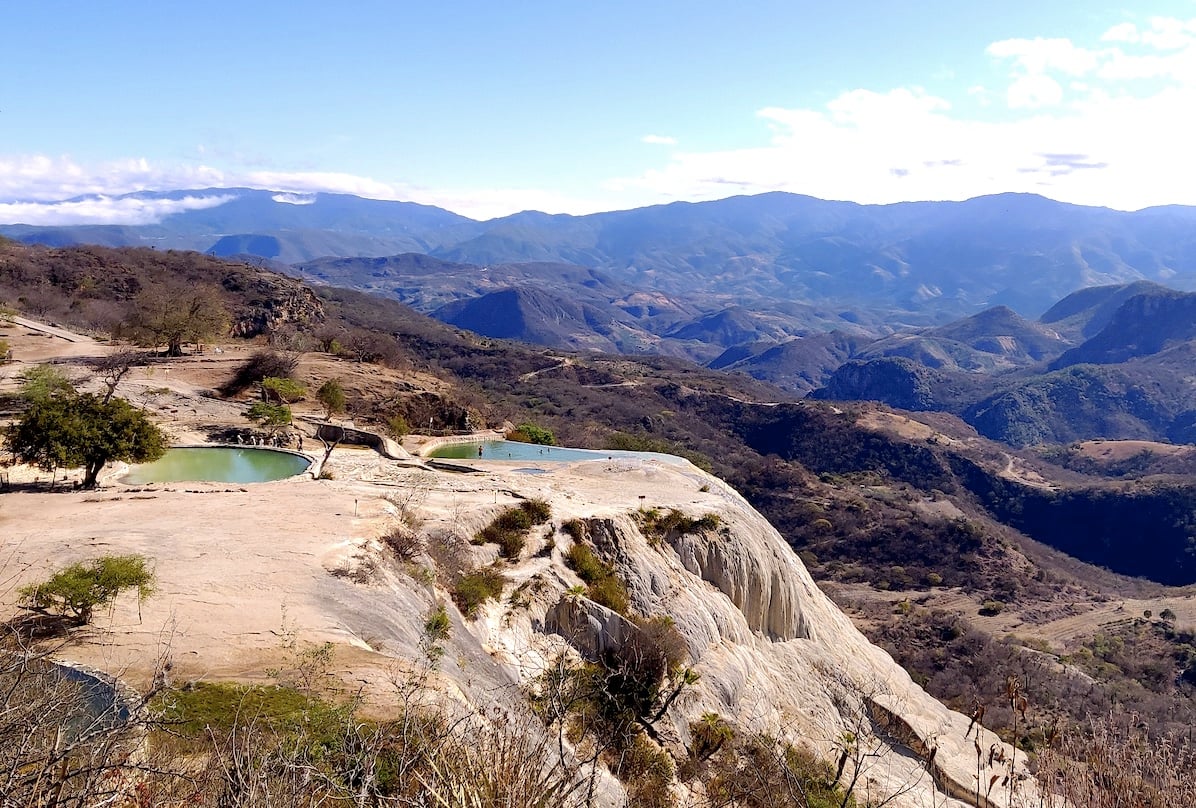
Hierve el Agua in Oaxaca Photo: Jennifer Richardson
Posted April 28, 2026
I met Lily one early January morning at a donut shop off the highway, about a 30-minute drive from Oaxaca City. Lily introduced herself to our small tour group — me and a family of four from Minnesota. She would be leading us for the day, as we visited some of the “must-sees” of Oaxaca. This included the scenic mineral springs and waterfalls of Hierve el Agua, the Zapotec archaeological site of Mitla, lunch at a local spot for memelas, and a visit to a locally owned and run mezcal distillery.
Oaxaca de Juárez, the capital of the state of Oaxaca in Mexico, is best known worldwide for its amazing food, art, beauty, and unique history. Whatever type of culturally curious traveler you are, Oaxaca will pull you in, whether it’s through the city’s mezcallerias, early-morning markets filled with a dozen different types of mole, or the street art that decorates almost every corner of the city.
Experiences Beyond the Downtown Core
For visitors to Oaxaca de Juárez, their experience reaches beyond the downtown core. The communities in the valleys nearby fuel the life that happens in the city proper. When you sit down to sip a glass of mezcal at a rooftop restaurant overlooking the Santo Domingo Cathedral, that smoky libation was the result of the labor of people and the plants of agave that exist miles away from the colonial downtown district.
The people of Oaxaca are, for the most part, not of Hispanic descent. Around 70% of the state’s population is of Indigenous origin. The largest language is Zapotec, accounting for about 300,000-400,000 of the state’s population.
When I started planning my trip to Oaxaca, I wanted to experience it through the Zapotec perspective.
Indigenous-centered Voices On Their Native Land
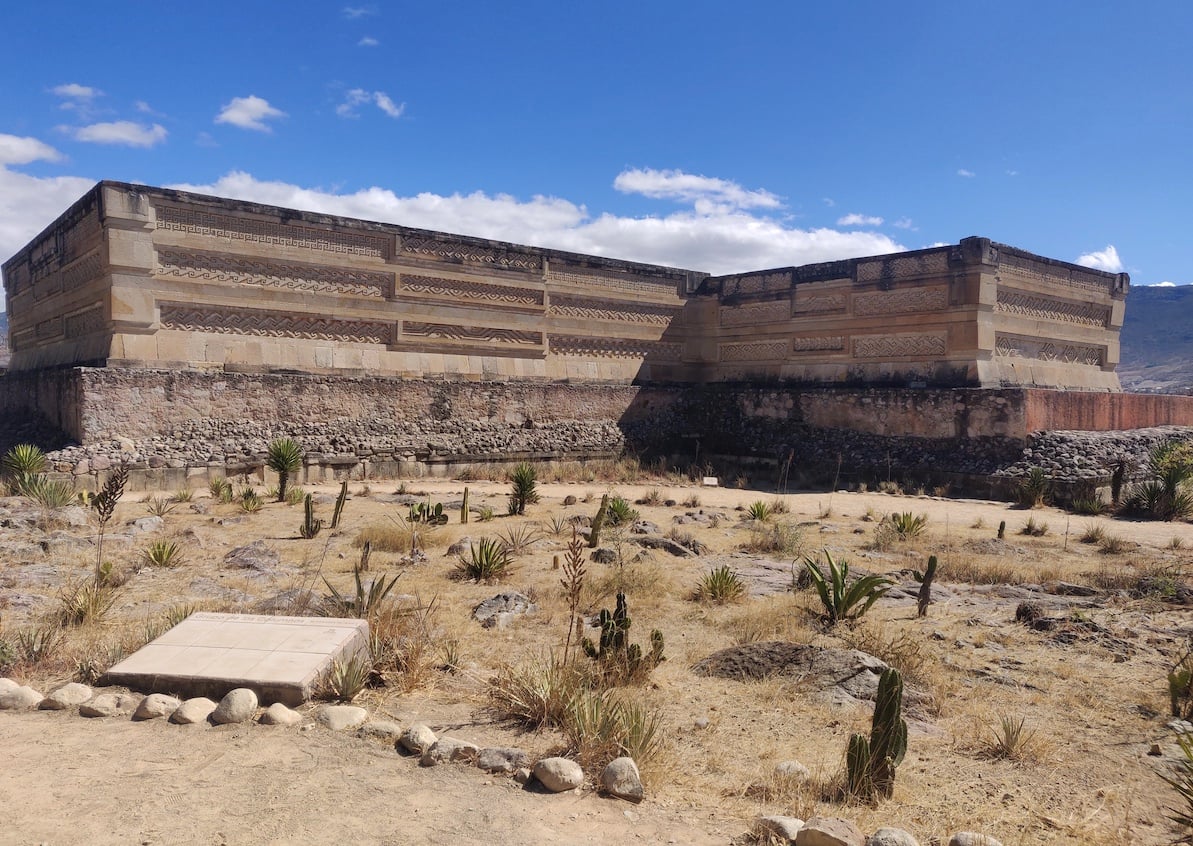
Mitla Ruins in Oaxaca Photo: Jennifer Richardson
This isn’t your typical tour agency in Oaxaca, mainly because it’s Indigenous-centered.
Liliana “Lily” Palma was born in California to Zapotec parents. After rematriating back to her Oaxacan community in 2013, she eventually started Zapotec Travel. Her intention was to create experiences for tourists centered around the region’s Indigenous voices. With so much lack of representation of Oaxacan Indigenous people, and particularly Indigenous women, in the booming local tourism scene, Lily decided it was time to start filling that gap.
“As Indigenous people, we’re often tokenized by the tourism industry. You’ll see our images, our demonstrations, but we don’t often get to speak, be leaders in these spaces, or get to reap any of the benefits. As a Zapotec woman, building a sustainable travel company, I knew that the forefront of my work was going to be centering the Indigenous Zapotec community,” Lily shares.
Our Day Tour of Oaxaca
By nine in the morning, our driver, Julio, dropped us off at the entrance to Hierve el Agua. We hiked along a trail, passing tall agave plants and finally arriving at a spot where we could get a decent view of the large, petrified waterfall or “cascade grande”, a dry and calcified waterfall overlooking the springs. Lily walked with our group, and a man introduced himself, saying that he would be leading this part of the tour. He was native to this particular region.
Lily explained, “This is not my expertise. He is from the community here in Hierve el Agua, so I want to make sure the right people get to represent their land. I’m not the best one to speak in this part of the tour, so I’m passing the mic.”
The next stop was Mitla, and for this part of the tour, Julio guided us. Being native to the community in Mitla, Julio explained to us that these archeological ruins (the ones that remain, post-Hispanic invasion) are on the site that was the religious and ceremonial center of the Zapotec and the Mixtec peoples. As we walked through the former palace grounds, Julio told us that Mitla was like “the Vatican of Zapotec”. Some records show that the area has been inhabited since 900 BCE.
A Mezcal Distillery Run by a Mother and Her Daughters
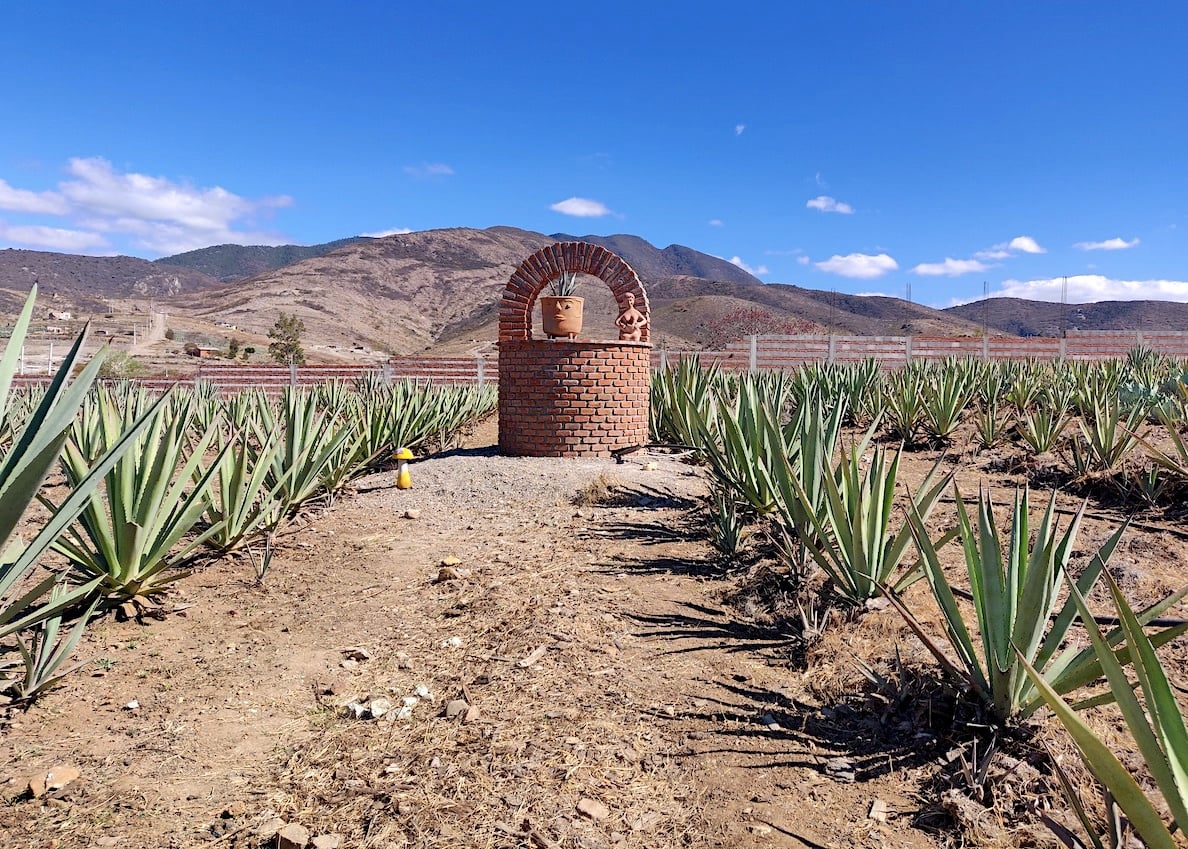
Agave Plants Photo: Jennifer Richardson
Pay a visit to Mezcal Desde La Eternidad in Santiago Matatlán, and you’ll be in the midst of something a little revolutionary: a women-owned and run mezcal business. This was the last stop on our tour, and arguably the highlight of any day trip in Oaxaca.
Mezcal Desde la Eternidad is a mezcal brand and palenque owned by the family matriarch, Hortencia Hernandez. After her husband passed away in 2021, Hortencia took over the business along with her two daughters, Lidia and Nallely.
Like many of the local palenques in the region, much of the process happens in-house — from growing and harvesting the maguey (agave plants) to bottling, selling, and distributing.
As we sipped some of La Eternidad’s mezcals, sampling different flavors (I liked the one infused with hibiscus) displayed along the bar of their palenque, Hortencia shared her favorite saying about mezcal with us. “Para todo mal, mezcal. Para todo bien, tambien.” Translation: Things aren’t going well? There’s always mezcal. Are things going well? There’s also mezcal.
An Equitable Approach to Your Typical Day tour
From the mezcal distillery on my tour to traditional red-clay potters and more, in some of the other experiences Zapotec Travel offers, every service provider receives a fair share for their time and knowledge. This made Lily’s business stand out for me.
As is often the case on a number of tours, a vendor will only make money from purchases made by tourists. So, let’s say you pass through an Indigenous village on a tour, and it’s marketed as a place famous for this particular type of textile. If the tour guide or agency is not genuinely connected to the community, there’s no guarantee of the village’s authority over the management of these tours. As a result, it’s the locals (and mostly women) who have little choice but to make and sell these products. In this scenario, a group of foreigners has entered their home, and the locals have to give their time to them (and in some cases, photos taken of them without their permission), and there’s only a chance that they will be compensated.
If we are really serious about building sustainable tourism infrastructure, people should be paid fairly for their knowledge and stories. Moreover, this is a shift away from an extractive practice towards active engagement.
This is what I experienced on the day tour with Zapotec Travel. Mitla wasn’t just Mexico’s ruins, it was Julio’s homeland. The mezcaleria we visited was unique because of Hortencia’s story.
There’s a lot that can be improved in any tourism sector and the travel industry at large, which contributes to 10% of the global economy. But instead of trying to figure out the solutions ourselves, maybe it’s time to start listening to the experts — the people of the places we visit.
Let’s Start There
And as Lily says, “Pass the mic.”
You can check out all the tours and experiences by Lily and her team on Zapotec Travel’s website.
Click here for discounted accommodations in Oaxaca, Mexico
Join the community!
Join our community to receive special updates (we keep your private info locked.)

