

Bread as Spoon: A Casablanca Lunch That Changed How I Think About Hospitality
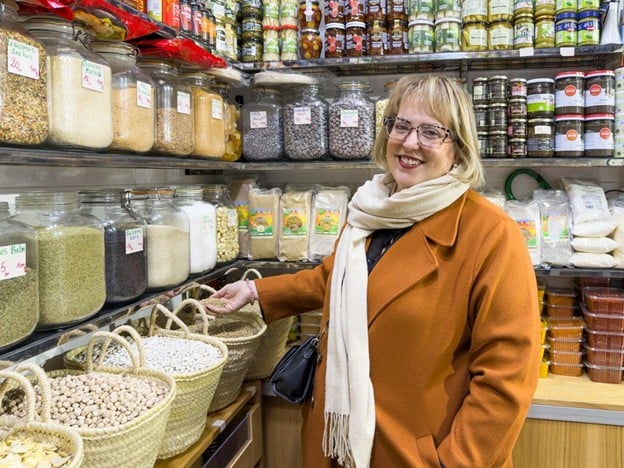
Chamsi with Traveling Spoon at the market Photo: Julie Diebolt
Posted April 10, 2026
The tagine lid lifted with a soft clink. Steam rose up in slow, fragrant ribbons of salt, citrus, and warm spice. After a morning of shopping at the market and cooking side-by-side with Chamsi in her Casablanca home, I tasted more than a great meal. I tasted how Moroccan hospitality works. I chase culture through real experiences as a seasoned travel writer and photographer. I’ll show you what this Casablanca cooking class taught me about flavor, table manners, and belonging.
About Chamsi
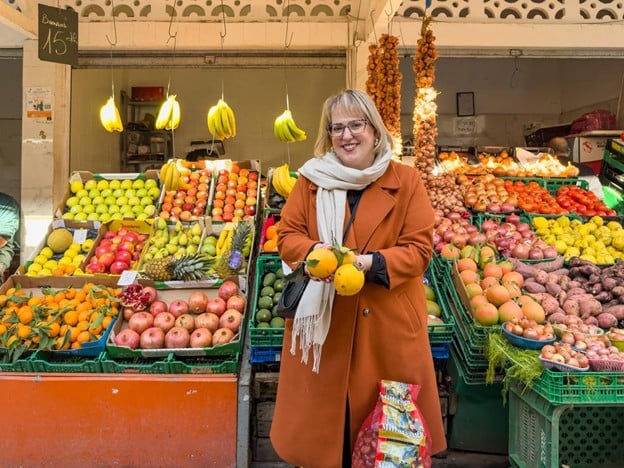
Chamsi with Traveling Spoon at the market before cooking class. Photo: Julie Diebolt Price
That morning started in Casablanca’s market, where a good meal begins long before a burner clicks on. Chamsi, our Traveling Spoon host—born in Montreal, with North African roots and now in Morocco for years—met me with an easy smile. She had a way of explaining things that never felt like a lecture. She didn’t “perform” culture; she lived it, then invited me close enough to notice the details.
In the Market
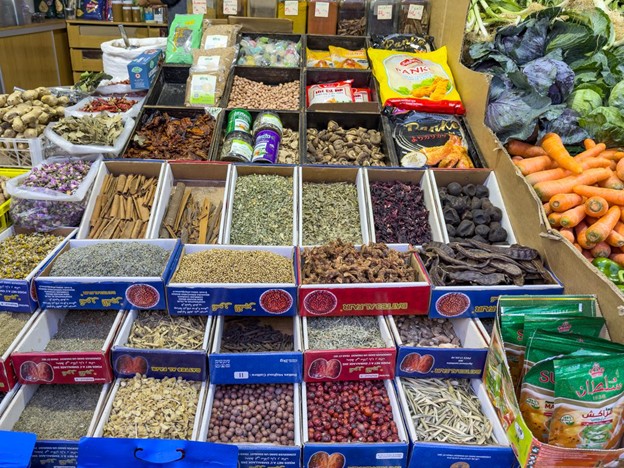
Fruits, spices, and vegetables at the market in Casablanca. Photo: Julie Diebolt Price
Inside the market, colors and scents overwhelmed: oranges, herbs, dates, silver fish, brine, citrus, cumin, and smoke. Chamsi didn’t rush. She showed me how to look. We stopped at a stall of dried fruits and dates. “Not all dates taste the same,” Chamsi explained. She proved it by handing me two to compare. One felt firm and toasty, like caramel with a backbone. The other melted faster. It tasted brighter, almost honeyed. This wasn’t foodie trivia. It proved that “one ingredient” can hold a whole range of choices.
At the spice stall, the colors alone could have filled my camera storage. Paprika, the color of brick dust; turmeric, like golden sunlight; cumin, like silky sand. Chamsi pointed out blends used for everyday cooking, not souvenir jars. “Smell,” she said, and the spice seller smiled like he’d heard that word a thousand times and still loved it.
We discussed what to cook: fish or chicken, olives or preserved lemon, savory or sweet. In the end, the market decided. The chicken looked best that day; preserved lemons and green olives seemed right for a slow-cooked tagine. In Morocco, you don’t always get a menu. Instead, you get what’s fresh. You’re expected to adapt.
The Kitchen
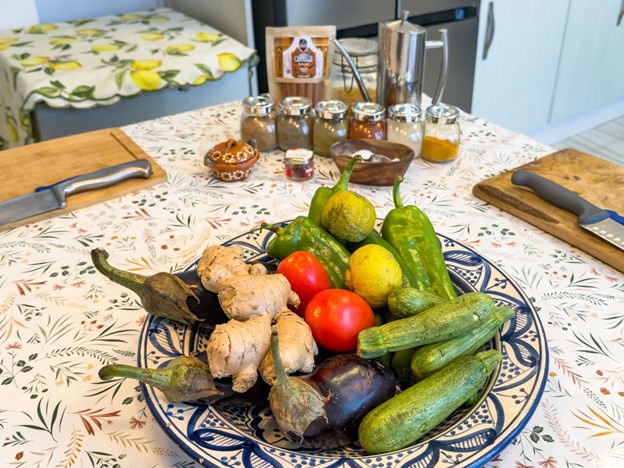
The bountiful island ready for cooking class. Photo: Julie Diebolt Price
Back in her kitchen, Chamsi said, “simple” no longer meant “easy.” We worked with our hands, layering spices into olive oil and garlic to build a marinade that shouted boldness without the noise. When I tried to add salt, Chamsi shook her head. “Wait,” she said. “The preserved lemon brings salt.” That one sentence cracked open a whole way of thinking. Preserved lemons aren’t a garnish. Packed with salt and left to ferment, you don’t fight the lemons with extra seasoning. You work with them.
We started the tagine the way people do when no one’s filming a tutorial. First, we dealt with the charcoal and the stubbornness of fire. The flame didn’t cooperate. So, Chamsi lit the propane grill, and we set about building the tagine. We started with the base—onions first, because onions do more than flavor. They protect the chicken from sticking, soften into the sauce, and become the quiet backbone of the dish.
Chamsi’s kitchen didn’t feel “rustic.” It felt lived in and comfortable. The spice jars, cooking tools, and bowls of produce awaited us on the island. I commented on the remarkably sharp knives that made our work so easy.
The Salads
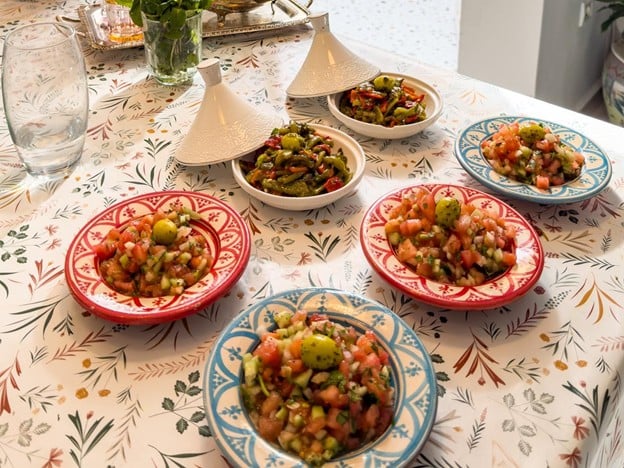
Moroccan salads in serving dishes. Photo: Julie Diebolt Price
While the tagine worked its magic, we made two salads that looked modest and tasted anything but. The first used roasted peppers. We charred them, then peeled away the skins. It was slow, careful work that can’t be rushed if you want the silky texture. We dressed the peppers with olive oil, herbs, garlic, cumin, and a squeeze of lemon.
The second salad brought tomatoes and onions, cut into tiny pieces. We seasoned by taste, then finished with a splash of argan oil and a little preserved lemon juice. Each bowl delivered a lesson. Morocco’s flavors don’t rely on tricks, they rely on attention. Moroccans spend much of their day preparing food.
The Meal
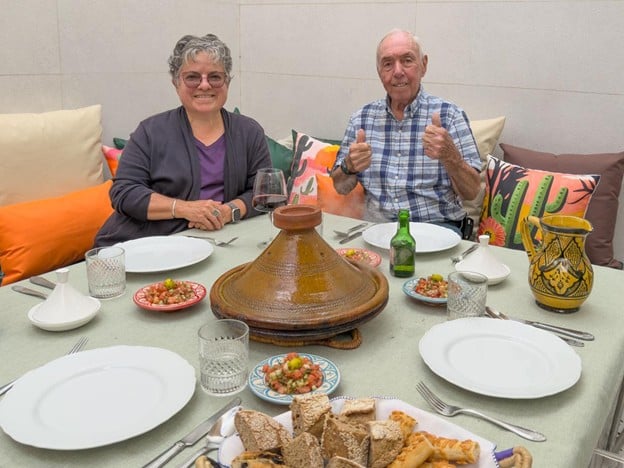
Author and husband ready to dine on the fruits of our labor. Notice the steam from the tagine. Photo: Julie Diebolt Price
Then it was time to sit at the table and eat the fruits of our labor.
We ate from shared dishes, the way families do. Bread wasn’t a side; it was the utensil. Tear, scoop, taste. (Note the silverware–it was acknowledging our American customs.) Chamsi showed me how to eat “from my side” of the communal plate. This gentle boundary kept the table orderly and respectful. No reaching across. No stirring the whole dish like it belonged to one person. The rules didn’t feel strict. They felt considerate, like manners designed to protect everyone’s comfort.
Bread is treated reverently. You don’t toss it away. If pieces remain, you set them aside with care, even if someone has touched them. Food isn’t a disposable prop here. It holds value. People treat it that way.
Chicken Tagine
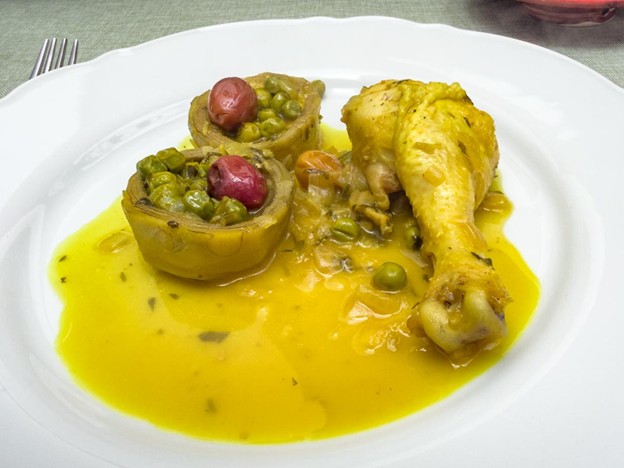
Chicken, peas, and artichoke hearts from the tagine. Photo: Julie Diebolt Price
When the tagine finally opened, the chicken fell tender under a forkless pull. Glossy with sauce. Dotted with olives and slivers of preserved lemon, peas, and artichoke hearts. The onions blended into the sauce like they’d always belonged there. Nobody rushed. We ate, talked, paused. Then, we ate the tiny pastries we selected from the bakery in the morning’s shopping. The meal moved at the pace of people who aren’t trying to “get through lunch.”
Moroccan Mint Tea
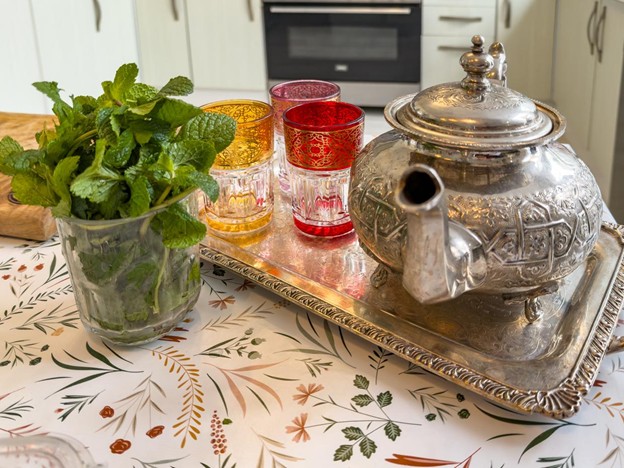
Moroccan tea and mint waiting to be served. Photo: Julie Diebolt Price
Afterward, Chamsi made mint tea. This closing ritual elegantly ends a meal. She rinsed the green tea first to tame bitterness, as is the custom. Then she added fresh mint and sugar, letting the pot return to a gentle boil. The tea arrived sweet, herbal, and soothing. She poured it from shoulder level, as is the custom.
Final Thoughts
I left that table full, yes, but also recalibrated. A single day of home cooking in Casablanca taught me a key lesson early. They protect dignity, reduce waste, and make room for everyone. As a traveler, I can’t control crowds, flight delays, or weather. But I can control my pace, my curiosity, and my respect. This lesson shaped everything that followed on my Moroccan visit.
Click here for discounted accommodations in Casablanca
Join the community!
Join our community to receive special updates (we keep your private info locked.)

