
Izamal: The Historic Mexican “Yellow City” Worth the Stop
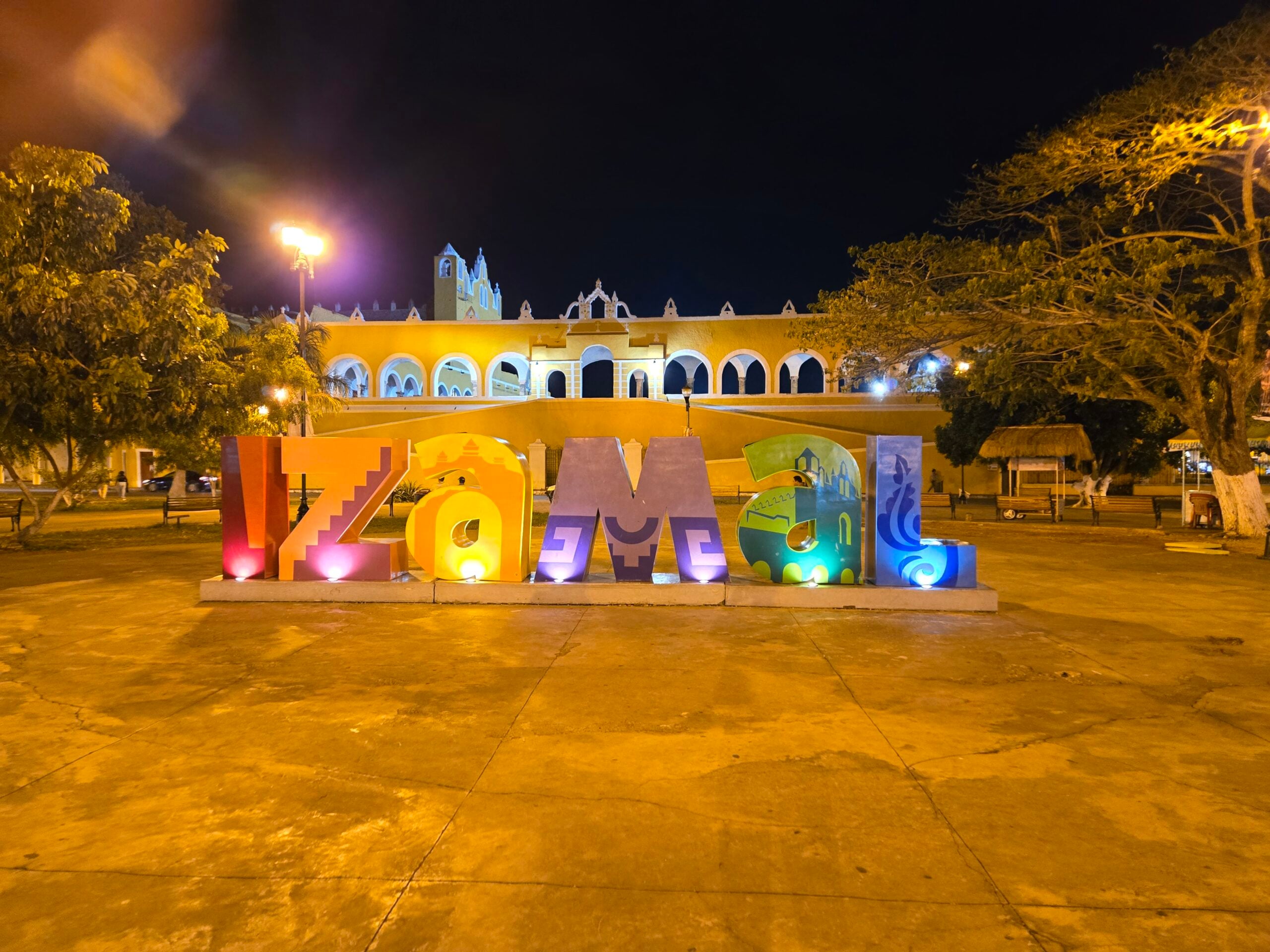
Izamal at Night Photo: Colleen O'Neill Mulvihill
Posted May 4, 2026
Night had fallen when we pulled into the Izamal train station. Awash in a golden yellow, illuminated by gentle lighting and the glow of the night sky, I could already tell that this ancient Mayan town was something special.
Earlier that evening, we’d boarded the new Tren Maya – Mexico’s Mayan train – from Cancun. Tren Maya offers a direct service between Cancun and Izamal several times a day, gently gliding travelers along a nearly three-hour journey through the Yucatan. The historic Mayan town of Izamal is one of Mexico’s Pueblos Mágicos, or “magic towns,” recognized for their cultural or historical significance and preserved architecture.
Next, with the help of the incredibly friendly staff at the train station, we hailed a taxi to our hotel in town, about a ten-minute drive. As we approached downtown, the hue of ochre surrounded us like a warm hug. Since we were arriving at night and planned a full day of on-foot exploration, we booked a two-night stay at Hotel San Miguel de Archagel, right in the central square.
Walking into the open-air lobby was otherworldly. The sound of trickling water and warm air encircled me as I gazed at the wood-carved sculptures and giant palm fronds inside. Our room on the second floor was spacious, comfortable, and air-conditioned. It featured a large bathroom and just enough Mexican décor to remind you of where you were. Eager to explore and find some dinner, we dropped our bags and headed out to the heart of Izamal.
Exploring the Yellow City at Night
The city center was clean, vibrant, and felt safe at night. Locals smiled and said hello as we walked to the center of the square to get a closer look at the giant, vibrantly painted letters spelling out Izamal. The glow from the streetlights bounced against the yellow walls of each building facing the square, creating a 360-degree golden globe surrounding us.
It was pushing 8 pm local time, but we were still hopeful of finding a bite to eat before retiring for the night. Fortunately, we stumbled upon a lovely restaurant called El Toro. Inside, three generations of local women cooked and served us the best chaya and cheese empanadas we’d ever had. Dinner was delicious, inexpensive, and exactly the cultural experience we had hoped to find.
Walking back to the hotel in the evening glow with a full belly and a happy heart, I was eager to see the city in the morning sunshine.
Izamal’s Blended Historic Past and Mayan Roots
For generations, locals in the Yucatan have referred to Izamal as Ciudad de las Tres Culturas — the City of Three Cultures. This refers to the cities’ Maya and colonial past, which over several centuries fused into a contemporary mestizo identity. To fully appreciate today’s Izamal, it’s important to understand this complex and multifaceted history.
One of the oldest, continually inhabited cities in the Americas, Izamal’s history dates to the Late Formative Period (750-200 BC). It served as an important spiritual center for the Mayan civilization. The ancient city was dedicated to Itzamná, the Mayan god of wisdom.
In the sixteenth century, Spanish conquistadors arrived. Along with the Franciscan order of the Catholic Church, they built a sprawling monastery atop what had once been a Mayan temple. Its open-air atrium and enormous courtyard are second in size only to Saint Peter’s Square in the Vatican.
The Convento de San Antonio de Padua: A Spiritual Landmark
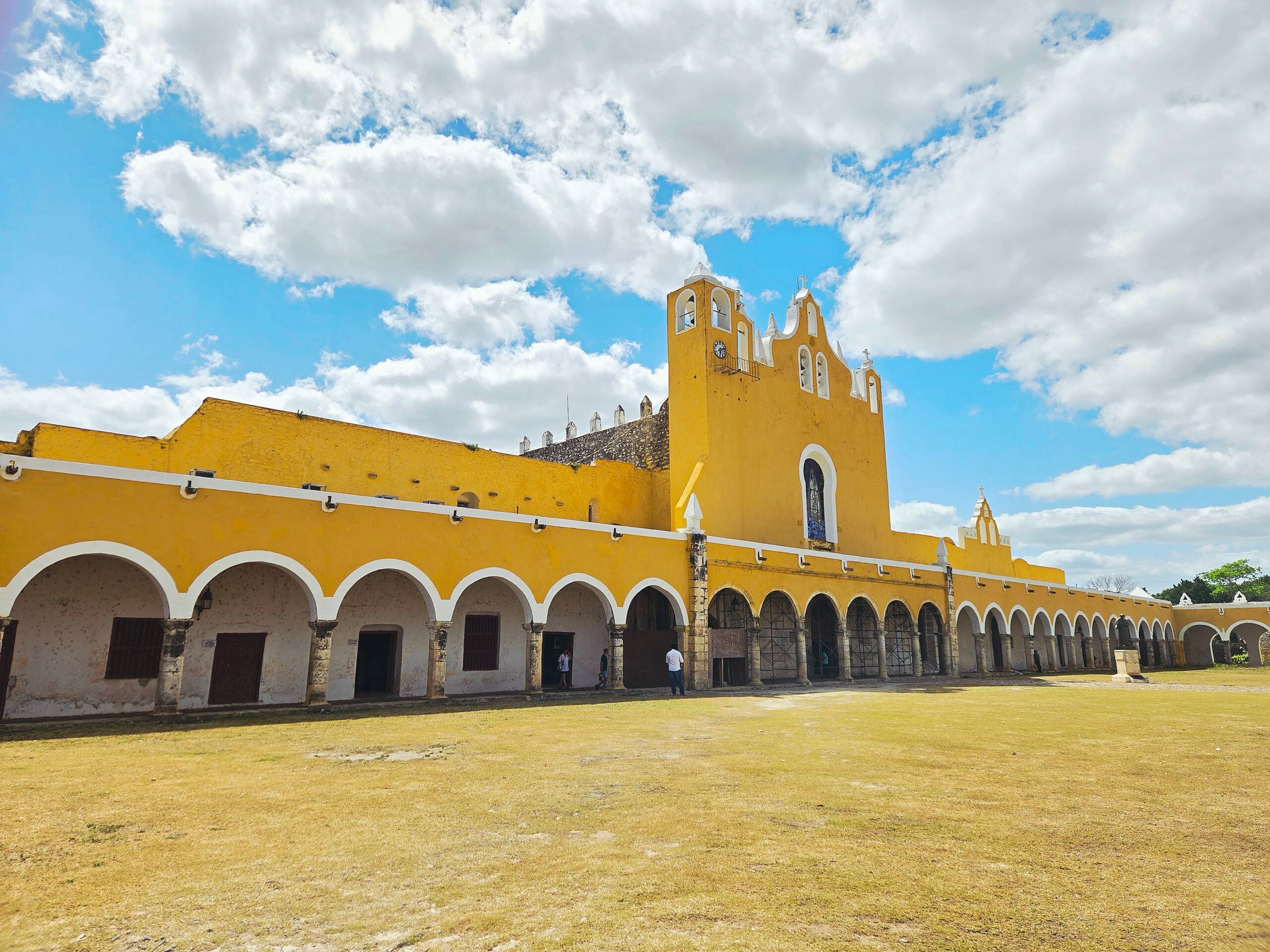
Convento de San Antonio de Padua Photo: Colleen O’Neill Mulvihill
The Convento de San Antonio de Padua is one of Izamal’s best-known sights. Its sweeping yellow arches and sprawling courtyard are a standout in the town. For years, people have come here on pilgrimages, helping Izamal keep its reputation as a special spiritual spot in the region.
The sun shone brightly on our first morning in Izamal. And the sky was the perfect shade of blue as we set out to tour the town on foot. Approaching the monastery, a line of colorful horse-and-buggies lining the adjacent street, waiting to take visitors for a ride through town. Their color palettes of pink and sea green added to the kaleidoscope of luminosity surrounding us in all directions.
Stepping foot into such a historic and massive structure made me take pause. To think of the number of worshipers this monastery held over the centuries was overwhelming. The altar stood two stories tall, awash in gold detailing and intricate design. The wooden pews were strong, yet ever so slightly worn, further revealing how many prayers must have been sent from this very spot.
The tile floors shimmered, a testament to the dedication and care of the local worshipers. Sitting for a moment, I recalled several altars I had knelt before in my Catholic upbringing. This, by far, was the oldest and one of the most elegant I’d seen. I, too, sent up a prayer of thanksgiving for this experience.
Spotting Multi-cultural Details Throughout the City
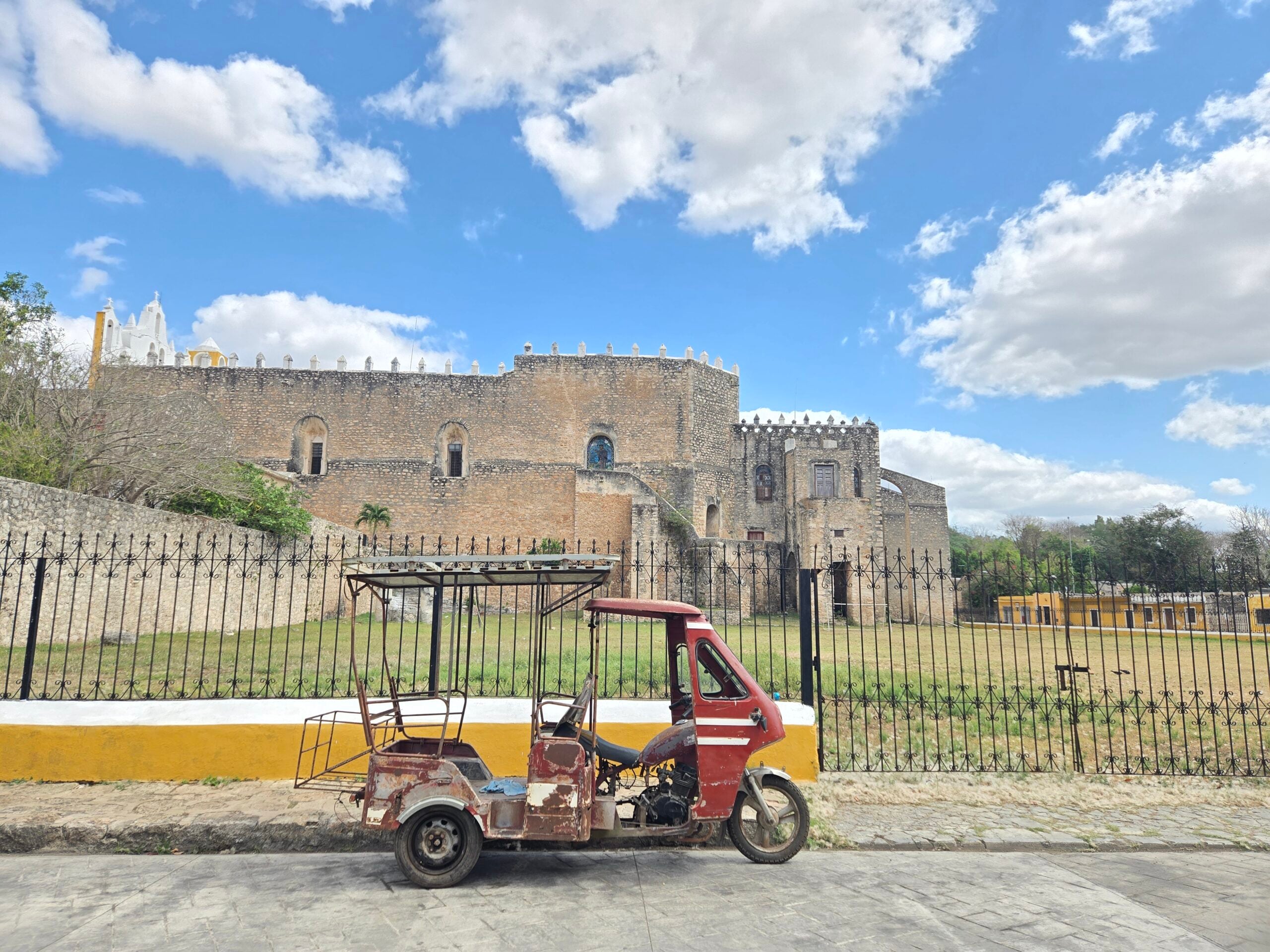
Walking In Izamal Photo: Colleen O’Neill Mulvihill
Izamal is home to numerous Mayan structures, complemented by helpful navigation signs. If you stay observant, you might also notice signs of even more pre-Hispanic buildings in local yards and along the city streets.
The most renowned Mayan monument in Izamal is the pyramid called Kinich Kak Mo, meaning Macaw of the Solar Fire Face in Maya. It is dedicated to the Mayan sun god, Kinich Ahau, and covers 2 acres (8,000 square meters). This makes it the biggest pyramid in Yucatán and one of the largest across Mesoamerica.
Walking along the city streets, we spotted nods to the mixture of Catholic influence, Spanish culture, and Mayan artifacts. What makes touring this city so special is the blending of all its history, seemingly done by design, yet obviously layered throughout the centuries, that appears strikingly cohesive.
Nothing Felt Out of Place, Yet Every Street Told a Different Story
As I continued to wonder about the meaning behind the city center buildings – as well as the monastery – being painted yellow, the answer finally found me. In 1993, Pope John Paul II visited Izamal as part of a larger effort to reach more indigenous Catholics. As a nod, the town painted all the buildings the same sunny egg-yolk yellow with white trim, the colors of the Vatican’s flag.
The yellow was selected as a symbol of reverence and celebration. Nonetheless, some locals think the tradition of using yellow goes back even further than this event. They explain that yellow symbolizes the sun, which is integral to the town’s Mayan heritage and the worship of the sun god, Kinich Kakmó.
Regardless of its origin, the impact is clear. Strolling through Izamal feels like stepping into a world bathed in golden light. This hue exudes warmth and vitality, making the town visually captivating and historically important. I left with one indelible impression after another, making it truly worth the stop along the Yucatan’s Tren Maya route.