

Chiapas Coffee Estates – Crops Through Sustainability
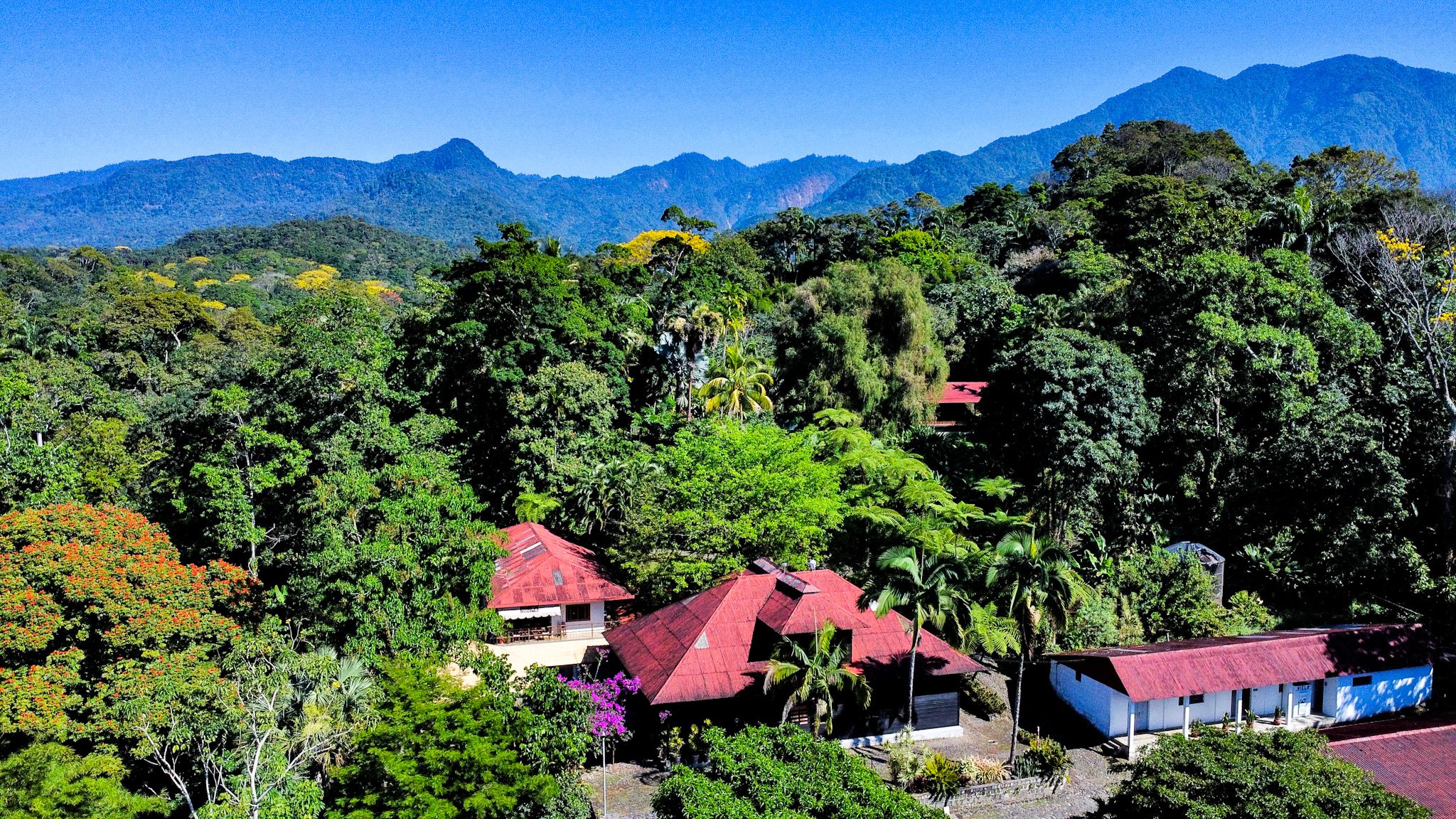
Landscapes along the Ruta del Café Photo: Nicholas Kontis
Posted August 13, 2025
Mexico’s southernmost state of Chiapas boasts steamy tropical rainforest jungles, fertile and pine-forested mountains, and standout colonial cities and towns. Known for its cobblestone streets, baroque buildings, and elegant plazas, San Cristóbal de las Casas is on many a traveler’s radar.
The ruins of Palenque and Yaxchilán are two of the most spectacular archeological sites in the Mayan world. The surrounding jungle remains unscathed, home to cacophonous howler monkeys, brightly colored toucans, and various cats, including jaguars and ocelots.
Chiapas produces cacao, mangos, avocados, bananas y ron. But in the misty highlands of the Soconusco region, there is another treasure. At an elevation of 1,800 to 3,750 feet, along the Ruta del Café (the “Coffee Road”), you’ll find some of the most sought-after coffee in the world.
In the late 19th Century, noting that Hamburg, Germany, was the world’s largest coffee port, Mexican President Porfirio Diaz began pursuing investors from Germany and Switzerland to emigrate to Mexico and establish coffee estates. The Sierra Madre de Chiapas offered a dense but fertile jungle, ripe for the production of “green gold” (oro verde) for those willing to work the land. After a coffee futures exchange opened in Hamburg in 1887, 24 million bags of coffee were traded in the first year and a half. Germany remained at the forefront of the coffee trade until the Second World War. Decades later, it recovered, and Hamburg is again the leading importer of coffee in Europe.
The Coffee Estates of Chiapas
Meanwhile, the fincas (coffee estates) of Chiapas have thrived. While Ruta del Café farms adhere to traditional methods of cultivation, the Starbucks chain is today one of its largest customers. Nearly 400 million coffee plants produce the region’s essential, aromatic brew, which draws from its environment with tasting notes of tropical fruits, cinnamon, almond, and dark chocolate.
Many fincas are perched above Tapachula, the second largest city in Chiapas, near the border of Guatemala, and are still run by descendants of the original settlers. Many of them welcome tourists, offering rooms, tours, guided hikes, wellness activities, fine dining, and immersion into coffee and flower production.

Finca Argovia Photo: Nicholas Kontis
Finca Argovia – A Focus on Sustainability
Founded by a family from the Aargau region of Switzerland, Finca Argovia’s coffee plantation features a flower house with a stylish boutique hotel. It is a leader in sustainability as well as hospitality. Owner Bruno Geisemann speaks with unabashed affection for his home.
“We cherish our land and are grateful to live where the Mayans have lived for over 3,000 years,” Geisemann says. The land has changed him. “I came to the farm, and all that I cared about was being the largest coffee producer in Mexico. Now I changed my ways.” Today, Argovia is a champion of organic farming. The concept is regenerative, one of rebuilding the soil and ecosystem. Coffee beans are cleaned and treated at the finca’s water treatment plant. Discarded coffee hulls are crushed into compost.
The grounds of this finca highlight sustainable balance and Geisemann’s passion for eco-agriculture. In addition to coffee production, the owner devotes many acres to ginger blossoms, orchids, heliconias, and other exotic flowers. His varied plans to protect and enrich the healthy forest soil have earned citations from Conservation International, The Rainforest Alliance, the National Organic Program, the U.S. Department of Agriculture and the European Union.

Lodging at Finca Argovia Photo: Nicholas Kontis
Lodging and Unique Experiences at Finca Argovia
Fifteen wooden cabins and casitas (now a part of the Tesoros lodging brand) nestle amid the lush jungle foliage. Other than an outdoor swimming pool and wellness area, there are few frills. There’s no need for phones or televisions. Guests grow accustomed to leaving their room doors ajar, welcoming the sights, sounds, and smells of the surrounding nature preserve. A curious deer might drop in unannounced. The melodic calls of tropical mockingbirds and green parakeets replace alarm clocks. Many of the birds — over 200 species — get their water from banana plants, so there are few mosquitoes.
“We understand hospitality as users rather than deliverers,” said Geisemann. “Through years of being on the land, we learned what we liked and did not like, making sure that our visitors spend their time and money to have the best guest experience. That’s our responsibility.”
Guests have the option of an intense coffee experience, either a full-day tour or a moderated version. Although a two-night stay is the norm, it would be easy to spend a week in these magical surrounding. Hike the mountains or explore the nearby Pacific coast. Birdwatching, fishing, turtle conservation, and visits to cacao plantations provide additional possible activities. Geisemann himself guides a sunrise hike through the coffee plantation and jungle-shaded banana plants, the climax of which is an astonishing view of 13,425-foot Volcán Tacana. As the finca works with Indigenous communities, guests also have the unique opportunity to meet local people.

Traditional Coffee Processing Equipment Photo: Nicholas Kontis
Finca Hamburgo
Each of the numerous farms along the Ruta del Café has its unique character, flavor profiles and cultivation methods.
Known for high-altitude coffee grown at elevations above 4,000 feet, Finca Hamburgo promises its guests cooler temperatures and a respite from the sweltering Chiapas heat. Founder Arthur Erich Edelmann moved his family from Perleberg, Germany, to Chiapas in 1888. Like all early settlers, the Edelmanns had the arduous task of planting thousands of coffee plants into the sheer hillside. They ran power from their own hydroelectric plant to process the coffee beans. Today, coffee production continues to flourish.
The magnificent Finca offers six rooms and two suites along a wrap-around porch, opening to sweeping panoramas of the verdant mountains. A small museum displays photos and artifacts from the finca’s 19th-century inception. The restaurant serves German beer. The farm offers guided tours where visitors may learn about the coffee production process, from planting to harvesting.
More Farms on the Ruta del Café
The coffee farm of Finca El Triunfo is part of the El Triunfo Biosphere Reserve, a UNESCO World Heritage Site. Visitors who walk through the luxuriant highland forest learn about the sustainable practices that produce a high-quality coffee renowned for its complex flavors.
Finca La Selva sits in the heart of the Lacandon jungle, where shade-grown plants are the specialty. As elsewhere, there’s an emphasis on biodiversity and environmental conservation.
Situated at an elevation of 5,000 feet in a coniferous forest, you’ll find Finca San Francisco. Besides coffee, it features a botanical garden of 3.7 acres, specializing in such tropical flowers as anthuriums, orchids, and birds of paradise. Two cozy rooms provide accommodation.
Finca San Vicente is known for its innovative farming techniques, adapting modern technology to traditional practices. Tours include tastings and discussions on sustainable agriculture.
Getting There
Daily flights to Tapachula airport, in southern Chiapas, operate from Mexico City, Guadalajara, Monterey and Tijuana. As rental cars are not recommended on the mountain roads, both Finca Argovia and Finca Hamburgo will pick up travelers at the airport. The drive from Tapachula to the Ruta del Café takes about 90 minutes. Tuxtla Gutiérrez, the capital of Chiapas, is a 4½-hour drive.
Click Here for Discounted Accommodations in Chiapas
Join the community!
Join our community to receive special updates (we keep your private info locked.)

