

Guyana’s Kaieteur Falls: The World’s Largest Single-drop Waterfall and So Much More
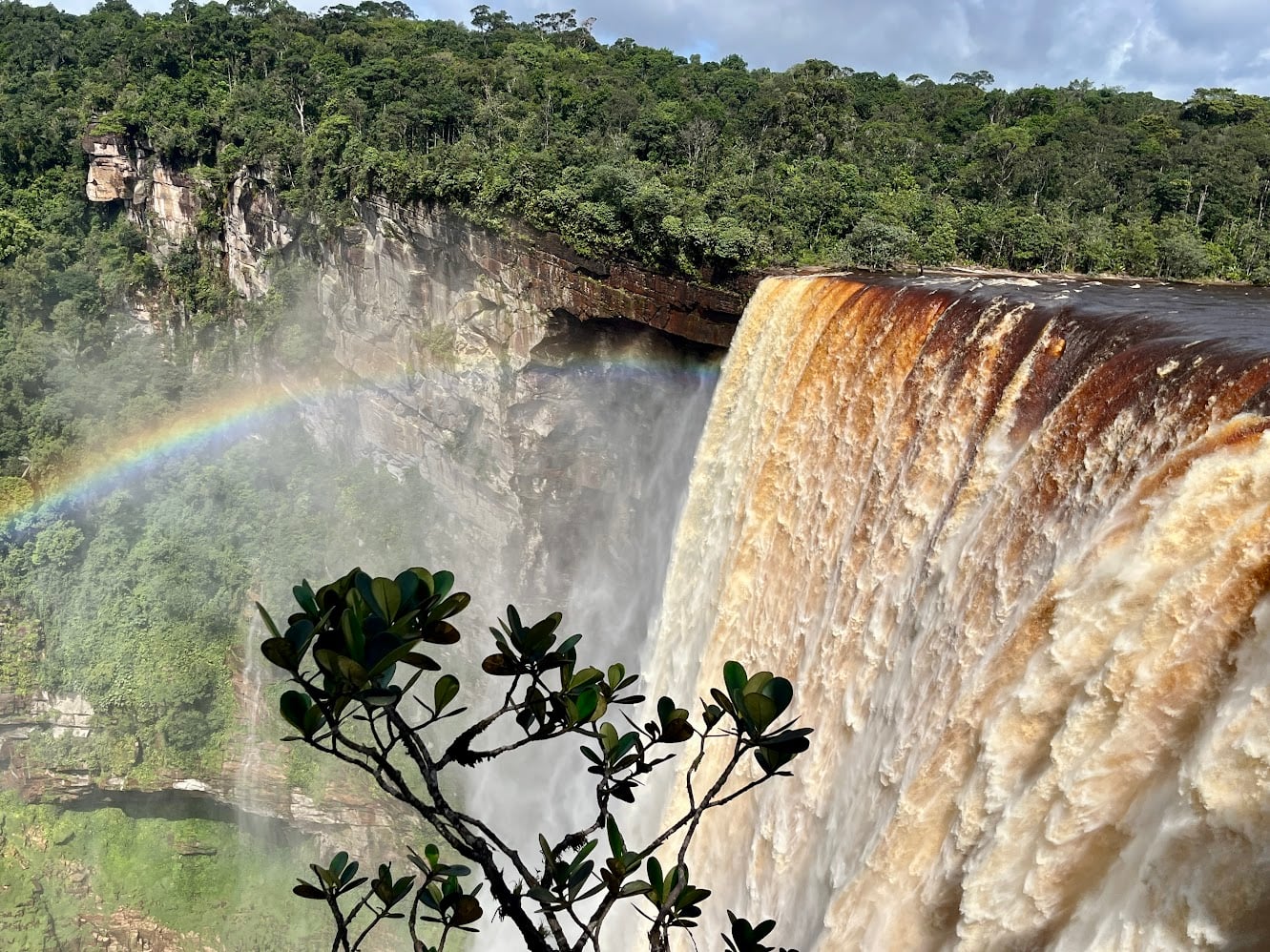
Kaieteur Falls and rainbow. Photo credit: Kirsten Harrington
Posted May 7, 2026
“Don’t go wandering off on your own – this area has lots of jaguars and moving vines – aka snakes,” our guide Sebastian cautions as I begin a tour of Guyana’s Kaieteur National Park with a handful of other adventurers. We’ve come to see Kaieteur Falls, Guyana’s most iconic landmark.
We head away from the park lodge, over layers of sandstone that have been compacted over hundreds of millions of years. This erosion-resistant material allows the upper cliffs at the waterfall’s top to remain intact.
After spending a week traversing the jungle and savannah in one of the most biodiverse countries on earth, I felt that nothing in Guyana could surpass what I had already experienced: encountering anteaters in the wild, swimming with capybaras, spotting rare birds in the rainforest, and searching for jaguars at night.
Then Kaieteur Falls peeks out from the mist at the end of the Boyscout’s View Trail. These legendary falls were hidden as we flew in, obscured by the cloud cover that hangs over them like a perpetual blanket. The falls reveal their glory as a gentle spray hits my face and the roar of thundering water fills the air. A rainbow connects the top of the falls to the Potaro River below, like the ribbon on a present, a final parting gift from this nature paradise.
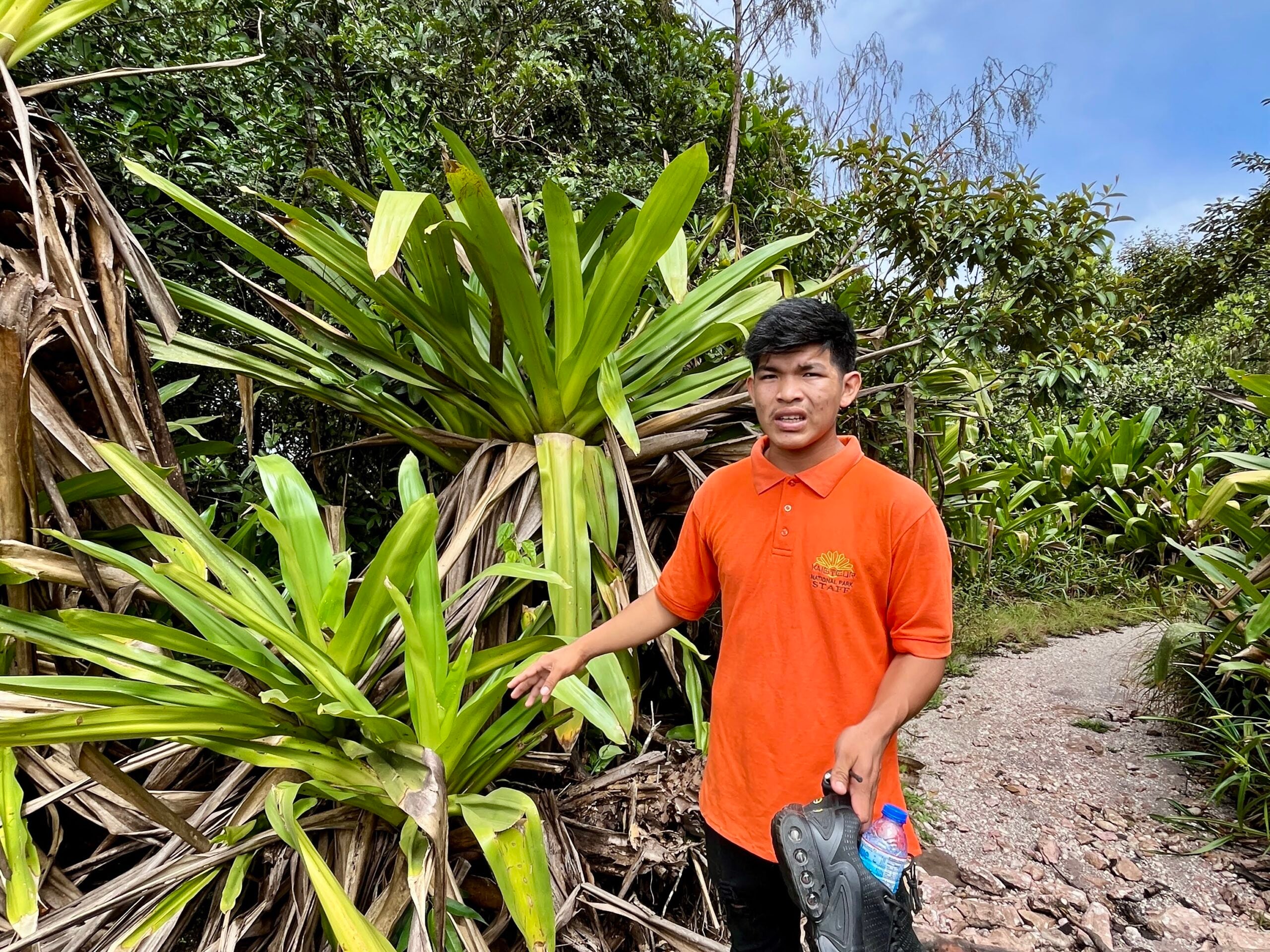
Our guide Sebastian briefed us on the ecology and history of the park. Photo credit: Kirsten Harrington
Legend of Kaieteur Falls
Situated south of Georgetown, Guyana’s coastal capital, Kaieteur Falls is a powerful single-drop waterfall. Plunging 741 feet, it stands hundreds of feet taller than Niagara Falls.
Legend has it that the local indigenous leader, Patamona Amerindian Chief Kai, prayed to the gods for protection against attacks by neighboring tribes. In a final move of self-sacrifice, he paddled his canoe over the falls, believing the gods would smile on his people and save them from destruction.
Pleased with Chief Kai’s sacrifice, the gods turned him into an immortal being who lives in the face of a cliff. Squinting and using my imagination, I see the shape of an old man carved into the rock wall near the falls. Combining the chief’s name, “Kai,” with “teur,” the Patamona word for “falls,” gives us the name Kaieteur.
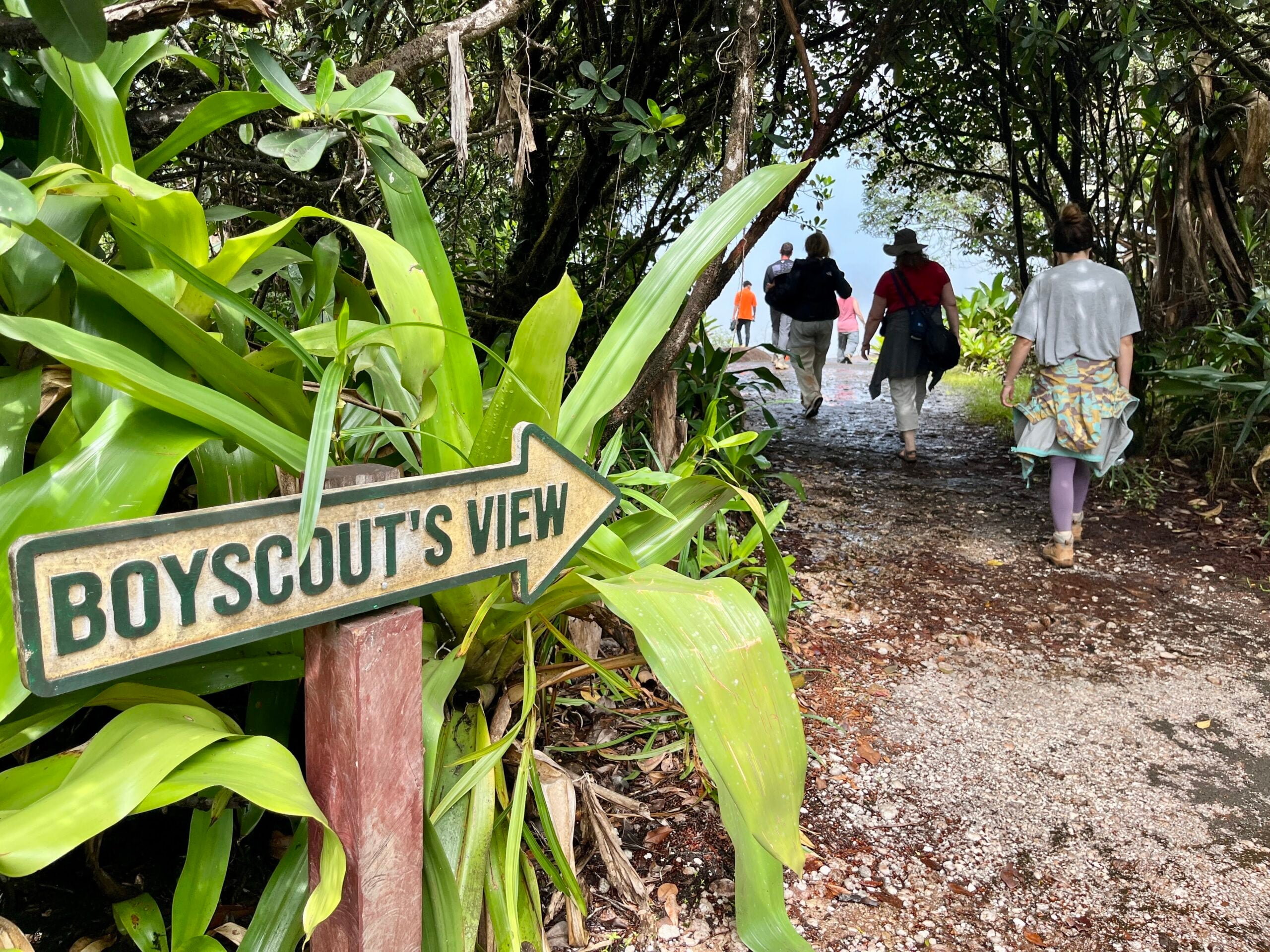
There are three main viewpoints in the park. Photo credit: Kirsten Harrington
Flora and Fauna at Kaieteur National Park
Sebastian leads us to three different observation spots. Each reveals a distinctive characteristic of the flowing water. As we leave the aptly named Rainbow View, tiny purple orchids, red helicopter-shaped flowers, and giant tank bromeliads line the trail. Carnivorous sundew plants line the sunny rocks along the trail, attracting insects with their sticky residue.
According to a study by Guyana’s Protected Area Commission, over 30 potentially new species have been discovered in the park over the last decade, including aquatic beetles, fish, and the Metallic Blue Tarantula. The high altitude, microclimates, a variety of habitats, and little human interference make Kaieteur National Park a prime spot for endemic species.
At the final vantage point at the Nature Valley trail, I sit down to rest near a tank bromeliad. Sebastian points out the dime-sized Golden Rocket Frog tucked away in the leaves of the plant next to me. Thought to live exclusively in the national park, this bright yellow, rare amphibian makes its home in the water trapped by the bromeliad’s leaves.
Walking back to the lodge, we stop to capture the beauty of the fiery orange Cock-of-the-Rock bird, one of over 300 avian species that call the park home, along with endangered Giant River Otters, armadillos, anteaters, wild cats, hogs, monkeys, and tapirs.
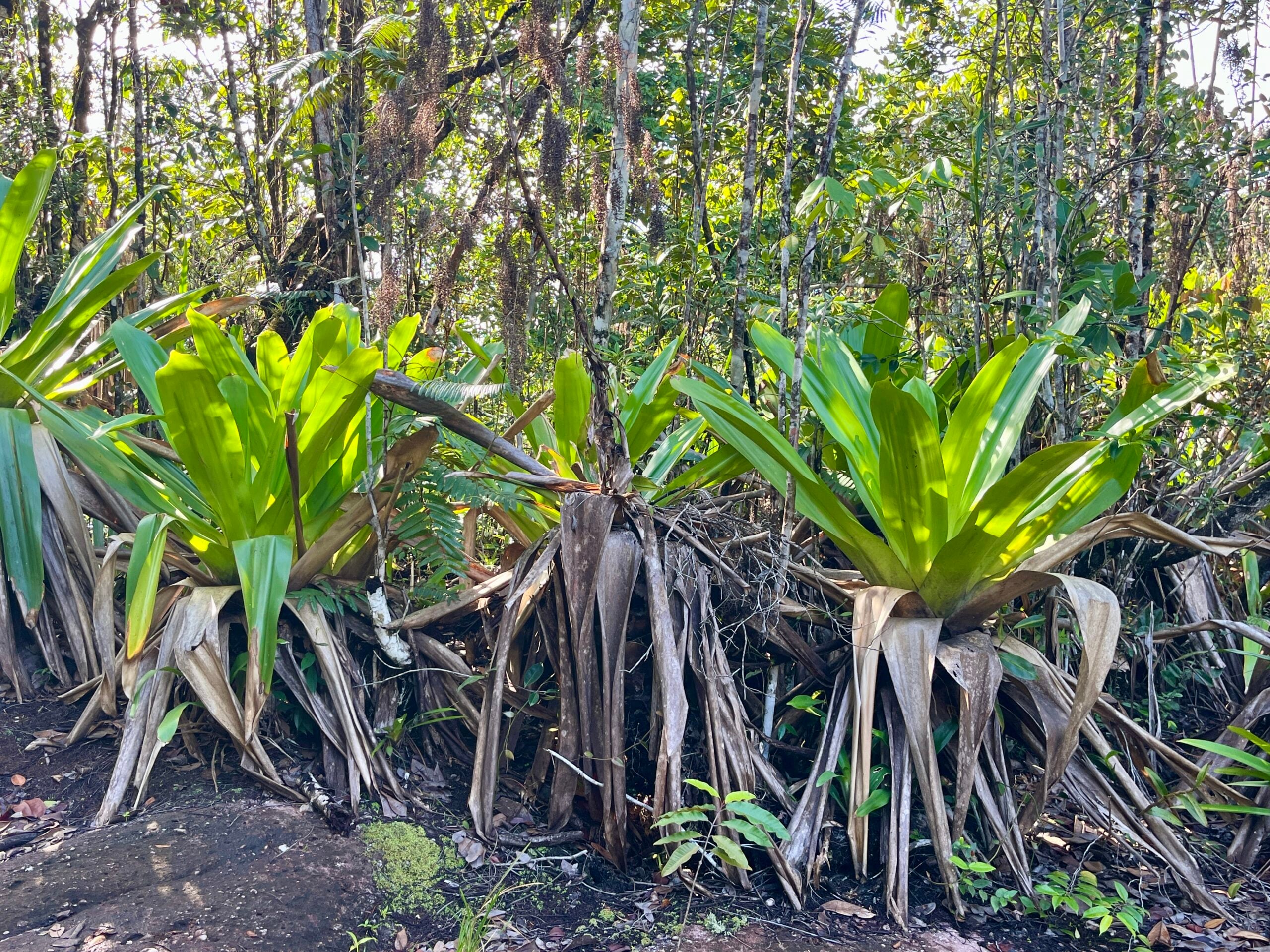
Giant Bromeliad plants provide a home for Guyana’s endemic Golden Rocket Frogs. Photo credit: Kirsten Harrington
Protecting Guyana’s National Treasure
Kaieteur Falls’ remote location inherently limits the number of visitors each year, with just over 8,000 people in 2025. We limited our time in the park to 2 hours, reducing the “wear and tear” on the landscape. During my visit, we didn’t see any other visitors, which added to the magical experience.
When originally established in 1929, Kaieteur National Park covered over 100 square kilometers. In 1973, the size reduced to a mere 19 square kilometers to allow gold and diamond mining. Thankfully, in 1999, the park’s size was increased to its current 626 square kilometers to allow more efficient protection of the ecosystem.
The park is currently managed by the Protected Areas Commission (PAC), with input from the Patamona people living in nearby villages who have relied on resources from the sacred area for generations. The local tribes work with the PAC to ensure that the cultural importance of this sacred landmark is protected by prohibiting activities such as extreme sports or disposing of human ashes.
How to Experience Guyana’s Kaieteur Falls
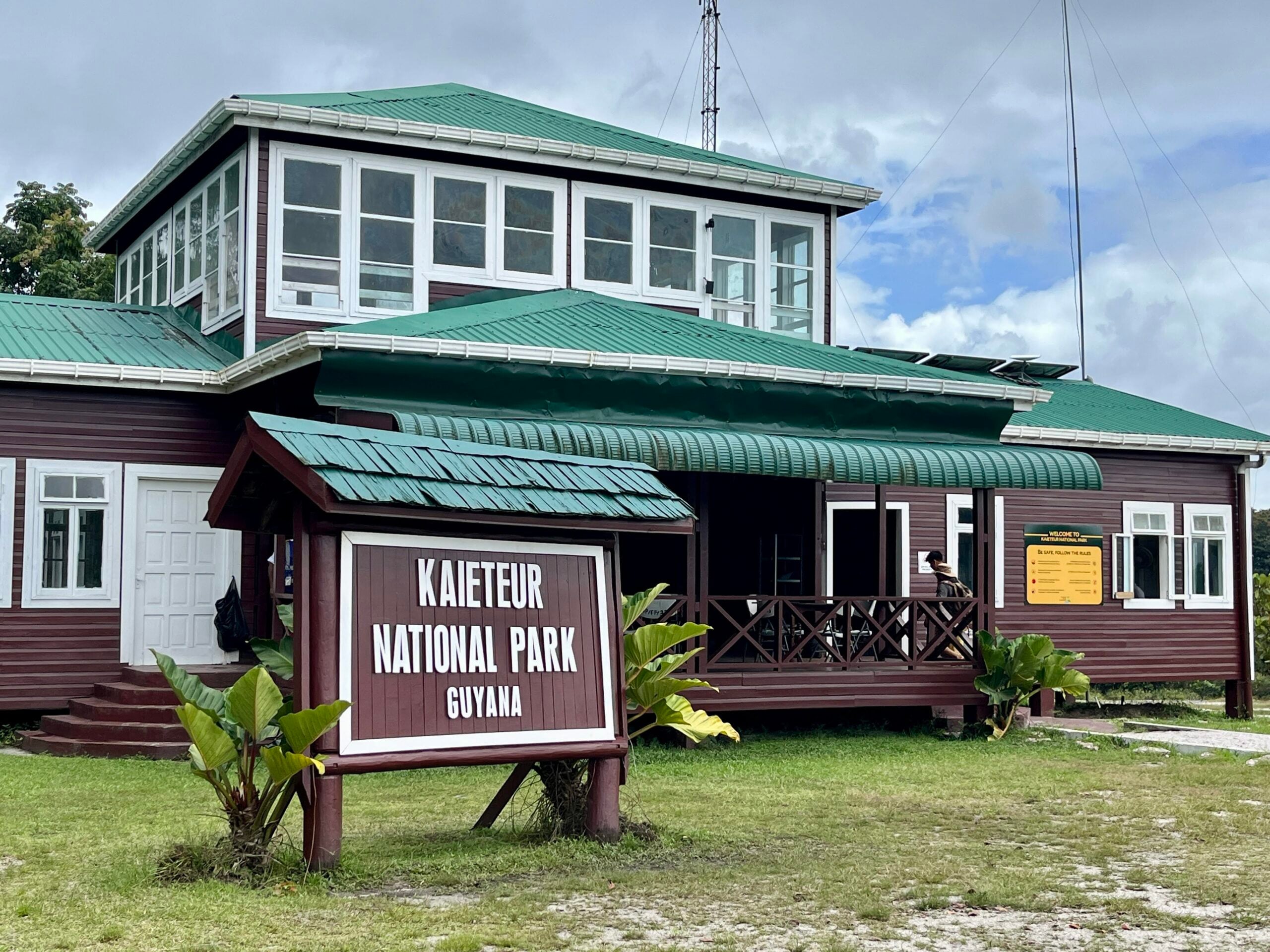
Most visitors arrive at this remote park by charter flight. Photo credit: Kirsten Harrington
Surrounded by undeveloped rainforest and not easily reached by car, visitors usually arrive by small 8-12-person aircraft. The flight takes about 60 minutes from the capital of Georgetown. A half-day trip includes a guide who will lead you to the best viewing spots. Tour operators Air Services Limited, Evergreen Adventures, and Roraima Airways offer packages from Georgetown.
Take a seat by the window and have your camera ready as the pilot circles a few times, approaching Kaieteur National Park. The scenic flight also gives you a glimpse of the vastness of the rainforest and a bird’s-eye view of the pink and blue rooftops above Georgetown.
Kaieteur Falls is more than a showy tumbling river; it’s a sacred spot that preserves indigenous culture, supports a wealth of plant and animal life, and symbolizes Guyana’s raw and powerful beauty.
Visit Guyana Tourism for more information on Kaieteur National Park
Click here for discounted accommodations in Georgetown, Guyana.
Join the community!
Join our community to receive special updates (we keep your private info locked.)