

Ethiopia’s Coffee Ceremony: A Cultural Connection

Ethiopia's Coffee Culture Photo: Shutterstock
Posted September 24, 2025
The smell of incense and coffee filled the air, mingling with steam and smoke as the clay pot brewed over charcoal. Rain fell softly at the open-air restaurant, and I moved closer to the fire. After 24 hours of travel from Atlanta to Addis Ababa, that strong cup of coffee revived me and welcomed me to Ethiopia.
But this was no ordinary cup; it was a celebration of culture. During my two weeks in Ethiopia, we gathered for a traditional coffee ceremony every day, often more than once. With our guides, their families, fellow travelers, and new friends we learned about the joys and struggles of the Ethiopian people. We shared pictures of our families and stories from our travels.
A cafe in the forest, a busy street corner, or on our hotel patio – the location changed but the ritual was the same. The host carefully roasts the coffee, offering a whiff of the enticing aroma, hand grinds the beans, and brews the coffee over charcoal in a jebena, a special clay pot. The slow, methodical preparation allows time for a midday rest, or a post-meal chat. I came to appreciate these built-in breaks from a busy day of sightseeing. The taste of coffee and those shared times still linger.
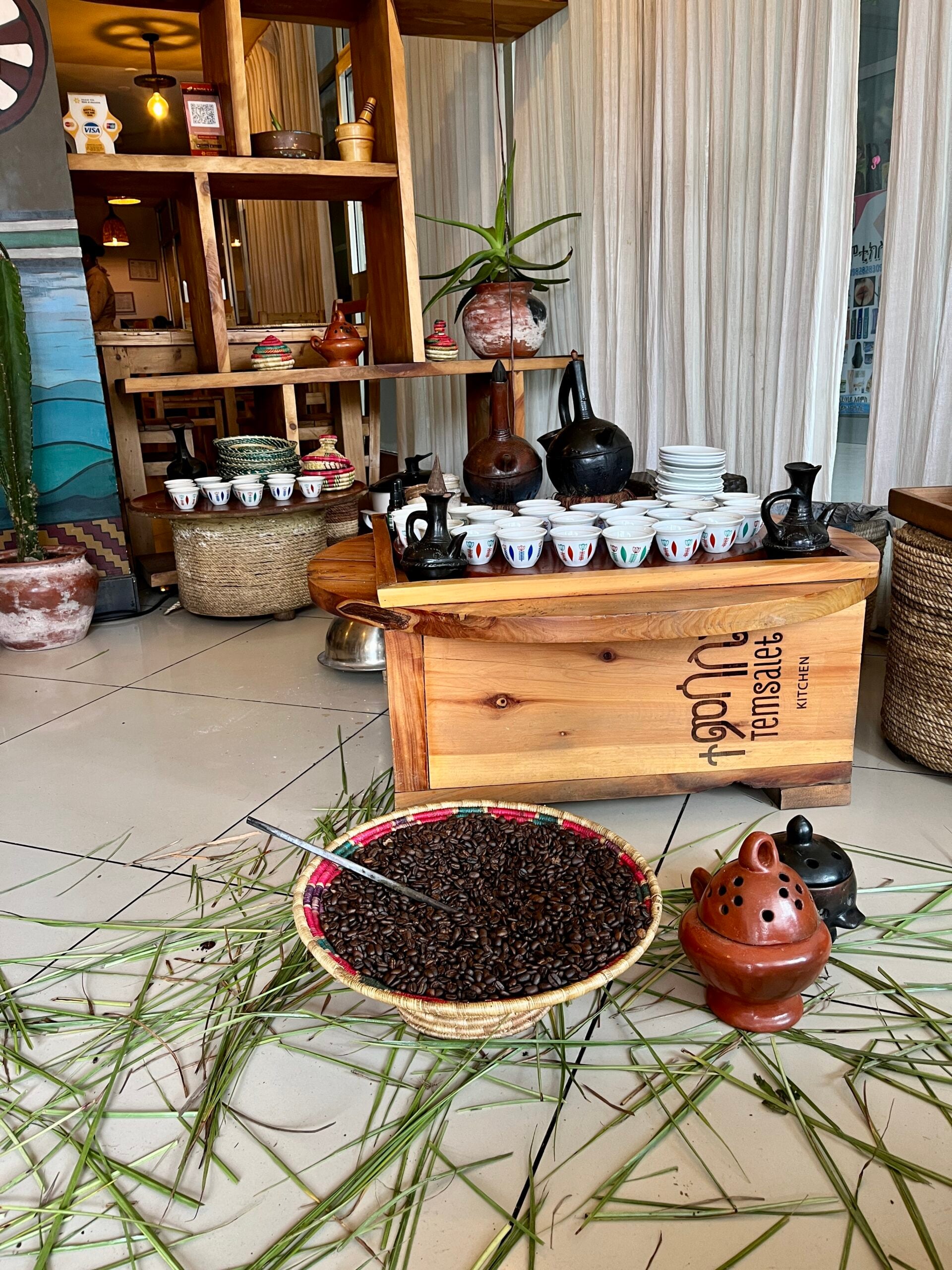
Temsalet Kitchen’s coffee ceremony area. Photo: Kirsten Harrington
Ethiopia: The Birthplace of Coffee
If the legend is true, we have one energetic goat and an observant goatherd named Kaldi to thank for the strong brew we savor each morning. Kaldi was watching his flock in the highlands of Ethiopia when he noticed the goats became energetic after munching on a particular bush with red berries. Kaldi tried it for himself and the rest is history. The Kaffa region, lush with coffee-yielding bushes, became known as the birthplace of coffee. Today, coffee plays an important role in Ethiopia’s economic and social fabric.
Fostering Connections
“The coffee ceremony is one of the most important cultural traditions in Ethiopia. It’s more than having a cup of coffee,” says Fitsum Kibreab, founder of Akuye Tour Company in Addis Ababa.
“It is a ritual connecting Ethiopians to centuries-old traditions. It’s also a social gathering, where families, friends, and neighbors sit around the ceremony and discuss different issues from politics and religious affairs to family and work issues.”
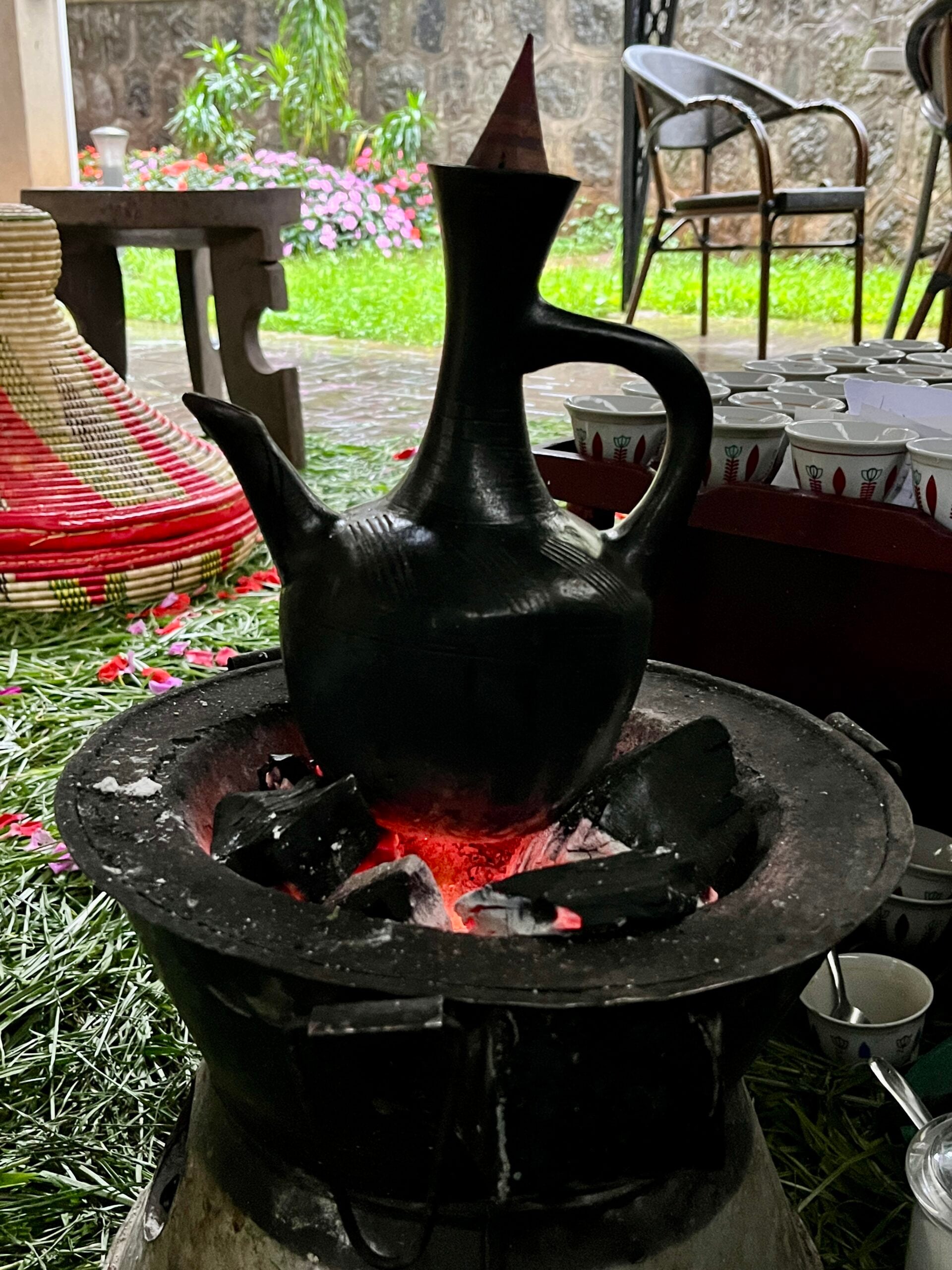
Coffee is brewed over charcoal in a clay pot called a jebena. Photo: Kirsten Harrington
A Sign of Welcome
Every element of the coffee ceremony is carefully organized. A small charcoal fire holds the clay coffee pot, while a tray of demitasse cups stands ready. A layer of green grass or carpet adorns the floor. Frankincense is always lit nearby, mingling with the aroma of coffee.
“The green grass represents renewal, life, and hospitality. It’s like rolling out the red carpet to honor the guest,” Kibreab explains. “It’s a way of showing the fertility and abundance of our country.” The incense cleanses the space of negative energy and adds a peaceful element.
“Once we smell the incense, we know our neighbors are having coffee, and we are invited,” Kibreab says.
Savory Snacks
It wouldn’t be a coffee ceremony without snacks. It’s important to have something in your stomach to cushion the strong coffee. Popcorn, roasted barley, or spongy injera bread are popular options.
“Sometimes we serve dabo, our round homemade bread with the coffee. It makes the ceremony richer and shows generosity,” says Teddy Embaye, founder of Teddy Zion Tours and Travel.
The large circular loaf is meant for sharing, with each guest tearing off a piece. On one occasion, we were welcomed with a special message baked into the fluffy, soft bread, a touching sign of hospitality.
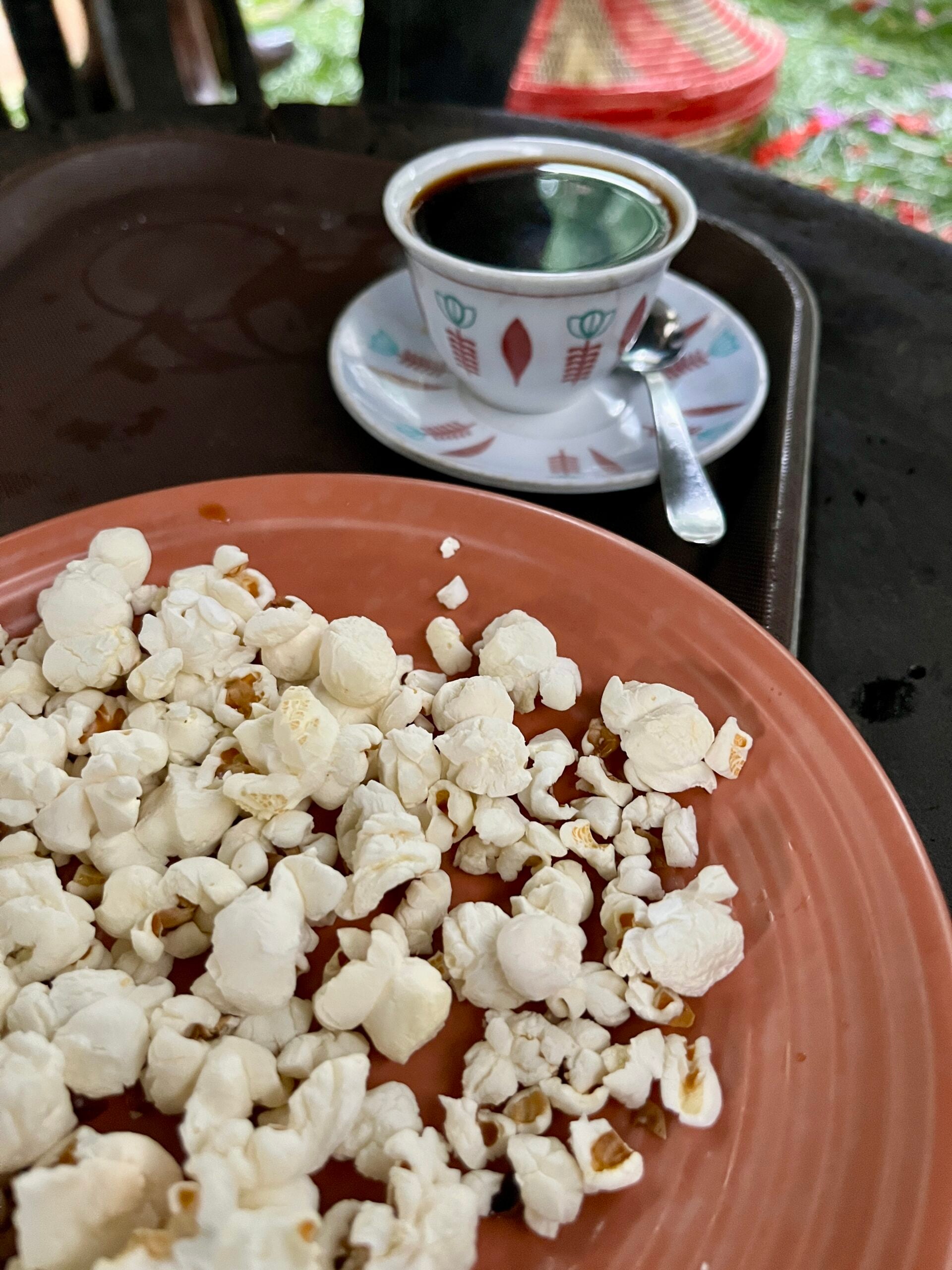
It’s common to serve small snacks like popcorn during a coffee ceremony. Photo: Kirsten Harrington
Coffee at Home
If you’re lucky enough to be invited to someone’s home, you’ll see that a coffee ceremony isn’t just for special occasions. Most families have a coffee set in their living room and will brew coffee with the full ceremony in the morning, after lunch or in the evening – maybe all three times.
“The smell of roasting beans with frankincense is part of our daily life,” says Embaye.
I loved chatting with new friends and our guides Fitsum and Teddy while the coffee was being prepared. There’s always time for a second cup, or even a third.
Sip for Yourself in Addis Ababa
You can’t go far in the Ethiopian capital without running into a small shop preparing the traditional brew. Look for locals gathered on low stools or follow the scent of incense.
Nature lovers will enjoy the coffee ceremony at Fresh Corner Kitchen, a treehouse-like restaurant in the forest of Entoto Park.
With multiple locations and 24-hour service, Akkoo Coffee is there when you need it. Start with lunch and stay for the coffee ceremony.
For a feel-good cup, drop by Temsalet Kitchen, a social enterprise restaurant that empowers women.
“For us, coffee is life. We even have a saying, ‘Buna dabo naw,’ which means coffee is our bread,” Embaye says. “Coffee gives us energy, brings people together, and makes our day complete. The ceremony is more than just drinking coffee. It’s about respect, hospitality, and connection.”
Click Here for Discounted Accommodations in Ethiopia
Join the community!
Join our community to receive special updates (we keep your private info locked.)