
The Art of Taking It Slow in Chiang Mai
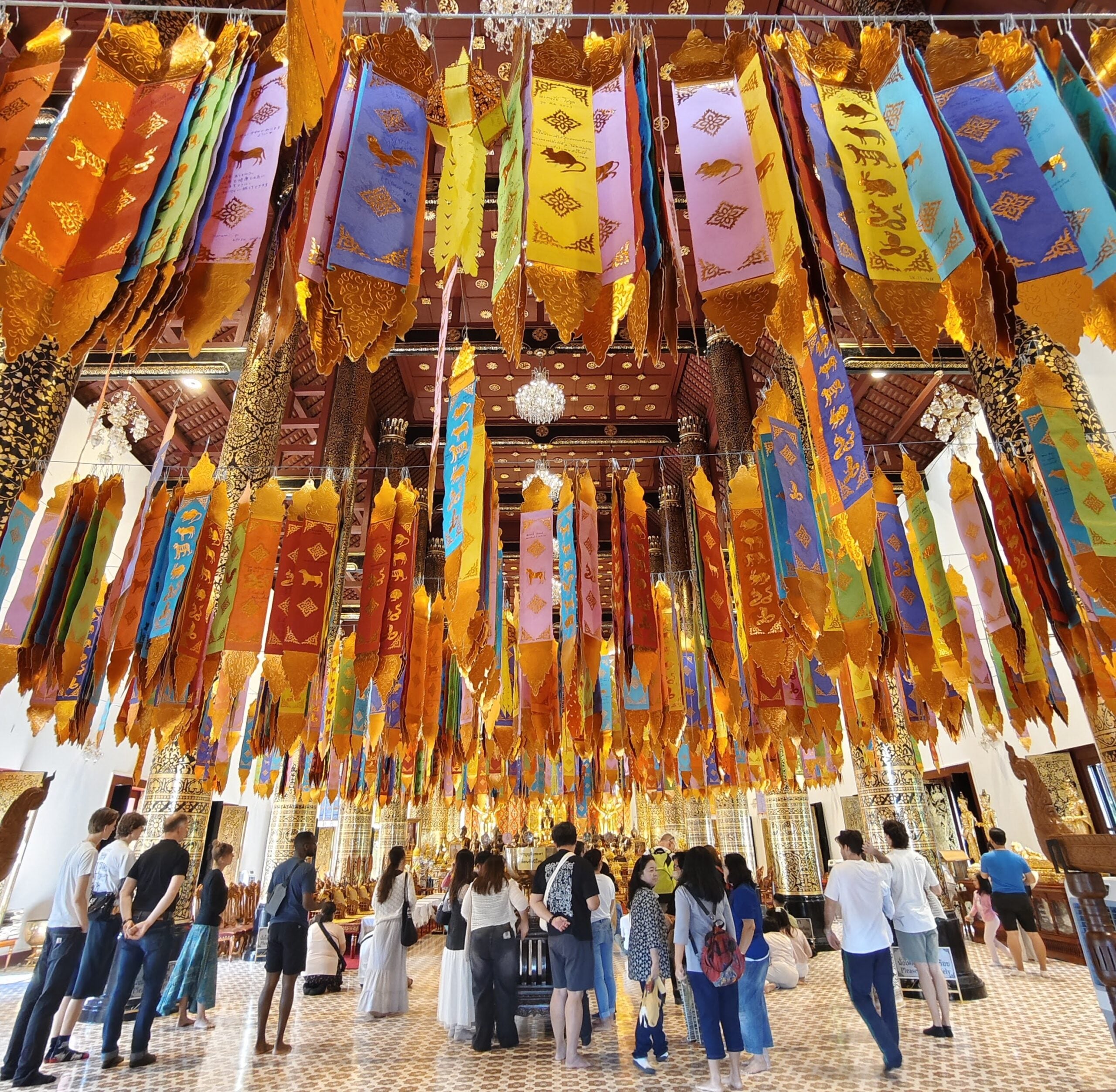
Chiang Mai is home to over 300 temples. Photo: Teh Chin Liang
Posted April 16, 2026
The red on the thermometer crept past 30°C. In Chiang Mai, temperatures remain volatile, chilly in the morning and sweltering by afternoon. I was in an air-conditioned restaurant and had a bowl of khao soi before me, its turmeric-gold broth steaming a rich coconut bisque.
The chanting of monks from the nearby temples, fading in and out in an ethereal cadence, was backdropped by the tinkle of the wind chimes.
Chiang Mai Slows You Down
“Living in Chiang Mai can make you lazy,” someone once told me. But for me, it is not the city that makes you lazy. Being here reminds me to always live in the present. You never feel rushed in Chiang Mai. Time seems to stand still here.
The vibe is simple yet blissful. You can just sit and watch the Lanna paper lanterns rustle in the breeze, slowly lulling you to sleep. And that is exactly what Chiang Mai exemplifies.
But Chiang Mai is more than temples, old streets, and northern Thai cuisine. Anywhere you go, even a seemingly ordinary place like a local university, sets a tone for you to slow down.
Chiang Mai University
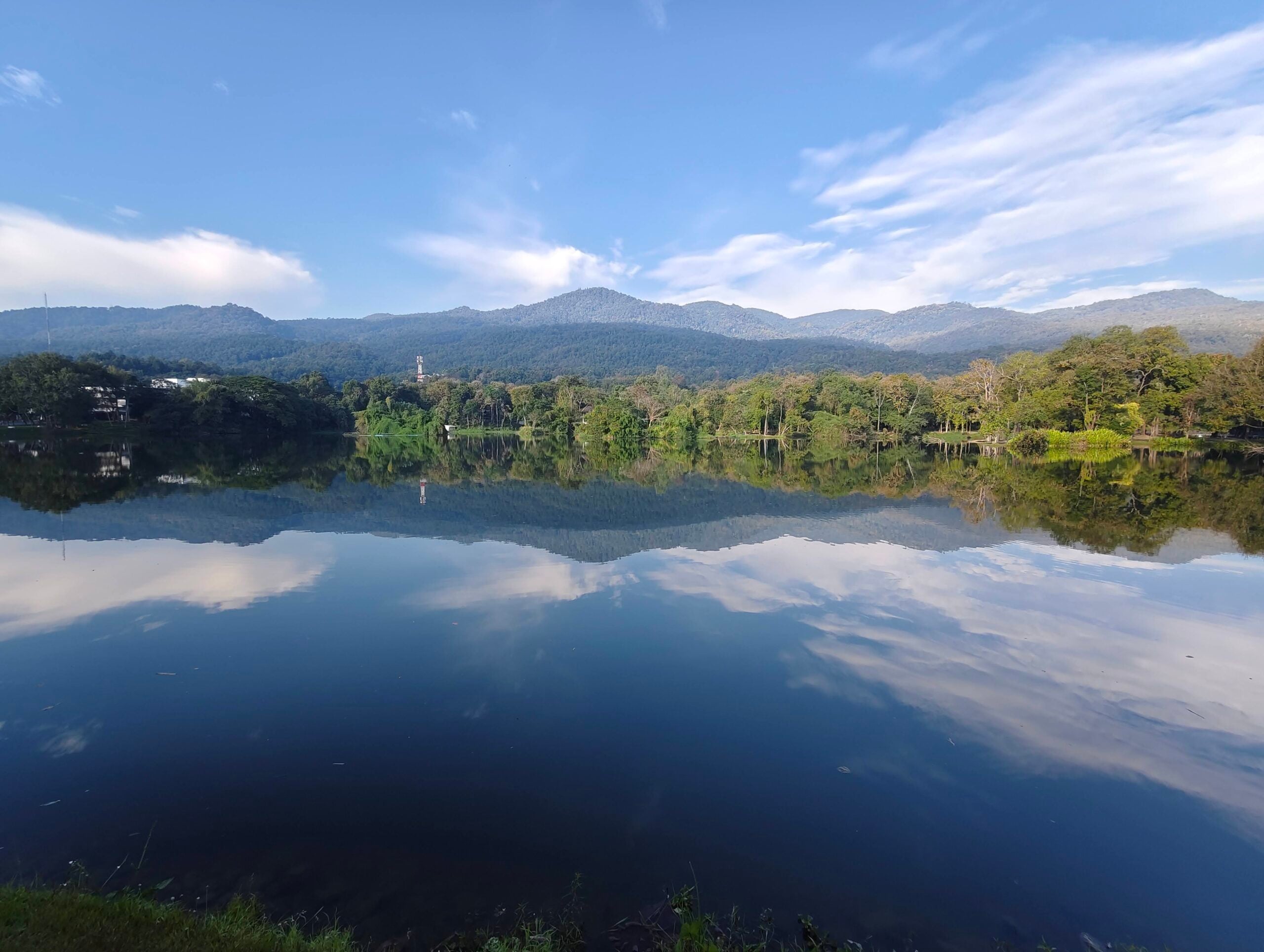
Ang Kaew Reservoir in Chiang Mai University. Photo: Teh Chin Liang
Chiang Mai University was made famous by the Chinese comedy blockbuster “Lost in Thailand” in 2012. Since the movie came out, there have been reports that many Chinese tourists put on student uniforms and sneak into classrooms to take lecture photos. Talk about obsession!
Most people will go in the morning to jog or cycle around the spectacular Ang Kaew Reservoir. The water is like a natural full-length mirror reflecting the rolling hills hemmed in by dense foliage in their entirety.
Around the reservoir, there are small parks, boardwalks and bridges across the waterways, and shady paths and ponds with fountains refracting sprinkler rainbows.
Sip your coffee and feast your eyes on greenery and tranquilty in local coffee shops. One of them has a sign “Living Your Dreams.” It could, in a literal sense, really feel like a dream to get yourself caffeinated in this setting.
Khun Chang Khian
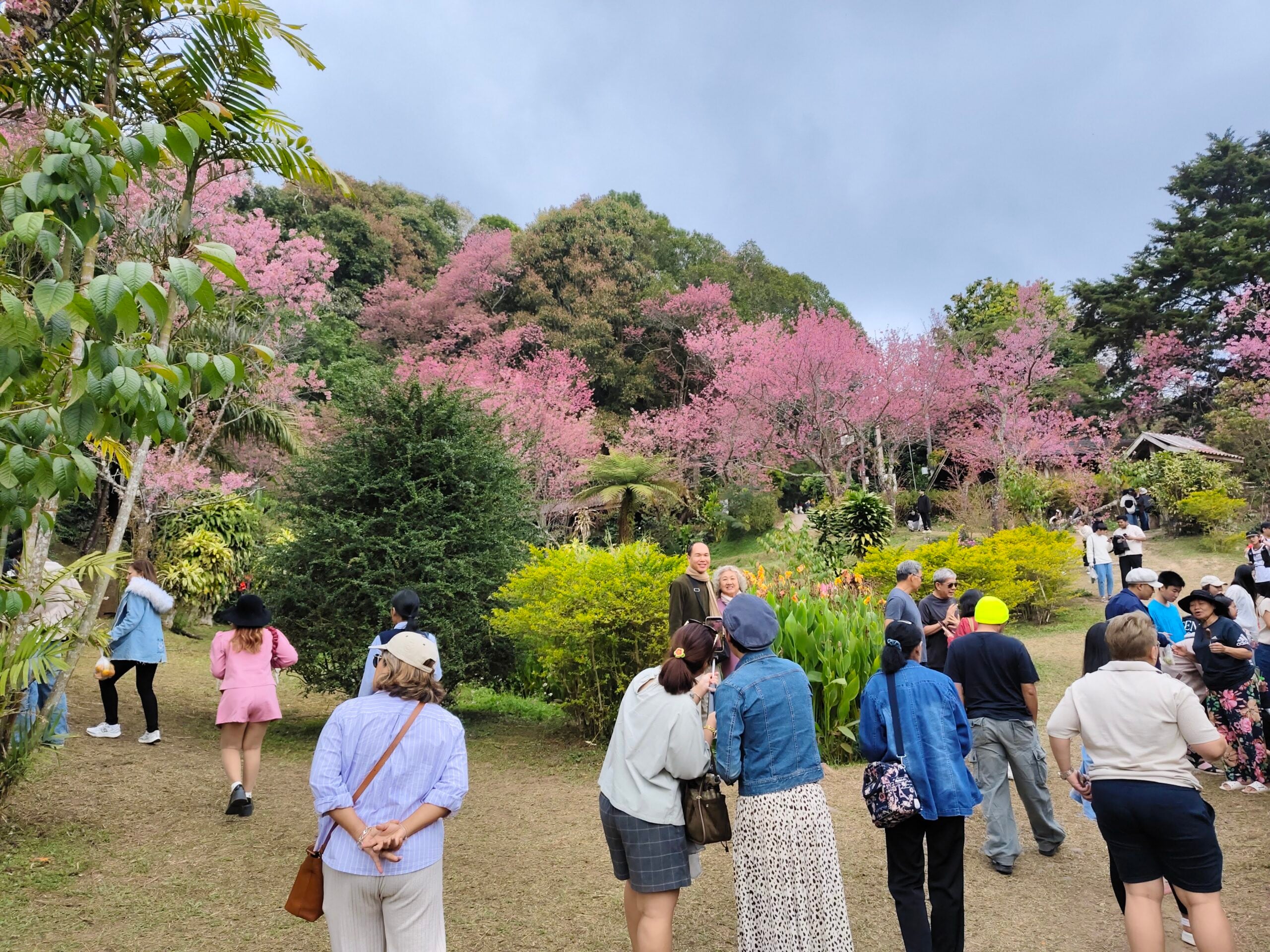
Khun Chang Khian is a village where people go to see the Himalayan cherry blossoms. Photo: Teh Chin Liang
When I was there, a galore of songthaews, open-air trucks with long rear seating, was waiting outside the university to take visitors places.
I went on a ride to Khun Chang Khian, a small Hmong village tucked into the mountains outside of Chiang Mai. December was the blooming season of the Himalayan cherry blossoms.
The songthaew climbed the last stretch of the hill road as it tapered into a treacherous single lane that only one car could pass at a time. The cherry blossoms lit up the hillside in a riot of blush pink.
The Himalayan cherry blossom, unlike Japanese Sakura, blooms only in winter, usually from November to January. The flowers grow in the mountains of South Asia and Southeast Asia.
Hmong Village Experience
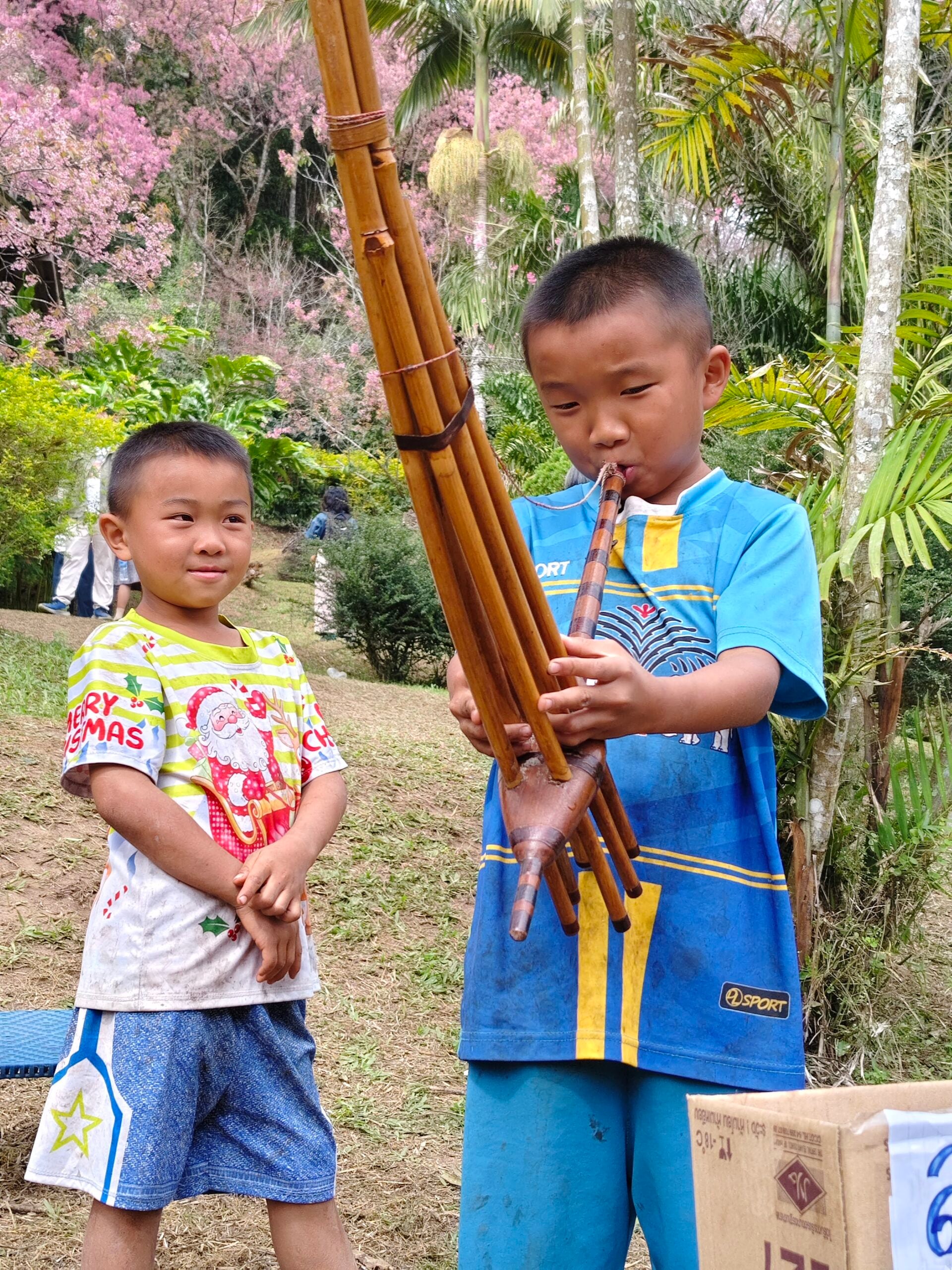
Village children play a bamboo mouth organ for tips. Photo: Teh Chin Liang
People walk under the canopy of blooming flowers to take photos. You can also try their archery game. The bows and arrows are made of bamboo. The targets are green papayas hanging from the trees. It takes a bit of practice to hit the papayas. The locals are patient to guide you through the craft.
The village kids come with a bamboo mouth organ called the Khaen. The bamboo pipe gives off a raw, droning thrum. It is not a performance meant to impress, but you still appreciate the beauty of their traditional music. Leave a tip if you enjoy it.
Khlong Mae Kha
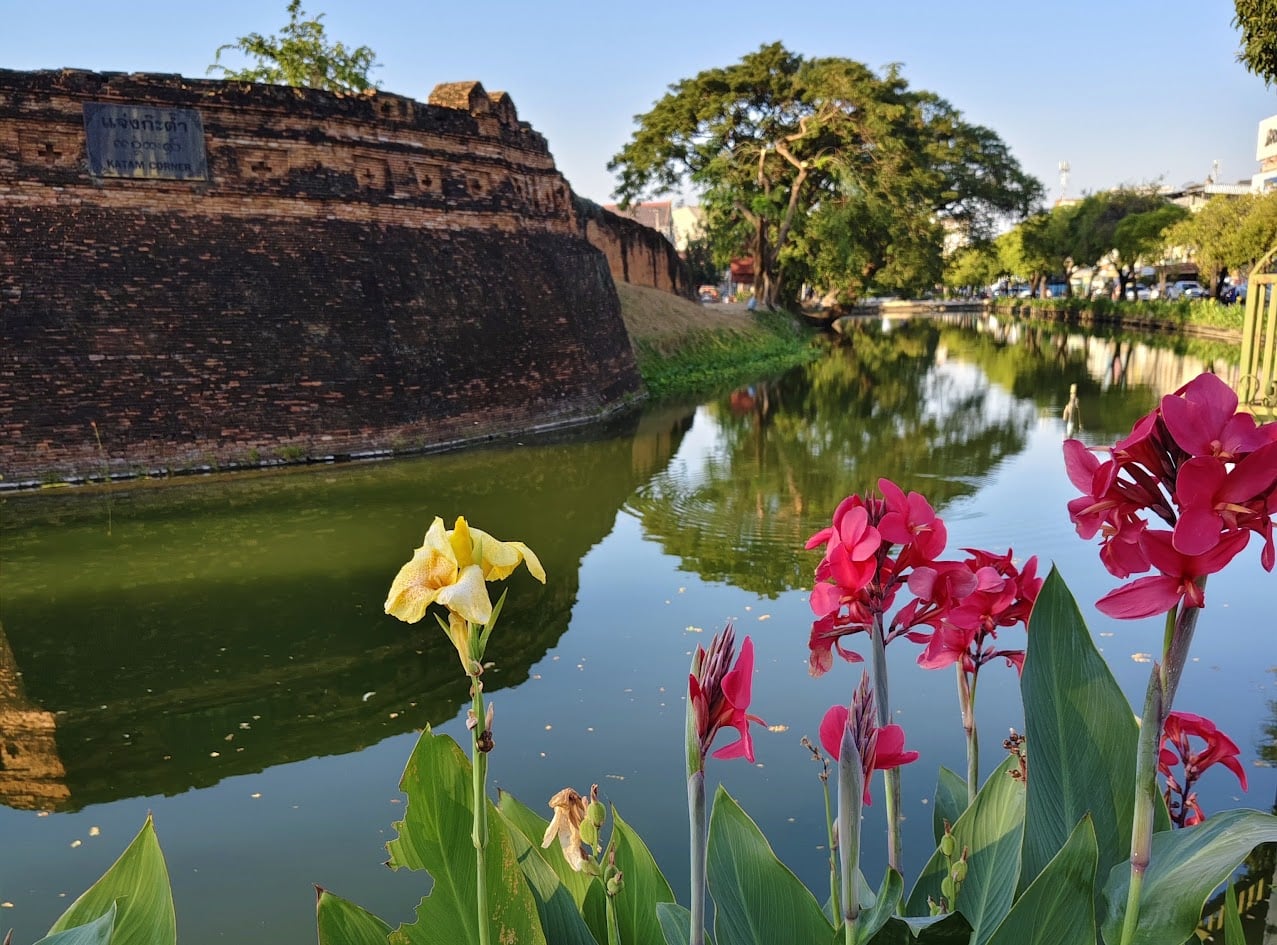
The historic moat of Chiang Mai surrounds the old town. Photo: Teh Chin Liang
Chiang Mai is surrounded by canals. Khlong Mae Kha was once a nondescript squatter settlement but has now been transformed into a canal promenade flanked by flowers. Think of it as a cross between Otaru in Japan and Hoi An in Vietnam, but on a much smaller scale and with a more local vibe.
Come in the evening and watch the lanterns light up the bridges. Local kids sing off-key karaoke for tips. The adults open up stalls selling snacks to visitors. Don’t forget to try “Khao Puk Nga” – a black sticky rice. It is a dessert made from pounded sticky rice and black sesame seeds, soft and chewy, slowly grilled over a banana leaf.
The Geese that Clean the Moat
The moat surrounding the old town dates back to the Lanna Kingdom, built to defend against enemies. In the early morning, when you slowly jog along the moat, you will see a sea of pink and white lotus drifting in the water, along with a flock of geese. You probably wonder if they are wild. But then you notice a wooden shack and even a small umbrella set up on the bank for them.
These geese are part of a government pilot project to help clean up the moat. They feed on algae and duckweed that disrupt the oxygen balance of the water. The presence of the geese also adds an aesthetic charm to the moat.
Kalm Village
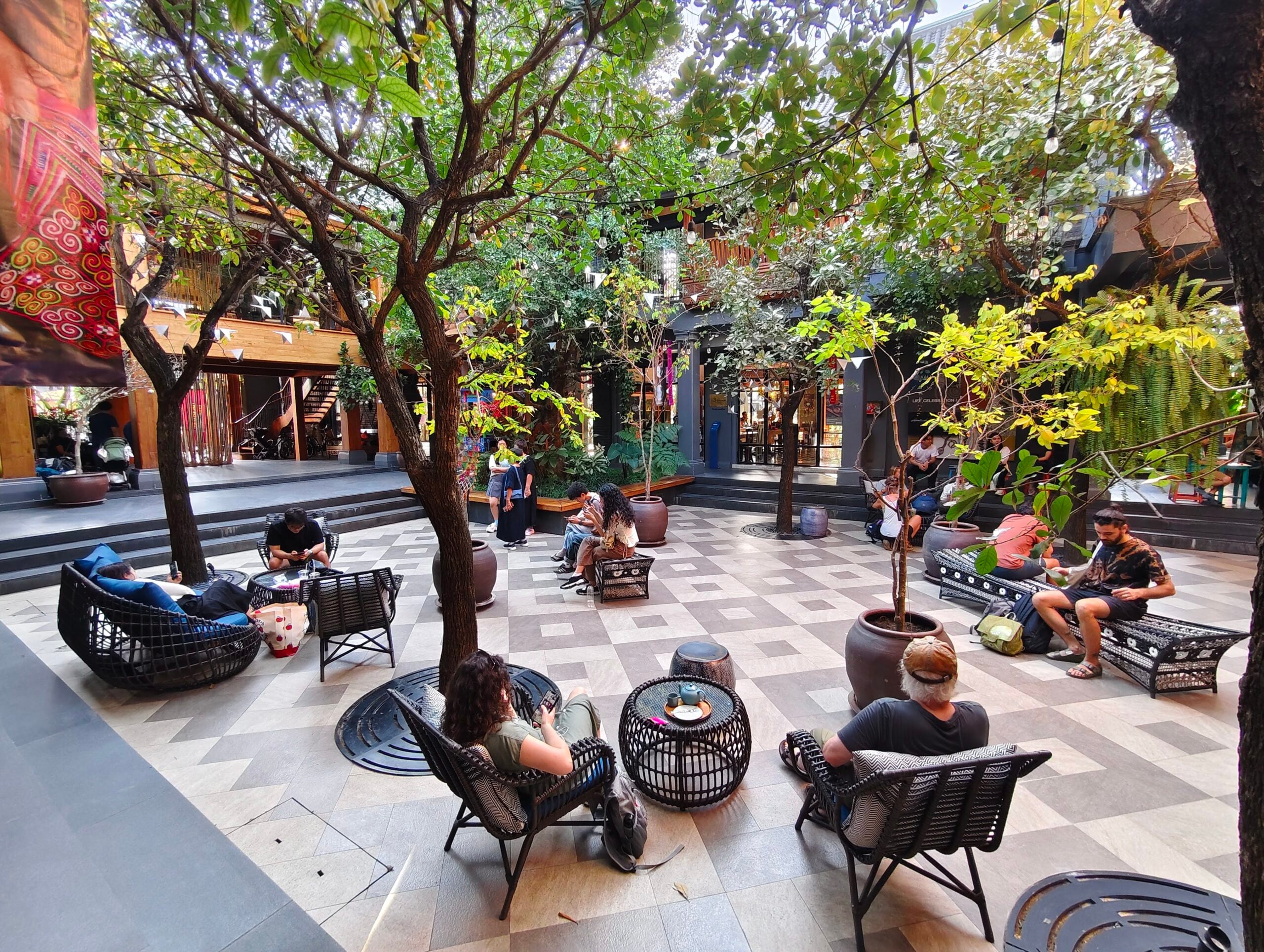
Visitors chill out in the courtyard at Kalm Village. Photo: Teh Chin Liang
Kalm Village is an art, craft, and culture center that preserves and reinterprets traditional Thai and Asian craftsmanship, and it really lives up to its name. Sitting in the open-air courtyard, listening to the water trickling through the bamboo spouts, and basking in the natural light is especially calming.
The village consists of a few traditional Thai buildings. Galleries for art exhibitions include the Kalm Archive which displays an array of textile works from Thailand, Indonesia, and Myanmar.
The upper floor is a library and a cozy co-working space furnished with benches, bean bags, and even recliner chairs. Most of the books are in the Zen genre.
There is a café that serves light meals, and their signature is Hanglay curry, or “Burmese curry.” It is cooked with pork, slightly sweet and sour, and served with omelets, rice, and soup.
New Year in Chiang Mai is Spectacular
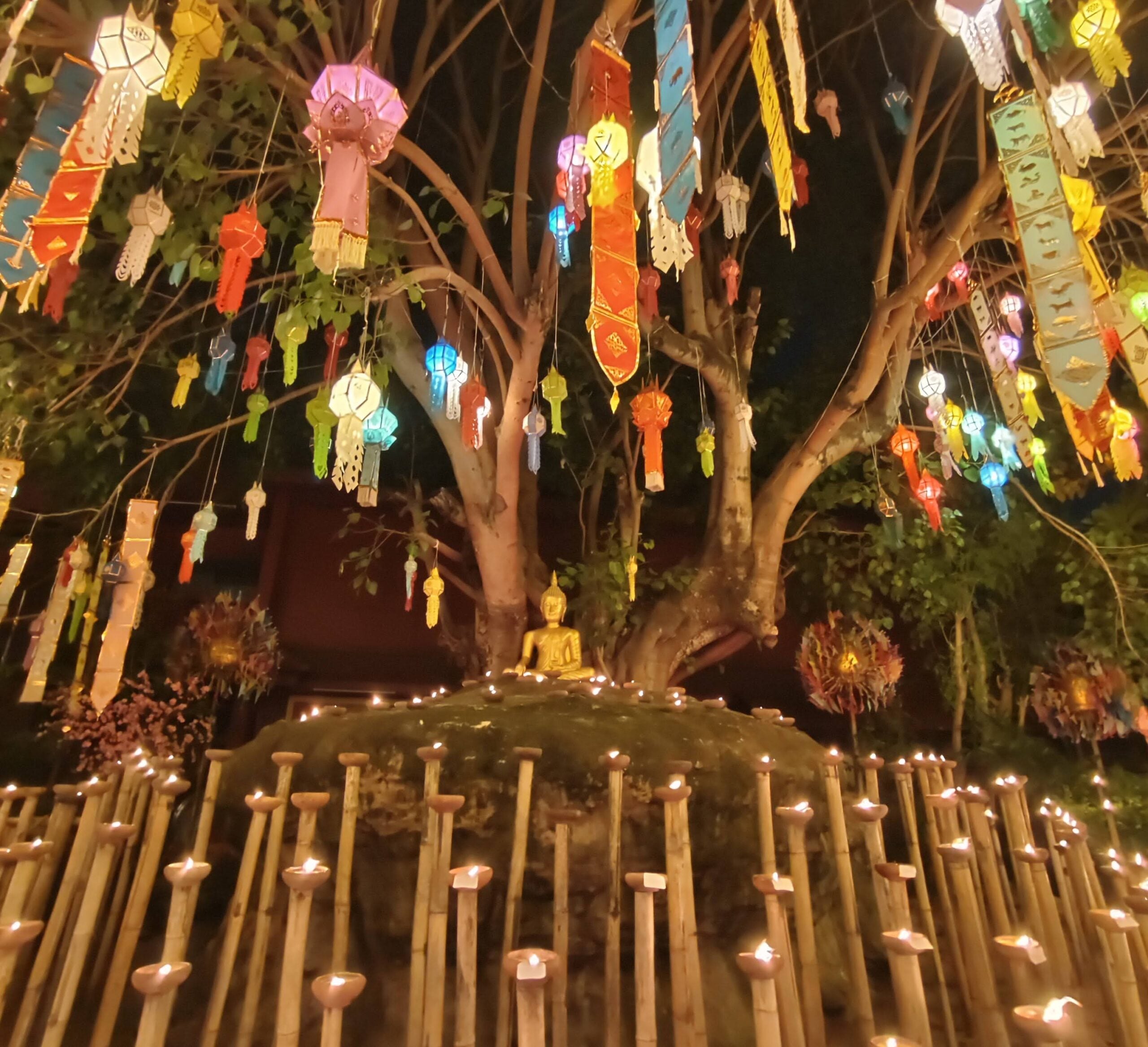
Lanterns lit on bamboo poles surround the Buddha on New Year’s Eve. Photo: Teh Chin Liang
My last day in Chiang Mai happened to be New Year’s Eve. Many temples opened their doors in the evening for New Year’s prayers. At one temple, monks lit candles on bamboo poles. Lanna lanterns hung low from a tree and illuminated a Buddha statue beneath it.
When the clock struck midnight, hundreds of Khom Loy, the sky lanterns, were released into the night air. Releasing the lanterns symbolizes letting go of bad luck and bringing in good fortune.
Khom Loy can float far up into the sky without falling. The lantern spectacle was backdropped by fireworks exploding in the background. Watching the lanterns taking off one by one and ascending until they became specks of light in the dark sky could be transcendental and meditative, and before I knew it, it drowned out all the festive cacophony around me.
Once again, I was reminded that I was in Chiang Mai, that New Year here, unlike anywhere else, is a mosaic of spiritual and sensory awe that only reveals itself when you … slow down.