

The Philippines Visayan Islands – Joyful and Hassle-Free
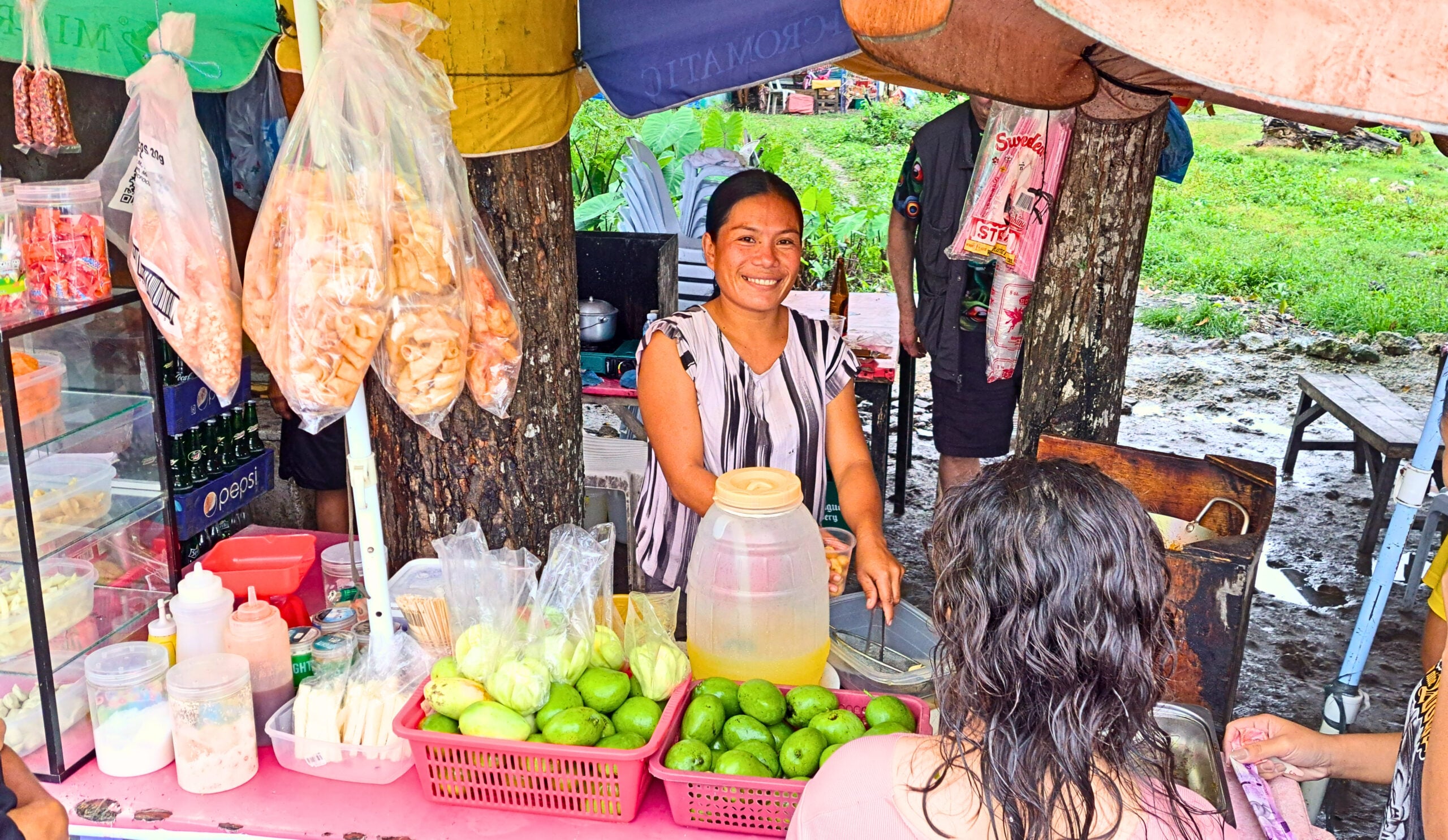
Roselyn, a joyous fried-seafood street vendor in Carcar City Photo: Bruce Northam
Posted April 13, 2026
America has a heartland. So does the Philippines. It has 7,600 islands organized into three major island groups, with the midlands comprising the welcoming Visayas region. My ninth trip there delivered an adventurous medley of down-to-earth pensions, a luxe island resort, and a perfect lifestyle mix of everything in between. I explored six different islands where one tune always sings true: this getaway means hospitality on steroids.
The Philippines constantly reminds you to let inner beauty be the prettiest thing you wear. Because most Filipinos speak English and they’ve enjoyed American-made entertainment for more than a century, we get each other and can laugh about it. Joyful Filipinos don’t age; they mature. Shrinks get little opportunity here, as there’s no laughter famine. After Spain’s rule gave way to American colonization in 1898, Uncle Sam did a few things right in this part of Southeast Asia. The U.S. legacy included building schools and basketball courts in practically every village, along with delivering Hollywood’s sense of humor.
Cebu Island: A Medley of Filipino Fun
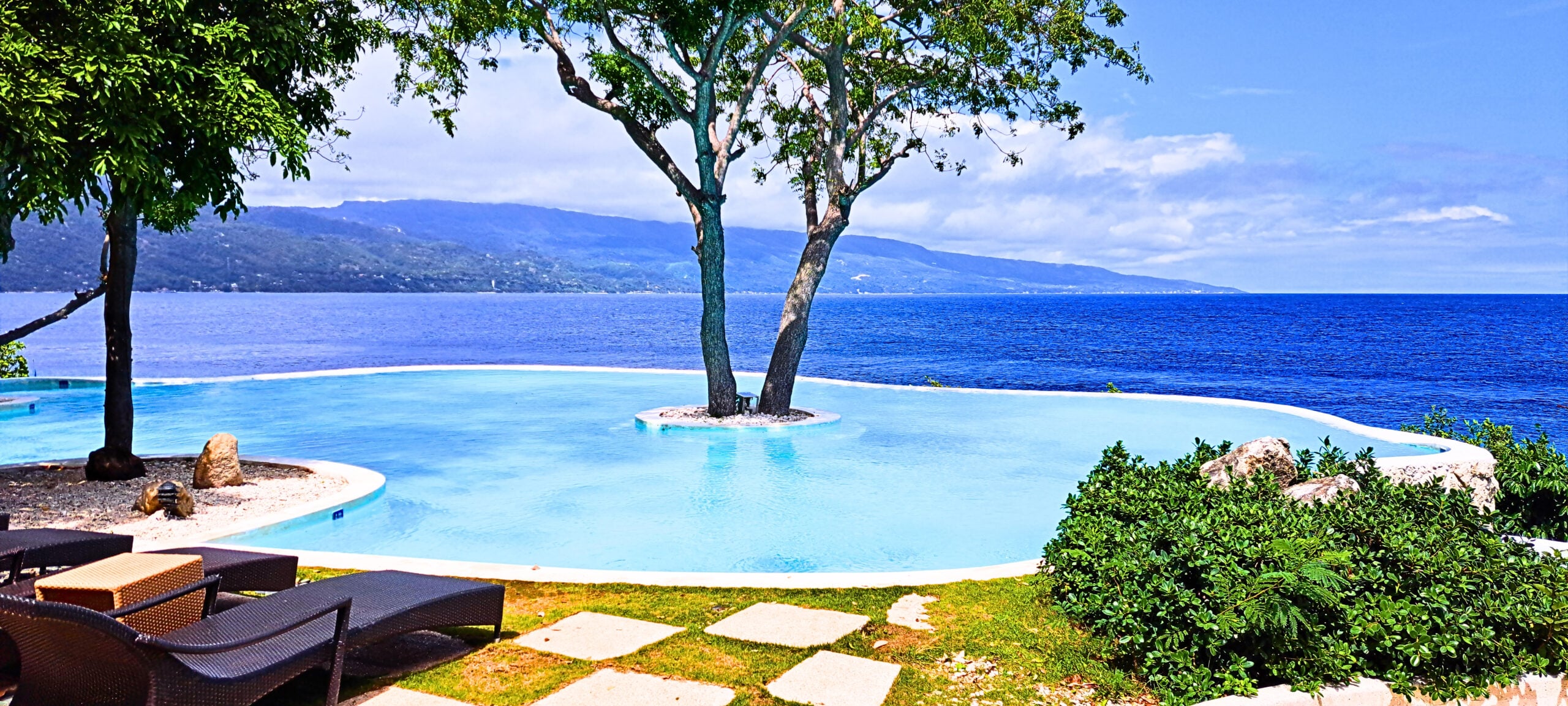
Bluewater Similon is a protected nature reserve with cold beer and swank cocktails Photo: Bruce Northam
Cebu Island, 130 miles long and 20 miles wide, has a rugged mountain spine flanked on all sides by coastal plains and beaches, offering a variety of landscapes. So, what is a vacation? For me, it’s people, entertainment, food, culture, and a place you call home temporarily. Here, those options are presented with ease, in both luxury and ultra-affordable modes.
Have you dreamt about a getaway to the ultimate private tropical island, Filipino style? Bluewater Sumilon Island Resort sits on breezy 60-acre Sumilon Island, which offers upscale twists from both the resort and the island itself. The only rules: no motorized vehicles or sulking. After a short ferry ride from the Cebu mainland, you immediately sense that it’s the right place to feel special and not need AC all the time. The 31 spacious oceanfront rooms provide a dual sense of privacy and community. There are also three private villas. Roaming about the island in orientation mode is an awakening that explores the perfect use of space.
Here, on this gorgeous coral uprising surrounded by a snorkeling and diving paradise, the pristine coral and the fish nipping at it are world-class. And there’s a good reason for this preserved biodiversity. Designated as a fish sanctuary in 1974, the island boasts the Philippines’ first marine protected area. The resort actively participates in conservation efforts. And yes, the perfect white sand beach awaits.
An Island Where Resort Meets Wildness
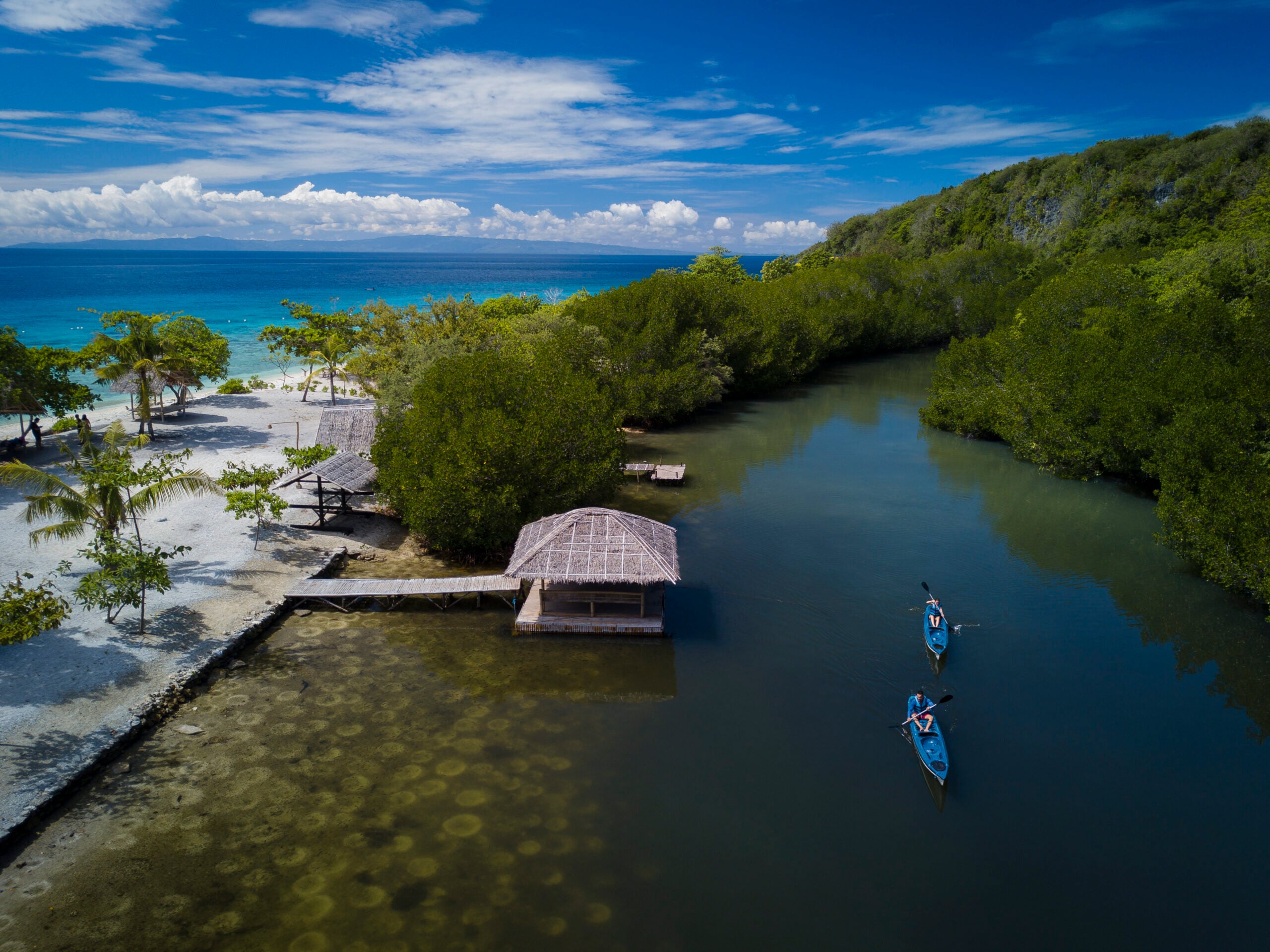
Kayaking in Bluewater Sumilon’s lagoon Photo: Courtesy of Bluewater Sumilon
Dictated by nature and charm, this well-envisioned multi-tiered campus exists where resort meets wildness. Within the lush island’s one-mile circumference, activities include feeding harmless blacktip reef sharks in their designated and protected lagoon feeding area. There’s also kayaking, paddle boating, and kite flying. Outdoor ping pong, anyone?
A personal highlight was a hike that circumnavigated the island’s epic raised coral coastline with Radz, who is also the resort’s green thumb. The short but challenging hike on very sharp ancient coral that looms 100 feet above the sea also visits a Spanish-era baluarte (watchtower) built in 1890 to ward off pirates. After the hike, Radz, who tends to the grounds in many ways, gave me a tour of the resort’s impressive sustainable veggie and herb gardens that are nourished by resort compost, beehives, and an organic coconut-wine making area. Again, a resort with a conscience.
Dining and Relaxing in Paradise
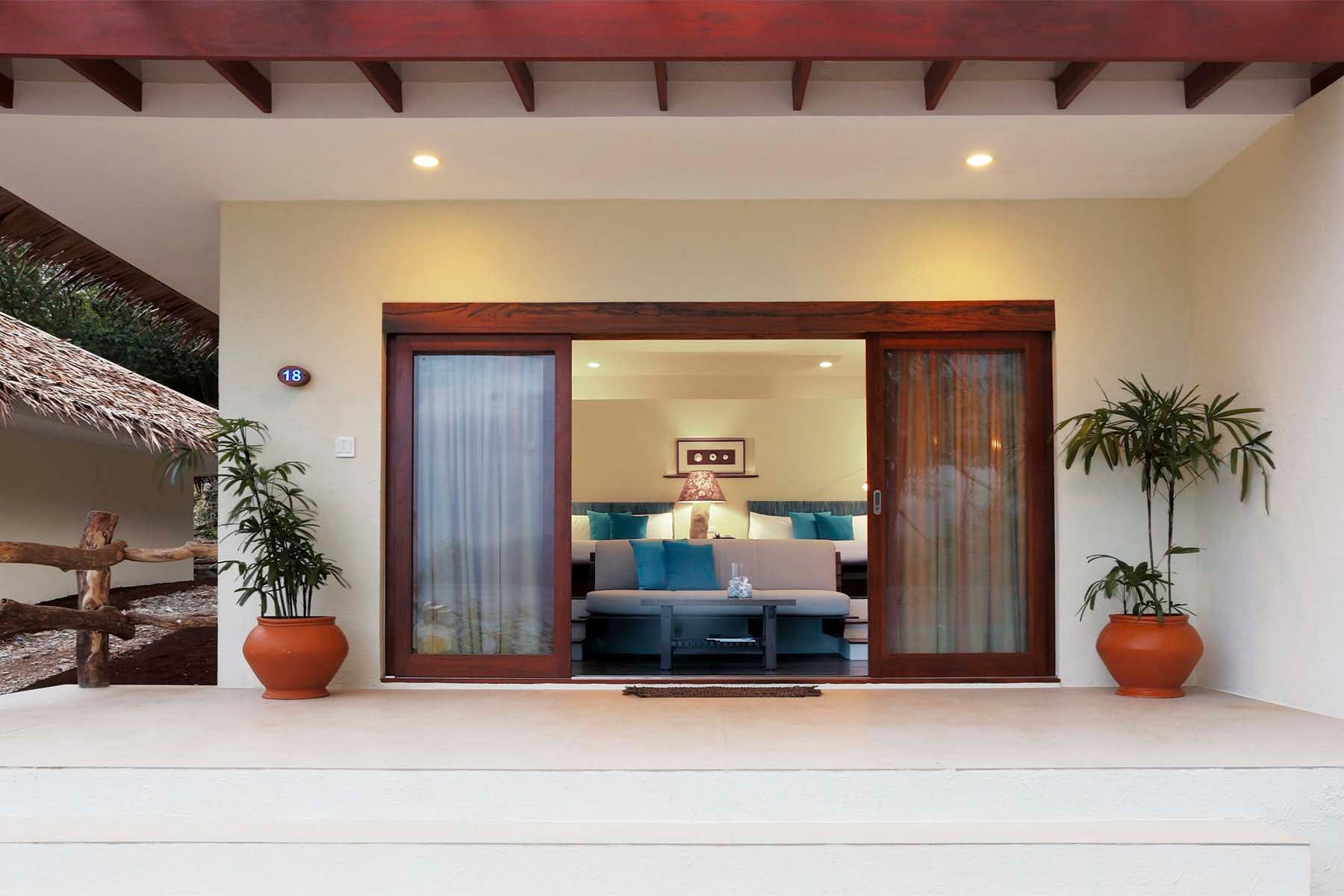
A deluxe oceanfront room awaits at Bluewater Sumilon Photo: Courtesy of Bluewater Sumilon
Bangus, a milkfish, is a popular Filipino morning option. This savory fish is marinated in vinegar, garlic, salt, and black pepper, then fried until crispy and golden. The main restaurant, Pulo sits beneath a gigantic open-air pulapa-like dome with views of the infinity pool, beach, and mangrove-infused lagoon. There’s no shortage of delicious international cuisine options. But your best bet is diving into Filipino faves. Consider their spicy hinalang soup, simmered with ginger, lemongrass, and green chili peppers. The resort adds grilled chicken and seafood skewers and tweaks the soup with coconut milk, zucchini, and carrots. The menus offer a nice balance of authentic local, cosmopolitan, comfort food classics.
During my stay a substantial storm blew through and cut Wi-Fi for a day (but not their independent power source). It was my best day, watching the weather unwind from my porch and feeling lucky to be in the Philippines. Traveling is about the people you meet. And international visitors aside, the ultra-hospitable Filipino staff here are friends you haven’t met yet. Bluewater Sumilon Island Resort is, among other delights, an eco-friendly private island where ultra-casual tropical-island bliss abounds, but Mother Nature will still rule, forever.
Cebu at a Slower Pace: Carcar and Oslob

Spanish colonial-era church and military ruin in Oslob Photo: Bruce Northam
I made Cebu-island side trips to two small coastal towns, Carcar and Oslob. Carcar, a Filipino heritage town, is proud of its well-preserved American colonial-era architecture dating from 1898 to 1946. Christian aficionados enjoy the many Catholic shrines, sights, and churches. I was especially impressed with the Teofilo Camomot shrine. Highlights included the Carcar City Museum (1929), built as a health-service dispensary.
In a town known for its roast pork, Lita & Joel’s picnic-style eatery is a must. The open-air Pabukid Restaurant is also a hit. I stayed at the lovely Casa Catalina Pensionne, a peaceful two-level refuge in an otherwise buzzing town. This in-town reprieve features lush internal gardens and sculptures, as well as an exterior draped with banana and coconut trees.
Way smaller than Carcar was Oslob, where I stayed at the Malonzo Pension House. This quaint two-level, family-run motel includes a courtyard teeming with bonsai trees. This seaside village, mostly known for visitors swimming with whale sharks, nudges you toward Gaisano Mall as the main attraction. However, for me, it was the availability of Spanish ruins, expert massages, and the local 7-11 at the main intersection, which is the nightly hotspot, with its outdoor mini picnic tables inviting it to be a community center merging expats, locals, and tourists.
Bliss in the Negros Island Region
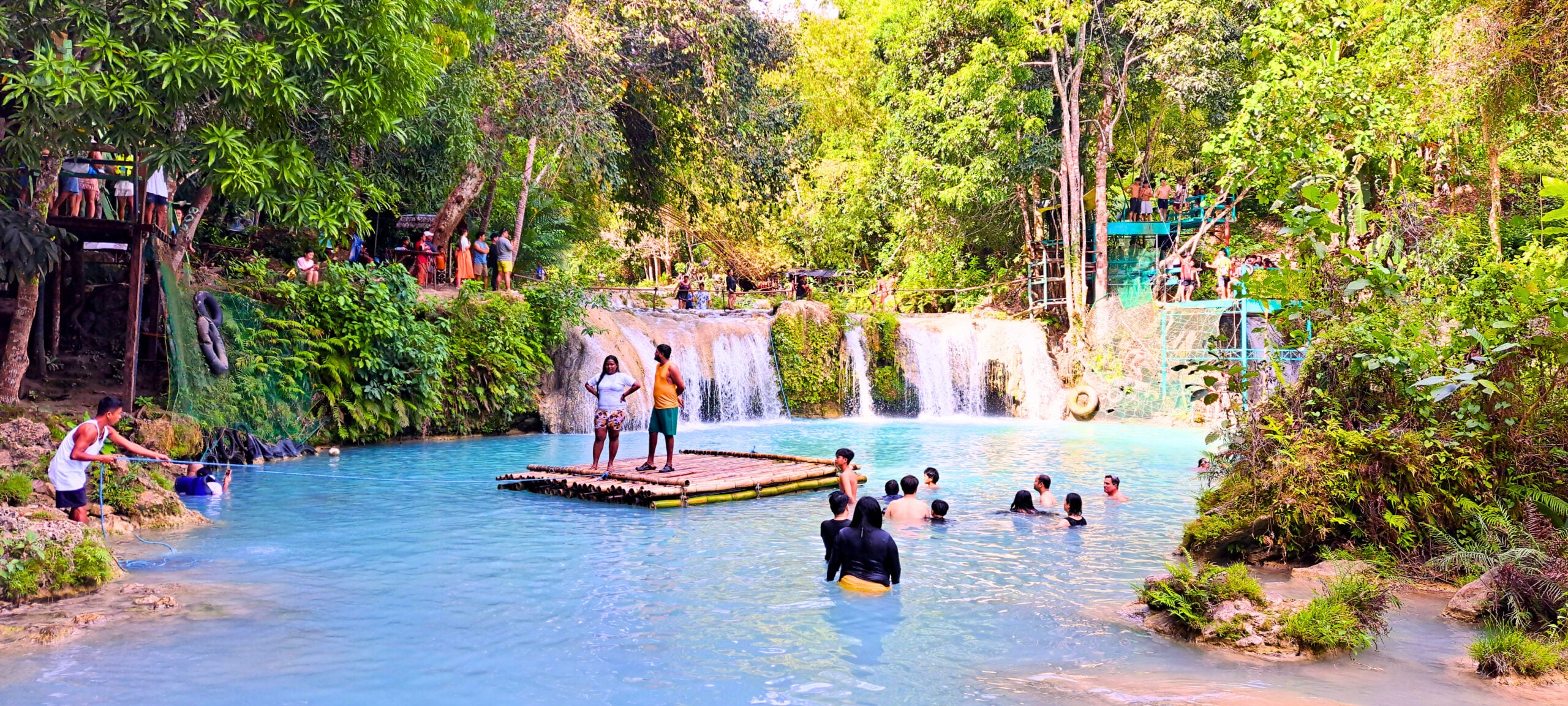
Cambugahay Falls—a happy tourist attraction on Siquijor Island Photo: Bruce Northam
The Philippines’ seemingly endless island landscape makes ferrying from one place to another a way of life. From the southern tip of Cebu, I ferried for 30 minutes to Negros Island to visit its “biggest” town, Dumaguete. The town features a lively public market, many permanent expatriate residents, and nearby water-sport-oriented accommodations, such as the inviting Silver Reef Dive Resort. The sprawling Dumaguete area also features multiple ports for transiting to two nearby islands, Siquijor and Apo.
There’s a marvelous matriarchal mandate on Siquijor (“Sickie-hoar”) Island, where the peaceful town of Maria (pop 15,000) has a women-only police force of 20. Here, their Visayan dialect is very gentle, even if locals get mad, which seems beyond rare. Other attractions include Juanita Torremocha’s Healing Hut, Paliton beach party central, and spring-fed Cambugahay Falls, a happy tourist attraction with a rope-swing “fairy walk,” where people get to walk on water.
Apo Island: A Diving and Snorkeling Heaven—With Happy Kids
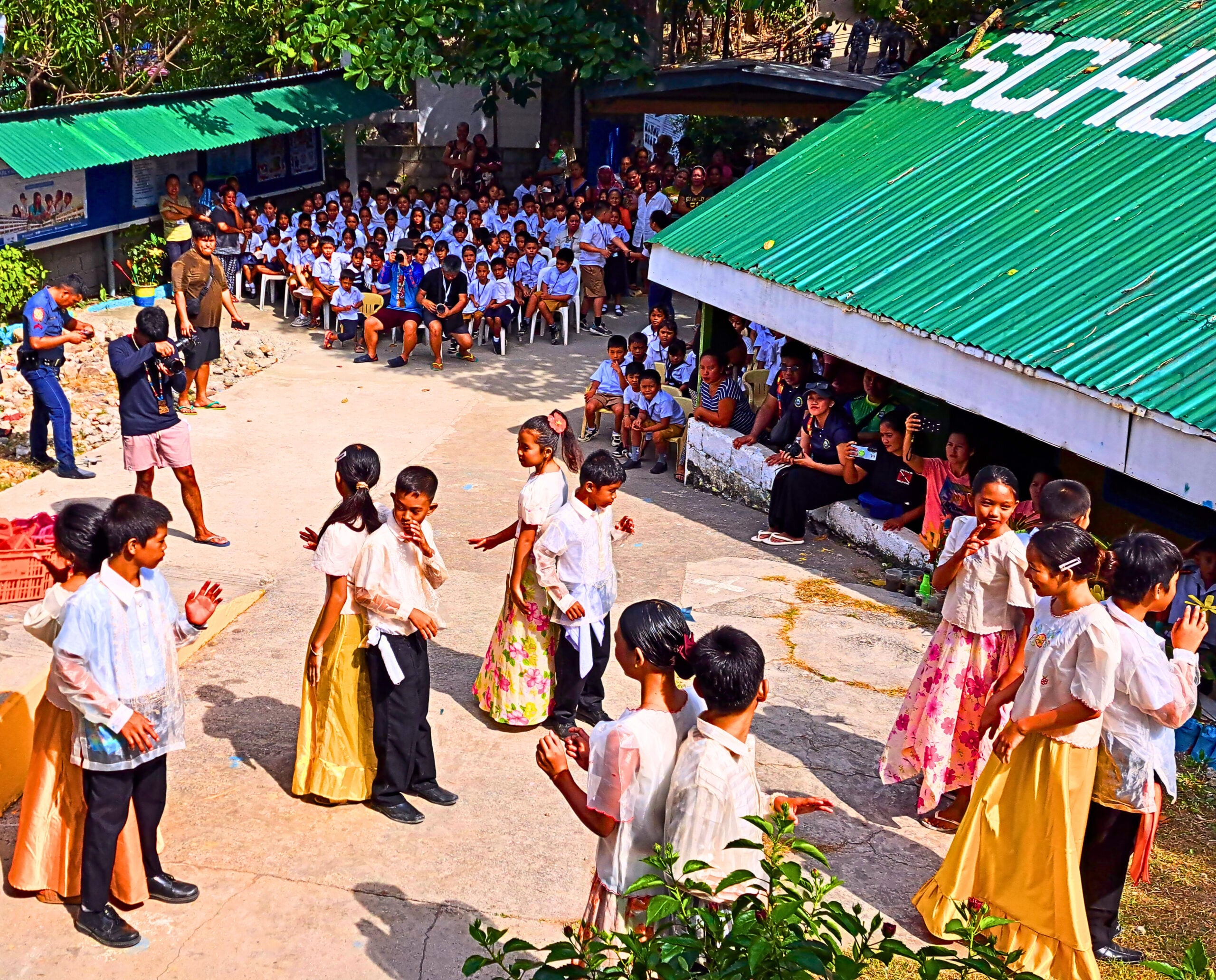
Apo Island’s kids are unpaid pros at keeping boredom at bay Photo: Bruce Northam
At a locally encouraged meetup at Apo Island’s elementary school, a donation helped create a student dance celebration and awards ceremony that concluded with gifts of snacks and school supplies. Here, I was reminded that smiling is involuntary, not learned. Even children born blind smile, and Filipinos never stop. Children sense the secrets to enjoying life, and couples here continue to have plenty of them. Hospitality starts early here.
Apo is internationally recognized as a successful model of community-managed marine conservation. If you don’t have time for a deep dive here, at least snorkel with the turtles. For Filipinos, turning strangers into friends remains a top priority. Warmth is the way here. Bring your tropical vacation dreams to life in the Visayas region and discover more reasons to Love the Philippines.
Click Here for Discounted Accommodations in Visayas
Join the community!
Join our community to receive special updates (we keep your private info locked.)

