
Barberville Pioneer Settlement: A Step Back in Time
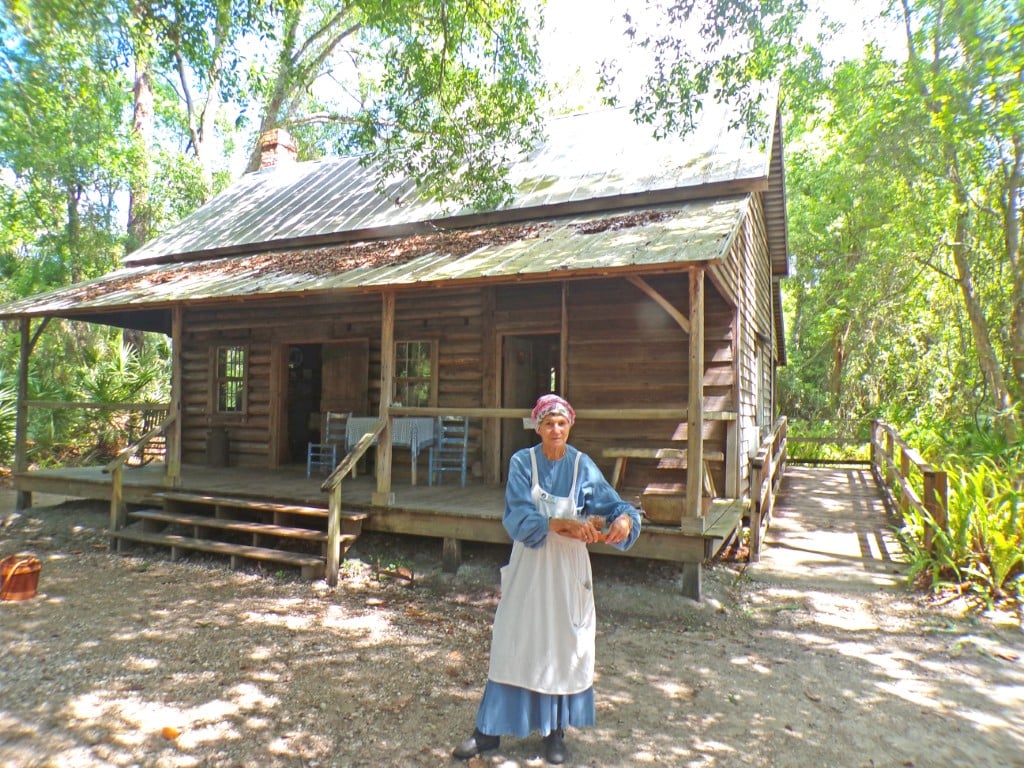
The Lewis Cabin in Barberville Photo: Kathleen Walls
Posted July 18, 2026
Barberville Pioneer Settlement feels like stepping straight into Florida’s frontier days. On my most recent visit, Associate Director Gudrun Benson walked me through the village’s history. Today it includes about 18 authentic structures that trace Florida life from the 1800s through the early 1900s—from the 1875 Lewis Log Cabin to the 1920s Turpentine Still and Bridge Tender’s House. The Pierson Railroad Depot, circa 1885, remains one of my favorites. This year marks their 50th anniversary, and they’re planning a reproduction of a Florida citrus barn to honor what was once the region’s defining crop.
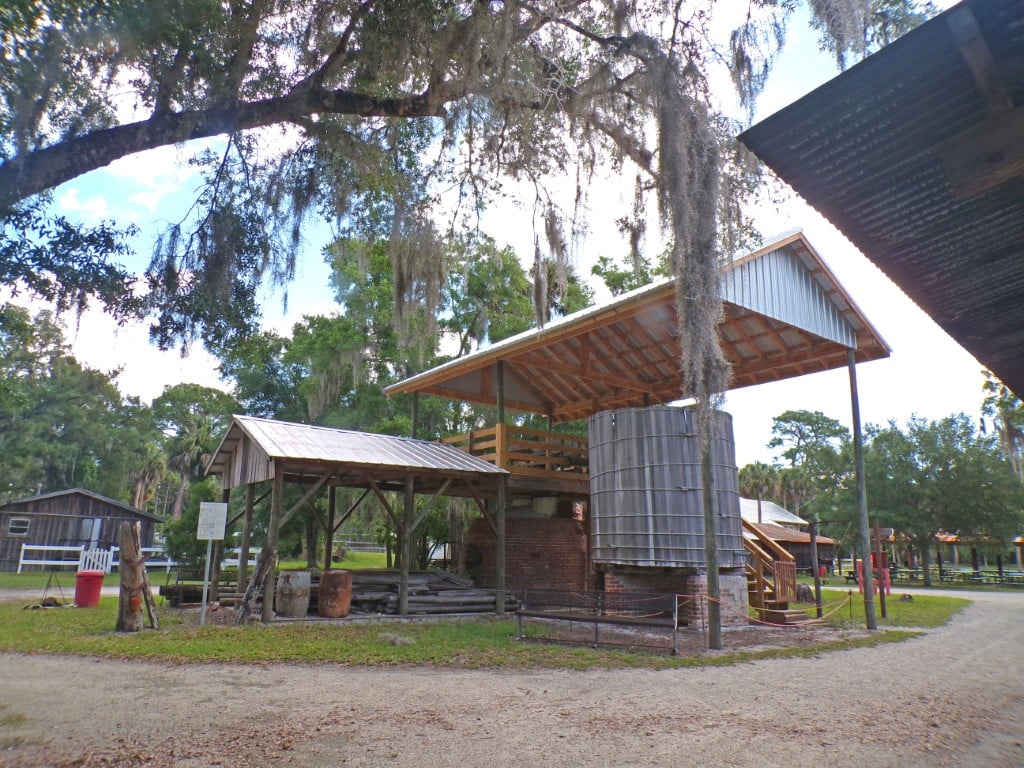
Historic Turpintine Still Photo: Kathleen Walls
Barberville’s Beginning
The settlement began in 1976 with the Central School of Barberville, built around 1919, and gradually grew into a full pioneer village. You enter through the former 1920s bridge tender’s house from the St. Johns River bridge at Astor, now the gift shop and office.
We started our tour at the barn. Gudrun explained, “It was built here on site in the late 1980s. They brought in a sawmill and milled the lumber that they needed. It’s built in the traditional style of a post-and-beam barn. So, all the connections have mortise and tenons. There are no nails in the frame.”
The docent showed us some of the farm tools of every kind. A 1913 Peerless team tractor was also setting out back. True to pioneer life, the barnyard is alive with chickens, goats, donkeys, and even peacocks.
The country store, which was once the heart of every small Florida settlement, shows how families bought everything from tools to groceries. Today, you can still pick up souvenirs there.
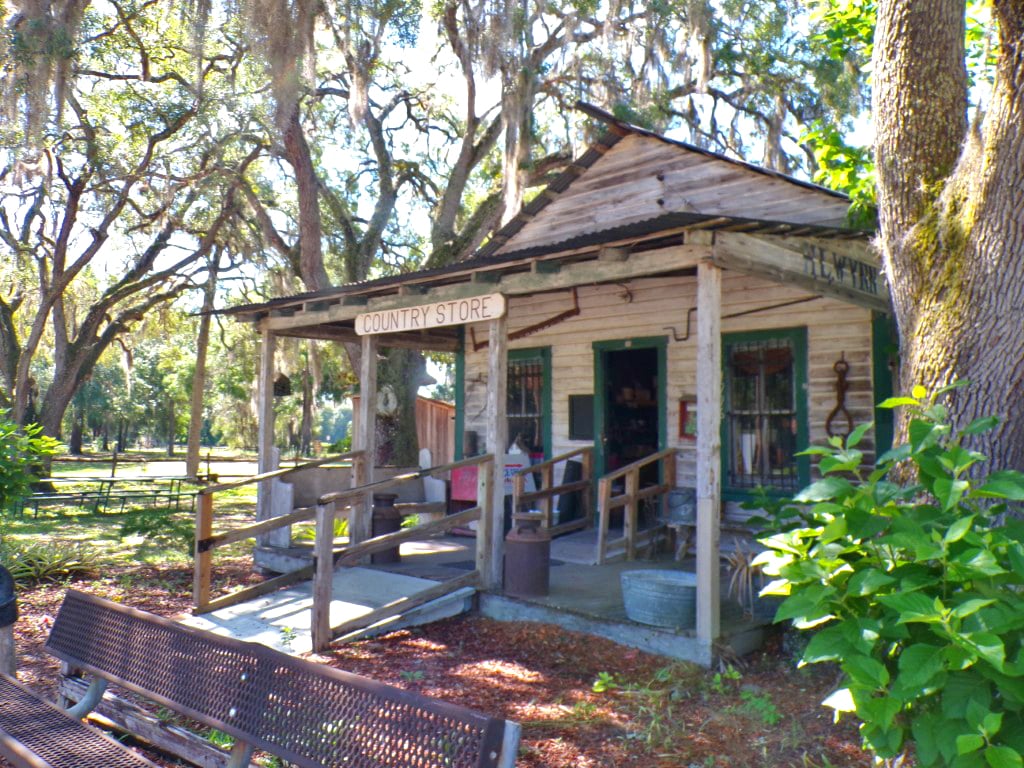
Barberville Country Store Photo: Kathleen Walls
Village Homes
Homes in the village range from simple to elegant. The Lewis Log Cabin, dating to 1875, is the oldest structure on site. Jim and Mary Lewis raised twelve children here. All but the youngest were born in this tiny home. It’s the only building not native to Florida, brought from South Georgia, but typical of the era. Costumed docents often greet visitors here, adding to the sense of stepping back in time. Our docent offered us a taste of homemade butter.
At the other end of the spectrum is the Underhill House, built in 1879 for Joseph and Lucretia Underhill. It was the first brick home in Volusia County. The bricks were made from local clay near Deep Creek. The house has a dramatic history. Teachers once boarded here, and renovations led to the discovery of many artifacts. Shortly after the construction of the home, Joseph died from an accidental gunshot wound during a boat trip to his orange grove on Tick Island. Years later, Lucretia remarried, only to have her second husband squander her inheritance and run off with another woman.
From Churches to Blacksmith Shops and More
Every settlement needed a church. In Barberville, the Midway United Methodist Church, circa 1890, meets that need. The church features a simple, beautiful one‑story wooden sanctuary. Fire was a constant threat in those days, so the village also displays two historic fire trucks: a 1919 American LaFrance and a 1933 Hahn.
The blacksmith shop highlights another essential trade. During events, a working blacksmith fires up the forge to demonstrate how tools, horseshoes, and household items were made.
One of the newest “old” buildings is the vintage garage built by the Ford Model A Restorers Club. “They call themselves the Cranking A’s and every Tuesday they bring their Model A’s in and work on them,” said Benson. “They call it Tinker Tuesday. We thought it was quite fitting with our theme. It also serves as a bridge between the change from a horse and buggy to a horseless carriage.”
Railroads shaped early Florida. The Pierson Railroad Depot, built in 1885 and moved here in 1982, captures that era. The caboose arrived the following year.
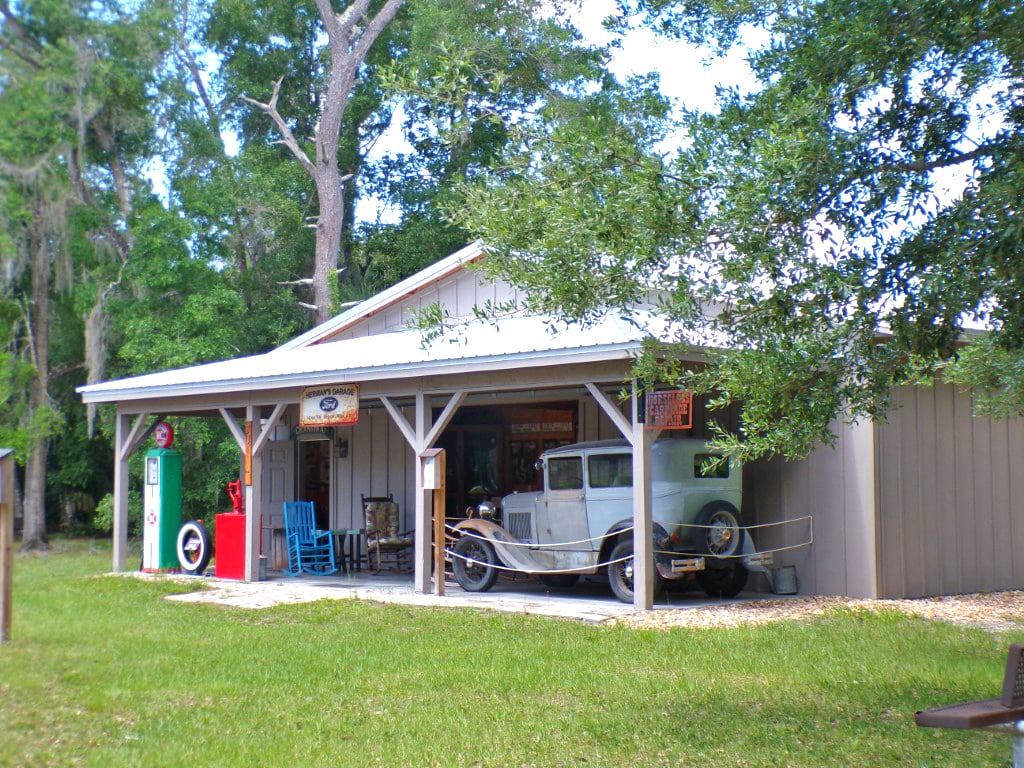
Historic Ford Vehicle Photo: Kathleen Walls
History’s Dark Side
The settlement also acknowledges the darker chapters of Florida’s history. An old jail wagon illustrates the Peonage System, where convicts were leased out for forced labor to logging camps, turpentine stills, and other companies until the 1920s. The iron cage, once outfitted with bunks for eight prisoners and two guards, would have been mounted on a flatbed wagon and moved from site to site. Standing before the empty cage, it’s easy to imagine how brutal those conditions were, especially in a Florida summer.
Discovering Historic Treasures
Back at the Central School, where the settlement began, the rooms display historic treasures including a 600‑ to 800‑year‑old Timucuan dugout canoe, treadle sewing machines, handmade quilts, and early‑20th‑century memorabilia. One classroom exists exactly as it would have been, complete with inkwell desks, a teacher’s globe, a blackboard, and even a dunce cap since public shaming was part of discipline then. A room dedicated to weaving displays looms, yarn, and samples of hand‑woven cloth. Ordering online wasn’t an option in those days.
Don’t miss the old stoves in the school kitchen. They are works of art.
A delightful surprise is the settlement’s contribution to the Wings of the West mural trail by artist Erica Group: vibrant peacock wings painted on an antique wooden building. It’s the perfect selfie spot.
Any time of year is a good time to explore Barberville Pioneer Settlement and experience the Florida Cracker way of life. With their 50th anniversary in 2026, festivals and events fill the calendar almost every month.
Click here for accommodations in Volusia County, Florida
Join the community!
Join our community to receive special updates (we keep your private info locked.)