

Hoonah, Alaska: A Cruise Port That Still Belongs to the People Who Live There

Icy Strait Point in Hoonah, Alaska, offers an example of tourism development shaped by local ownership, culture and community priorities. Photo: Mate Koczka.
By Mate Koczka
Posted July 3, 2026
By the time the morning fog begins lifting over Port Frederick, the outline of a massive cruise ship is already visible beyond the trees. It moves slowly through the gray water, dwarfing the fishing boats and wooden houses along the shoreline of Hoonah, a small Alaska Native community on Chichagof Island with fewer than 900 residents.
One of the world’s largest forms of mass tourism is arriving in one of the quietest and most isolated corners of Southeast Alaska. Yet Icy Strait Point, the cruise destination built beside Hoonah, tells a vastly different story from most modern cruise ports.
Once an abandoned salmon cannery, today it serves as one of Alaska’s most successful tourism projects. Not because it turned itself into a polished tourist machine, but because the local community refused to let outsiders define what tourism here would look like.
A Place Built Around Survival
Long before cruise passengers started arriving here, the Huna Tlingit people lived among the glaciers and waterways of what is now Glacier Bay National Park. Oral histories describe how advancing ice forced entire clans to leave their homeland in the 1700s. Families crossed dangerous waters in dugout canoes before eventually settling in a more protected area, which they named Hoonah — “where the north wind does not blow.”
That sense of displacement still hangs quietly over the community today. Hoonah does not feel like a town that was built for visitors. Rather, it feels like a place people fought hard to keep alive.
Walking through Icy Strait Point, the difference is obvious almost immediately. There are no rows of chain jewelry stores, no artificial “Alaskan frontier” sets, no polished shopping district designed to look local while seeming the same as every other cruise stop. Instead, the center of the port remains in the original red cannery building from 1912, standing against the rainforest like a reminder of another era. Even with hundreds of thousands of visitors arriving during the summer season, the place somehow still feels tied to the people who actually live here. That may be what surprises first-time visitors most.
The Cannery That Once Held the Village Together
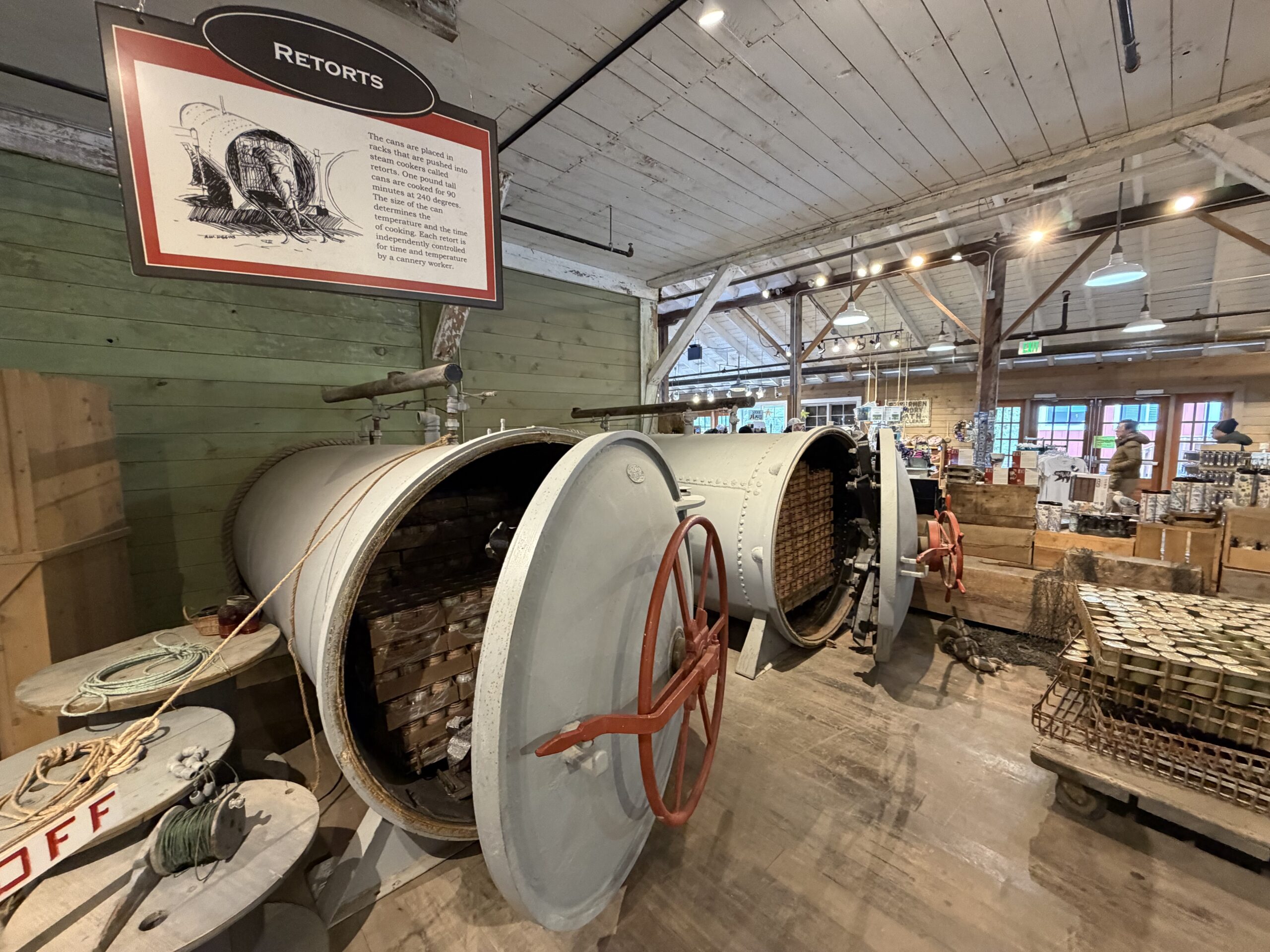
A free museum inside the restored cannery preserves the history of the salmon industry that once sustained generations of Hoonah families Photo: Mate Koczka
For much of the twentieth century, Hoonah revolved around fishing. The Hoonah Packing Company cannery became the economic center of the village after opening in 1912. Fishing boats filled the harbor, salmon runs shaped the rhythm of daily life, and generations of local families worked seasonal jobs connected to the industry.
Older residents still remember the years when Hoonah’s fishing fleet became famous across Alaska. During the height of the salmon industry, the community earned the nickname “Million Dollar Fleet,” as a reflection of how much money flowed through the harbor during peak seasons.
But like many resource-dependent communities, Hoonah eventually faced collapse. Salmon populations declined, the cannery closed, and the village’s economic foundation slowly disappeared. Logging jobs later declined as well. By the late twentieth century, many rural Alaska communities were struggling with unemployment, population loss, and uncertainty about the future.
The cannery itself sat abandoned for years. In another town, it probably would have been torn down. Here, people chose to keep it. That decision ended up shaping everything that followed.
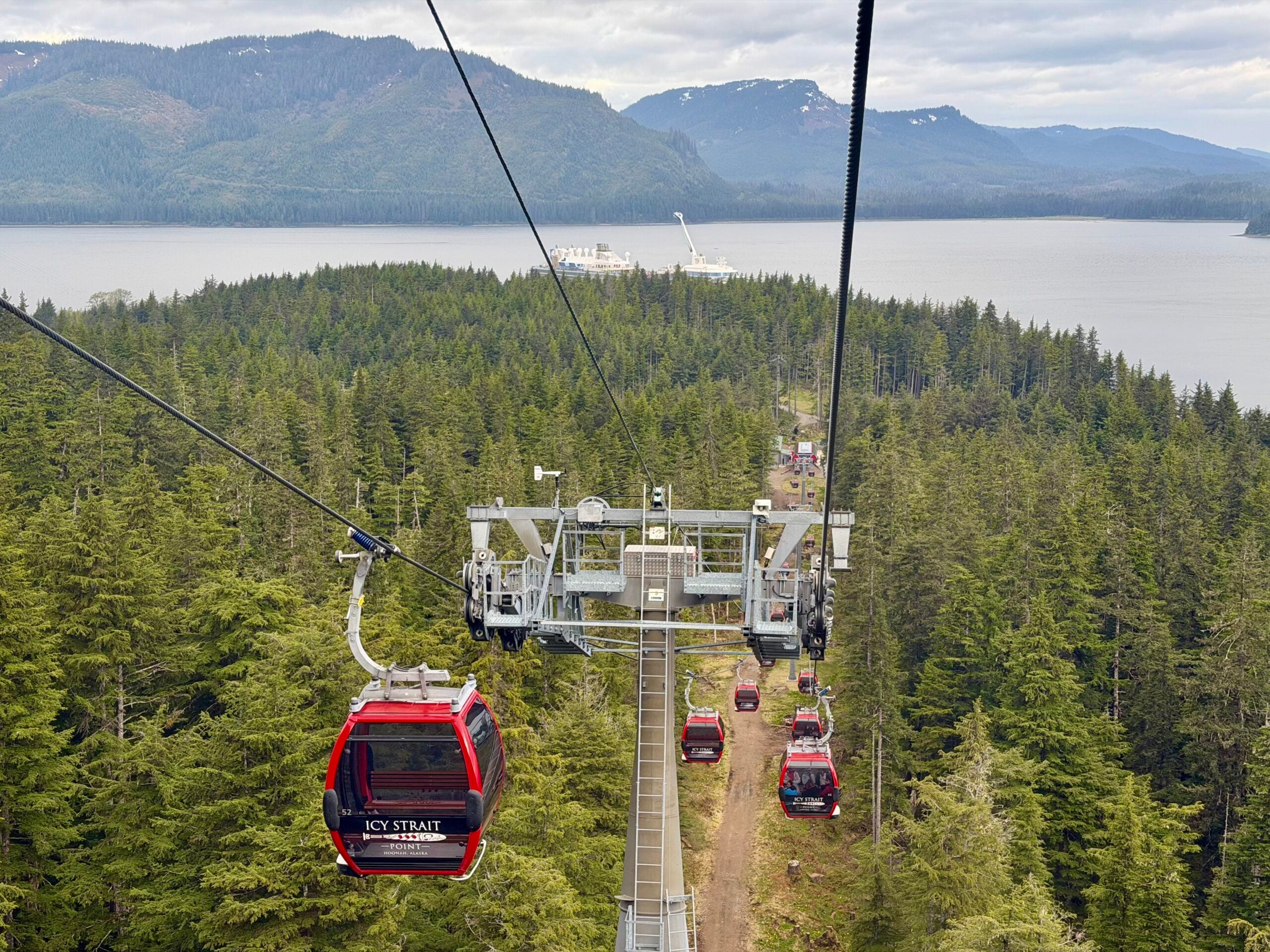
Icy Strait Point’s two gondola lines carry visitors between the cruise ship docks and up Hoonah Mountain, offering sweeping views along the way Photo: Mate Koczka
Tourism — But on Local Terms
The transformation began after the creation of the Huna Totem Corporation, the Alaska Native corporation established through the Alaska Native Claims Settlement Act. In 1996. The corporation bought the old cannery property in what many considered a risky move at the time.
The idea was never simply to build another cruise port. Instead, local leaders wanted to create a tourism model where the community itself remained in control: economically, culturally, and physically. When Icy Strait Point opened to cruise ships in 2004, it became something almost unheard of in North America: a cruise destination fully owned and operated by an Indigenous community.
Nowadays, at Icy Strait Point, visitors choose from over 30 different shore excursions tailored to every level of adventure. The centerpiece of the port’s attractions is the ZipRider, one of the world’s longest and steepest zip lines, which propels riders down a 5,495-foot cable from the top of Hoonah Mountain at speeds reaching up to 65 mph. To access the summit and its panoramic trails, guests take the scenic red SkyPeak Gondola, while the free green Transporter Gondola conveniently connects the port’s two main docks at sea level.
Beyond the adrenaline rush, the destination offers world-class wildlife encounters, including “whale-guaranteed” watching tours in the waters of Icy Strait. Also, the guided bear-search expeditions on Chichagof Island, a unique environment renowned for having more coastal brown bears per square mile than humans. For a complete Alaskan experience, travelers also enjoy kayaking, fishing, and off-road excursions. Travelers also have the option of combo packages that blend outdoor exploration with deep cultural and culinary immersions, such as the traditional Tribal Connections performance or the hands-on Alaska’s Wildest Kitchen masterclass.
A Community Decision
The community decides which businesses operate in Hoonah. Large international retail chains were intentionally excluded so that tourism revenue would stay local. Most employees come from Hoonah, and many residents balance seasonal tourism work with subsistence fishing, hunting, and gathering traditions that remain central to life in rural Alaska.
In many cruise destinations, tourism seems disconnected from everyday local life. Here, the line between the two is much harder to separate.
One small example says a lot. The Lil’ Gen’s donut stand at the port directs proceeds toward helping local families with food and housing support. It is a small operation, but it reflects the larger philosophy behind the development: tourism revenue is meant to circulate back into the community rather than disappear elsewhere.
Culture That Still Feels Alive
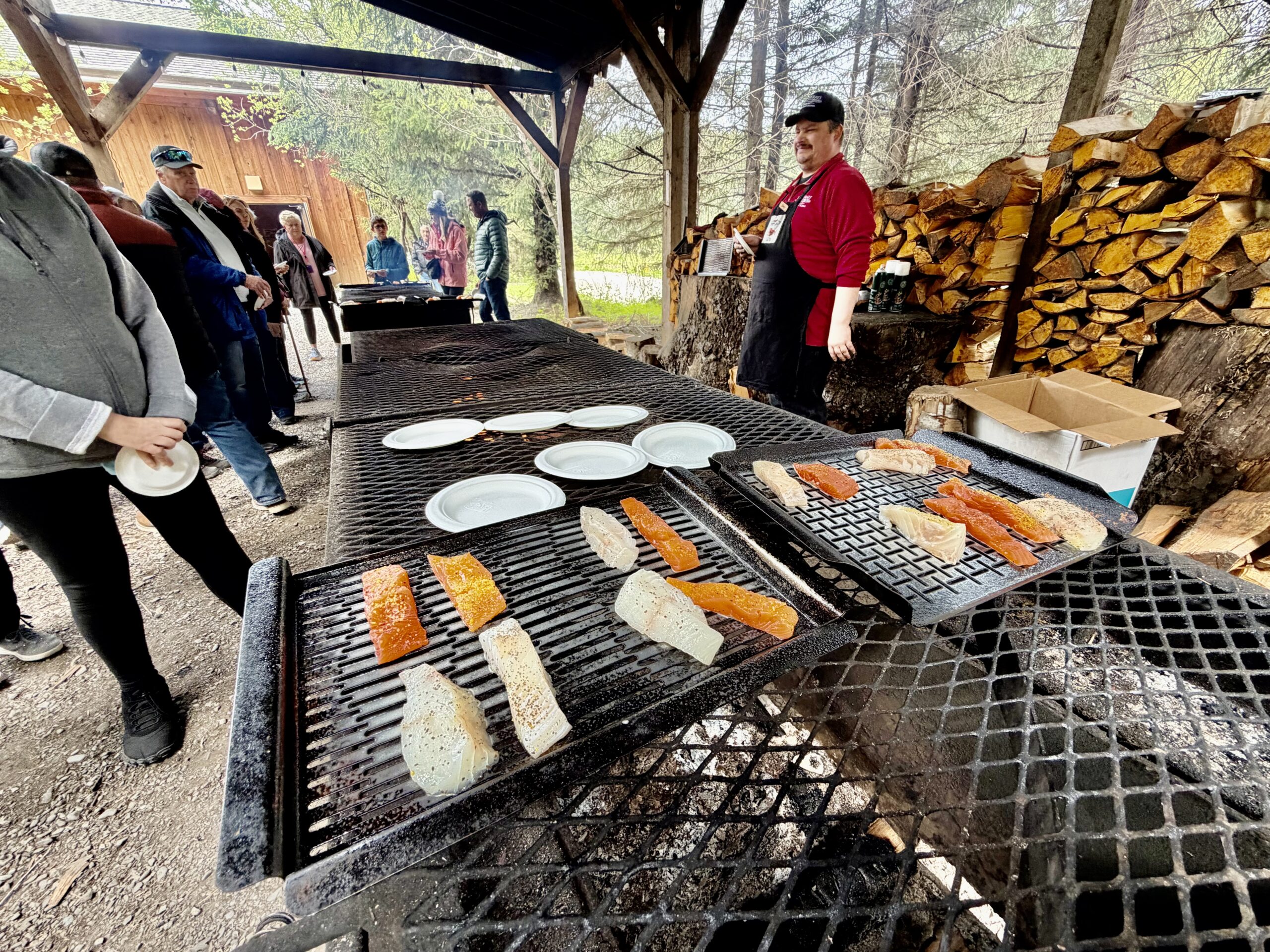
During the Alaska’s Wildest Kitchen experience, visitors can prepare and cook their own locally caught fish over an open fire.
Photo: Mate Koczka
Avoiding the feeling that culture has been reduced to performance remains one of the biggest challenges in Indigenous tourism anywhere in the world. Icy Strait Point does not entirely escape that tension, but it handles it more carefully than most places.
At the Heritage Theatre, visitors watch Tlingit dance, drumming, and storytelling performances connected to clan history and migration stories. But the people on stage are not actors hired to play a role. Often, they are students, elders, artists, or community members who share traditions that still matter in their own lives.
Tourism revenue also helps fund cultural preservation programs through the Huna Heritage Foundation, including carving apprenticeships for younger generations learning traditional Northwest Coast art forms.
The result is that culture here rarely seems frozen in time for visitors. It feels contemporary, lived-in, and still evolving.
Even the totem poles near the harbor carry emotional weight beyond tourism imagery. The Fishermen’s Honor Totem Pole commemorates the fishing industry that once sustained the village, while carved Watchmen figures symbolize protection and memory.
As the ships leave in the evening and the rainforest disappears back into mist, the village becomes quiet again. The harbor empties. The crowds vanish. What remains is not a tourist attraction pretending to be a community, but a real community still trying to decide what kind of tourism it can live with and what kind it refuses to become.
Click here for discounted accommodations in Hoonah, Alaska
Join the community!
Join our community to receive special updates (we keep your private info locked.)