

The Alhambra in Granada: An Islamic Treasure in Southern Spain
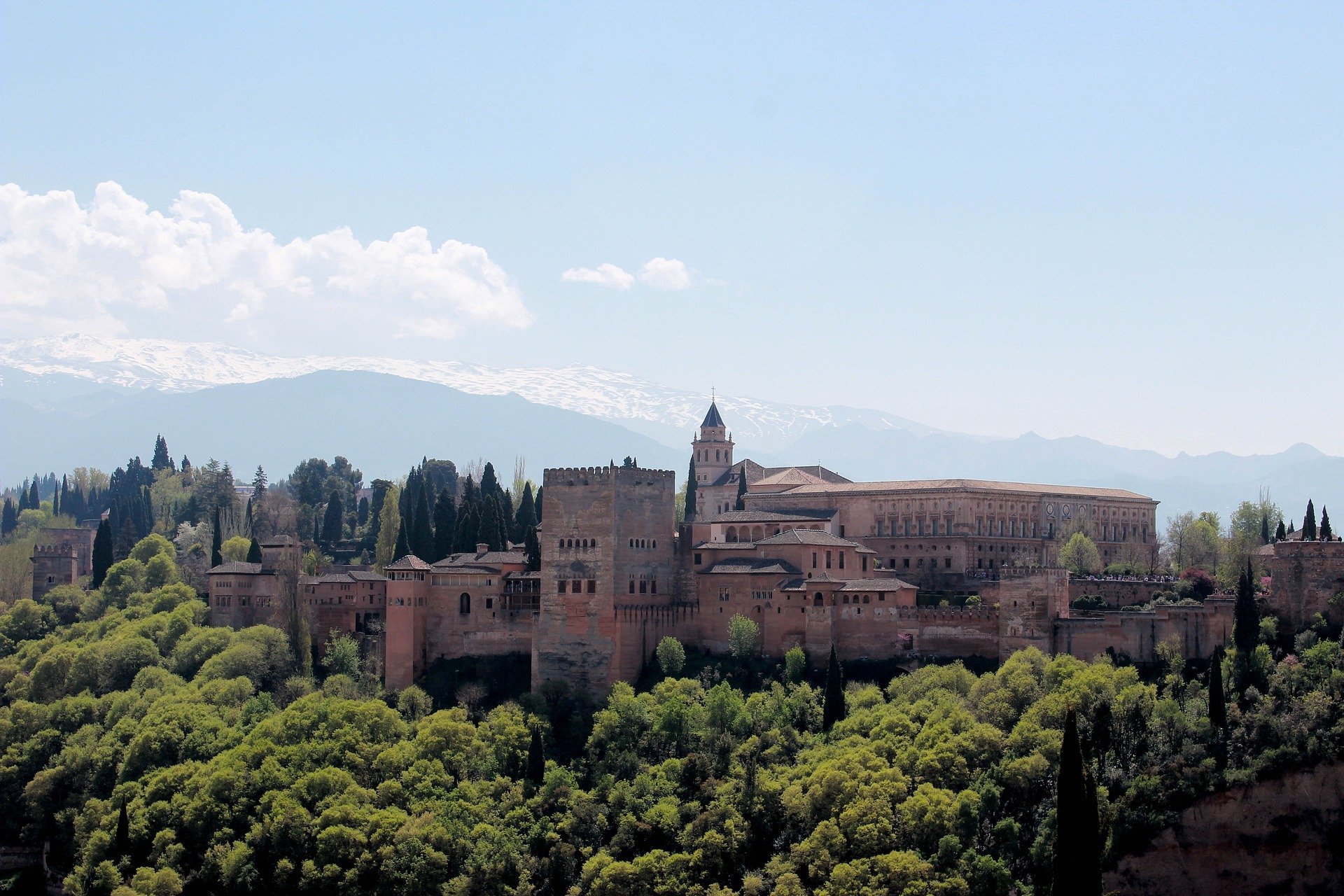
The Alhambra overlooks Granada and preserves the architectural legacy of the Nasrid dynasty alongside later Christian additions.
Posted August 21, 2026
The Alhambra rises above Granada as one of Spain’s best-known landmarks, but its importance extends far beyond its beauty. The palace and fortress complex preserves the artistic achievements of the Nasrid dynasty, which ruled the last Muslim kingdom on the Iberian Peninsula. It also reflects the Christian monarchy that took control of Granada in 1492 and reshaped parts of the site.
The Alhambra challenges any simplified version of Spanish history. Its Nasrid palaces preserve the achievements of Muslim Spain, while later Christian buildings show how new rulers asserted their authority within the same complex.
From Fortress to Nasrid Royal City
Buildings stood on Granada’s Sabika Hill as early as the ninth century. The Alhambra we recognize today began to take shape after Muhammad I founded the Nasrid dynasty in the 13th century. He established his court on the hill and began developing a fortified royal city.
The Alhambra served as a palace, military stronghold and administrative center. It also housed senior officials, court servants and elite soldiers. Within its walls were residences, workshops, baths, gardens and places of worship.
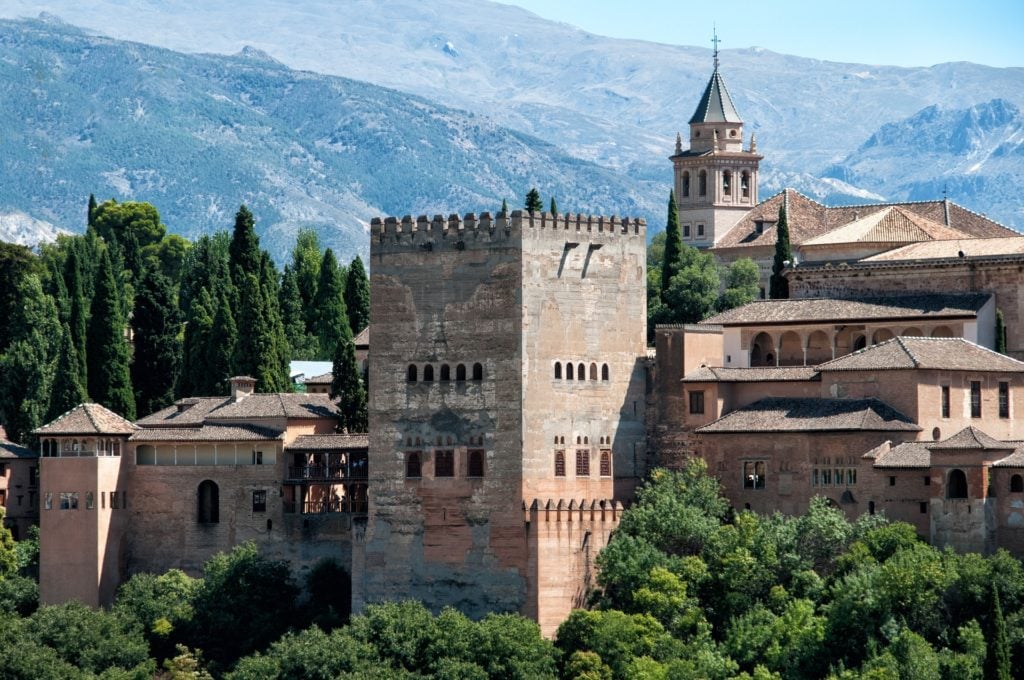
The Alhambra in Granada preserves the architectural legacy of the Nasrid dynasty and the later rulers who reshaped the complex.
The Alhambra reached its artistic height during the 14th-century reigns of Yusuf I and Muhammad V, who commissioned many of the palaces, courtyards and decorative features seen today. Its name comes from the Arabic al-Hamra, often translated as “the red one,” likely referring to the reddish color of its walls and towers.
Architecture That Communicates Power
The Alhambra’s interiors show how Nasrid artists turned plaster, wood, tile, marble and paint into highly detailed surfaces filled with meaning.
Geometric patterns cover walls and floors. Stylized leaves and vines appear beside Arabic calligraphy. Many inscriptions praise God, honor the ruling sultan or reproduce lines of poetry. The Nasrid motto, commonly translated as “There is no conqueror but God,” appears throughout the palaces.
The inscriptions and decorative patterns reinforced the sultan’s religious legitimacy and political authority. They also reflected the skill of the craftspeople who created the palaces.
The Court of the Myrtles shows how architecture supported that message. Its long reflecting pool, clipped myrtle hedges and formal arcades create a sense of order and symmetry around the Comares Tower.
Nearby, the Hall of the Ambassadors served as a throne room where the sultan received official visitors. Its walls combine geometric designs, plant-inspired decoration and Arabic inscriptions.
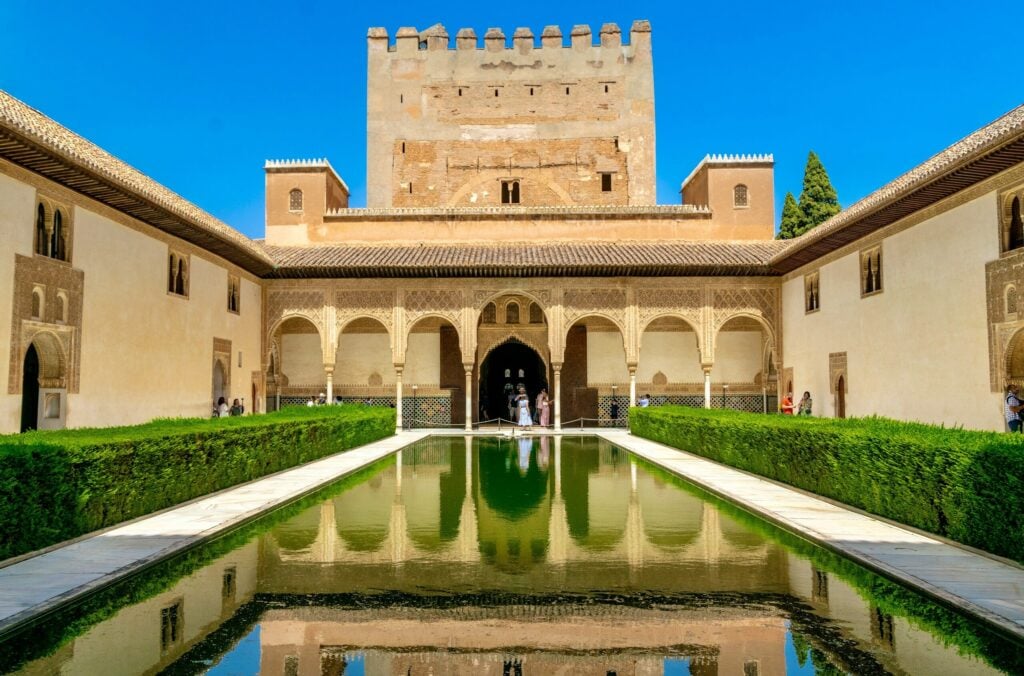
The Court of the Myrtles reflects the Comares Tower, showcasing the Nasrid use of water, symmetry and architecture at the Alhambra.
Inside the Court of the Lions
The Court of the Lions is the Alhambra’s most recognizable space. At its center, a marble basin rests on 12 carved lions. Four narrow water channels extend from the fountain toward the surrounding halls.
Muhammad V commissioned the palace during the 14th century. Its slender columns, carved arches and careful proportions create an impression of lightness. Yet the courtyard also formed part of a royal residence designed to display the refinement and legitimacy of Nasrid rule.
Several rooms around the courtyard contain elaborate muqarnas, a sculpted decoration that resembles honeycombs or stalactites. The Hall of the Two Sisters has one of the finest examples. Its domed ceiling breaks into hundreds of small cells that change in appearance as sunlight moves through the room.
The lions and fountain have required extensive conservation. The sculptures were removed for restoration and returned to the courtyard in 2011.

Twelve carved marble lions support the central fountain in the Court of the Lions, one of the Alhambra’s best-known examples of Nasrid design. Photo by franky1st
Water as Art and Infrastructure
Water is one of the Alhambra’s defining features. It cools courtyards, fills reflecting pools and adds sound to quiet rooms. It also reveals the technical knowledge required to support a royal city on a hill.
Nasrid engineers carried water from the Darro River through the Acequia Real, or Royal Canal. The system supplied palaces, baths, fountains, gardens and residential areas. It also supported cultivated land around the complex.
This blend of engineering and landscape becomes especially clear at the Generalife, a retreat east of the main fortress. Its gardens included ornamental spaces, orchards and productive land.
The Patio de la Acequia remains the Generalife’s best-known space. A long water channel runs through the garden, connecting architecture, plants and irrigation. The Generalife was not simply an ornamental garden. It formed part of a working landscape that supplied the royal court.
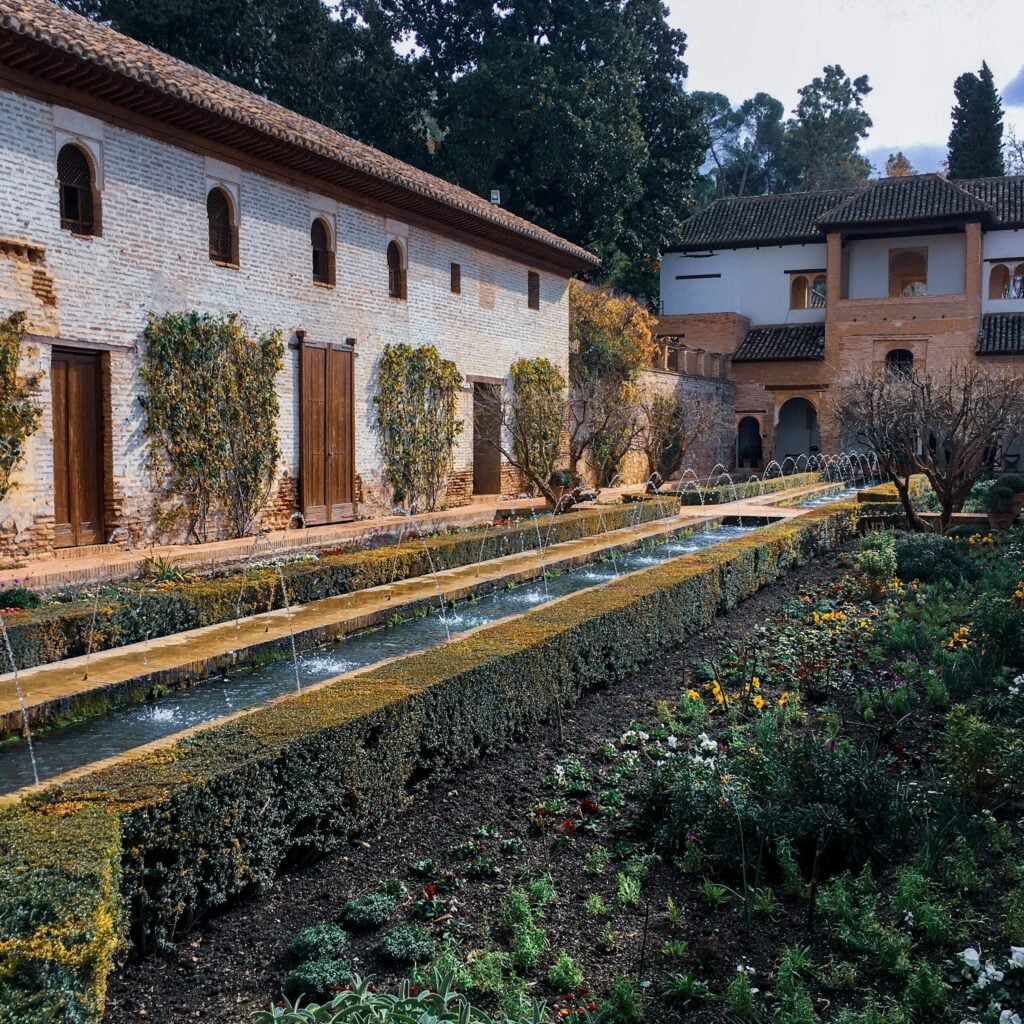
The Generalife gardens combined ornamental planting, irrigation and productive land as part of the Nasrid rulers’ retreat beside the Alhambra. Photo by Ágatha Depiné
What Changed After 1492
Granada surrendered to Isabella I of Castile and Ferdinand II of Aragon in 1492. The transfer ended Nasrid rule, but it did not lead to the complete destruction of the Alhambra.
The Catholic Monarchs made the complex a royal residence and ordered extensive repairs, often using Muslim craftspeople. They also introduced Christian symbols and altered selected spaces.
Emperor Charles V made the most dramatic addition. In 1526, he commissioned a new Renaissance palace inside the Alhambra. Its massive square exterior and circular courtyard contrast sharply with the smaller scale and intricate surfaces of the Nasrid buildings.
The palace carried an unmistakable political message. Charles V placed a monumental Christian royal residence inside the former seat of Muslim power. Construction also changed the layout and access points of the older complex.
The Church of Santa María de la Alhambra was completed in the early 17th century on the site of the former main mosque. Together, the church and Charles V’s palace show how Christian rulers placed their authority within the former center of Nasrid power.
Survival, Restoration and Global Fame
The Alhambra experienced periods of neglect and damage after its years as a royal residence. French troops demolished parts of the complex as they withdrew in 1812. During the 19th century, writers and artists helped renew international interest in the site.
Washington Irving played an important role in that revival. He stayed at the Alhambra in 1829, and his Tales of the Alhambra introduced many readers to a romanticized vision of the palace. That attention raised the Alhambra’s international profile, but it also encouraged an exotic image that sometimes overshadowed its real history.
The Alhambra became state property and was declared a national monument in 1870. UNESCO added the Alhambra and Generalife to the World Heritage List in 1984. The designation expanded in 1994 to include the Albayzín, Granada’s historic Muslim quarter across the Darro River.
Together, these places preserve different parts of medieval Granada. The Alhambra represents the royal and administrative center, while the Albayzín reflects the urban community that developed around it.
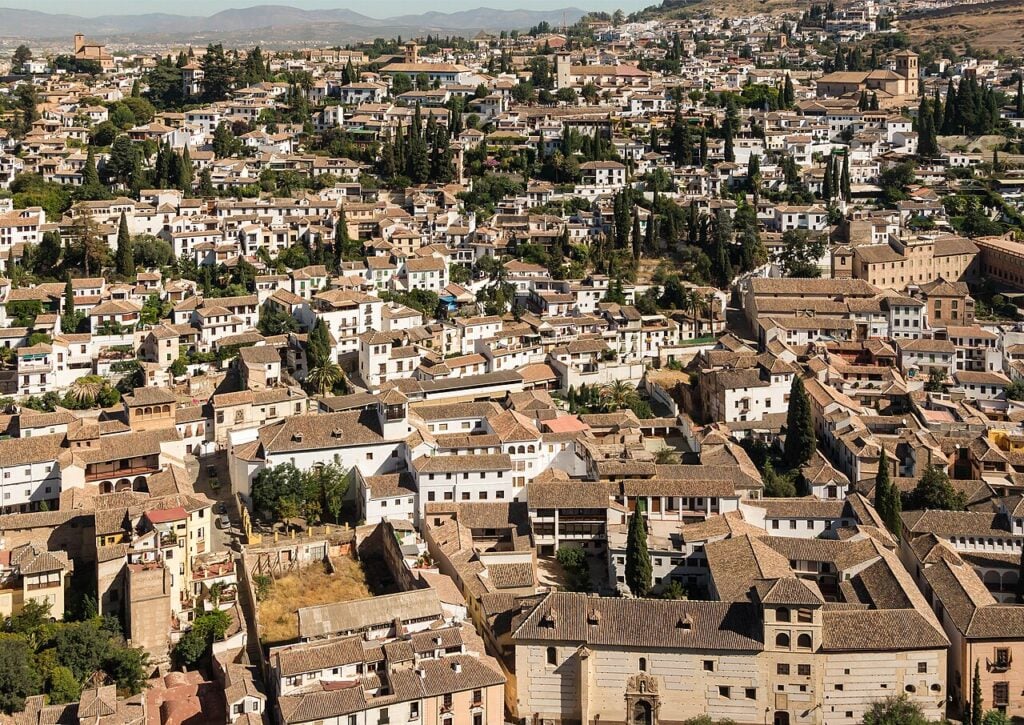
The historic Albayzín preserves Granada’s medieval street pattern and a blend of Moorish and later Andalusian architecture. The neighborhood joined the Alhambra and Generalife on UNESCO’s World Heritage List in 1994. Photo by Jebulon via Wikimedia Commons, released under CC0 1.0.
Visiting the Alhambra With Context
The Alhambra is often treated as a beautiful backdrop, but its history deserves more than a quick walk through its courtyards. It was once a functioning city shaped by rulers, craftspeople, engineers, soldiers, servants and farmers.
The Alhambra’s popularity creates a modern preservation challenge. Protecting its delicate plasterwork, tilework and timber while keeping the site accessible requires thoughtful destination stewardship. That shared responsibility among site managers, residents and visitors is central to my book, Destination Stewardship: Drive Sustainability, Economic Renewal, and Cultural Integrity.
Buy tickets through the official Alhambra website. Entry to the Nasrid Palaces is timed, and visitors must arrive at the hour printed on the ticket. The general visit also includes the Alcazaba and Generalife, so plan several hours for the entire complex.
Visitors may arrive for the Court of the Lions or the Generalife gardens. Understanding who built the Alhambra, who later claimed it and how it has been interpreted makes the visit far more meaningful.
For a broader look at that influence, read World Footprints’ Spain As We Know It, Thanks to the Moors. Travelers continuing through Andalucía can also explore 6 Can’t-Miss Destinations in the South of Spain.
Book Your Stay Near the Alhambra
Use the interactive map below to compare hotels and vacation rentals near the Alhambra. Move the map to search other parts of Granada, or use the filters to find accommodations near specific points of interest. Available rates are drawn from platforms including Booking.com, Hotels.com, Expedia and Vrbo.
Join the community!

Join our community to receive special updates (we keep your private info locked.)