

Why You Should Visit Antique Shops When You Travel
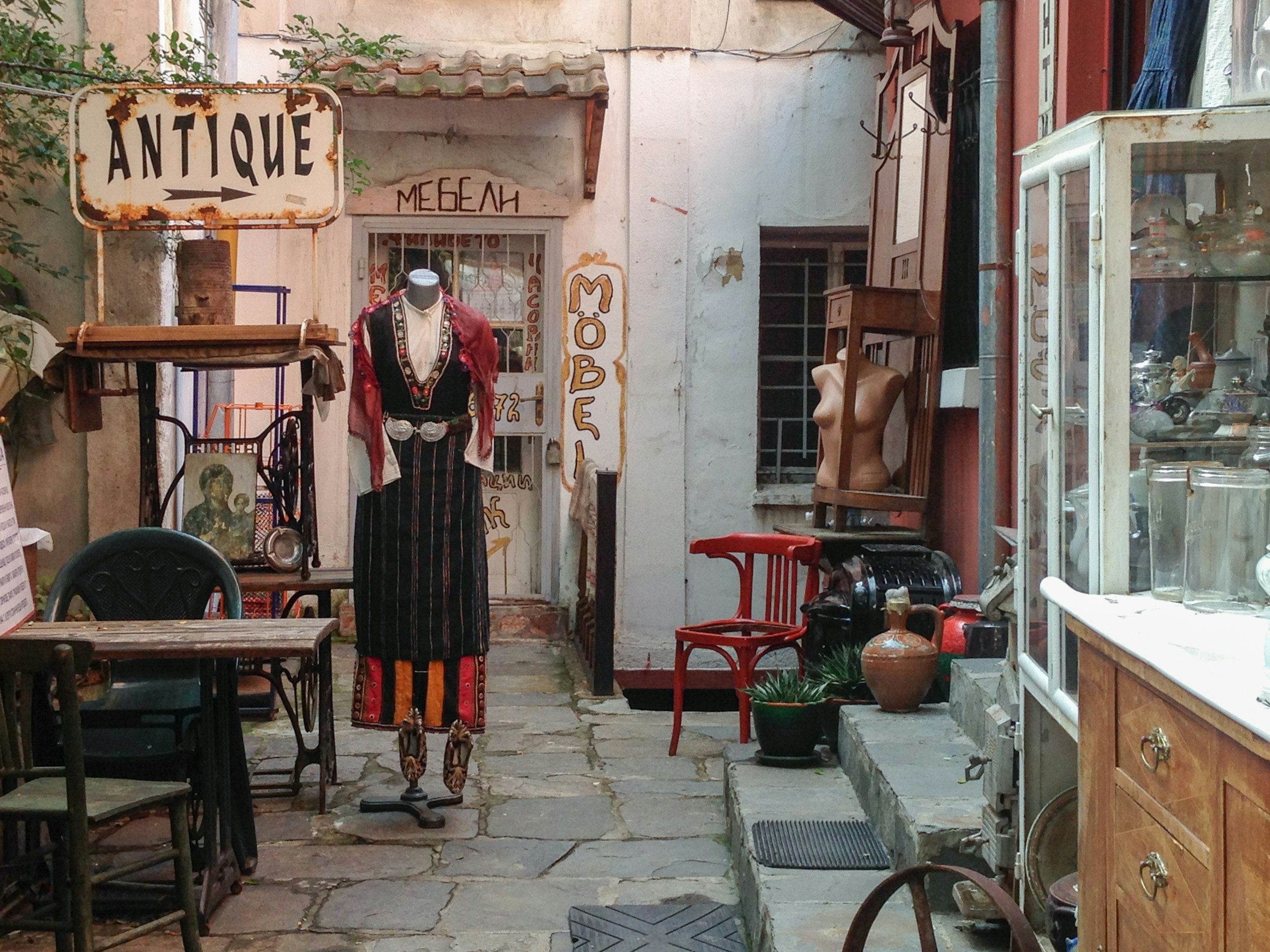
Antiques and Travel Photo by Linda Gerbec
By Cara Siera
Posted July 8, 2025
When I was a kid, I thought everyone popped into quirky little antique shops when they traveled. After all, my family did. We built entire day trips around it. We’d spend hours drifting from shop to shop in Cadiz and Paducah, Kentucky, or Watertown, Pigeon Forge, and Lebanon, Tennessee.
Those shops can be as informative as museum visits, especially with a knowledgeable companion. They can help you get to know the area in a distinct way. I still make it a habit to visit antique shops when I travel, and I think you should, too. Here’s why.
Growing Up with Antiques
Transformative travel is all about expanding your thinking and seeing things from different perspectives. Antique shops and so-called indoor “flea markets” helped me to do that at a young age.
My dad often pointed out items from the past that he grew up with, or things his parents and grandparents would have used. I knew what a coffee mill, washboard, oil lamp, vinyl record, and phonograph looked like and what they were used for. I had a sense that life hadn’t always been exactly as I knew it at the time.
Dad also used the opportunity to teach me right from wrong. Retro advertisements and branding are rife with prejudicial imagery, for example. Dad would point these things out to me, explaining how the caricatures could hurt people’s feelings, and that they influenced others to treat them differently and unfairly. It was a simple lesson, but I grew up with keen desires for justice and equality as a result.
You’ve probably heard the phrase “a bull in a china shop.” I wasn’t allowed to be one. My early training involved calmly pondering my surroundings and respecting other people’s possessions at an age when many children would romp and run with abandon. I believe that these qualities, such as self-control and thinking before acting, have served me well into adulthood.
Finally, I met many people I wouldn’t have otherwise. A three-year-old who looked at but didn’t touch expensive and fragile “pretties” was a bit of an oddity, so conversations with shopkeepers and local craftspeople often ensued.

Antiques and Travel Photo: Susan Kirsch Unsplash
Getting to Know the Character of a Place
Have you ever asked a significant other to give you a tour of where they grew up or asked longtime friends to share entertaining anecdotes about one another? If so, you’re aware of how the past shapes who a person is now.
The same is true of the places you travel to. For example, when I visited the small waterfront town of Beaufort, North Carolina, the annual Beaufort Pirate Invasion was in full swing. Costumed reenactors and children in captain’s hats roamed the streets. We took a ferry to Shackleford Banks, where we snorkeled and observed wild horses whose ancestors had escaped shipwrecks centuries ago.
But one of my most enduring memories of Beaufort was a little shop with a wall of shelves housing dozens of handmade masted sailing ships of assorted sizes. More than the pirate festival, more than the visitor center boasting of shipwrecks, this display spoke volumes about the area’s pride in its maritime history.
Antiquing Abroad
I had always viewed Australia as a world apart. I pictured it filled with wildlife, rugged terrain, and adventurous people. When we stopped in at an antique shop in Montville, Queensland, I wondered what weird and wonderful treasures I would find. Taxidermized platypus and extinct Tasmanian tigers danced through my mind.
The amazing thing about Montville Antiques, however, was how normal it was. Established in a former residential home, it featured large arched doorways between rooms, brightened by pastel yellow paint. Curio cabinets and lighted displays lined the walls. The china, jewelry, and ancient Roman coins—I was intrigued as to how they traveled half the world—were exactly the kinds of things I’d find in antique stores back home. Tiffany-style lamps and European beer steins perched on countertops. There were wind-up clocks, nutcrackers, figurines, and books.
To my surprise, the Australian antique store didn’t tell a story of a wildly divergent past. Instead, it spoke of a shared history of European colonization, of artistic styles and material goods that travel here and there with the flow of humanity. Rather than pointing out our differences, it reminded me that, despite being located on opposite ends of the globe, we are very much the same.
At the next shop, my friend found a vintage sweater that fit just right. At another, I was delighted by a collection of tiny, painted ceramic animal figurines that reminded me of the squirrels and kittens my grandmother had kept on a corner shelf. Only these were kangaroos, koalas, and kookaburras. They were different, but very much the same.

Antique Shops Around the Globe Photo by Zoshua Colah
More than Objects
Our personalities and decisions are largely shaped by our environment. “Nurture” or environment accounts for about 40 to 60 percent of our personality traits, according to psychologists. No matter your age, exposure to relics of the past and the quiet, museum-like environment in which they are often sold can introduce you to entirely new perspectives.
Over the years, antiquing has introduced me to past events that we can learn from. It’s shown me that despite differences in culture and national borders, we’re all very much alike.
Click Here for Discounted Accommodations in Montville, Queensland
Join the community!
Join our community to receive special updates (we keep your private info locked.)