

7 Countries Black Americans Should Consider When Moving Abroad

Retirement, remote work and changing priorities are leading more Black Americans to investigate life outside the United States.
Posted November 15, 2024
Last Updated August 2, 2026
Editor’s Note: Immigration rules, financial requirements and security conditions can change. Confirm current requirements with the relevant immigration authority or consulate before applying.
Friends, readers and fellow travelers have been asking Ian and me the same question: Where should Black Americans consider moving abroad?
The reasons vary. Some are thinking about retirement. Others can work remotely and want to experience life beyond the United States. Families are considering what another country might offer their children. Political and racial tensions are also causing some Black Americans to question whether they still see their futures at home.
Ian and I have spent decades traveling the world and reporting on places with rich cultures, complicated histories and communities that often receive little attention in traditional travel stories. We also know that enjoying a country as a visitor is very different from living there.
No country is completely safe, free of racism or automatically welcoming to every Black American. National travel advisories are useful, but they do not measure whether someone will feel respected by an employer, accepted by neighbors or comfortable navigating daily life. Experiences can also differ according to gender, sexuality, disability, age and income.
The seven countries below are not ranked. Each offers a different combination of cultural connection, immigration options and everyday livability. Each also comes with challenges that should be considered before packing a suitcase or buying property.
1. Ghana
Ghana holds a special place in the African diaspora. Its 2019 Year of Return invited people of African descent to reconnect with Ghana 400 years after the first recorded arrival of enslaved Africans in English-occupied North America, at Point Comfort in colonial Virginia. That outreach continued through Beyond the Return and now the Black Star Experience, reinforcing Ghana’s relationship with its global diaspora.
Accra has attracted Black American entrepreneurs, retirees, artists and families, but Ghana offers more than an expatriate scene. Cape Coast and Elmina confront visitors with the history of the transatlantic slave trade. Kumasi opens a window into the Ashanti Kingdom, while smaller communities offer a very different experience from life in the capital.
Black Americans may feel an immediate cultural or emotional connection to Ghana. That should not be confused with automatic acceptance or an easy immigration process. You are still entering another country with its own customs, expectations and ways of doing business.

Ghana’s Year of Return and later diaspora programs encouraged people of African descent to reconnect with the country’s history and culture. Photo by Ransford Quaye.
How to Move
Most Americans planning to work or operate a business in Ghana will need an appropriate work and residence permit. Ghana Immigration Service lists separate permit categories for employees, company owners, investors, students, dependents and people connected with nonprofit or religious organizations.
Entering Ghana as a tourist does not authorize someone to take a job or begin operating a business. Immigration status, company registration, investment requirements and any professional licenses should be confirmed before relocating rather than after arrival.
Ghana also grants Right of Abode status to certain people of African descent in the diaspora. It can provide permanent residence, visa-free entry and the right to work without a separate work permit. However, it is not an entry-level relocation visa. Ghana’s regulations require extensive character, financial and contribution evidence, including attestations from qualified Ghanaian referees. Applicants must also have lived in Ghana continuously for the 24 months immediately before applying. During the seven years immediately preceding that 24-month period, they must have lived in Ghana for at least five years in aggregate. Approval remains discretionary.
Right of Abode is a permanent immigration status, not Ghanaian citizenship. It allows the holder to live and work in Ghana without repeatedly renewing a residence or work permit, but it should not be described as an automatic route to a Ghanaian passport.
According to current U.S. government guidance, non-Ghanaian residents over age six who spend at least 90 days in Ghana during a year must register with the National Identification Authority for a non-citizen Ghana Card. The card is needed for activities such as opening a bank account, obtaining a work permit or securing a driver’s license.
Local Considerations
As of July 2026, Ghana carries a Level 2 U.S. travel advisory. The State Department cites crime, poor health infrastructure, violence against women and violence against lesbian and gay travelers. It recommends reconsidering travel to the northern border areas of the Upper East, Northeast and Upper West regions, as well as areas west of the N12 highway in the Savannah Region.
Health care, roads, utilities and internet reliability vary considerably. Conditions in Accra or Kumasi may not reflect daily life in smaller cities and rural communities. Emergency medical services are limited outside Accra, and a serious illness or injury may require evacuation to another country. Prospective residents should confirm that their insurance covers treatment in Ghana and medical evacuation before moving.
Anyone buying land or establishing a business should use an independent Ghanaian attorney, confirm ownership and registration records and avoid relying solely on the seller, developer or business partner. Business licenses, tax obligations and investment requirements should also be confirmed with the appropriate Ghanaian authorities.
A long visit is not the same as living in Ghana. Before purchasing property or moving permanently, spend time in the community where you expect to live, including outside the December holiday season. Test ordinary routines such as transportation, medical care, banking, shopping, internet access and dealing with government offices.
Find Discounted Hotels
2. Portugal
Portugal continues to appeal to Black Americans who want a European base, public transportation, access to other countries and a legal route for retirees or people with independent income.
Lisbon and Porto receive most of the attention, but their popularity has also made housing more expensive. Coimbra, Braga, Setúbal and other communities may provide alternatives, although smaller cities can have fewer international services and less racial diversity.
Portugal’s connections with Cape Verde, Angola, Mozambique, Guinea-Bissau and São Tomé and Príncipe are visible in its food, music and communities. Those relationships grew from a colonial history that should not be romanticized. Portugal may feel diverse, but Black residents and migrants still encounter racism, hate speech and reports of racial profiling.

Portugal offers residence options for retirees and people with independent income, although housing pressure has changed life in Lisbon and other popular communities.
How to Move
Portugal’s residence visa for retirees and people living on passive income is commonly called the D7 visa. Applicants must document regular income, suitable accommodation, insurance and other required information. The D7 is an entry visa rather than the final residence permit. It allows the holder to enter Portugal and apply for residence after arrival.
The base means-of-subsistence benchmark is tied to Portugal’s national minimum wage, which is €920 a month in 2026. Applicants should confirm the total required for themselves and any accompanying family members with the Portuguese consulate responsible for their place of residence.
Portugal also offers other routes for remote professionals, workers, entrepreneurs and investors. Portugal’s Golden Visa remains available through certain qualifying investments, but purchasing residential property no longer qualifies a new applicant for the program.
Local Considerations
Portugal currently has a Level 1 U.S. travel advisory. Petty theft remains a concern in busy visitor districts and on public transportation, but the country is generally considered safe for travelers.
Housing may be the more difficult issue. The OECD reports that rising demand, limited construction and weaknesses in the rental market have placed serious pressure on affordability. Lisbon and other popular communities have experienced some of the greatest pressure.
Black Americans considering Portugal should look beyond the neighborhoods promoted by relocation influencers. Rent before buying, avoid approaching the local housing market only as an investment opportunity and consider how your move may affect residents already struggling to remain in their communities.
Prospective residents should also obtain cross-border tax advice before moving. Qualifying for a residence visa and becoming a Portuguese tax resident are separate matters, and U.S. citizens may continue to have filing obligations in both countries.
3. Barbados
Barbados offers something that many European and Latin American destinations cannot: an English-speaking society in which Black people form the overwhelming majority of the population.
That does not mean Black Americans and Barbadians share the same culture or history. Barbados has its own class divisions, social customs and identity. Still, some newcomers may find it easier to settle into a place where Black history and culture are part of national life rather than a small chapter in the national story.
Barbadian culture grew from West African and European influences within a plantation economy built on enslavement. That history continues to shape the island’s music, food, religion and public life.
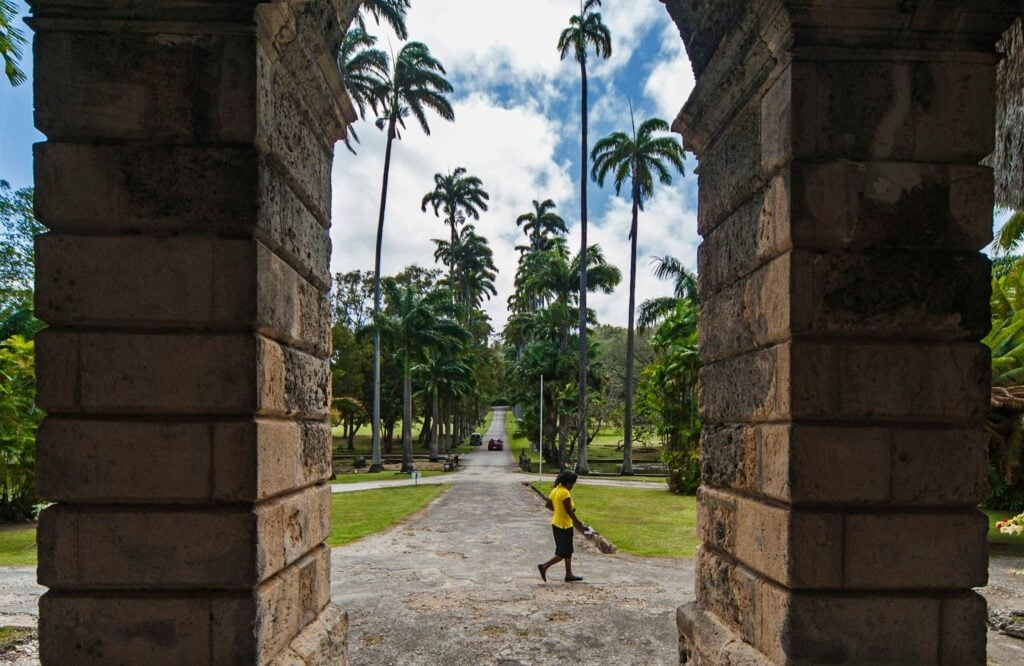
The palm-lined drive at Codrington College in St. John leads to one of Barbados’s oldest educational institutions. The college was funded by estates worked by enslaved Africans, a history that remains central to reconciliation efforts. Photo by Tom Jur.
How to Move
The Barbados Welcome Stamp allows people with employment or businesses outside Barbados to live and work remotely from the island for up to 12 months. Applicants must certify that they expect to earn at least US$50,000 during that period or have sufficient means to support themselves and any accompanying family members. Upon approval, the fee is US$2,000 for an individual and US$3,000 for a family group.
The current application system accepts renewals, but the Welcome Stamp is not permanent residence and should not be described as a direct path to citizenship. It works best for someone who wants to test life in Barbados while continuing to work for an employer or business outside the country. Welcome Stamp holders may not accept local employment or provide services to people or businesses operating in Barbados.
People seeking employment with a Barbadian company, operating a local business, retiring permanently or settling in Barbados long term need a different immigration route. Depending on their circumstances, that may involve a work permit, Special Entry Permit, immigrant status or permanent residence.
Local Considerations
Barbados currently carries a Level 1 U.S. travel advisory and is described as generally safe. Petty theft and other crimes of opportunity still occur, particularly in areas popular with visitors.
Before committing, price long-term housing, groceries, utilities, private insurance and transportation. A pleasant week at a beachfront resort will not tell you what it costs to maintain a household or how easily you can obtain specialist medical care.
Health facilities are available throughout Barbados, but hospitals and doctors may require payment before treatment or admission. Patients must also cover the cost of transfers between hospitals. Prospective residents should confirm that their insurance covers care in Barbados and medical evacuation before moving.
4. Panama
Panama has long attracted American retirees, but its relevance to Black Americans extends beyond affordability and warm weather.
Enslaved Africans were brought to Panama during Spanish colonial rule, and maroon communities resisted slavery and Spanish authority. A later wave of Afro-Caribbean migration began during construction of the Panama Railroad in the 1850s, when workers arrived from Jamaica and elsewhere in the Caribbean. Decades later, tens of thousands of Caribbean workers—especially Barbadians—came for the French and U.S. canal projects. Many remained in Panama, and their descendants helped shape the country’s food, language, music and identity, particularly in Colón, Bocas del Toro and Panama City.
Panama City offers the country’s largest concentration of hospitals, international businesses and air connections. Boquete, Coronado, Colón and Caribbean communities provide very different lifestyles. Prospective residents should not assume one represents the entire country.
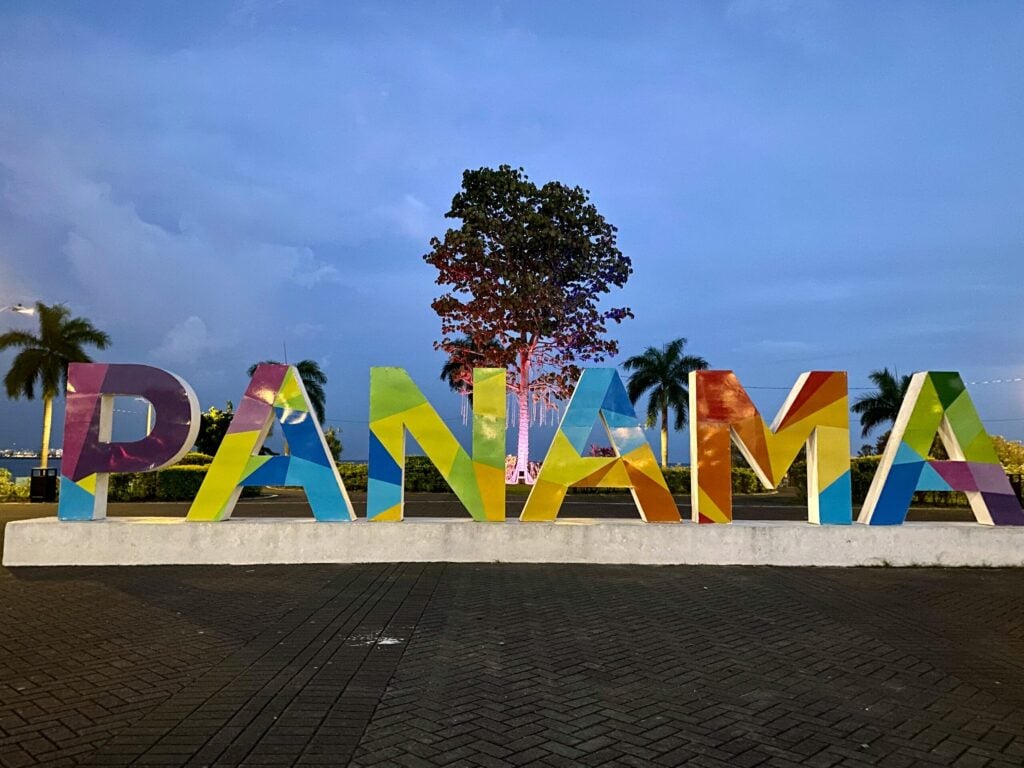
A Panama sign welcomes visitors to a country shaped by Indigenous, African, Caribbean and European histories. Photo by Rikin Katyal.
How to Move
Panama’s Pensionado program is one of the clearest retirement routes in the region. Applicants must generally demonstrate a lifetime pension of at least 1,000 balboas, equivalent to US$1,000, per month. An additional 250 balboas per month must be demonstrated for each dependent. The permit is indefinite and does not require renewal.
Panama also offers residence categories for investors, employees and people with family connections, as well as a separate short-stay visa for remote workers. The remote-worker visa is a nonresident category. It requires annual income of at least 36,000 balboas from outside Panama, remains valid for nine months and may be extended once for another nine months. It does not authorize employment or services for Panamanian clients or businesses.
Local Considerations
Panama currently has a Level 2 U.S. travel advisory because of crime and the possibility of civil unrest. Parts of the Darién and Mosquito Gulf carry “Do not travel” warnings. Those restricted areas are remote from most established residential communities, but they remain part of the country’s overall security picture.
Traffic, heat and humidity can make life in Panama City more demanding than the skyline suggests. Visit during the rainy season, try the transportation you expect to use and test the distance between your prospective home, hospital and grocery store.
Medical care is strongest in Panama City, while facilities and ambulance response can be limited in rural areas. Private hospitals may require payment before treatment or admission. Prospective residents should confirm that their insurance covers care in Panama and medical evacuation before moving.
Anyone purchasing real estate should use an independent Panamanian attorney and investigate the title, contracts, fees and ownership records before paying a deposit. U.S. authorities have received complaints involving broken contracts, demands for additional payments, lost property and alleged fraud.
Find Discounted Hotels
5. Thailand
Thailand remains one of the more practical Asian choices for retirees and remote workers. Bangkok offers the largest selection of international services. Chiang Mai attracts people seeking a slower pace, while the islands and coastal cities appeal to those who want to live near the water.
Yet Thailand should not be reduced to low prices, beaches and friendly service. Living there requires adjusting to a different language, legal system and social culture. Black Americans may also encounter colorism, curiosity or stereotypes that differ from racism in the United States but are no less important to understand.

Thailand provides long-stay options for remote professionals and retirees, but daily life differs considerably among Bangkok, Chiang Mai and the islands.
How to Move
Thailand’s Destination Thailand Visa is designed for remote workers, digital nomads, freelancers and participants in certain cultural, training or medical activities. The visa remains valid for five years and permits stays of up to 180 days per entry. A holder may apply to extend an authorized stay for up to another 180 days.
The Royal Thai Embassy in Washington currently requires workcation applicants to submit bank statements covering the previous three months. Each statement must show an ending balance of at least 500,000 Thai baht, which the embassy estimates at approximately US$16,000. Applicants must also provide evidence of foreign employment, self-employment or professional freelance work.
The DTV workcation category is intended for people whose employment, business or freelance work is based outside Thailand. It should not be treated as authorization to accept a job with a Thai company. Local employment generally requires the appropriate non-immigrant visa and a Thai work permit. The DTV is also a temporary visa rather than permanent residence. Thailand offers separate non-immigrant and long-stay categories for qualifying retirees and other applicants.
Local Considerations
As of July 7, 2026, Thailand carries a Level 1 U.S. travel advisory. The State Department recommends increased caution in the Thailand-Cambodia border region because of the risk of armed conflict and in the southernmost provinces of Yala, Pattani and Narathiwat because of unrest.
Anyone considering Chiang Mai should spend time there during the annual smoke season, generally from February through April. Agricultural burning and forest fires can push fine-particle pollution to unhealthy or hazardous levels. Retirees should also compare insurance, prescription access and hospital services before settling on an island or in a smaller community, where medical facilities may be more limited than in Bangkok and other major cities.
6. Costa Rica
Costa Rica’s “pura vida” image attracts people seeking nature, warm weather and a less hurried life. It also has several established immigration categories, making it more practical than countries that provide only a short-term remote-work visa.
For Black Americans, the Caribbean province of Limón offers an important cultural connection. Beginning in 1872, workers recruited primarily from Jamaica arrived to help build the railroad between the Caribbean coast and Costa Rica’s interior. Many stayed, and Afro-Caribbean communities helped shape Costa Rican calypso, food, language, religion and national identity. Since 2018, Costa Rica has recognized August as the Historical Month of African Descent.
That history should not be treated as proof that racism or regional inequality has disappeared. Afro-Costa Ricans continue to report discrimination and unequal access to opportunities. Economic conditions also differ sharply by region, with the Huetar Caribbean region experiencing substantially higher poverty than the Central Region.
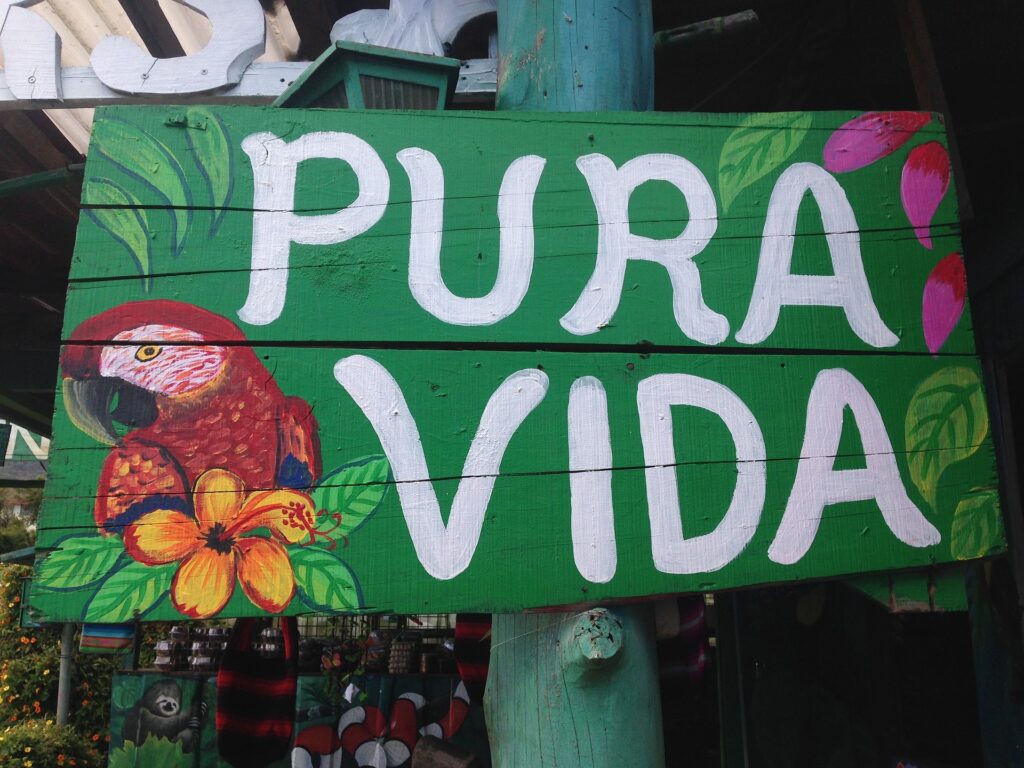
Costa Rica’s “pura vida” philosophy reflects a slower, more relaxed approach to daily life, but prospective residents should also research local safety, health care and infrastructure.
How to Move
Costa Rica’s pensionado category requires a permanent monthly pension of at least $1,000 from outside the country. The rentista category requires stable monthly income of at least $2,500. Both are temporary-residence categories rather than tourist extensions. Once their residence is approved, applicants generally must enroll in Costa Rica’s social-security system and maintain that coverage when renewing their immigration status.
Remote workers may qualify for Costa Rica’s digital-nomad program by demonstrating monthly income from outside the country of at least US$3,000 for an individual or US$4,000 when applying with dependents. This is a temporary stay category rather than legal residence. It is granted for one year and may be renewed for one additional year. Applicants and accompanying dependents must have medical insurance covering the full authorized stay, with at least US$50,000 in coverage.
Local Considerations
As of April 2, 2026, Costa Rica carries a Level 2 U.S. travel advisory because of crime. Petty crime is common throughout the country, while violent crime affecting tourists has included armed robbery, homicide and sexual assault.
Safety varies by community. Health care, road access, flooding, internet service and emergency response also differ between the Central Valley and coastal or rural areas. Spend time in the actual community under consideration rather than judging Costa Rica from a resort stay.
Medical care is generally strongest in San José and may be limited elsewhere. Hospitals and doctors often require payment before treatment or admission, and ambulance equipment may be limited. Prospective residents should confirm that their insurance covers care in Costa Rica and medical evacuation before moving.
7. Cabo Verde
Cabo Verde is one of the least familiar countries on this list, but it deserves consideration.
The Atlantic archipelago consists of 10 volcanic islands west of Senegal, nine of them inhabited. The islands were uninhabited before Portuguese settlement began in the 15th century. An early Creole society developed through Portuguese colonization and the forced migration of enslaved people from West Africa, while Cabo Verde became a major center in the Atlantic trade of enslaved people. That history shaped the country’s distinct language, food and music. The late Cesária Évora brought morna, one of Cabo Verde’s best-known musical traditions, to audiences around the world.
The nine inhabited islands offer very different experiences. Praia, on Santiago, is the capital and largest city. Mindelo, on São Vicente, is known for music and cultural life. Sal and Boa Vista have the strongest resort economies, while Santo Antão attracts hikers and people seeking a quieter setting.
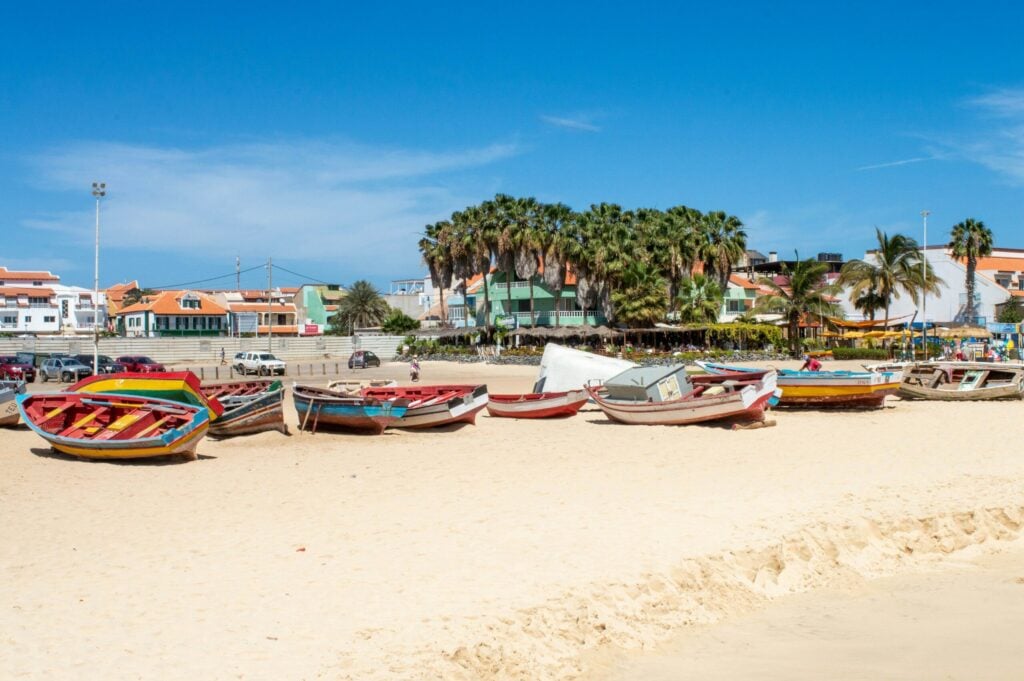
Colorful fishing boats line a sandy beach in Cabo Verde, where coastal communities maintain traditions alongside the country’s growing tourism economy. Photo by Florian K.
How to Move
Cabo Verde’s Remote Working Program provides a six-month temporary work-and-tourism visa that may be renewed for another six months. It is intended for self-employed people and digital nomads who can perform their work online without a fixed office.
That program is useful for testing life in Cabo Verde, but it is not permanent residence. Cabo Verde also offers residence visas for professional work, investment, higher education lasting more than one year and family reunification. A residence visa permits a six-month stay and may be extended until a final decision is made on the residence-permit application.
Local Considerations
Cabo Verde currently carries a Level 1 U.S. travel advisory and is generally considered safe. Praia has a separate Level 2 designation because of an increased risk of theft, mugging, armed robbery and assault.
Portuguese is the official language, while Cabo Verdean Creole is widely used in daily life. Medical care is strongest in Praia and Mindelo, while facilities elsewhere vary considerably. Ambulance service is limited, and hospitals may require payment before treatment or admission. Transportation between islands can be difficult, including during medical emergencies. Brava and Santo Antão do not have operational airports, which can complicate evacuation. Prospective residents should confirm that their insurance covers treatment in Cabo Verde and medical evacuation before choosing an island.
Before Choosing a Country
Moving abroad should begin with a scouting trip, but not a vacation.
Visit during the destination’s least attractive season. Rent an apartment in a neighborhood you could realistically afford. Buy groceries, use public transportation and travel to the nearest hospital. Ask how long it takes to open a bank account, arrange utilities and obtain a prescription.
Speak with Black residents who have lived there for several years. Social media often highlights the excitement of arrival while saying little about immigration renewals, taxes, loneliness, health emergencies and the challenge of building relationships outside an expatriate circle.
Most importantly, distinguish among a visitor visa, digital-nomad visa, temporary residence, permanent residence and citizenship. They are not interchangeable. A digital-nomad visa may allow you to work remotely for a year without creating a realistic route to permanent residence or citizenship.
Immigration status and tax residence are separate questions. Prospective residents should obtain qualified immigration and cross-border tax advice before moving money, purchasing property or establishing a business.
Relocation also carries a responsibility to the place receiving you. Learn the local history, support locally owned businesses and avoid housing practices that displace residents. Moving abroad should not mean recreating an insulated American lifestyle in someone else’s community.
Find Discounted Hotels
FAQs
What are the safest countries for Black Americans moving abroad?
There is no universally safest country. Portugal, Barbados, Thailand and Cabo Verde currently carry Level 1 U.S. travel advisories, although Thailand and Cabo Verde have specific areas where increased caution is recommended. Experiences also vary by city, neighborhood, gender, sexuality, disability, race and immigration status.
Can Black Americans receive permanent residence in Ghana?
Some Black Americans of African descent may qualify for Ghana’s Right of Abode, which provides permanent residence, visa-free entry and the right to work without a separate work permit. It is not an entry-level relocation status. Applicants must satisfy extensive residence, character, financial and contribution requirements, and approval remains discretionary.
Which countries have retirement visas?
Panama and Costa Rica have residence categories tied directly to qualifying pension income. Portugal’s D7 visa is commonly used by retirees who can document recurring passive income, while Thailand offers separate retirement and long-stay visa categories. Income, insurance, residence and renewal requirements differ by country.
Does a digital-nomad visa provide permanent residency?
Usually not by itself. A digital-nomad visa or remote-work permit generally authorizes a temporary stay. Applicants should confirm whether it can be renewed or converted to residence and whether time spent under that status counts toward permanent residence or citizenship.
Should I buy property before moving abroad?
Renting first allows prospective residents to understand neighborhoods, seasonal conditions and local systems. Buying property does not automatically grant residence in any of the countries covered here, although a qualifying investment may support a separate immigration application in some destinations.
Find Discounted Hotels Anywhere in the World
Before deciding where to move, spend time experiencing everyday life in the destination. Compare hotel rates and find discounted accommodations for a scouting trip to Ghana, Portugal, Barbados, Panama, Thailand, Costa Rica, Cabo Verde or anywhere else in the world.
Join the community!
Join our community to receive special updates (we keep your private info locked.)