

Westarctica: A Self Proclaimed Micronation on a Real Mission
Posted October 21, 2025
Spanning 3.5 billion acres across the southern hemisphere, buffeted by the deadly Southern Ocean and raked by sub-zero polar winds all year long, Antarctica remains an unclaimable landmass under the 1959 Antarctic Treaty.
In 2001, while serving in the US Navy, Travis McHenry came across an article about how Antarctica remained unclaimable by any nation. What seemed like trivia to many served as a fascinating discovery to him.
“I realized that instead of being a conquering warlord, I could create a country of my own in a remote place that nobody else wanted,” he says.
In the same year, he founded a self-proclaimed micronation on 510,000 square miles of land in western Antarctica. He named it Westarctica, a combination of “west” and “Antarctica”.
A Self-Declared Nation
Travis loves reading stories about Napoleon and being inspired by his nation-building in post-revolutionary Europe. Running a micronation gives him a taste of being a modern Napoleon —minus the invasions and conquests.
“A micronation is, essentially, a nation whose sovereignty is not recognized by any other sovereign nation,” Travis explains.
Although fictional, micronations can look just like real countries. They have their own national and governmental elements like flags, constitutions, governments, stamps, and currency. Except, they don’t have sovereignty over any land.
Westarctica is about one third the size of the continental United States. It is mostly a vast, desolate ice sheet, sparsely dotted with craggy mountain ranges and rocky peaks that give it an otherworldly character.
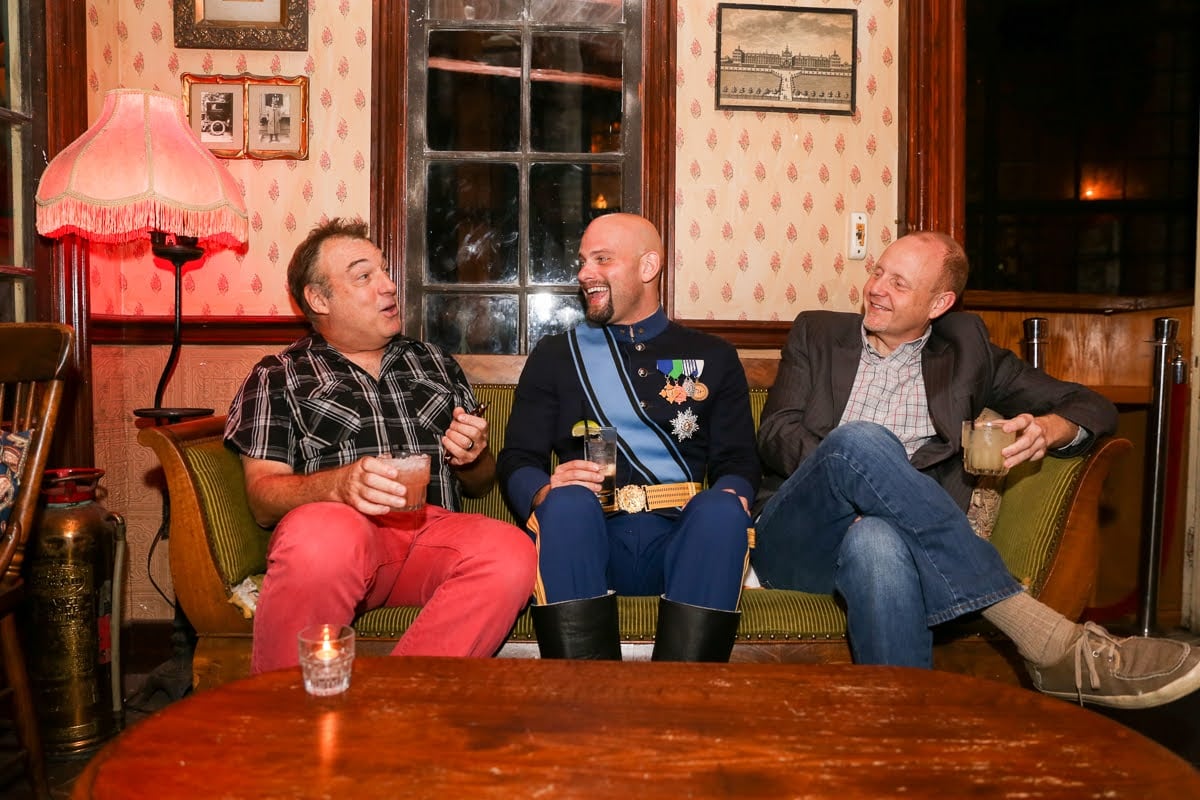
Westarctica’s 15th Anniversary Celebration at Sassafras Saloon in Hollywood Photo: Travis McHenry
Advocating for the Environment
Although the harsh terrain renders it uninhabitable for humans, the untouched surrounding ocean and coastline of Westarctica harbor diverse wildlife.
“Penguins, sea birds, seals, whales, and many different species of fish are abundant in the waters of the Southern Ocean,” Travis explains.
Like anywhere else in the world, Antarctica is under the pressing threat from climate change. Melting glaciers, shrinking ice sheets, ocean acidification, overfishing etc. are constantly eroding the ecosystem in one of the last frontiers on Earth.
As the head of state, Travis often dresses as the uniform Grand Duke of Westarctica.
Picture a dark navy military-style coat with a high collar, blue sash, and multiple pinned medals and insignias. As much as the regality it projects, the uniform serves less to display power and prestige and more to advocate for environmental responsibility.
“Every time I wear the uniform of the Grand Duke of Westarctica, I become very conscious that I am no longer speaking and acting as Travis McHenry, but as the representative of our entire population and the territory we have claimed,” Travis notes.
“Speaking about threats from global climate change to the West Antarctic Ice Sheet and our many glaciers is always on my mind. Despite being a remote place with no permanent population, it is still a vital piece of our planet, and somebody needs to speak up on its behalf,” he continues.
Putting Environmental Campaigns First
Over the course of 25 years, Westarctica has launched several environmental campaigns to address the potential threats to the fragile polar ecosystem. One campaign that stood out to Travis was the movement to stop Japanese whaling in protected Southern Ocean waters.
They created a “wall of shame” to call out 10 Japanese executives. Each entry had their photo, name, email, and details of their involvement in illegal whaling.
“I can’t say for certain if our campaign had a direct impact, but within one year, they actually did stop whaling operations in the protected area,” Travis recalls.

Westarctica Currency Ice Mark notes, Westarctica’s paper currency Photo: Travis McHenry
First Micronation Flag in Antarctica
While Travis has never visited Westarctica, three of his supporters have made the journey to Antarctica with the flag.
The first was a scientist who worked for NASA’s Operation IceBridge. He flew the Westarctica flag over Antarctica and took a photo of Ellsworth Land, on the eastern edge of the claimed territory of Westarctica.
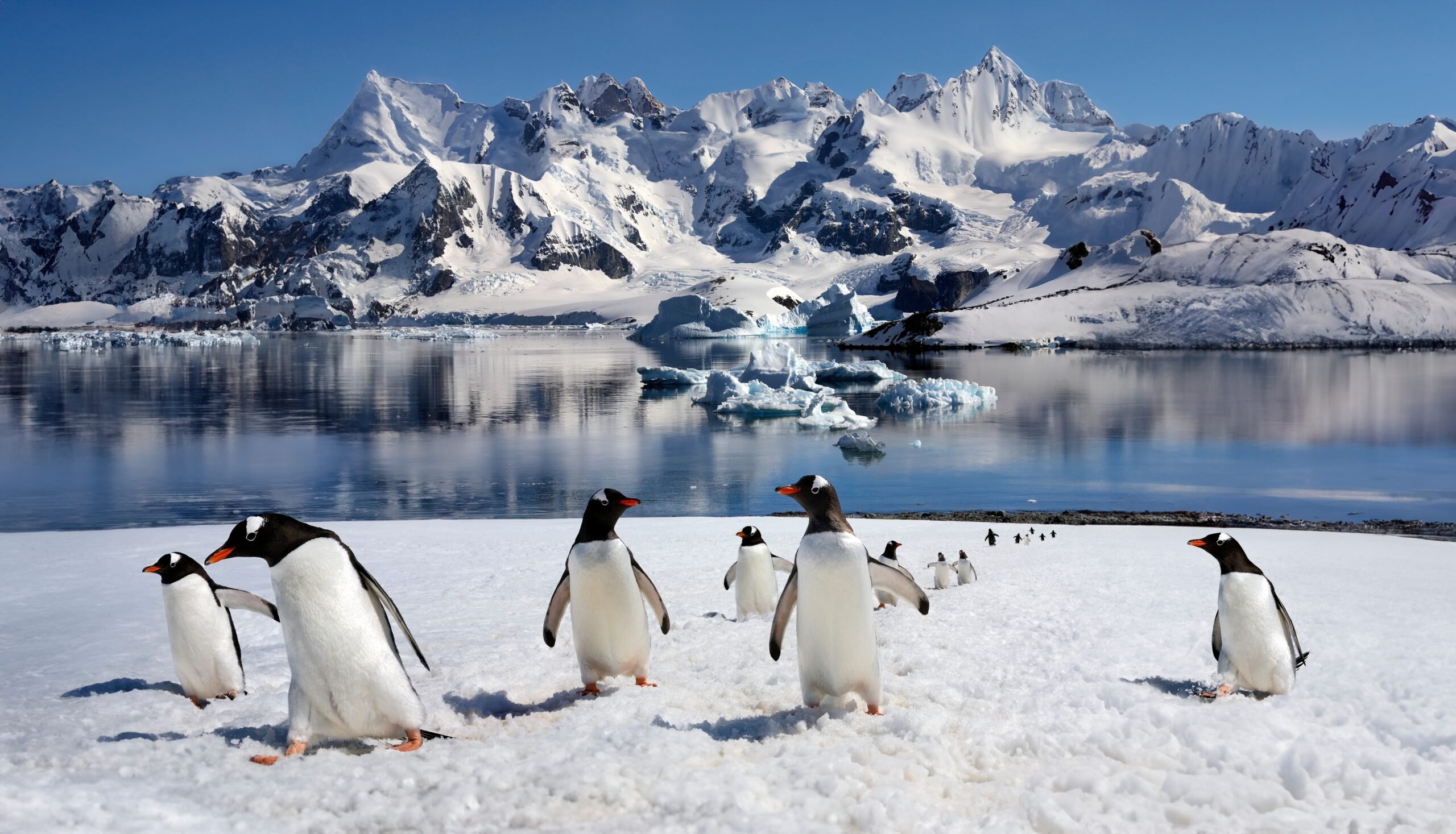
In November 2023, a scientist and her husband took the flag to an Antarctic island, posing with a colony of penguins. The following day, they landed on the Antarctic Peninsula with the flag.
“It was the first time any micronation had their flag on the continent,” Travis says.
Balancing Travel and Ecology
Landing in Westarctica is a major logistical challenge. But Travis pointed out that any form of tourism will leave some degree of damage to the natural ecology of the region. Increased human footprints translate into invasive species, pollution, disturbance of seabirds, and a rise in carbon emissions.
“However, if done right, a small group visit to different parts of Westarctica each year would be incredible,” Travis says. “They could help record ice levels and take photos that reveal climate change in action. People usually respond more to pictures than to raw scientific data.”
Wildlife from Antarctica is front and center on the stamps of Westarctica, though somehow the portrait of Travis keeps popping up with each new printing. The coins follow a similar theme: they mostly celebrate the polar wildlife as well as the geography of Western Antarctica.
A Micronation Open to All
Westarctica is open to anyone who wants to get involved. For example, anyone who donates to the cause of Westarctica is rewarded with a nobility title named after the geographic features of Westarctica.
“It is somewhat similar to an adopt-a-highway program. We have found that it gives people a fun talking point to discuss climate change and the impact it is having in Antarctica,” Travis explains.
Travis believes that making a place feel more real helps people care about it more. Instead of just hearing about “some glacier” melting into the ocean, the Marquis of Thwaites can talk about the Thwaites Glacier that is rapidly losing its ice.
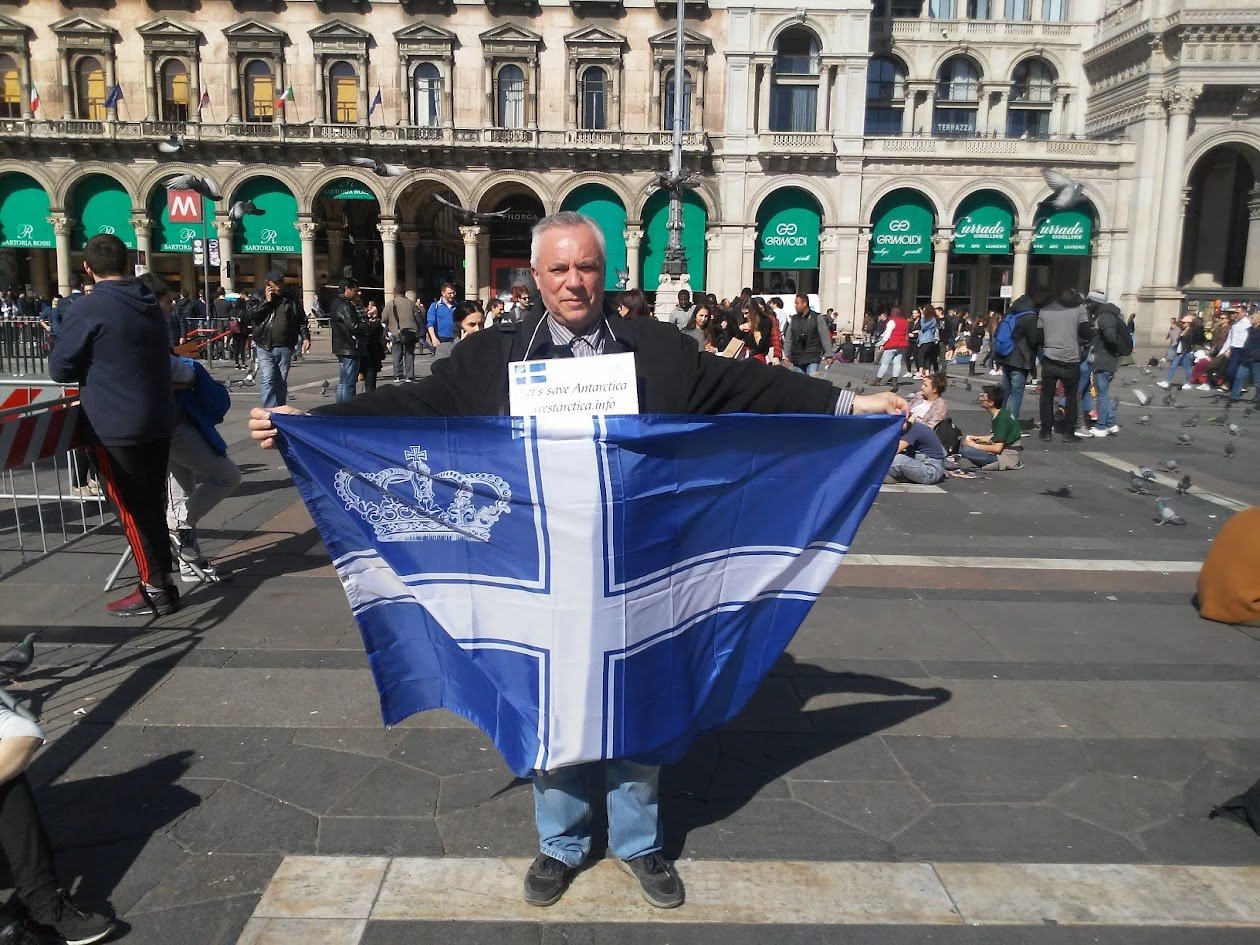
Westarctica Consul General to Italy, Francesco Alvaro Ronchi, attending a climate protest in Naples in 2019 Photo: Travis McHenry
Social Events and Knightwoods
Knightwoods are bestowed on supporters, and even individuals outside Westarctica who have made meaningful contributions.
Westarctica has cultural initiatives open to anyone. For example, an art contest and a writing fair held in alternate years.
In-person events held regularly include a major Anniversary Celebration every five years in a different city to mark the Independence Day (November 2nd). Members of diplomatic corps also meet on a semi-regular basis.
“Events like these in Westarctica open the door to building a real community of people devoted to environmental advocacy and alternative statecraft—and that is what a micronation stands for,” Travis says.
Click Here for Discounted Accommodations in Ushuaia, Argentina — The Southern Most City enroute to Antarctica
Join the community!
Join our community to receive special updates (we keep your private info locked.)

