

Foraging in Finland Is More Than a Walk in Nature
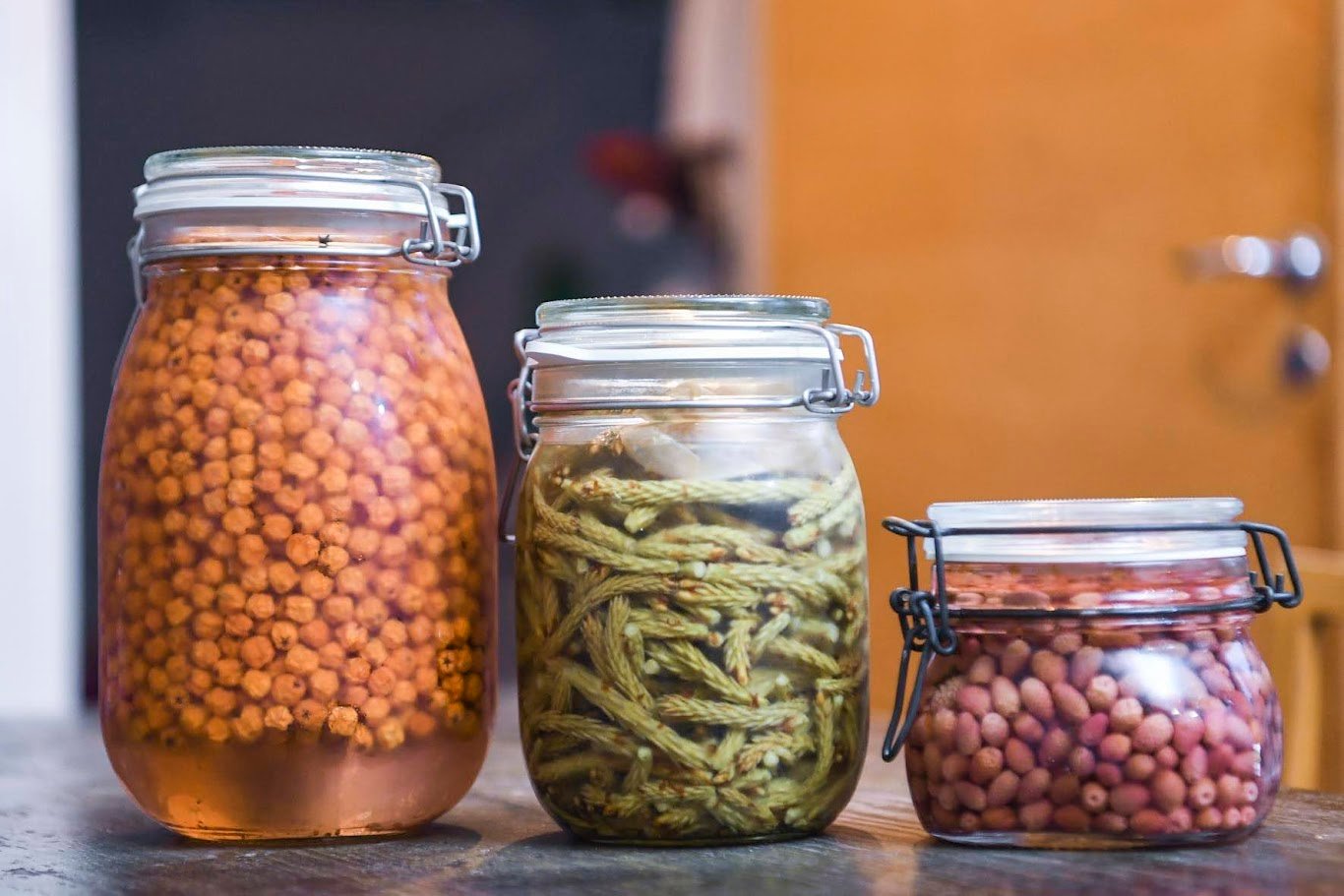
Salted rowan berries, fermented pine cones and marinated spruce bloom. Photo: Jyrki Tsutsunen
Posted September 12, 2025
“There is never a traditional way of foraging. You develop your own approach over time.” Jyrki Tsutsunen explained when asked about Finnish foraging traditions. His approach combines careful identification with creative experimentation, without ever compromising the balance of nature.
Before entering a forest or meadow, he makes sure the area is clean and biodiverse. He looks over the plants he comes across. Taking only a small amount, he puts them into baskets or wraps them in cloth bags. Back home, he sorts and stores the forage based on how they should be preserved. For example, nettles are lightly blanched and frozen, while wildflowers are dried or used fresh for tea.
“I never over-harvest or strip any area bare. Sustainability isn’t a buzzword for me. It’s a principle I live by,” he said.

Jyrki Tsutsunen. Photo Courtesy of Jyrki Tsutsunen
Finland is a Wild Foraging Mecca
Jyrki is a Finnish wild food chef and forager. He spent his childhood on his grandparents’ farm.
“Having nature right outside the doorstep was simply part of everyday life,” Jyrki said. “We lived off what the forest and lakes provided. Foraging wasn’t something exotic like what people think; it was simply what we did every day,” Jyrki said.
While most people think that forests are the only places to forage, you can forage anywhere edible plants grow. They could be in meadows, the edges of fields, and even private yards. Southern Finland is a go-to region for foraging, thanks to its long growing season. The principle of “Everyone’s Rights” makes foraging accessible to everyone.
“Wild herbs can be spotted along jogging trails, meadows, or at the grassy edges of the parks. These are the hotspots for species like nettle, dandelion, and bilberry. They are not only easy to identify but also rich in culinary and medicinal value,” Jyrki said.
Mushrooms, berries, and conifer needles come from the forest. But you would probably never think that most of the wild herbs Jyrki forages grow best in urban environments.

Orange capped bolete. Photo Jyrki Tsutsunen
Risks of Foraging
Most people get exciting thinking about foraging. They picture themselves slipping into comfortable clothes and shoes, threading their way along grassy trails and through shrubs, maybe humming a tune or twirling in a little dance, while randomly picked wild herbs and edible plants steadily pile up in their basket. The truth is that many wild plants and mushrooms are difficult to identify, and a simple mistake could lead to food poisoning, or even death. Although wild herbs are packed with nutritional value, some species may contain harmful compounds or cause allergic reactions. Using them excessively without proper knowledge can be dangerous.
As much as it is everyone’s right to access nature, there are restrictions in national parks, protected areas, and on private land. You cannot take roots, branches, or resin without permission.

The forest where Jyrki picks mushrooms. Photo Jyrki Tsutsunen
Foraging Awakens your Senses
Foraging is the best way to immerse yourself in nature with all five senses. Looking across the forest for green shoots, flowers, and berries. Taking in the scents of spruce or meadowsweet. Running your hand across the dandelion leaves or fresh nettle tips and feel their textures. And don’t forget to tune in to the birdsong and the rustle of the wind.
A day in the forest is also a walk in the footsteps of Finnish ancestors. Back in old days, Finns gathered wild food in times of famine and to treat illnesses. This traditional knowledge has been passed down through generations.

Elk tartare with linden leaves and wild mustard garlic mayonnaise. Photo Jyrki Tsutsunen
Wild Flavors are One-Of-A-Kind
The taste of wild herbs really stands out.
“Their textures are unlike anything you find in a supermarket,” Jyrki said. “Wild foods such as mushrooms and herbs, when swirled in your mouth, can deliver some interesting flavors like nuttiness, lemon, anise, shrimp, curry, dill, and pineapple etc.”
Learn-as-You-Go Cooking
Cooking with wild ingredients is all about trial and error. There are many successes and a fair share of failures too.
“I remember once fermenting cattail (Typha). It ended up smelling exactly like a sewer. But strangely, it had a surprisingly unique appeal,” Jyrki mentioned. “These experiments teach me what works and what doesn’t.”
Jyrki creates his dishes with wild ingredients to highlight flavor and texture in ways that make people pause, notice, and remember. For example, marinated pinecones can transport people back to childhood, or to a forest cabin where the air smelled just like the flavors in his dishes.
“The emotional connection is what excites me most in cooking,” he said.

Pine panna cotta and marinated pine cones. Photo: Jyrki Tsutsunen
Mix and Match Experiment
Jyrki often pairs his newfound wild ingredients with other ingredients to elevate their taste or texture and create something mind-blowing.
“Take nettle (Urtica dioica) – it’s excellent in stews, pestos, or soups. Add something like lingonberry or meadowsweet, and the flavor goes up to a whole new level,” Jyrki revealed.
While nettle offers greenery and strong minerals, lingonberry adds a hint of tang and acidity. Meanwhile, meadowsweet introduces a berry-like, slightly licorice nuance. The combination of the trio turns out to be unexpectedly magical.
“Metsänhenki” Dining Experience
“Metsänhenki” means “the spirit of the forest” in Finnish. It is a concept that inspires Jyrki to combine modern Finnish cuisine and experimental sound art.
In this performance, he collaborates with percussionist Tatu Rönkkö and sound artist Måns Strömberg. Together, Tatu and Måns compose immersive soundscapes using forest materials and sampled natural sounds to serenade the diners.
“Imagine tasting pine panna cotta with marinated cones while listening to a ballad played on an ‘electrophone’ made from a tree trunk. This performance is designed to engage all the senses, and people often walk out with a lasting impression,” Jyrki explained.

Burbot, rye sourdough crust, leek puree, leek ash and ramsons oil. Photo Jyrki Tsutsunen
The Impact of Industrialization
The dawn of industrialization has kicked off urbanization and changed the way people lived. As a result, the use of wild foods either decreased or was labeled with negative connotations, such as being a “famine food.”
Many organizations such as Swedish and Finnish food heritage organizations and educational groups (e.g., Martha Association, 4H, Metsähallitus, and the Hortoilu community) have rallied behind the revival.
The revival is, after all, well worth the effort.
Foraging itself is a creative and sensory experience. It is a conscious and sustainable way to complement the conventional diet, brings back memories, and connects people to the spiritual side of forests. It can also be a communal experience that brings family and friends together.
While wild herbs will likely never become mass-market commodities, they offer an excellent complement to our diets. And maybe, just maybe, they help people start seeing the forest for the trees again.
Click Here for Discounted Accommodations in Finland
Join the community!
Join our community to receive special updates (we keep your private info locked.)

