

Hunt for UFOs and Cryptids on North American Mystery Trails
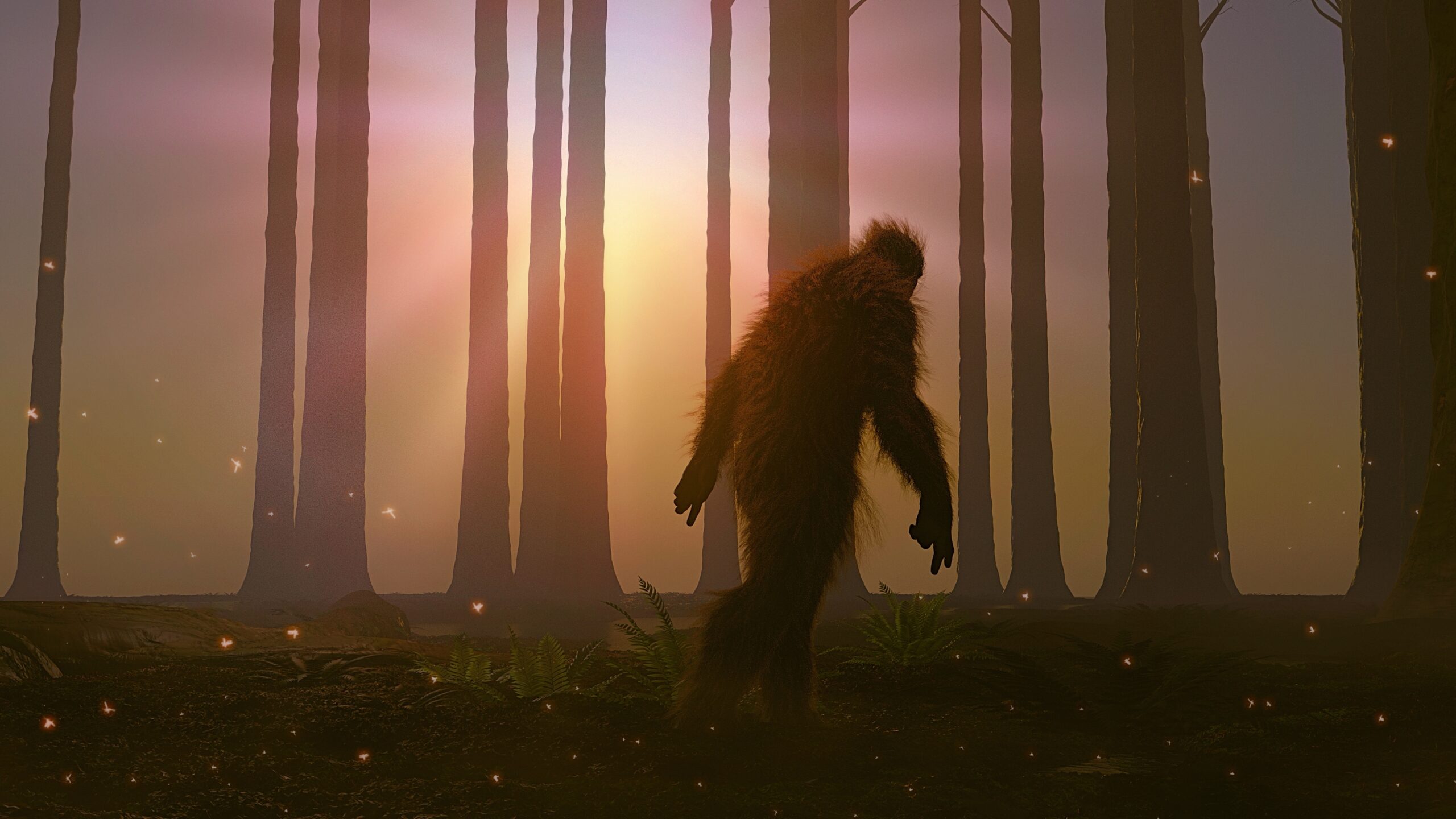
Within the ancient forests, veiled by whispers of misty legends, Bigfoot emerges. Photo: Shutterstock
Posted February 6, 2026
The mural stopped me cold.
Painted on the side of a shipping container in Des Moines, Washington, six doughnut-shaped discs hurled what looked like molten fire down upon a small boat in Puget Sound. A dog cowered. A man shielded his son. The sky burned with something that didn’t belong there.
I had stumbled onto the Maury Island Incident of June 21, 1947, and here’s what shook me most. This highly documented UFO sighting occurred eight days before the famous Roswell crash. Before “flying saucers” became a household phrase. It happened before Kenneth Arnold spotted nine objects skipping across the sky near Mount Rainier and launched what historians now call “The Summer of the Saucers.”
Standing before that vivid mural by artists Nancy and Zach Pahl, I realized I’d been chasing fantastical stories my whole traveling life without knowing where they truly began. Years ago, I took my own Sasquatch safari in Harrison Hot Springs, British Columbia. The word “Sasquatch” was first coined there in 1929. And painted humanoid footprints still meander along the tourist strip beside glacier-fed Harrison Lake. I never spotted the creature, but I’ve never stopped looking.
Why Do We Do This?
Why do millions of travelers now seek out places where the unexplained supposedly happened? Maybe it’s because Congressional UFO hearings have moved from late-night television punchlines to primetime news. Maybe it’s because the UAP Disclosure Act has forced conversations about government transparency that were once whispered only in conspiracy circles.
Social media virality hasn’t hurt either. What was once a fringe hobby has become a mainstream travel trend. And small towns across America are discovering that their monsters can become economic engines.
West Virginia hosts so many cryptid festivals that the state essentially declared itself America’s cryptid capital. Point Pleasant’s annual Mothman Festival draws upwards of 15,000 visitors to a town of fewer than 5,000 residents. Roswell’s UFO Festival generates more than $2 million in economic impact over four days. These aren’t numbers that tourism boards ignore.
The truth, it seems, is out there. And here are seven trails where you can chase it.

Mural of the Maury Island Incident Photo: Heide Brandes
The UFO Mysteries Trail, Des Moines, Washington
Launched in April 2025, this 11-stop mobile adventure traces the infamous Maury Island Incident through Seattle’s Southside, Maury Island, and Vashon Island. The free trail features the vibrant mural depicting Harold Dahl’s encounter with six flying discs, a metallic sculpture honoring Sparky, the dog killed by falling debris, and a mysterious obelisk inscribed with a secret message.
Pat McVay’s cedar sculpture “Raven Discovers Spaceship” adds an Indigenous perspective to the region’s otherworldly history. The trail is free and self-guided, though reaching Maury Island requires a ferry with standard fees. Visit seattlesouthside.com for the digital trail pass.
Nevada’s Extraterrestrial Highway
State Route 375 stretches 98 miles through high desert emptiness, skirting Area 51 and passing through Rachel, population 54, where the Little A’Le’Inn serves Alien Burgers and “Beam Me Up, Scotty” cocktails.
Stop at E.T. Fresh Jerky in Hiko for snacks and selfies with mural-ized extraterrestrials, browse the Alien Research Center’s towering silver alien statue, and snap photos at the iconic Extraterrestrial Highway sign now covered in stickers from believers worldwide. The road connects Crystal Springs to Warm Springs and is best driven as a two-day adventure with an overnight in Tonopah, where the Mizpah Hotel offers historic haunts and the Clown Motel offers something else entirely.
California’s Bigfoot Trail
This 360-mile long-distance hiking route through the Klamath Mountains celebrates both biodiversity and Bigfoot lore. The trail passes 32 species of conifers, traverses six wilderness areas, and ends at Redwood National Park near Crescent City.
It’s not named ironically. Northwest California’s dense forests and remote terrain have generated Sasquatch reports for generations. Of the 360 miles, approximately 100 follow seldom-used Forest Service roads, with the remainder on backcountry trails. The trail demands serious wilderness navigation skills and is not a casual weekend outing. Maps and route descriptions are available at bigfoottrail.org.
New Jersey’s Pine Barrens
The Jersey Devil has haunted these 1.1 million acres since 1735, when Mother Leeds allegedly cursed her 13th child and watched it transform into a winged, hooved creature that flew up the chimney and into folklore.
Historic Batsto Village in Wharton State Park makes an excellent base for exploration, and the 50-mile Batona Trail winds through the heart of Devil territory. Pinelands Adventures offers guided kayak trips through the dark cedar waters where the creature supposedly drinks. The Pine Barrens were designated the country’s only “state demon” residence in 1938, a distinction New Jersey wears with peculiar pride.

New Jersy Pine Barrens, Devils Hole Trail Photo: Shutterstock
Hocking Hills Bigfoot Country, Ohio
Ohio ranks fourth nationally in Bigfoot sightings, and Hocking County’s rugged Appalachian foothills are ground zero for what locals call the “Grassman,” named for the lichen or moss some witnesses report seeing on the creature’s shoulders.
Documented sightings date to the 1950s, with reports of creatures drinking from Rose Lake and scaling cliffsides with young on their backs. The Hocking Hills Bigfoot Festival in nearby McArthur draws thousands each August, and year-round visitors can hike Ash Cave, Old Man’s Cave and surrounding state forest trails while watching for something watching them back.
Point Pleasant, West Virginia’s Mothman Territory
The 12-foot metallic Mothman statue downtown has become a pilgrimage site for cryptid enthusiasts, its famously shapely rear end earning it the affectionate nickname “Shiny Hiney.”
The Mothman Museum showcases artifacts from the 1966-1967 sightings that preceded the Silver Bridge collapse. The TNT Area outside town, where the original witnesses spotted the red-eyed creature, remains accessible to the brave who venture there after dark. The annual Mothman Festival in September transforms downtown into a celebration of the weird, featuring speakers, vendors, music, and visitors in homemade wings.
Harrison Hot Springs, British Columbia
Where the word “Sasquatch” was born. This tiny lakeside hub, 90 minutes east of Vancouver, embraces its furry heritage with the Sasquatch Museum, the Sasquatch Trail featuring carved statues throughout town, and Sasquatch Country Adventures offering guided tours into remote logging roads above Harrison Lake.
The Sts’ailes First Nation, who have shared Sasquatch stories for generations, hosts annual Sasquatch Days in June with war canoe races and traditional storytelling. British Columbia has documented more than 3,000 Sasquatch sightings since the 1920s, many concentrated in this area. Whether you believe it or not, the scenery alone justifies the journey.
These trails offer something beyond the ordinary tourist experience. They invite us to wonder, to question, and to accept that our maps might not show everything that moves through this strange and beautiful world.
So, pack a camera and keep your eyes on the treeline. And remember what a Sasquatch hunter once told me in Harrison Hot Springs.
“You never know what you might see at the side of the road.”
Click Here for Discounted Accommodations Across the USA
Join the community!

Join our community to receive special updates (we keep your private info locked.)

