

Exploring the Golden Stone and Rolling Hills of the Cotswolds
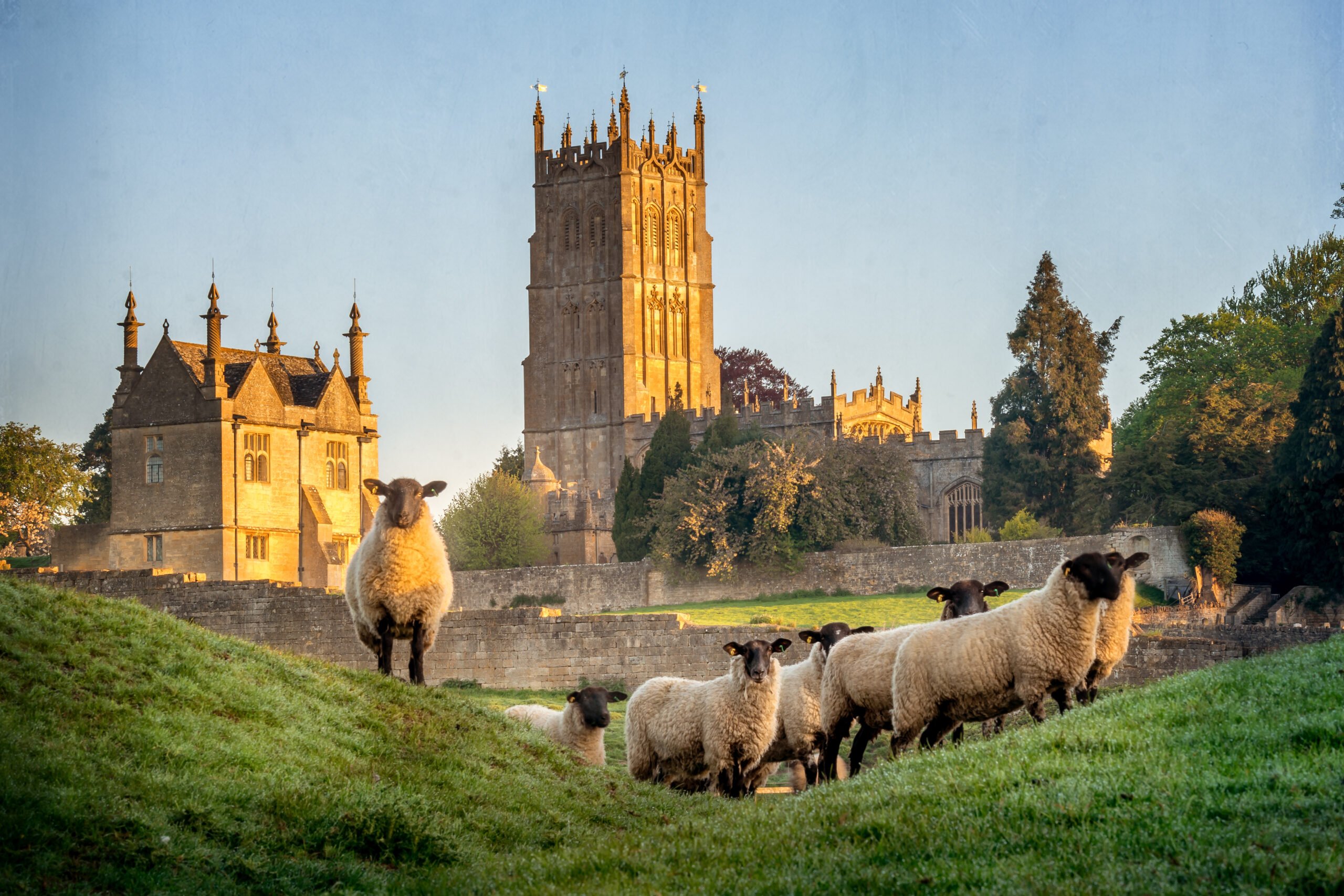
Villages of Cotswolds Photo: Shutterstock
Posted December 10, 2025
On a breezy summer morning, I embarked on a tour of the villages of the Cotswolds. Famed for its quaint half-timbered buildings, overhanging upper storeys, and narrow alleyways, the villages of the Cotswolds possess undeniable charm. Small group tour leader Ian McKenzie led us from the university town of Oxford into the inner recesses of the Cotswolds. Designated as an Area of Outstanding Natural Beauty, the Cotswolds spread across five English counties—Wiltshire, Gloucestershire, Oxfordshire, Warwickshire, and Worcestershire.
“The name actually comes from an Anglo-Saxon chieftain named Cod in the 12th century. He owned a vast expanse of ‘wold’ or upland country in this region. Hence, this was Cod’s wold and eventually became the Cotswolds,” said Ian. We started early from Oxford and planned to drive through a couple of villages in Oxfordshire before reaching the Northern Cotswolds in Gloucestershire – the most picturesque part of southwest England.

Cotswolds is a region in southwest England spread across five counties Photo: Sugato Mukherjee
Discovering Minster Lovell
The first stop was Minster Lovell, an unremittingly pretty village. We walked by honey-colored buildings overlooking well-kept gardens brimming with summer blooms. A couple of vintage cars passed by, with cheery faces on the wheels. It was a Sunday and an unusually clear summer morning. At the northern edge of the tiny village, a short uphill climb led to a landscape surrounded by woodland, with a river gurgling through it. “This is the River Windrush, and it has journeyed through history,” Ian announced dramatically. He pointed to the crumbled ruins of an ancient manor house, standing quietly beside the gushing river.
Walking through the entrance, we marveled at the impressive remnant of the original vaulted ceiling and an ancient dovecote. Ian delved into the checkered past of the Lovell family manor house from which the village derives its name. The story unveiled a chilling history. “The Lord of the Manor got embroiled in the Battle of the Roses in the 15th century. He lost his life in a secret vault inside this house. His skeleton was found nearly three centuries later.” And that makes this lovely hamlet one of the most haunted villages in England, with ghostly wails in the night around the manor house, which dates back to 1430,” Ian shared as our small group took a little hasty step back to the car.
Visiting the Idyllic Village of Swinbrook
A 10-minute drive from Minster Lovell brought us to our next destination. The idyllic Swinbrook village boasts a pretty church, a cricket pitch with a wooden pavilion, and an ochre-hued stone pub beside an arched bridge across the River Windrush that trickles by. The setting looks so incredibly vintage that the popular TV series Downton Abbey, a historical period drama set in the early 20th century, was largely filmed in Swinbrook.

Local villagers taking out their vintage car on a sunny summer morning Photo: Sugato Mukherrjee
Burford, The Gateway of Cotswolds
Burford, dubbed the ‘gateway of Cotswolds’, was barely a 10-minute drive from Swinbrook. However, it seemed a world away. The long high street set upon a hillside and flanked with antique shops and funky cafes characterises the medieval market town that served as the hub of the booming wool trade for more than half a millennium. The 12th-century town church is the oldest building in Burford. In its moody, dimly lit interiors, the graffiti and carvings made by prisoners (it was a temporary prison in the mid-17th century) still survive. When we came out into the sunlit churchyard, Ian showed us the age-worn tombstones with a curious rolled design. “These were bale tombs of the wool merchants of the era, unique to this part of the world.”
Stow-on-the-Wold
The medieval town of Stow-on-the-Wold was our next stop. The teeming town square, hemmed in by honey-colored buildings, tiny tearooms, and bookshops, belies the bloody chapter of history etched in the town’s annals. In the early spring of 1646, this market square provided the setting for the last battle of the English Civil War in which King Charles I’s army was defeated by the Parliamentarians.
We wandered through the narrow streets. A quick tour of the town church revealed an architectural wonder with its beautiful tree-framed doorway and stained-glass windows. We planted ourselves on the wooden stools of Porch House. With its rippled flagstone floors, low-beamed, skewed ceilings, and yellowing frames on the walls, the traditional British pub whips up oodles of quirky character. I almost choked over my tankard of ale when Ian, sitting on the next stool, quietly told me that an inn on this site has been operative since 947 AD, which makes the Porch House the oldest pub in England!

4. The medieval houses are built with locally sourced golden yellow stones and stone slate roofs Photo: Sugato Mukherjee
On to Lower Slaughter
Leaving Stow-on-the-Wold, once more we traveled on the windy country roads. Rolling green meadows stretched out on both sides. Shortly, we arrived at Lower Slaughter. A small stream wedges its way through the heart of this picture-perfect village. We walked its quiet left bank, marvelling at the 16th and 17th century limestone homes with mullioned windows and gabled roofs. At the end of the village, the red-brick water mill dates to the 19th century and now houses a museum, a gift shop, and a café. But nothing in this charming Gloucestershire hamlet seemed remotely grisly, and I was expecting a gruesome tale of horror from the sound of its name! Ian explained that the name of the village comes from the archaic word “slough,” which meant a swamp.

The towns and villages feel like a time warp Photo: Sugato Mukherjee
Destination Great Tew
We drove northeast for about half an hour and looped back into Oxfordshire for our final destination. Great Tew, is arguably the most beautiful village of England. Exiting the car, we immediately knew why. Perched on a ridge, the village overlooked a beautiful, wooded valley with clusters of dark-red ironstone cottages, their rose gardens fronting them. The effortless grace of the horses ambling and tottering on the swathes of green completed the spectacle. “This is not quite on the tourist radar because the narrow, winding streets are off limits to the large tour buses,” Ian said. Designed by eminent botanist John Louden, the delightful driveway and the natural park remain unchanged to date.
The mellow afternoon sun glanced off the green Cotswold ridges as we headed back towards Oxford. I had to catch a 6.35 train from there to London but had just enough time to find a quaint tearoom and indulge in traditional Cotswolds afternoon tea, served with freshly baked scones and clotted cream. A perfect ending to a lovely day of exploration in the Cotswolds!
Click Here for Discounted Accommodations in the Cotswolds
Join the community!

Join our community to receive special updates (we keep your private info locked.)