

Royal Highland Festival: Bhutan Monarch Commitment to Highland Preservation
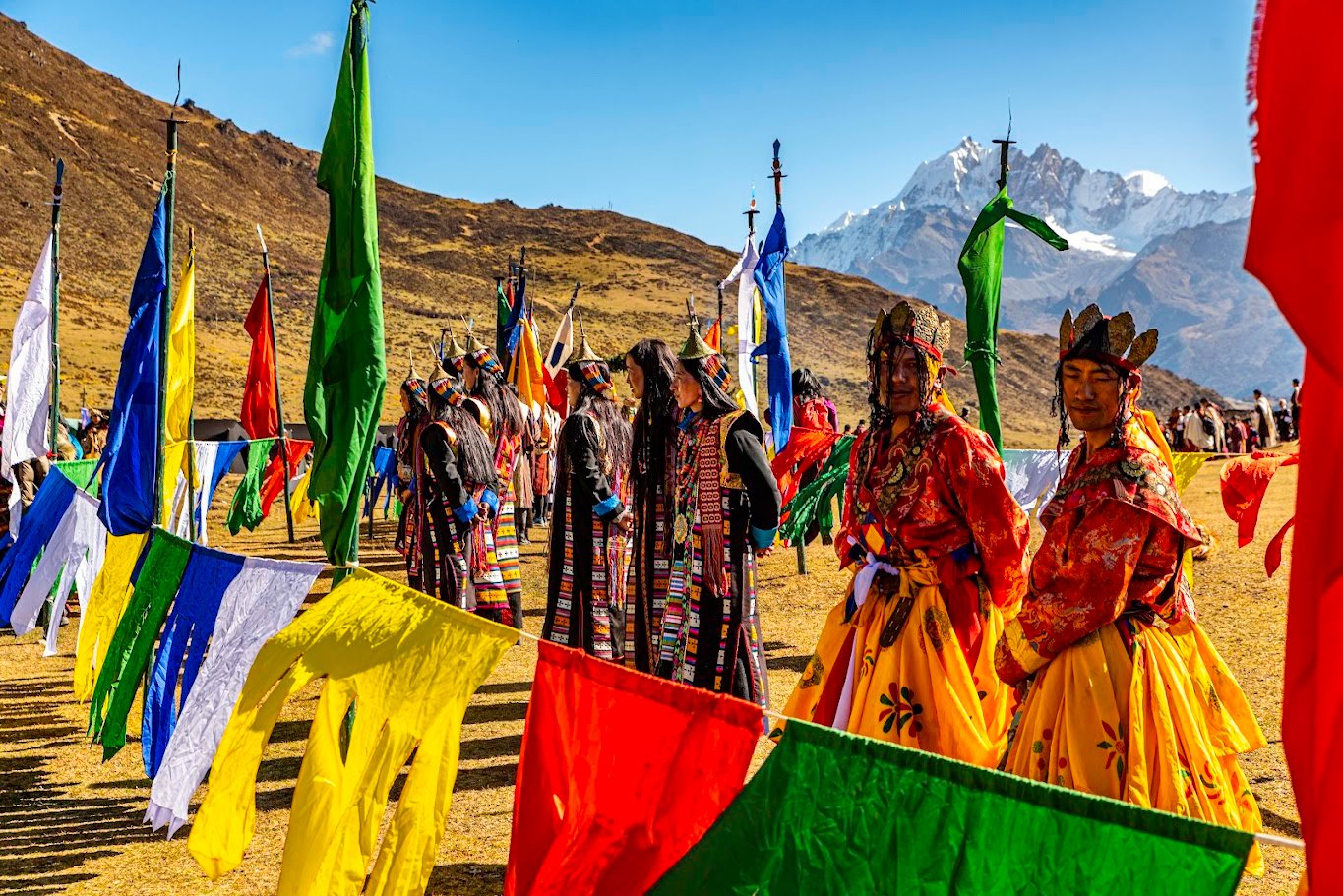
The festival procession is gearing up for a colorful march. Photo: Dorji Dhradhul
Posted August 28, 2025
Unlike in most parts of Europe, the alpine frontier in Bhutan begins at around 4,000 meters above sea level.
These windswept plateaus, made up of vast rugged terrain, are not only home to the highlanders but also a treasure trove of biodiversity — stunted firs and dwarf rhododendrons, blue sheep, marmots, takins, snow leopards, and, most notably, yaks and the highly sought-after golden fungus (Cordyceps sinensis), which are the pulse and lifeblood of the highland economy.
Despite the lucrative income from the harvest of this caterpillar-fungus, the traditional way of highland life—especially yak herding—was slowly giving way to commercial agriculture.
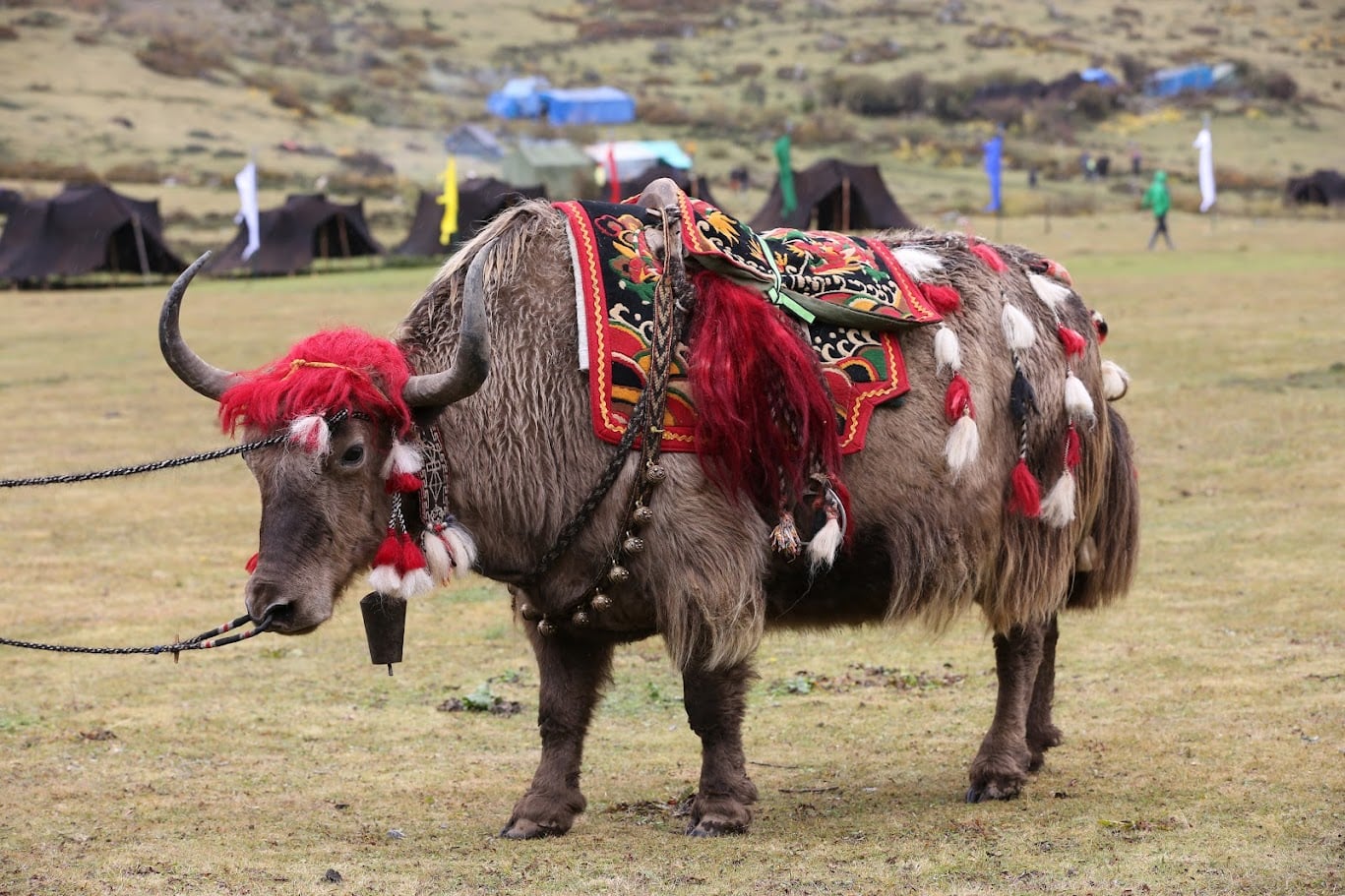
A yak is adorned in its finest regalia. Photo: Dorji Dhradhul
Celebrating Highlander Heritage
In 2015, His Majesty King Jigme Khesar Namgyel Wangchuck expressed his concern surrounding the sustainability of the golden fungus and the cultural erosion that comes from economic overdependence on a single resource.
In his vision, a well-curated festival could preserve tradition while creating new opportunities for tourism and the economy. And with that, the idea of the Royal Highland Festival was born.
Dorji Dhradhul was the Dzongda (Governor) of Gasa at the time. Gasa is one of the most remote districts where the untamed Bhutan Highlands cut through the low-hanging Himalaya clouds. He was entrusted with a royal mission to work with the people of Gasa to bring the festival to life.
“There is a saying in Bhutan: A royal command is heavier than a mountain to carry, but more precious than gold to discard,” Dorji says. “That perfectly captured the journey of creating the festival. It was a huge responsibility, but one I carried with honor and purpose.”

Bhutan Girls from Laya in their traditional attire. Photo: Dorji Dhradhul
A Cultural Bonanza
The Royal Highland Festival is a two-day annual event held on 23 and 24 October. It is a medley carnival of music, dance, food, local products, and traditional sports set in one of the most remote parts of the world.
From yak shows and competitions where contestants parade their beautifully decorated yaks, to cultural performances and displays of highland animals—such as the powerful Bhutanese mastiff and mountain horses, the festival is a cultural bonanza that celebrates Bhutanese traditions and the resilience of highland communities.
“Covered in headgear and traditional saddle cloths, the animals plod down the surrounding hills into the festival grounds like noble guests on a regal catwalk. Playing in the air is the soulful highland song about the yak. The scene is both theatrical and tender,” Dorji describes.
“At its heart, the festival is a celebration of yak-based highland farming, the vital role it plays in sustaining life at high altitudes. I like to call yak as the camel of the Himalayas,” Dorji says.

Bhutan Parade of animals at the festival. Photo: Dorji Dhradhul
Flavors of the Highlands
The festival starts with a riotous blend of sights and sounds and culminates in a gastronomic treat. The highland cuisine is simple yet hearty and perfectly suited for the high-altitude climate.
The star ingredient, unsurprisingly, is yak, and it runs the gamut— yak meat curry, yak butter tea, dried yak cheese, and soft yak cheese fried in butter.
But there is more to the menu than just yak. For example, Khulay, a highland-style buckwheat pancake served with spicy ezay (Bhutanese chili paste) or melted yak cheese. Puta—a type of handmade buckwheat noodle commonly found in eastern Bhutan.
Wild mushrooms also find their way into local cuisine, for example, cordyceps tea.
Ara is a locally brewed traditional alcohol made from maize, wheat, or rice. For a sweet fix, try the local honey, harvested from bees that forage high-altitude wildflowers and believed to have medicinal properties.
“The food at the festival isn’t just about taste—it’s about story, survival, and identity. Each bite connects you to the people, the land, and the unique rhythm of life,” Dorji explains.

Bhutan A special local rice dish topped with festive treats traditionally offered to deities and supernatural beings. Photo: Dorji Dhradhul
Yak-Herding Highland Tribes
Two of the prominent highland tribes are the Layaps of Gasa in the west and the Merak-Saktengpas, popularly known as the Brokpas, in the eastern district of Trashigang.
The Layaps are a semi-nomadic community living in Laya village, tucked away at an altitude of 3,800 meters, which is where the festival is held. They migrate with the seasons and raise yaks for milk, meat, wool, and butter, which are vital sources of sustenance in the harsh alpine climate. They are known for their unique dialect, traditional yak-wool garments, and iconic bamboo hats adorned with beads. Fondly named, their remote homeland is known as Be-yul or “The Hidden Shangrila Land.”
The Brokpas of Merak are an Indigenous highland community in the eastern reaches. Like the Layaps, they are yak herders and share a similar semi-nomadic lifestyle. However, their language, customs, and attire are distinctly different. Their attire is quintessential: layered woollen clothes, sheepskin boots, and unique headgear made from yak hair and felt.
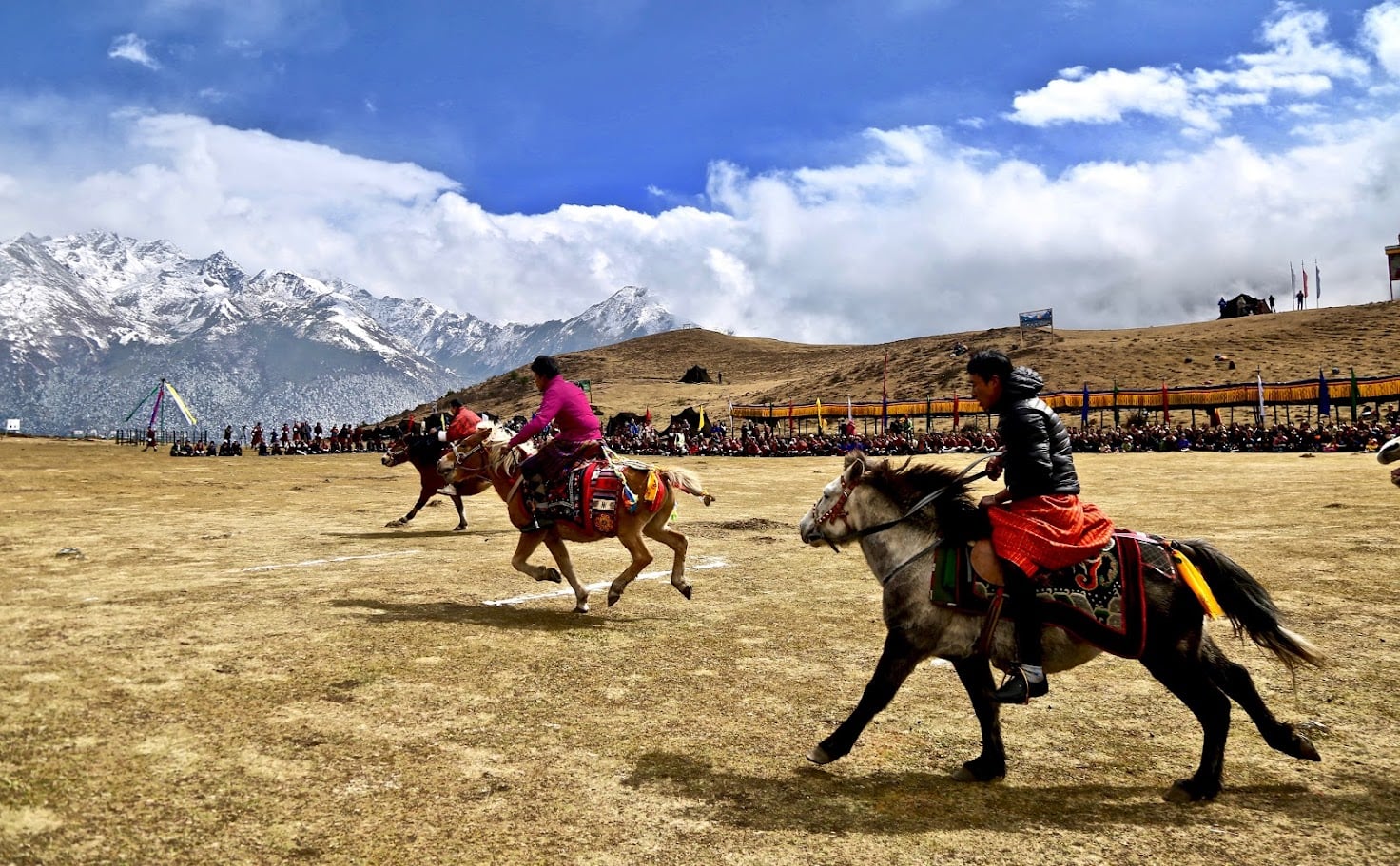
Horse racing is one of the main sports. Photo: Dorji Dhradhul
Festival at 3,800 Meters Above Sea Level
Dorji remembers visiting Laya village while searching for the festival site. “Despite the logistical challenges, I knew Laya and nearby Langothang would be the perfect setting. But for the festival to be meaningful, it had to be owned by the Layaps themselves,” Dorji says.
Part of the responsibility of being a host was to offer homestays, find ways to showcase local culture, and help prepare the land for the festival. Many of them were hesitant to volunteer unless they were compensated. “But we kept convincing them that this festival was for their own future—honoring their identity, bringing development, and fulfilling the vision of His Majesty the King,” Dorji reminisced about his first engagement with the Layaps.
The festival was inaugurated with a ceremonial procession on October 13, 2016, to welcome His Majesty the King to the festival grounds. Everyone dressed in their finest – from the marchers of the procession to the crowds. The national flag, bearing a dragon straddled across yellow and orange, fluttered with a cracking rustle in the wind. A cone of golden light spilled across the peaks of Laya.
“The timing felt almost divine. The sounds of traditional religious instruments echoed through the crisp mountain air. It was a scene out of a dream,” Dorji reminisced about his first impression of the festival.
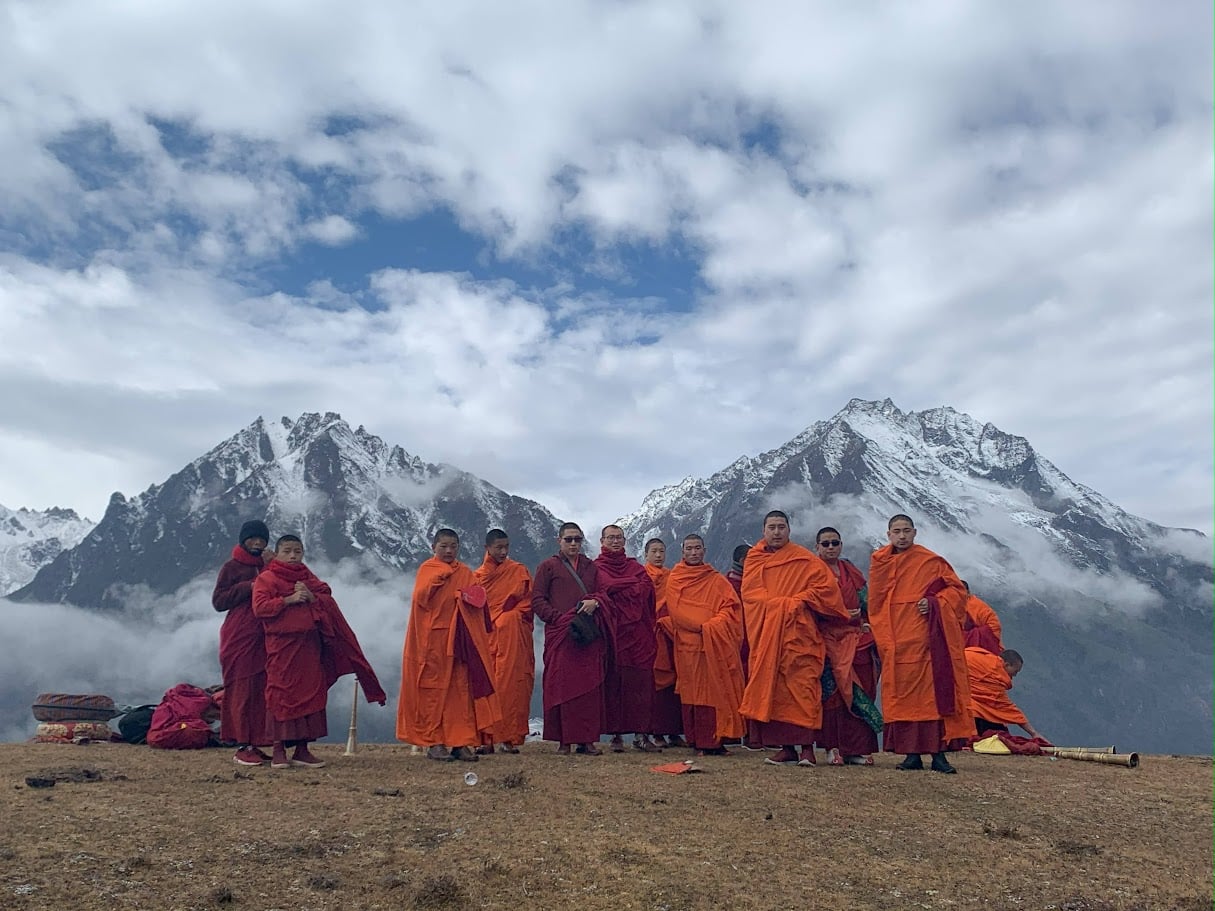
Robed monks at the festival. Photo: Dorji Dhradhul
A Logistic Effort Worth the Journey
To get to the festival is a bit of a logistical challenge. From Paro or Thimphu, there are two main ways to get to Laya. A 20-minute chartered helicopter ride provides the fastest option, though it depends on weather and availability. Most people would drive from Thimphu to Gasa via Punakha, then continue to the trailhead. From there, trek for about 2 hours through scenic forests and alpine meadows to reach Laya.
When asked what the festival means to him, Dorji has a clear and heartfelt answer. “The festival is like a living museum in motion, set against the breathtaking backdrop of the Himalayas. It brings together ancient traditions, Indigenous knowledge, music, food, and the unique identity of people like the Layaps and Brokpas.”
For me, the Royal Highland Festival is a reminder that even in the remotest corners, there is a story worth telling and a culture worth preserving.

Bhutan Participants enjoy a picnic lunch. Photo: Dorji Dhradhul
Click Here for Discounted Accommodations in the Bhutan Highlands
Join the community!
Join our community to receive special updates (we keep your private info locked.)

