

The Women of Bolivia Wrestling with Purpose
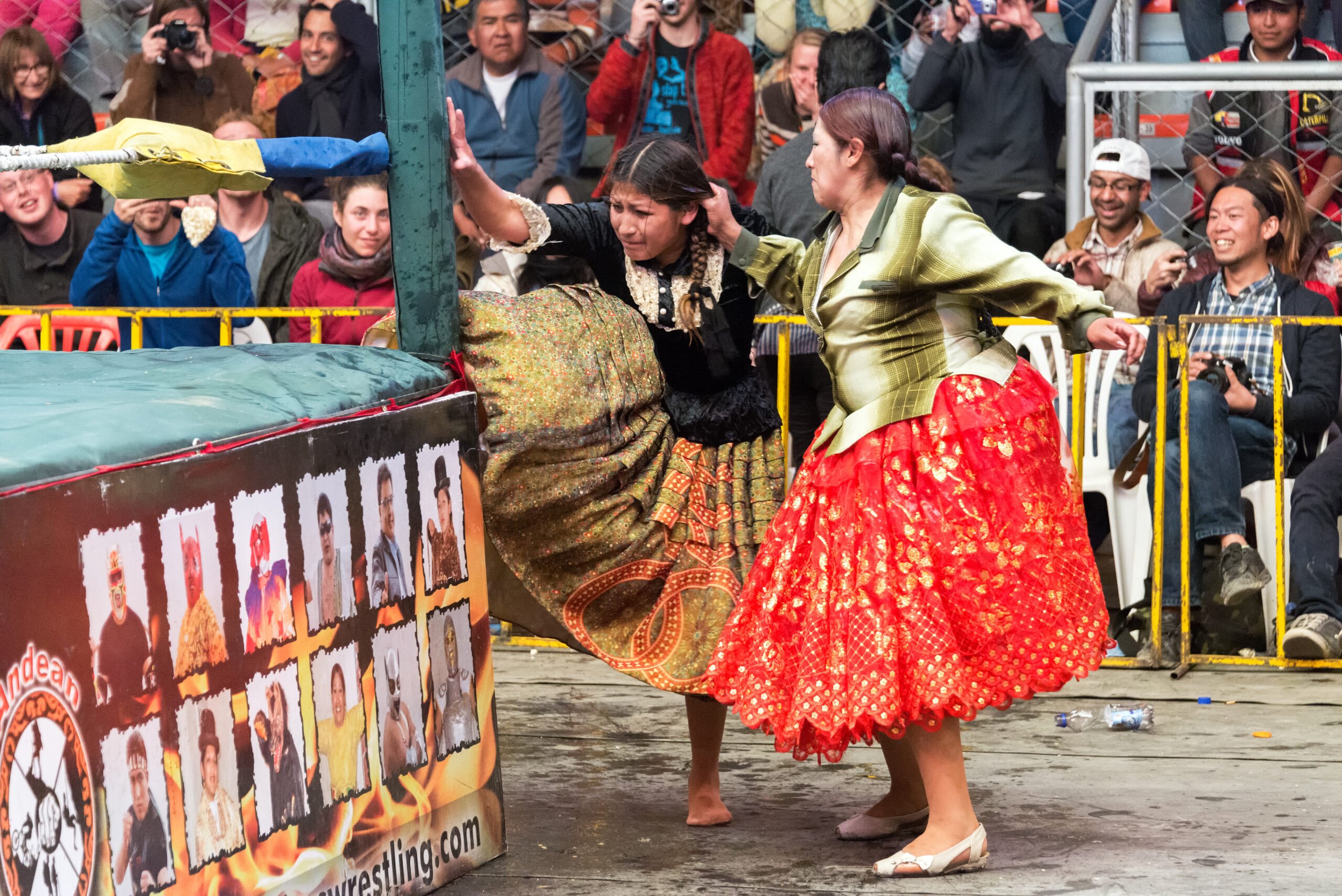
Indigenous Women Wrestlers of Bolivia Photo: Shutterstock
Posted August 16, 2025
Just 40 years ago, the Indigenous Aymara women of Bolivia held a specific place in society. Often barred from certain restaurants, cafes, even many forms of public transportation, they mostly worked for the middle and higher class as domestic workers. This meant that had little chance at continuing education or any real form of integration into Bolivian life.
This story was drawn out for them by the Spanish colonizers who first came over in the 16th century. The women were given a specific wardrobe as they were subjected to service work: a long, layered skirt (pollera), shawl, blouse, and flat shoes. Early in the 1900s, the now-infamous bowler hat was added to their style of dress. The women were simply referred to as ‘cholas’, the feminine of “cholo”, which was a derogatory term for someone of mixed Spanish and Indigenous descent.
But over the past few decades, these women have taken what was meant to be disparaging and turned it into the diminutive “cholita”, using the name with pride while still rocking the layered skirts and bowler hats. Clothing that once kept them on the periphery is now coveted in the international fashion scene. Many of the Cholitas in Bolivia wear these clothes in their daily life—and have even brought this look to the wrestling ring.

Cholita Wrestling Costumes Photo: Jennifer Richardson
Cholitas Luchadoras: A Brief History
Inspired by Mexico’s Lucha Libre, Bolivia’s wrestling scene started to gain popularity in the 1960s. The wrestlers were only men until the early 2000s, when some local Cholitas wanted to join in on the fun. Some reports state that the move was motivated by a way to practice self-defense and to earn extra income. For other women, it was motivated simply by the joy and love of the sport (whether this type of wrestling is actually more theater than an athletic endeavor is always up for discussion).
Their eagerness to join the wrestling world was not welcomed at first, and Cholitas have reported being barred from dressing rooms or from fighting in the ring entirely. But they persisted, and their participation became too popular to ignore. As a result, the Cholitas have changed the game.
Now, tourists from all over the world flock to El Alto, a city just outside of La Paz, Bolivia’s largest city, to see the Cholitas in action. Literally meaning “The Heights” in Spanish, El Alto stands at 13,615 feet in altitude—almost 2,000 feet higher than La Paz, which stands at 11,975 feet. Make sure to bring a bag of coca leaves to chew on to help you catch your breath.
One Sunday in El Alto
I got the chance to see the wrestling Cholitas one Sunday in May during my trip to Bolivia. Joining me was my good friend Maria and her mom, who both live in La Paz. We met in the Sopocachi district and caught a cab to Centro, where we got our tickets from a local tour agency before boarding the bus up to El Alto. Our tour group was mostly European backpackers who were staying in the nearby hostels.
The show was great, and they really emphasized audience participation and worked to get the crowd going for every new match. The younger Cholita wrestlers were paired younger with more experienced ones as they engaged in Lubra Libre style tricks with the classic “good guy” vs “bad guy” plot. You could tell that the Cholitas loved engaging with the audience, even grabbing one of the spectators to dance or going in for a kiss. Their wrestling moves were professional, and the Cholitas wardrobe was used well to show just how unique this genre of wrestling is. Jumping on your opponent hits different when its done in a big puffy skirt.
Included with your ticket is a bag of popcorn, a soda, and a little souvenir. The show lasted about 1.5-2 hours with a 15-minute intermission.

Cholitas Wrestle as a Bolivian Tradition Photo: Jennifer Richardson
Cultural Challenges
As the cholitas luchadores continue to grow in popularity their work has also been subject to some cultural criticism, some saying that this type of exhibitionism only adds to more objectification. Maria’s mom also made a comment during the show, “I don’t know how I feel about seeing the Cholitas like this.”
It’s also very apparent that the show is about getting the attention of the foreigners and it’s very much an international tourist attraction. The few locals who did go to the Sunday show didn’t sit in the front row, as the tour groups were brought in first to take their seats closer to the stage.
But from the people I spoke to and features that I read about some of the most well-known cholitas luchadoras, they love this work and want to keep doing it. While you can’t ignore the very obvious gender roles on display during the performance, maybe that’s the point.

Lily the Untouchable Photo: Jennifer Richardson
Lily, The Untouchable
After the show, I spoke with Benita, or “Lily, The Untouchable” (her Lucha name). Lily is a long-time wrestler with the cholitas luchadoras. She’s been wrestling for over 20 years and started at 21 years old. When I asked her what first sparked her interest in wrestling, she said that it has always been in her family. Her dad used to be a wrestler, and her brother wrestles today.
Currently living in La Paz, Lily is married with children and works at the mayor’s office. When she’s not at work, she’s wrestling, practicing one to two times a week with her fellow Cholitas.
What do you like most about being a wrestler? I asked.
“I like the support aspect of it. One of my favorite things is when we go to schools to talk about our work and teach them about wrestling and how we do it. I like doing interviews and talking to the audience and our fans. It’s empowering. It’s fun.”
The Cholitas play with their audience and make sure the guests have a good time. At one point, a Cholita stood up in the corner of the ring and started chanting. The audience quickly followed suit: “Cho-li-tas! Cho-li-tas! Cho-li-tas!” Their wrestling moves required a lot of skill and strength, not just acting. But they definitely put on a show.
This isn’t your average Lucha Libre show, however, because you can’t ignore the story being told here, and the fight that is (quite literally) unraveling right in front of you—as you sit and cheer the Cholitas on while munching on popcorn in a wrestling stadium in this city at the top of the world.
Click Here for Discounted Accommodations in La Paz, Bolivia
Join the community!
Join our community to receive special updates (we keep your private info locked.)

