

Agra Beyond the Taj Mahal
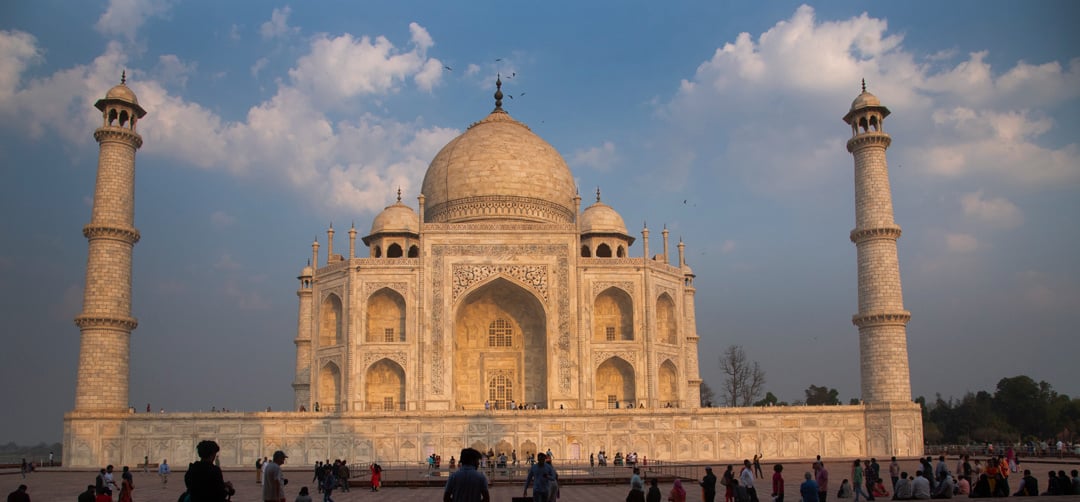
One of the iconic symbols of India, Taj Mahal took 16 years to be completed in 1648 Photo: Sugato Mukherjee
Posted November 13, 2026
The iconic Taj Mahal has been India’s most recognizable monument for more than four centuries. And, in today’s parlance, the most Instagrammable. However, in the popular imagination, Agra remains the home of the Taj, and nothing more. But the city is an eclectic mix of bygone cultures and traditions, blended with hues of modernity. The sounds of folklore, vignettes of the streets, and the breathtaking architectural gems the city tucks away in the folds of its labyrinthine alleys are only some of the things that make up ‘the Agra experience’.
On the Mughal Trail
Agra was an unknown town of little importance on the banks of the Yamuna River till the mid-16th century. Under Emperor Akbar, it developed into an architectural paradise. It became a hub of political activity and a bustling trading center of the Indian subcontinent. The great ruler was laid to rest at Sikandra, 10 km from his sprawling empire’s capital. The red sandstone mausoleum is a work of architectural splendor. Its towering gate and minuscule minarets make it look more like a dainty Rajasthani palace than an Islamic tomb. You can often spot a few deer ambling about in the manicured gardens!
Another beautiful tomb is I’timad-ud-Daulah, the stunning white maqbara of Emperor Jehangir’s Persian minister. Standing tall and proud on the banks of the Yamuna, the mausoleum marks the transition of the Mughal School of architecture from red sandstone to white marble and, according to historians, serves as the blueprint for the Taj Mahal.
An extraordinary ensemble of Mughal built heritage can be traced in the gardens that line the banks of the Yamuna River. These gardens were created over a period of more than 100 years as sanctuaries of respite from the sweltering heat. While some of the gardens are in various states of disrepair, some of them, like Ram Bagh, Chinni ka Rauza, and Mehtab Bagh, still bear brilliant testimonies of Mughal landscape traditions with neatly laid-out planting patterns. And the garden of I’timad-ud-Daulah still enjoys the ancient water system of channels and walkways, the marble waterslides, and chutes still impeccable.
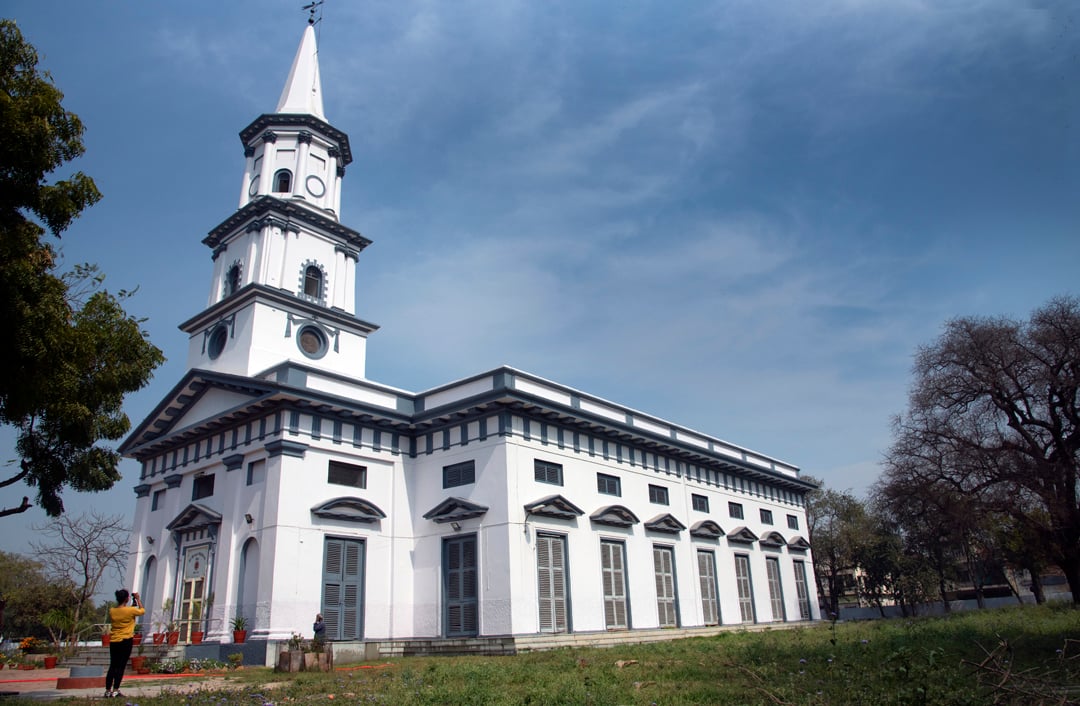
St. George’s Cathedral is a spendid example of architecture orginally built as an Anglican Church in 1828 Photo: Sugato Mukherjee
The Colonial Legacy
Agra fell into the hands of the British in 1803 and remained one of their most important seats of power for the next 150 years. During this time, the city witnessed some tumultuous upheavals, including India’s First War of Independence in 1857. The heritage of Agra’s colonial past lives on in the immaculately maintained Roman Catholic cemetery as well as the grand Indo-Saracenic St John’s College, and the gothic Agra College. The beautiful St. Georges Cathedral, with its yellow ochre stucco and white dressings, and ionic columns carrying a slightly vaulted roof continues to draw the nearby Christian population along with tourists.
A nearly forgotten relic of the colonial past is Abdul Karim’s tomb – a pagoda-like mausoleum built in the memory of Queen Victoria’s favorite munshi. Two centuries have passed but the relationship between the empress who controlled India and her Indian assistant who lies interred here in this simple monument remains the subject of debates, speculations and even a blockbuster film!
Taj Mahal was built from 1632 to 1648, when the sprawling neighborhood of Mumtazabad took shape by the South Gate of the Taj Mahal, where the masons and architects of the mausoleum found their homes. Three and a half centuries later, the labyrinthine lanes of the neighborhood (known as Tajganj) still accommodates the descendants of the creators of Taj in their 17th-century homes. Many of the home rooftops command magnificent views of the iconic ivory-white monument. Tucked into the folds of this atmospheric locality is the dargah of Syed Jalal Bukhari Rehmatullah, who protected the foundations of the Taj Mahal from the evil spirits. The three-arched, single-dome Sandali Mosque, built in memory of Kandhari Begum, the first wife of Shah Jahan, is also worth a visit for the mystical stories that shroud the monument and its feline residents.
Into a Time Warp
The quintessence of Agra is best felt in its bustling streets and busy bazaars. A walk through the spice streets of Rawatpara redolent with the strong smell of turmeric, cinnamon and cardamom provides a sensory experience heightened at the nearby Khoya Gali. The curious traveler walks into Namak ki Mandi. Here they discover artisans making gold and silver foils for Ayurvedic medicine. The green and white Akbari Mosque is nearby, from where the stone paved street of Kinari Bazaar leads you into a time-warp – a kaleidoscope of roadside shrines, tea stalls, vendors of knick-knacks – all of which look as old as the street that dates back to the 16th century.
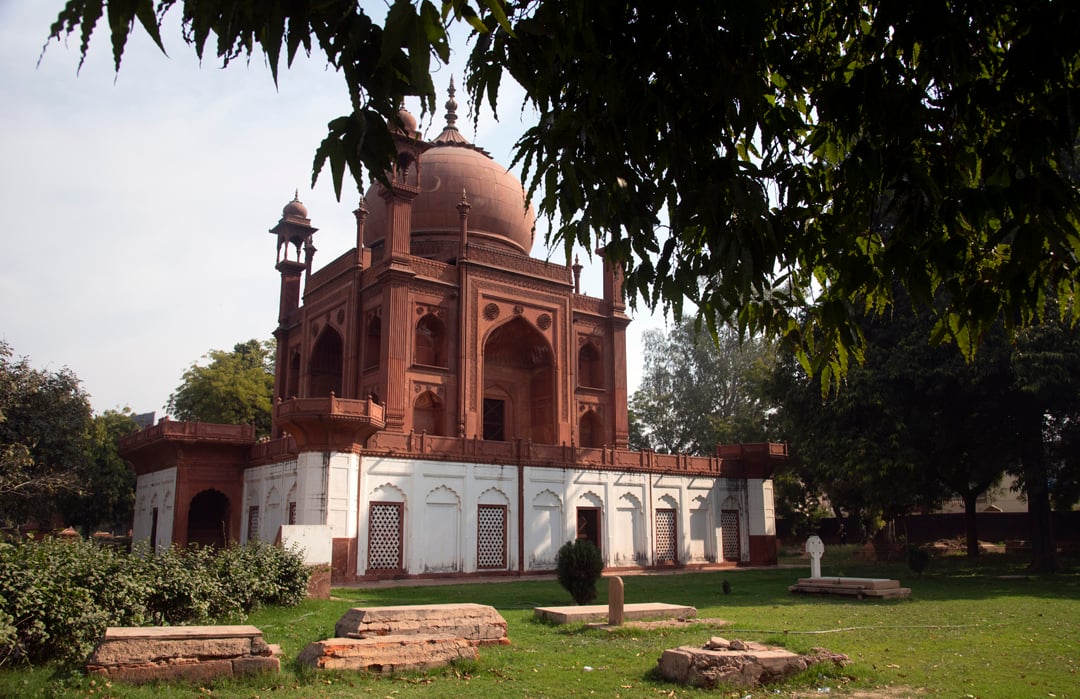
Roman Catholic Cemetery with Tombs Dating back to the 16th and 17th century Photo: Sugato Mukherjee
Crafts & Cuisine
Agra retains its living handicraft traditions, each with a deep and interesting history. The most famous craft passed down generations for more than 350 years is marble inlay work. Brought to Indian subcontinent by Italian travelers in teh 16th century, this classical art form involves very precise and minute patterns etched on marbles.
Legend says Emperor Akbar once issued a decree that all his soldiers must wear shoes. Shoemakers from all over the empire were called up in Agra. An indigenous leather industry burgeoned in the kingdom’s capital. The legacy continues and the city remains one of Asia’s largest shoe manufacturing hub.
Embroidered textiles with intricate motifs of gold and silver threads, popularly known as the zardozi design, are another homegrown industry of Agra. Originally a Central Asian import, craftsmen have adapted it using a combination of copper wire with a golden or silver polish and silk strands.
The rich legacy of Mughlai cuisine lives on in Agra. Upmarket restaurants serve authentic Mughlai dishes. For the intrepid connoisseur, the vibrant streets and chaotic bylanes offer other delights. They whip up some of the best dalmoth in the country. This crunchy snack pairs best with a cup of piping hot masala chai. Succulent jalebis are typically served with bedhai, a fried puffy bread. The bread comes with a small bowl of vegetables and a dollop of curd. But the crowning glory of Agra street cuisine is petha – a dessert made from white pumpkin or ash gourd, imbued with different flavors. It’s a sweet ending to the explorations into the nuances of this medieval city, whose textures now seamlessly blend into the Smart Cities Mission with great traffic management, surveillance systems, solid waste management, and environmental sensors.
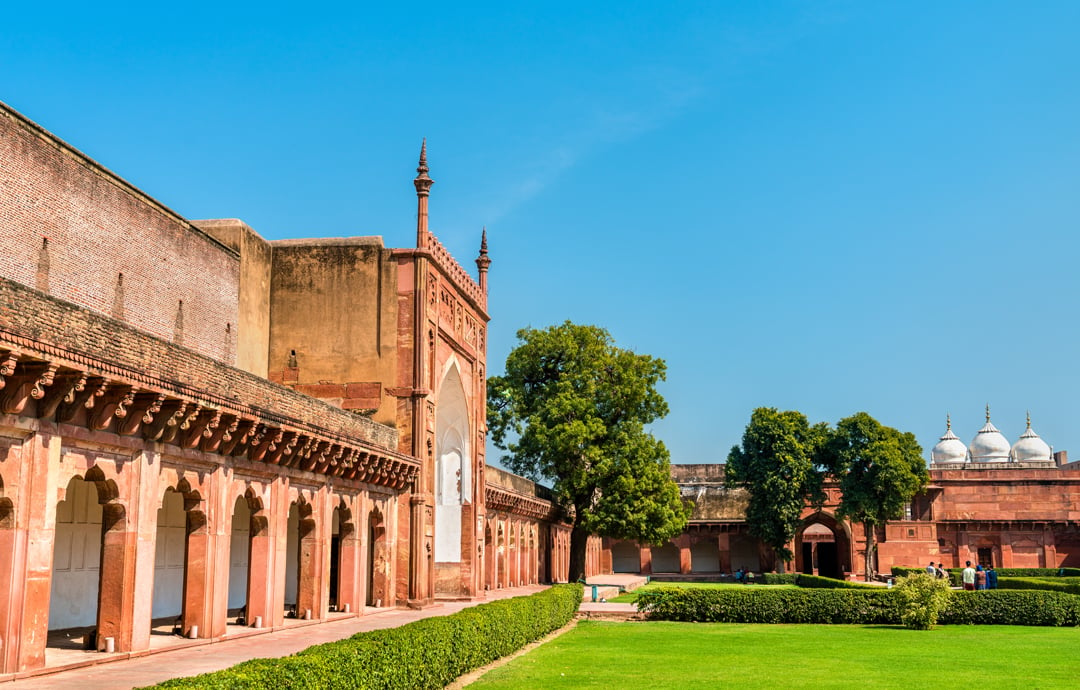
Argra Fort is a 16th-century red sandstone citadel established by Emperor Akbar Photo: Sugato Mukherjee
Click here for discounted accommodations in Agra
Join the community!

Join our community to receive special updates (we keep your private info locked.)