

Smithfield’s Freedmen’s Schoolhouse: Where Freedom Went To School
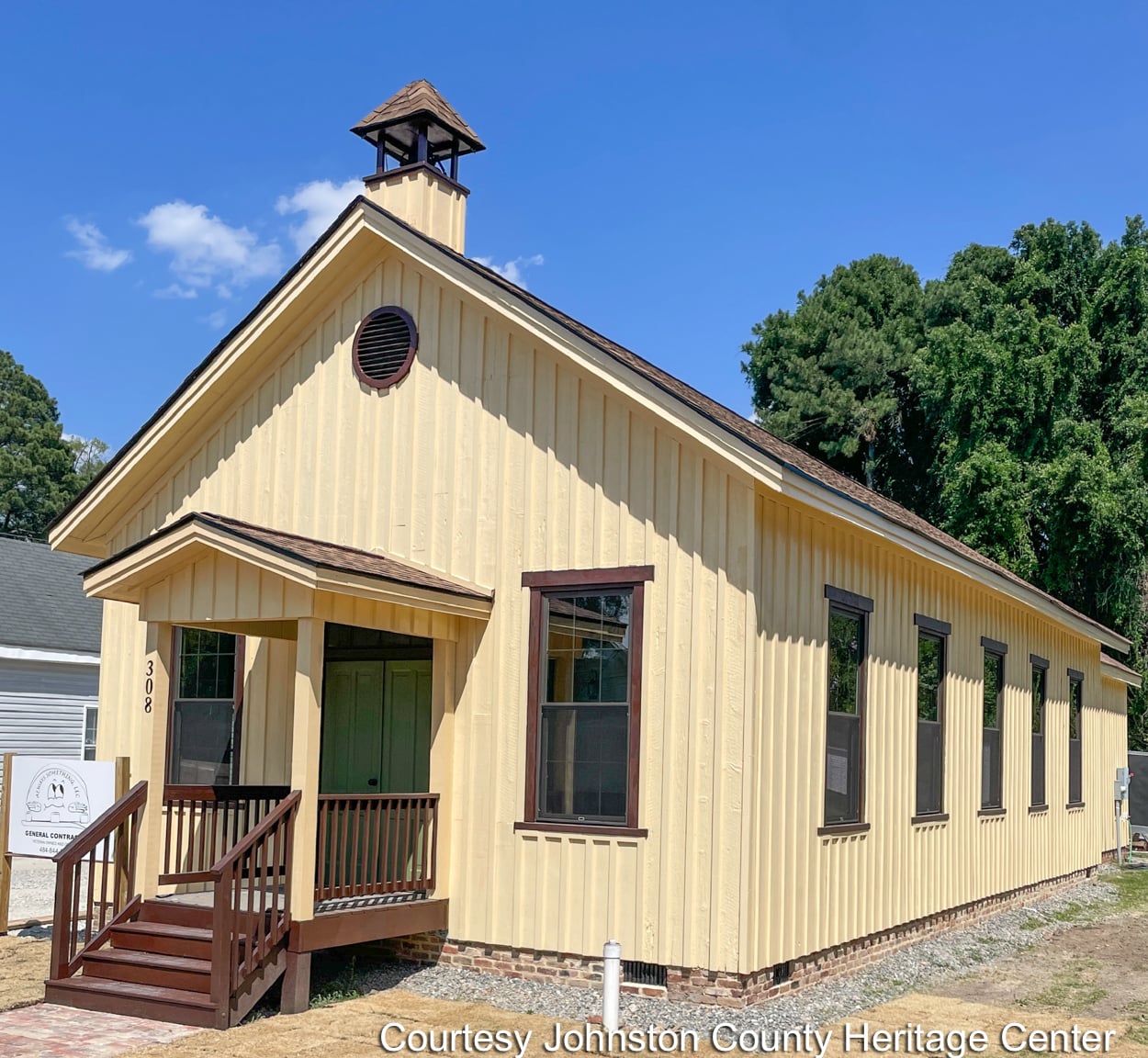
Restored Smithfield Freedmen's Schoolhouse Courtesy Johnston Co Heritage Ctr
Posted November 10, 2026
I came to Johnston County, North Carolina, in 2023 for moonshine, Ava Gardner, and barbecue. When visiting the Johnston County Museum, I learned about the schoolhouse. The boarded-up building caught my eye as I walked around the neighborhood, though I didn’t know about its restoration plans then.
Built in 1868–1869, the Smithfield Freedmen’s Schoolhouse served formerly enslaved people and their children. More than 160 schools for freedmen operated in North Carolina from 1865 to 1870. This is the only schoolhouse known to survive.
The restoration of the Smithfield Freedmen’s Schoolhouse and the Juneteenth 2026 dedication drew me back to the story.
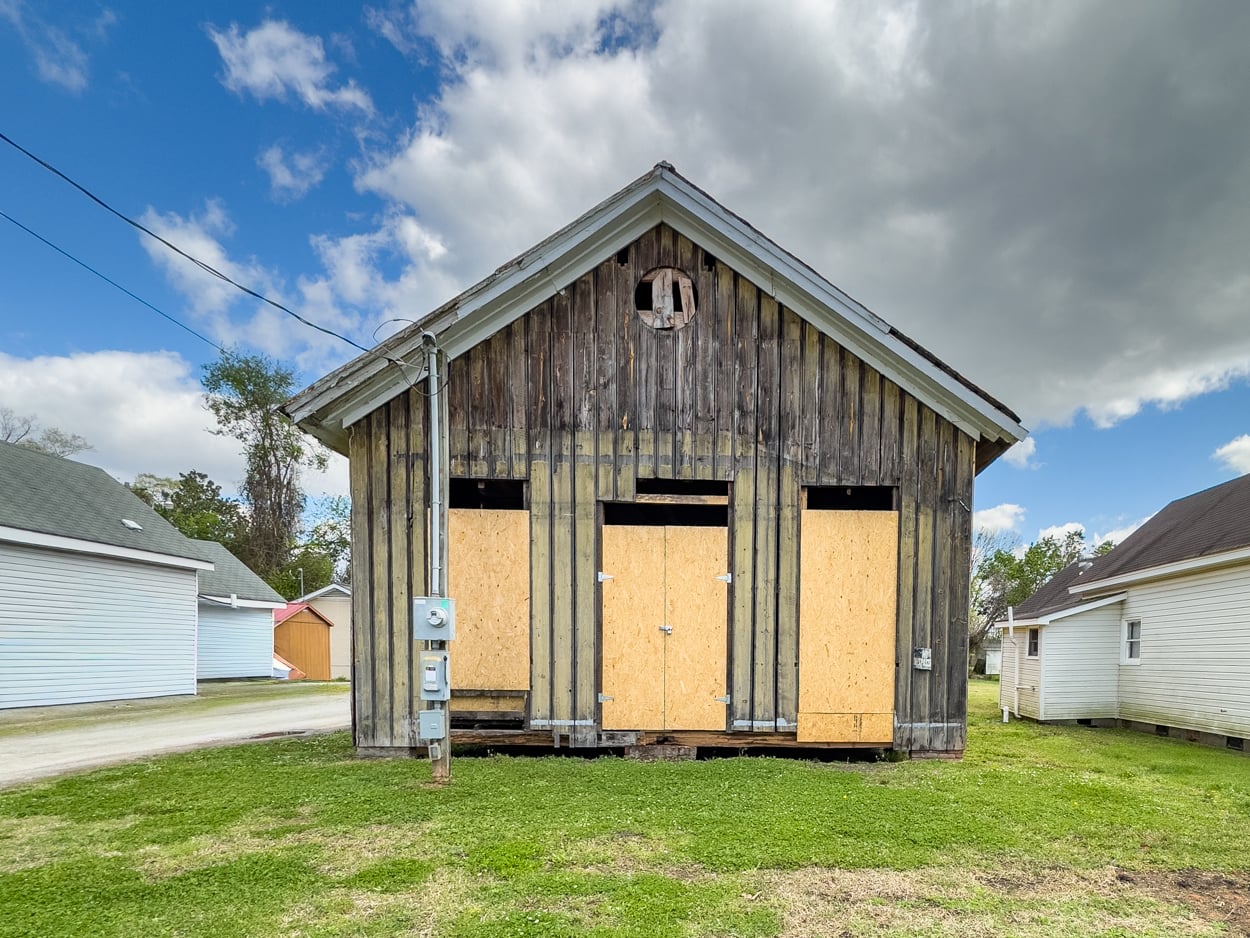
Front view of Smithfield Freedmen’s Schoolhouse on Fourth Street ©Julie Diebolt Price
History Of Smithfield Freedmen’s School
The Freedmen’s Bureau was formed near the end of the Civil War to help formerly enslaved people transition from slavery to freedom. During Reconstruction, the bureau offered practical aid to freed people, impoverished white Southerners, and war refugees.
In January 1866, the New England Freedmen’s Aid Society sent Sarah Phelps, Jane Hamilton, and Clara Woodbury to teach at a school local freedmen had built in Smithfield. The schoolhouse burned on April 22. The cause remains uncertain, but classes resumed the next day in freedmen’s homes. Local freedmen then built another school on town property.
In 1868, teacher Susan Hayes used $50 raised from Northern friends to buy a half-acre lot. The Freedmen’s Bureau built a two-room schoolhouse there. Children and adults studied in its classrooms, with some students fitting lessons around work.
North Carolina took over the school in 1870 under a new public education law. That year’s federal census listed Mary Elizabeth “Bettie” Morgan Brown, a free-born local woman, as a teacher. The school offered flexible hours and night classes for adults and working students. Records from 1870 identify students ranging in age from four to 61.
By 1871, the school had a new name, Lincoln School, and African American teachers carried on its work.
John W. Byrd served as principal from 1886 to 1912 and added a college preparatory curriculum. The building moved to an adjacent lot in 1887 to make room for a new Baptist church building. Workers also added walls to create a third classroom and a coat room.
During Byrd’s tenure, the school gained two teacher residences. He later led what became Johnston County’s first Black high school.
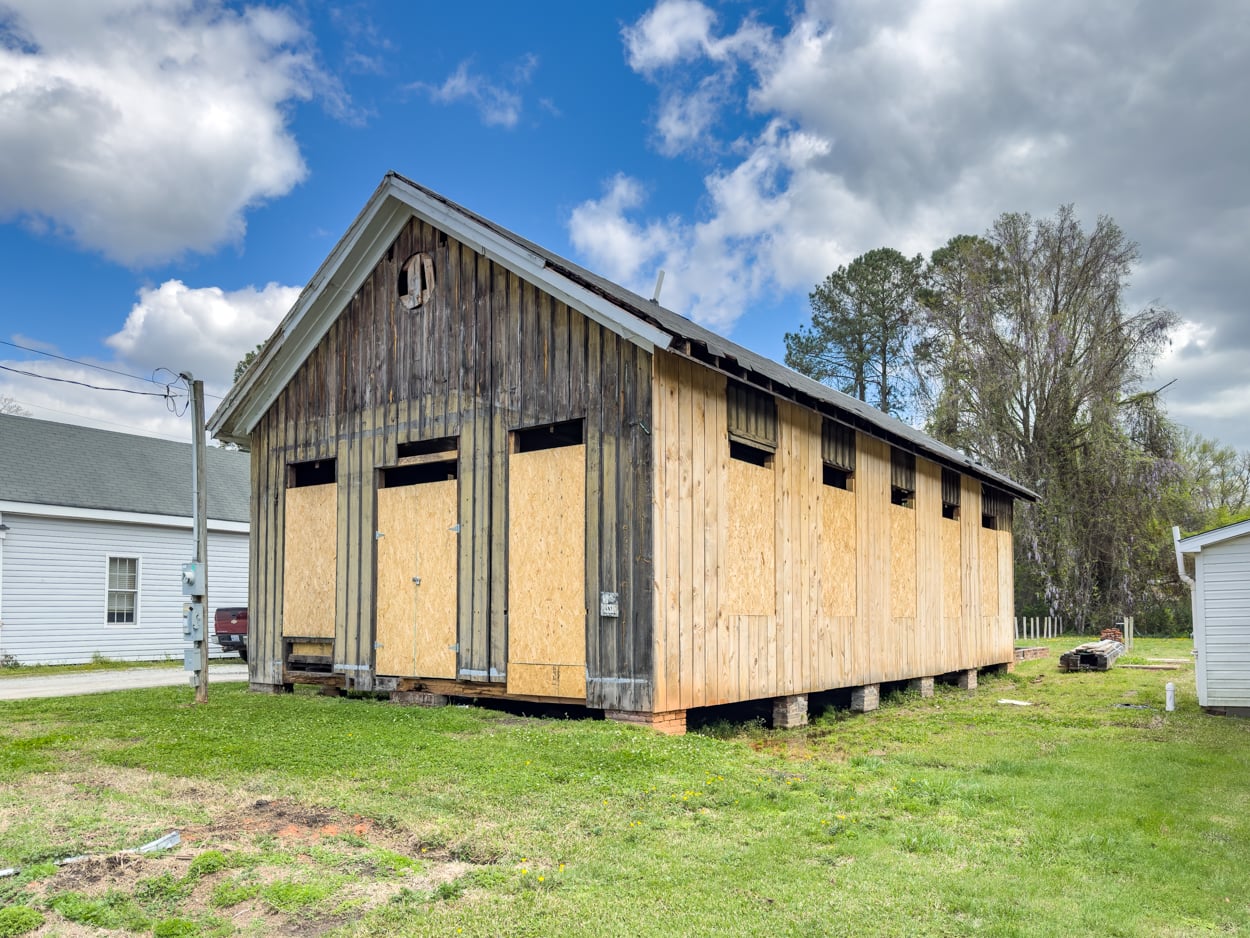
Side view of Smithfield Freedmen’s Scholhouse on Fourth Street ©Julie Diebolt Price
A Forgotten Building Finds Its Story Again
The schoolhouse became a private residence in 1913, and its early Freedmen’s Bureau history faded from public memory. Research in 2002 brought that story back to light.
In 2010, the State Historic Preservation Office confirmed that the building dated to the 1860s.
The Historic Smithfield Foundation received the schoolhouse and its lot in 2019, and restoration began in 2021.
The Johnston County Heritage Center and the Historic Smithfield Foundation led the preservation effort. By June 2022, the effort had raised about $350,000, including a $250,000 legislative appropriation and a $25,000 grant from the Johnston County Visitors Bureau.
A North Carolina Humanities grant helped support the interpretation plan, with student interns Tiana Galloway and Georgia Earley and historian Dr. Crystal Sanders involved.
World Footprints also documents Goldsboro, Florida’s Black heritage, including the Crooms Academy Museum.
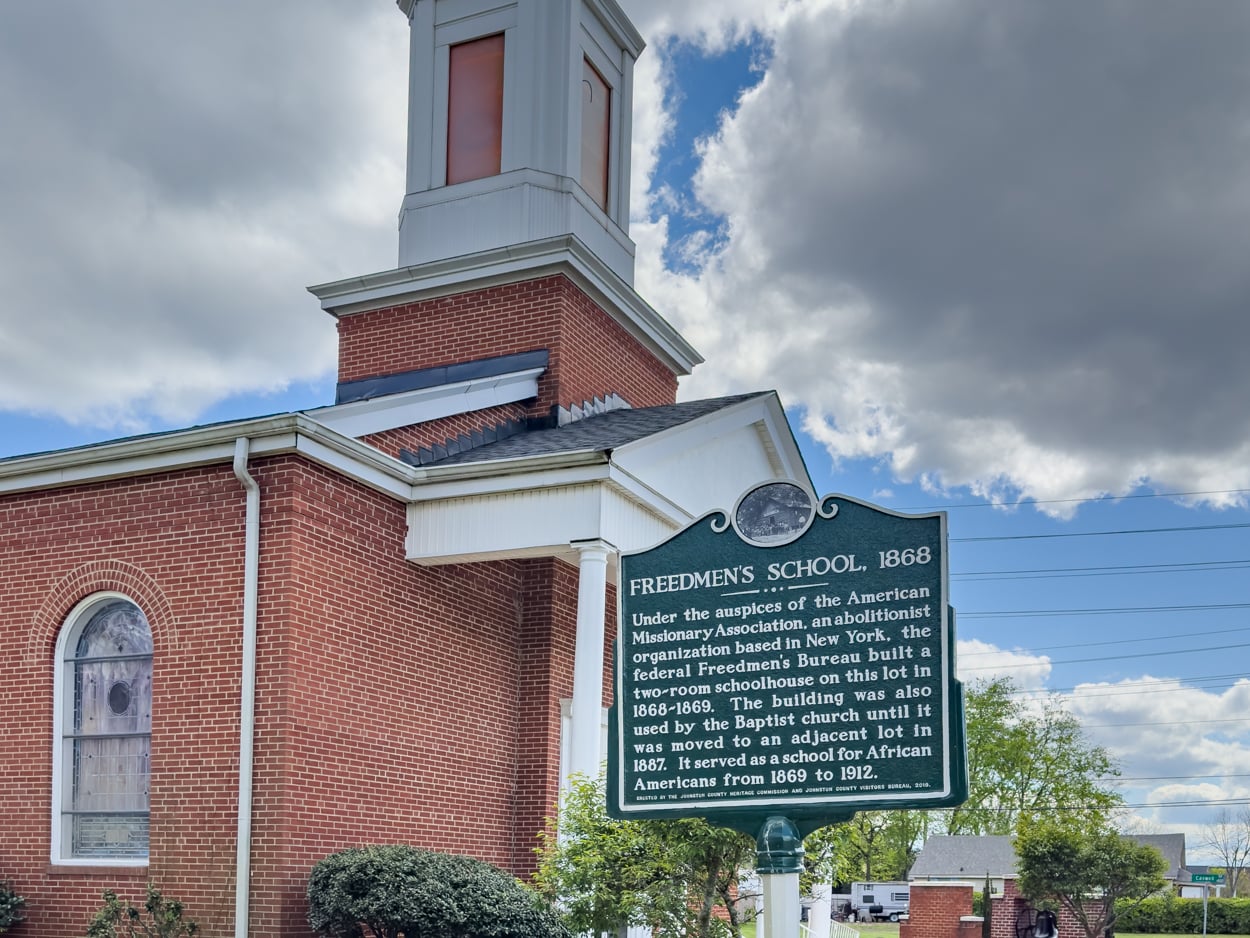
Historical sign in front of the First Missionary Baptist Church ©Julie Diebolt Price
Inside The Restoration
The restoration was designed to return the schoolhouse to its 1860s appearance. Plans also called for a small rear wing with a restroom and kitchen. Organizers plan to use the site for educational programs, meetings, and public gatherings.
One pocket door survived, including a section painted black and used as a blackboard. Chalk writing from before 1912 remains intact.
Juneteenth Dedication
The community dedicated the Smithfield Freedmen’s Schoolhouse on Juneteenth, June 19, 2026. The program began at First Missionary Baptist Church, followed by a ribbon-cutting and public tours at the schoolhouse.
Keynote speaker Dr. Crystal R. Sanders is a Johnston County native. Her great-great-grandparents, Wesley and Constantia Bell, sent their four children to the school. Her research focuses on African American history, Black education, and civil rights.
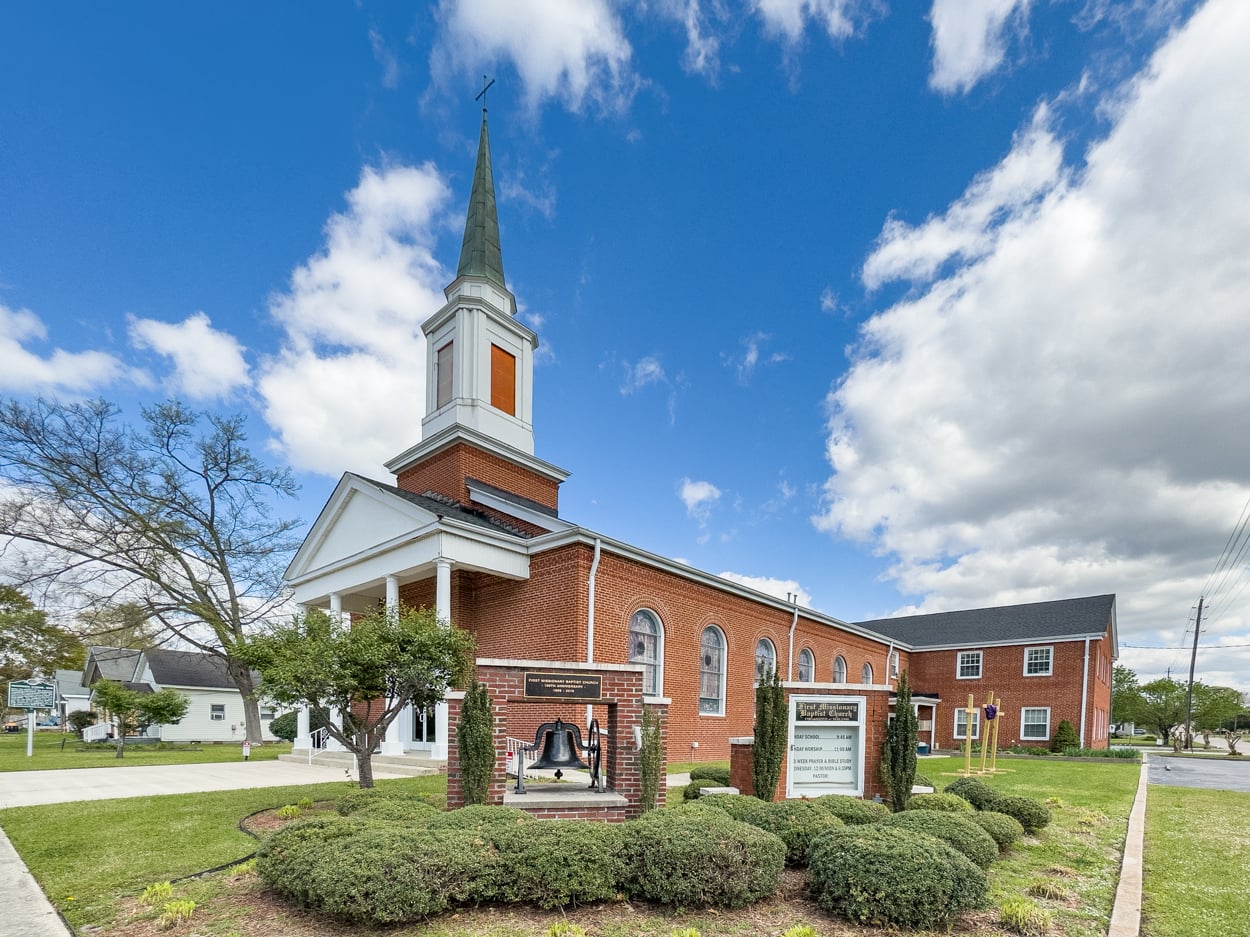
First Missionary Baptist Church ©Julie Diebolt Price
Know Before You Go
The schoolhouse is at 308 N. Fourth Street in downtown Smithfield. The Johnston County Visitors Bureau lists free admission, street parking, and accessibility. The schoolhouse offers tours by appointment and has no regular public hours. Email Todd Johnson at todd.johnson@johnstonnc.gov to request a tour.
You can find out whether an ancestor attended the Smithfield Freedmen’s School. Johnston County’s online schoolhouse records let visitors search for students by name or year attended.
Travelers can arrange a tour of the restored classroom, then visit the museum, walk through downtown Smithfield, and stop for a local meal.
I was delighted to see pictures of the restored schoolhouse. The photographs showed me what had become of the boarded-up building I saw in 2023 and reminded me of the Smithfield freedmen who resumed classes in their homes the day after their first school burned. Their determination to learn gives this building its meaning.
Click Here for Discounted Accommodations in Johnson County, North Carolina
Join the community!
Join our community to receive special updates (we keep your private info locked.)

