

The Art of Fishing with Cormorants in Yangshuo
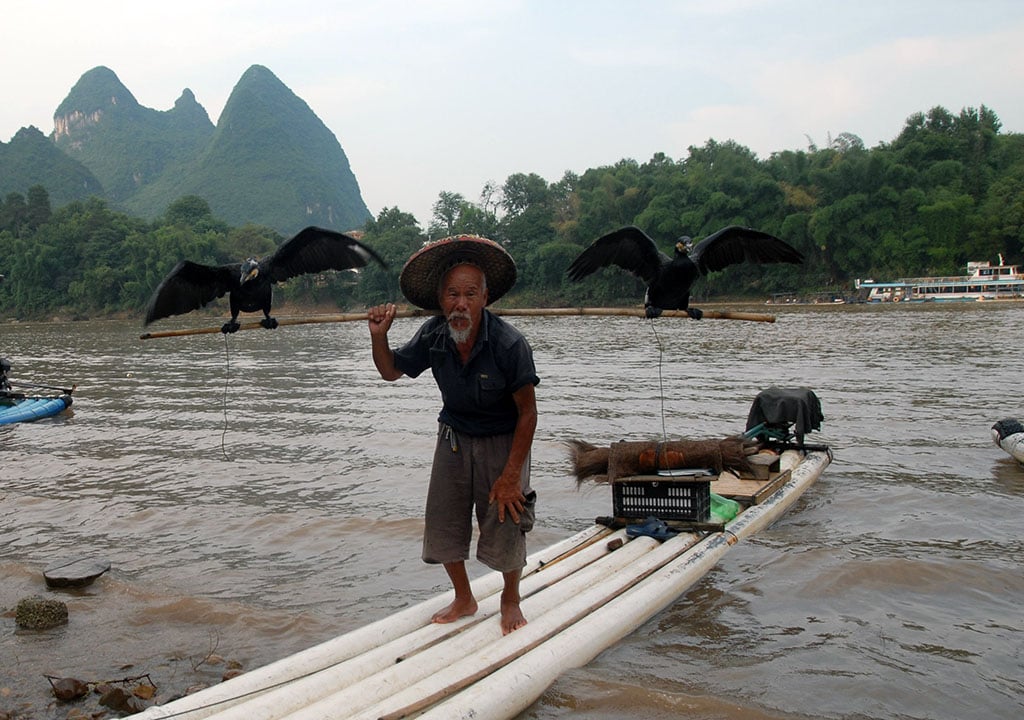
Only a few fishermen are now involved in the trade, which is a major tourist draw Photo: Sugato Mukherjee
Posted September 3, 2025
The muddy waters of the Li River churn in the erratic wind that blows in. The weather is unusually inclement for a summer evening. Dark clouds hover above the pointed ridges of the Karst mountains to our north. Hwang stops rowing and points downstream towards a bend of the river. A couple of bamboo rafts have suddenly popped into view, bobbing in the water, slowly moving towards us.
Experiencing Local Life
I am in Yangshuo to experience the local life in the smaller towns of China. The small county is spectacularly hemmed with the serried karst mountains – corrugated limestone cliffs poking into the sky. The area offers numerous options for hiking and biking through the verdant countryside, dotted with ethnic villages, and leisurely cruises along the Li River, which winds its way through this beautiful region of Guangxi Province.
And this quaint corner of Southwestern China also preserves a dying art that dates back more than 1,300 years: fishing with cormorants.

The tradition of cormorant fishing goes back hundreds of years. Photo: Sugato Mukherjee
A Life Amid a Watery World
For hundreds of years, the cormorant fishermen of the Li River have lived a life immersed in a watery world, utilizing their cormorant fleets as avid fish-eaters and excellent swimmers. This ancient system of fishing is now almost extinct. Unlike Japan, where the last practitioners of this fishing technique are on an imperial payroll. They serve as procurers of freshwater fish for the emperor’s table, in addition to receiving subsidies from local authorities. Here in Southern China, this ancient trade survives mainly as a tourist attraction. Modern fishing methods have rendered this ancient bird-assisted practice commercially unviable.
Hwang, my boatman, explains the technique. “In this traditional system, there are no fishing rods, no nets, and no baits. The fishermen tie a loose collar around the cormorant’s throat, which they have trained for years to catch fish from the water. The snare prevents the bird from swallowing their catch and the fishermen retrieve the fish when they come back to the boats.”
The bamboo rafts arrive shortly. The two rowers, wiry middle-aged men sporting conical fishing hats, throw me quick smiles and proceed to light up the boat lanterns. “The flaming lamps will attract the fish below the surface towards the raft. This is why fishing with cormorants is done after sundown,” Hwang quietly informs me. The cormorants, four in number, looking dignified in their black plumage and white crests sit patiently in the bows of the boats and watch the proceedings in mild amusement.
The fishermen scoop up the birds and make a strange, piercing sound. The birds toss themselves into the river, which now looks almost inky in the gathering darkness. The black-feathered creatures bob up and down with the gentle tide. The fishermen hit the water with the crude oars and begin hollering a chant. And the birds are gone, diving into the depths of the dark waters. As if piloted by an intangible communication, the bamboo dinghies follow their trail. Hwang rapidly rows our boat to keep pace with the watery drama.

The fishermen lighting their lamps on the boat Photo: Sugato Mukherjee
The Watery Drama Unfolds
A few hundred yards into the river, the fishermen stop, and with a sudden swoosh, a couple of birds emerge out of the river. In the darkness, I can make out one of them is struggling with a rather large fish. One of the boatmen throws a net over the birds and hoists them up on the deck. They free the wriggling carp from one’s beak and whistle softly. The cormorant stiffens and noiselessly sputters out two more fish trapped in its gullet. Taking the cue, its partner delivers its catch, a couple of mid-sized carp, from its windpipe onto the deck.
Both birds get a few small fish as rewards, which they gobble up. Hwang tells me to tip the fishermen, a small supplement to the price of the freshly-caught large carp I have purchased from them. Hwang points to the mark where the bird’s beak struck the flesh. “This makes all the difference in taste,” he says. The cormorant’s razor-sharp beaks kill the fish instantly, which is believed to make the meat tastier.
With a deep bow, the men steer back their dinghies into the darkness. Two more cormorants are waiting for their masters somewhere in the middle of the Li River.

Once prevalent in many parts of South and East Asia, this is now a dying practice. Photo: Sugato Mukherjee
A Feast from the River
At dinner that night, the sprightly lady chef of my hotel gingerly places the bowl of beer fish before me and announces, “This is the carp you bought this evening.” Fried golden-brown in a deep beer batter, beer fish is Yangshuo’s culinary highlight and has been my staple meal for the last three nights. The fresh and tender meat seasoned with fragrant spices has always tasted great, but it leaves a sublime trail on my palate tonight. Now I know why cormorant-caught fish fetch a premium price and find themselves on Japan’s imperial table.
Click Here for Discounted Accommodations in Yangshuo
Join the community!

Join our community to receive special updates (we keep your private info locked.)