

Gothenburg, Sweden: A Different Idea of Sustainable Travel
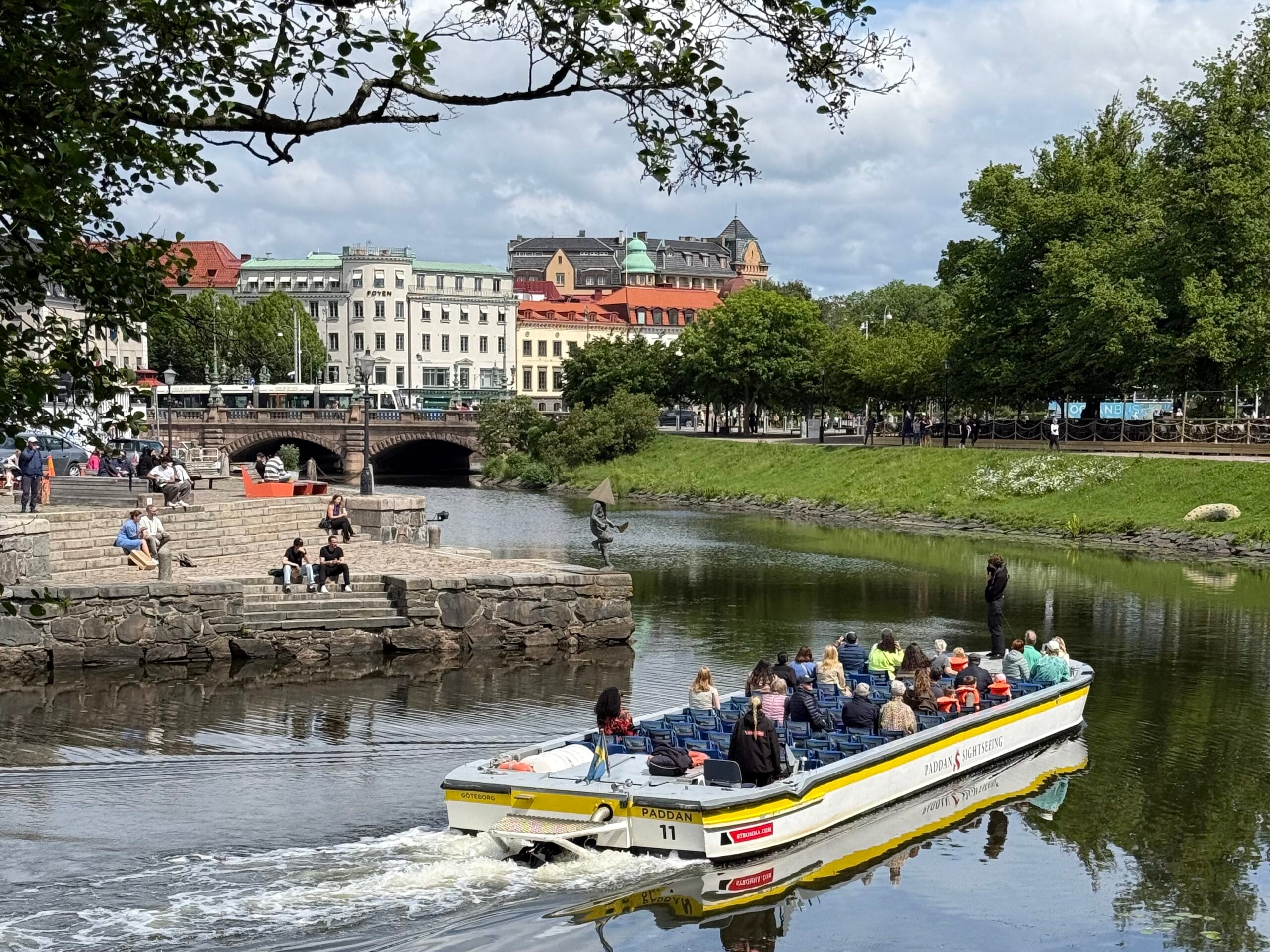
A Paddan canal tour offers a car free way to explore Gothenburg from the water. Photo Sharon Kurtz
By Sharon Kurtz
Posted July 12, 2026
I love thrifting. There is a particular thrill in searching through racks until something speaks to me. I never know what I am looking for until I find it. In Gothenburg, it was a sweater I found at Erikshjälpen Second Hand, one of the many secondhand stores in Sweden’s second-largest city. It was the perfect sweater, the kind of find that makes a devoted thrifter feel she has uncovered something meant just for her. I also picked up a flyer, even though I could not read Swedish. Only later did I understand that my purchase was connected to something much bigger.
Erikshjälpen is a children’s rights organization with nonprofit secondhand operations. Store surplus and donations support programs that help children go to school, feel well, and live safely. The stores also build community, with volunteers gaining retail experience and using their time to make a difference for people and the environment. My sweater had already lived one life. Now it would live another with me, while the money I spent served another purpose.
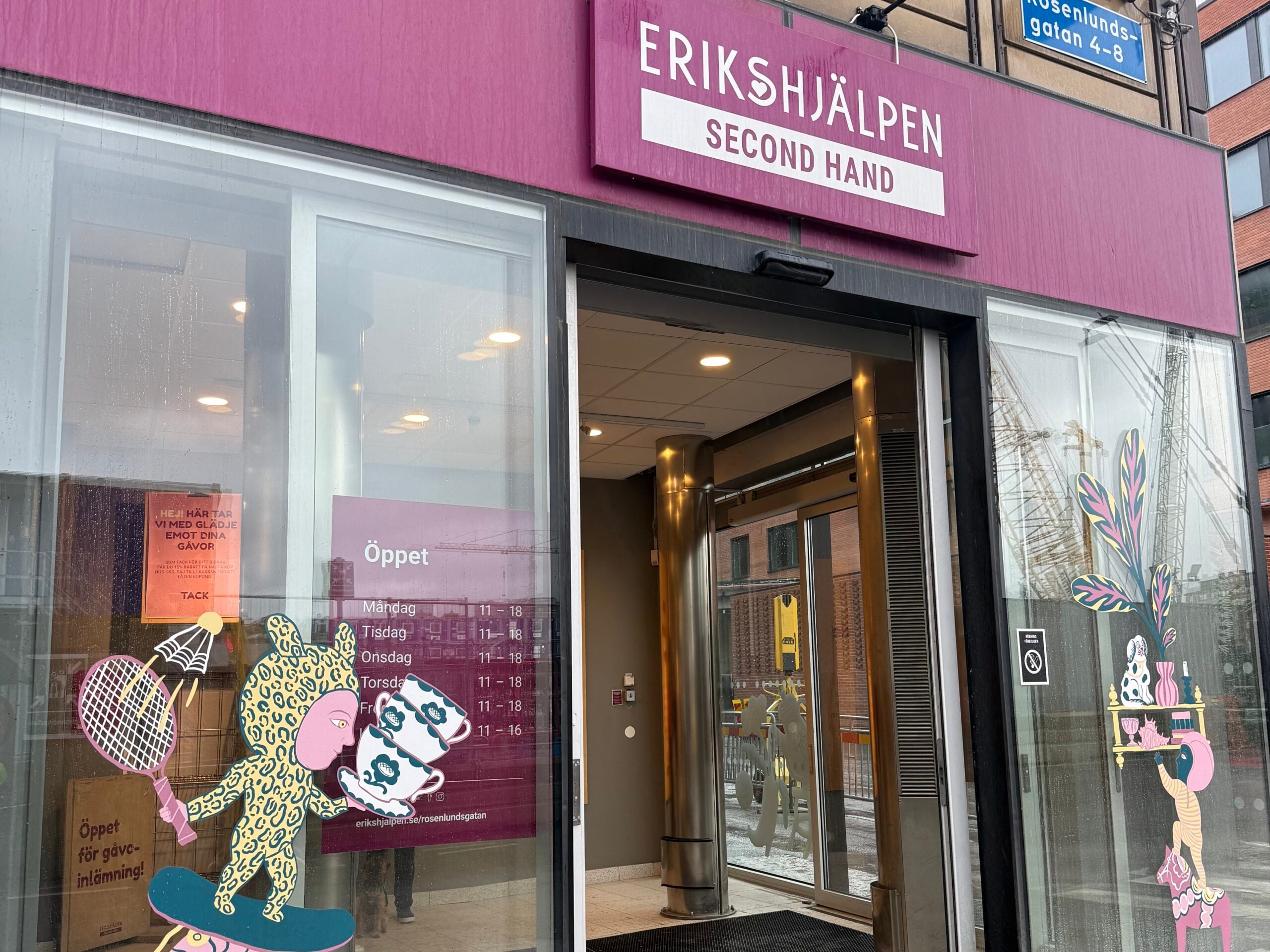
Erikshjälpen Second Hand, where my sustainable Gothenburg story began. Photo Sharon Kurtz
Gothenburg’s International Recognition for Sustainability
Before arriving, I knew Gothenburg had earned international recognition for Sustainability. But rankings often feel abstract. I wanted to understand what sustainability looked like on the ground. I noticed it in secondhand shops woven into the city center, recycling bins separated by materials, and bicycles everywhere.
Most of all, I noticed it in a journey from central Gothenburg to the Southern Archipelago, then by bicycle and ferry to other islands.
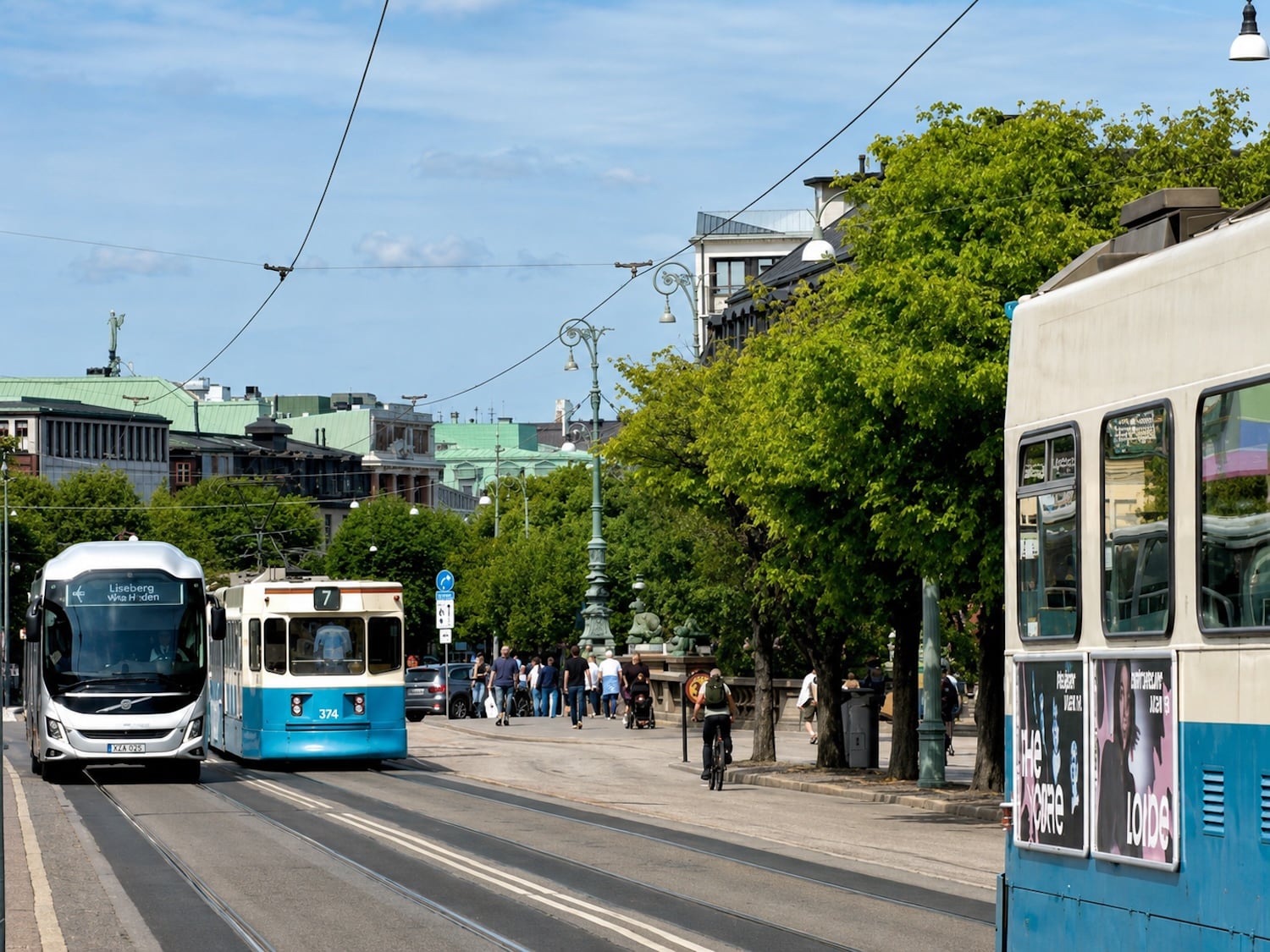
Gothenburg’s efficient public transport makes the city easy to explore. Photo Sharon Kurtz
Leaving the City Without a Car
As I left the Avalon Hotel in central Gothenburg for Styrsö, where I would spend two nights at Kusthotellet Styrsö, I did not rent a car. I didn’t need one.
Gothenburg’s public transportation network connects trams, buses and ferries from city streets to the Southern Archipelago. A transportation pass became my ticket to almost everywhere I wanted to go.
In the United States, we often talk about sustainable travel as a series of personal decisions: Rent an electric car? Reuse a hotel towel? Carry a refillable water bottle? Those choices matter. But Gothenburg made me consider a different question: What if communities were designed so the sustainable choice did not require extra effort?
The ferry carried me into the archipelago. On Styrsö, I walked from the ferry stop to my hotel. There was no need for a taxi, rental car, or private transfer. My suitcase, my own two feet and the island ahead were all I needed.
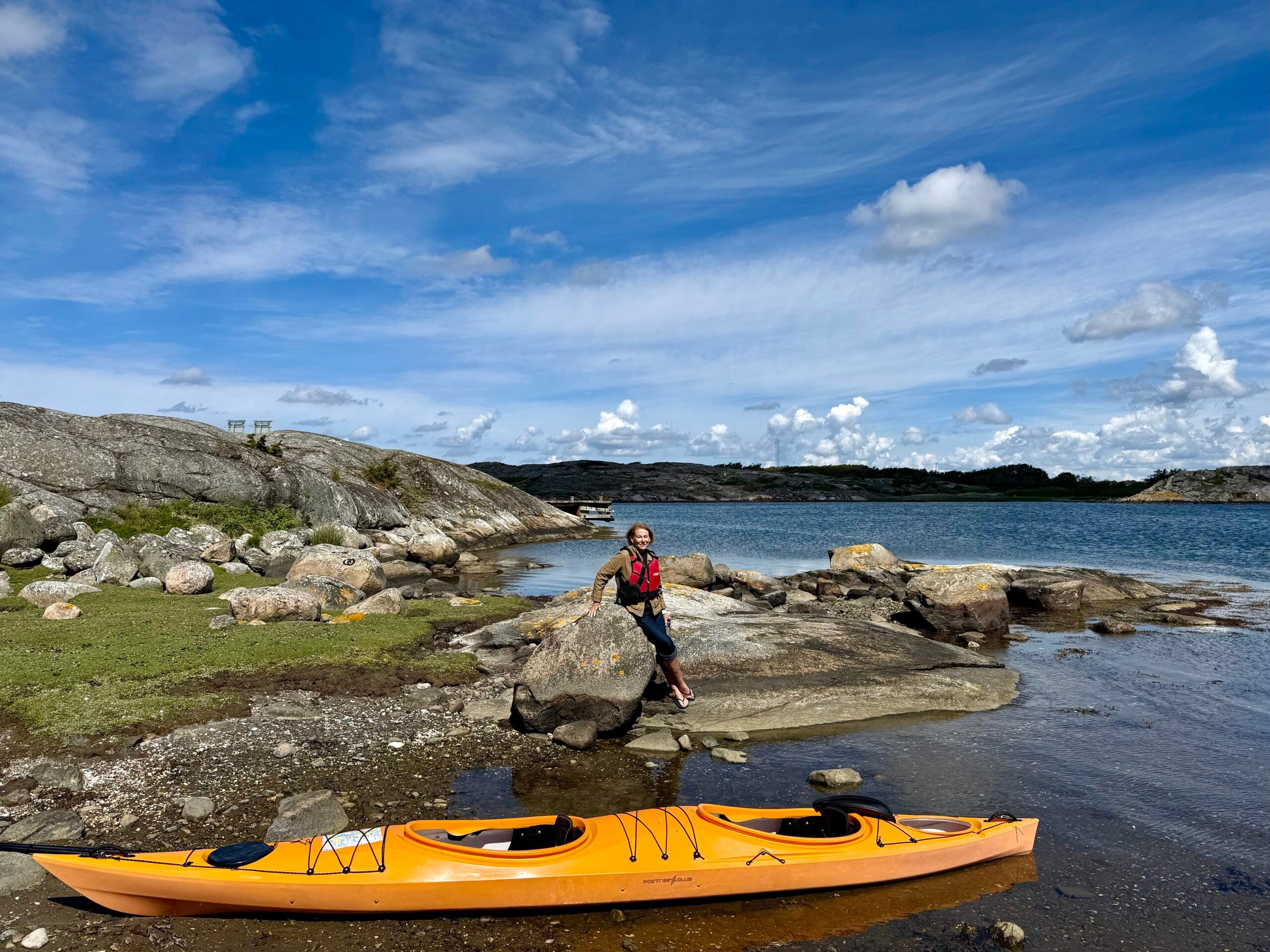
Kayaking from Donsö after cycling across the bridge from Styrsö—no car required..Photo Sharon Kurtz
A Bicycle, a Ferry and the Freedom to Keep Going
After lunch, I borrowed one of the hotel’s bicycles and set out again. Previously, I had noticed how bicycles were woven into daily life. People rode them through the city and rolled them onto ferries as casually as commuters stepping onto a bus. I decided to joined them. With my bicycle, I took a ferry to Vrångö. On another outing, I rode across the bridge from Styrsö to neighboring Donsö for a kayak tour and lunch at Popsicle, an unexpected family-run eatery and knitting shop near the harbor.
Without cars, I noticed different things. I heard the water and my tires against the road. I could stop when I wanted and continue when I was ready. Perhaps that was the biggest surprise. Sustainability did not feel restrictive. It felt like freedom.
My journey also made me consider something I had rarely thought about. Who gets easy access to nature?
In Gothenburg, a day by the sea can begin with public transportation. The same network that moves people through the city extends to ferries serving the Southern Archipelago. Bicycles roll aboard with their owners. Residents travel between islands. Visitors head for the sea.
When public transportation connects people with nature, access becomes part of community life rather than something reserved for those with the right vehicle or enough money for a private experience.
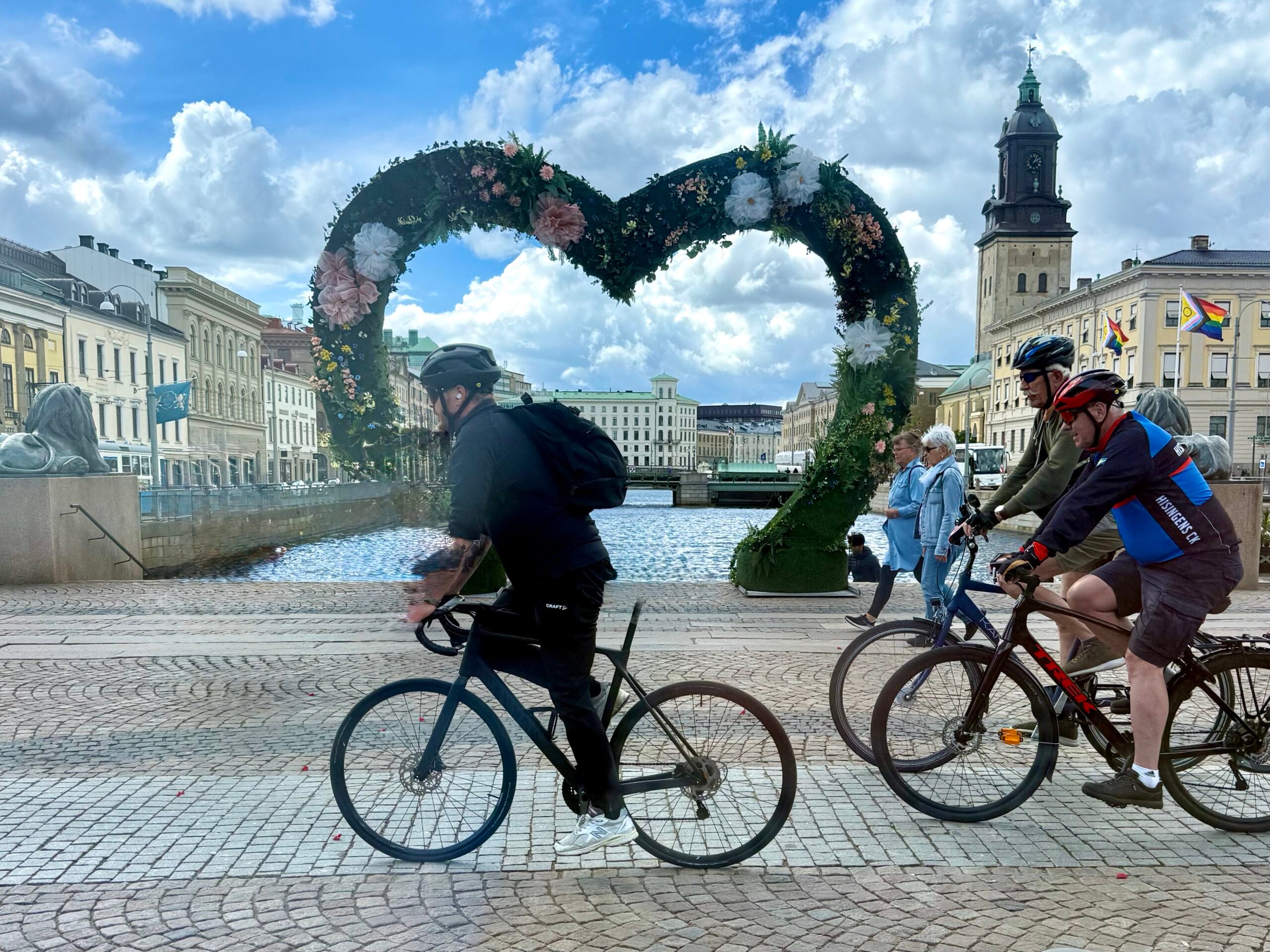
Cycling through the heart of Gothenburg, a city made for exploring without a car. Photo Sharon Kurtz
A City Where Secondhand Is Not Second Best
Back in Gothenburg, I kept noticing secondhand shops. They were not hidden on the outskirts or treated as places only bargain hunters visit. They were part of the ordinary retail landscape. I thought about the souvenirs we typically bring home. So many are manufactured for tourists, shipped long distances and sold in shops filled with identical objects. My sweater was the opposite. There was only one. It already existed and the money I spent served a purpose beyond giving me something to remember Gothenburg by. It may be the most purposeful souvenir I have ever brought home.

Wearing the secondhand sweater I found at Erikshjälpen—my favorite souvenir from Gothenburg. Photo Sharon Kurtz
Ground-Truthing a Green Reputation
Afterward, the Gothenburg sustainable travel awards mattered less to me than the bicycle on the ferry and the sweater in my suitcase. A ranking can measure a city’s performance. It cannot tell us what it feels like to move through that city.
What I found in Gothenburg was not perfection. It is still a modern city with cars, consumption and environmental challenges. No destination has all the answers. But I found a place where many sustainable choices had been made easier by the way the community worked.
Back home in Texas, I returned to a life where I get into my car without thinking. Distances are greater. Public transportation is limited. The systems around me encourage different choices.
Gothenburg did not turn me into a different person. But it changed the questions I ask. Why do we place so much responsibility on individuals to live sustainably while building communities that make sustainable choices difficult?
I think about the ferry now. The bicycles rolled aboard. The city disappeared behind us. The islands came into view. And I think about the sweater hanging in my closet. It does not say Sweden across the front, and I did not buy it in a souvenir shop. It had a life before me, and buying it helped give something back. I love it because it reminds me that something does not have to be new to have value. Sometimes, it simply needs another life.
Click here for discounted accommodations in Gothenburg, Sweden
Join the community!
Join our community to receive special updates (we keep your private info locked.)

