

Bergen’s Green Paradox: How a Fjord City Is Managing Its Own Success
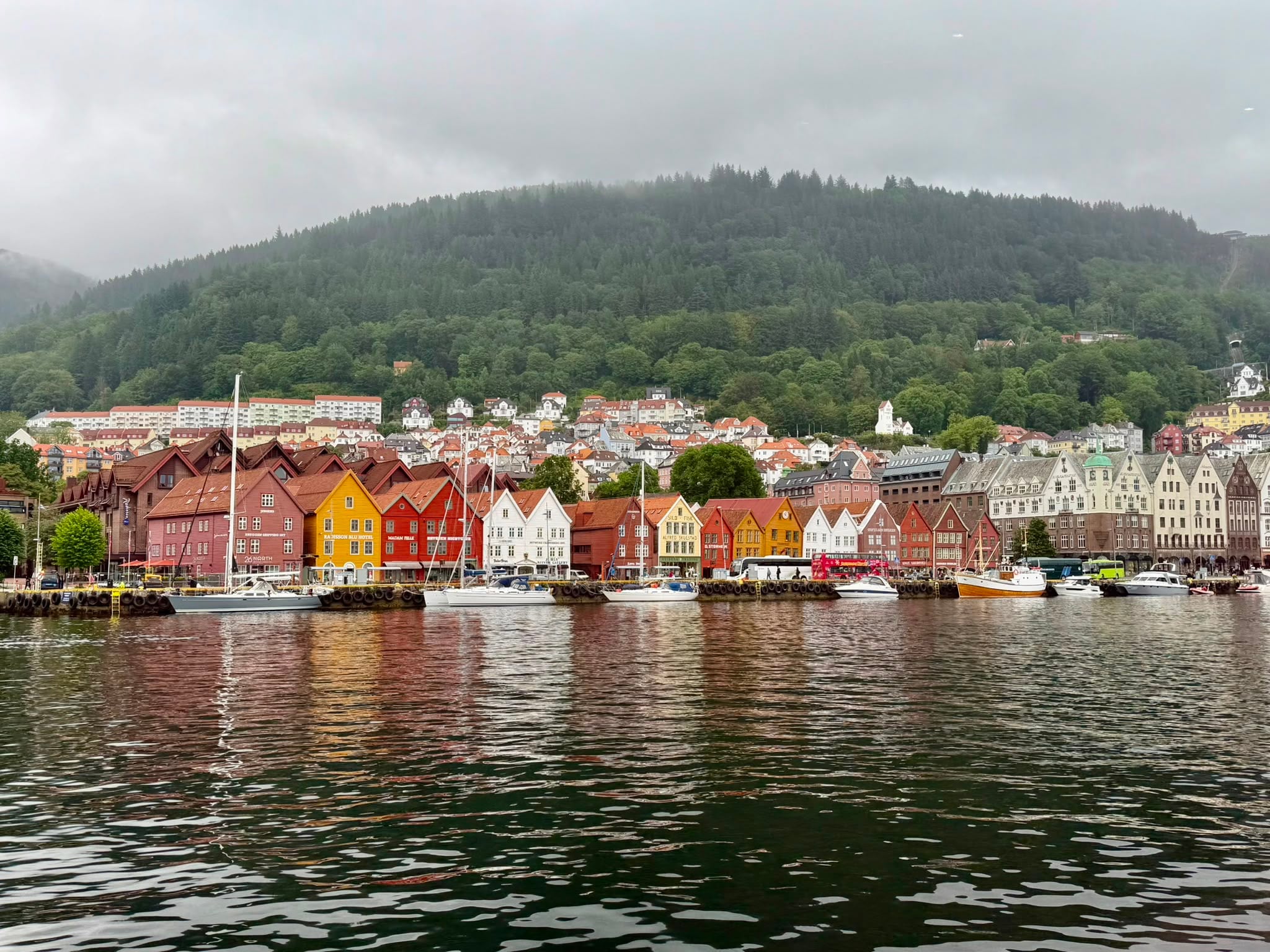
Rows of brightly painted houses add character to Bergen’s historic streets Photo: Mate Koczka
By Mate Koczka
Posted July 31, 2026
With visitor numbers continuing to rise, Bergen, Norway, continues efforts to spread tourism across seasons and neighborhoods while protecting its heritage, environment, and residents’ quality of life.
Bergen’s appeal is easy to understand. The historic wooden buildings of Bryggen, the surrounding mountains, and the city’s position at the gateway to Norway’s fjords make it one of the country’s most recognizable destinations. Yet the qualities that attract visitors also make Bergen vulnerable to their impact. Its historic center is compact, its most famous sites are concentrated within a small area, and thousands of people often arrive within hours of one another.
The pressure continues to grow. According to Statistics Norway figures supplied by Visit Bergen, the wider Bergen region recorded 3.3 million commercial overnight stays in 2025—10 percent more than in 2024 and 25 percent above the 2019 level.
For Vilde Midtbø Ulsten, Chief Sustainability Officer at Visit Bergen, those numbers make one question unavoidable. How can tourism remain valuable without making the city less livable for the people who call it home?
A Certification That Must be Earned Again
Ulsten, a former journalist who began her current role in March, is responsible for coordinating Visit Bergen’s sustainability work and maintaining several formal certifications.
Bergen holds Norway’s Sustainable Destination label, which must be renewed every three years. The process goes well beyond making environmental pledges. Ulsten says the destination must document its performance against 84 core indicators grouped into five chapters: destination management; strategic framework; conservation of nature, culture, and environment; strengthening social values; and economic viability. Because Bergen is also a major cruise destination, a sixth cruise chapter adds further requirements, bringing the total to approximately 100 indicators.
The documentation draws on municipal records and surveys of residents, visitors, and tourism businesses. It is followed by an external assessment lasting between one and three days, during which an independent auditor meets representatives from the municipality, restaurants, museums, and other local organizations.
“The social relations are important,” Ulsten explained. “People living here have to be happy and glad about tourism as well, because if not, then we have failed.”
Visit Bergen is also certified through Norway’s Eco-Lighthouse program, which focuses on environmental management within organizations and businesses. These labels provide a framework for measuring progress, but they do not mean Bergen has solved the contradictions of tourism. A certification can document local improvements; it cannot remove the emissions generated by every flight or cruise itinerary that brings travelers to the region.
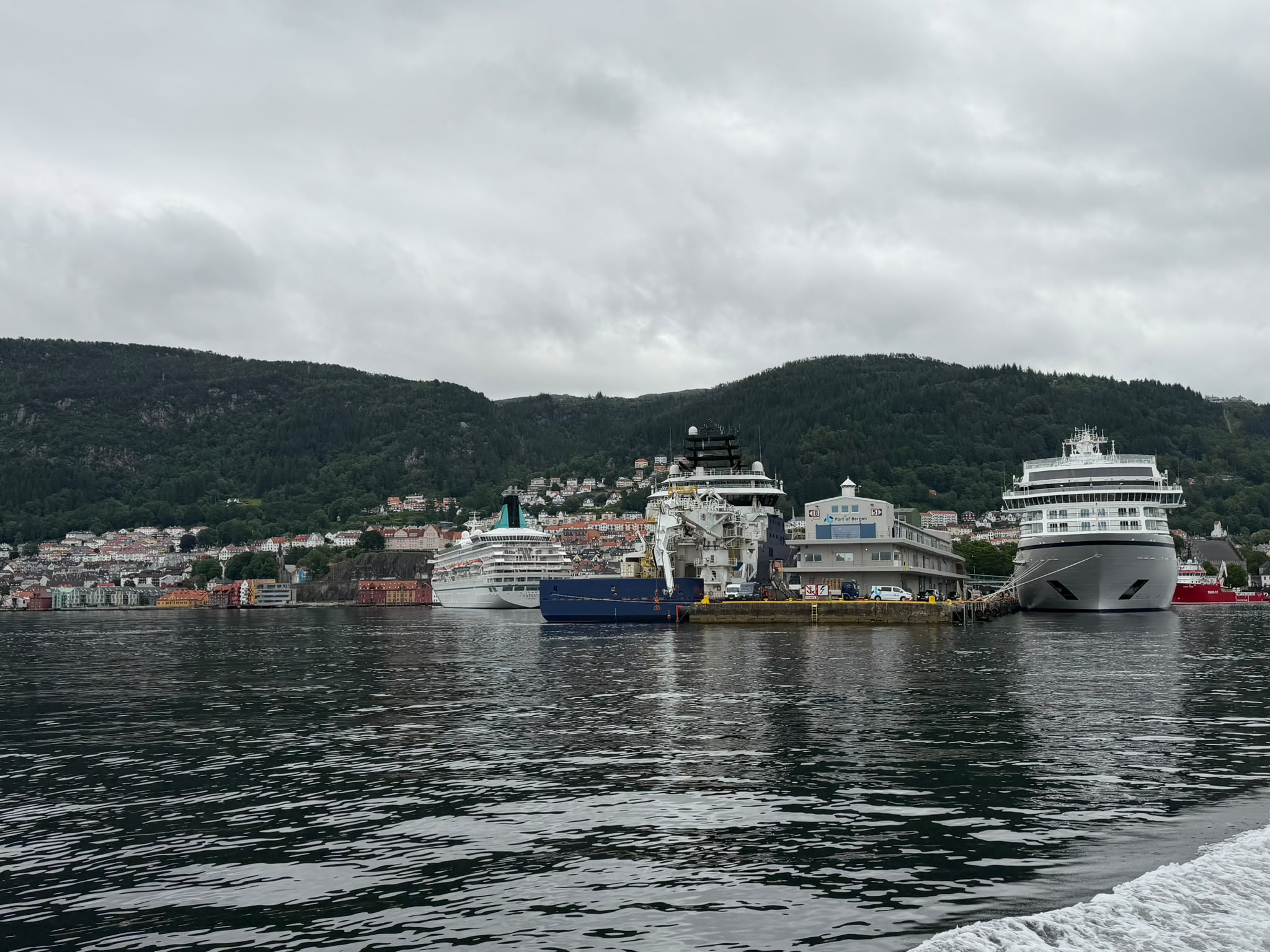
Ships dock in Bergen Harbour, close to the city’s historic centre Photo: Mate Koczka
Cruise Tourism and the Limits of a Compact City
Cruise traffic continues to be Bergen’s most visible tourism challenge. When several ships arrive close together, passengers tend to converge on the same places: Bryggen, the Fish Market, and the Fløyen funicular. This results in intense congestion in streets that also serve as residential neighborhoods and everyday routes through the city.
According to Ulsten, Bergen limits cruise traffic to a maximum of four ships or 8,000 passengers during a 24-hour period. She also pointed to Bergen Harbour’s shore-power facility, Europe’s largest for cruise ships, which can connect three vessels simultaneously. The port aims and expects all cruise ships to use shore power while in port in 2026, allowing them to turn off their engines and operate without direct emissions while docked.
These measures reduce some local pollution and provide a degree of control over daily visitor volumes. But they do not resolve the larger question of whether the economic contribution of cruise tourism is proportionate to its environmental and social costs.
Consideration for Local Residents
Ulsten regularly meets residents of the city center, including people who are dissatisfied with the presence of large visitor groups. Short-term rentals present another source of concern. In some neighborhoods, she said, permanent residents are moving away as homes are increasingly converted into temporary accommodations for visitors.
Bergen’s response is not simply to attract fewer people. It is also trying to change when visitors arrive, where they go, and how long they remain.
Visit Bergen no longer concentrates its marketing on images of warm summer days. Instead, it promotes the city’s winter, rain, and less polished seasonal reality. The aim is to distribute demand more evenly across the year rather than funneling most visitors into a short peak period.
The organization also wants travelers to move beyond the small triangle formed by Bryggen, Fløyen, and the Fish Market, exploring other parts of the city and region at different times of day. Another priority focuses on increasing the average stay from approximately 1.8 days to at least two.
A longer visit is not automatically a greener one, but it may allow travelers to engage more deeply with the destination while generating more local value than a brief stop concentrated around a few crowded attractions.
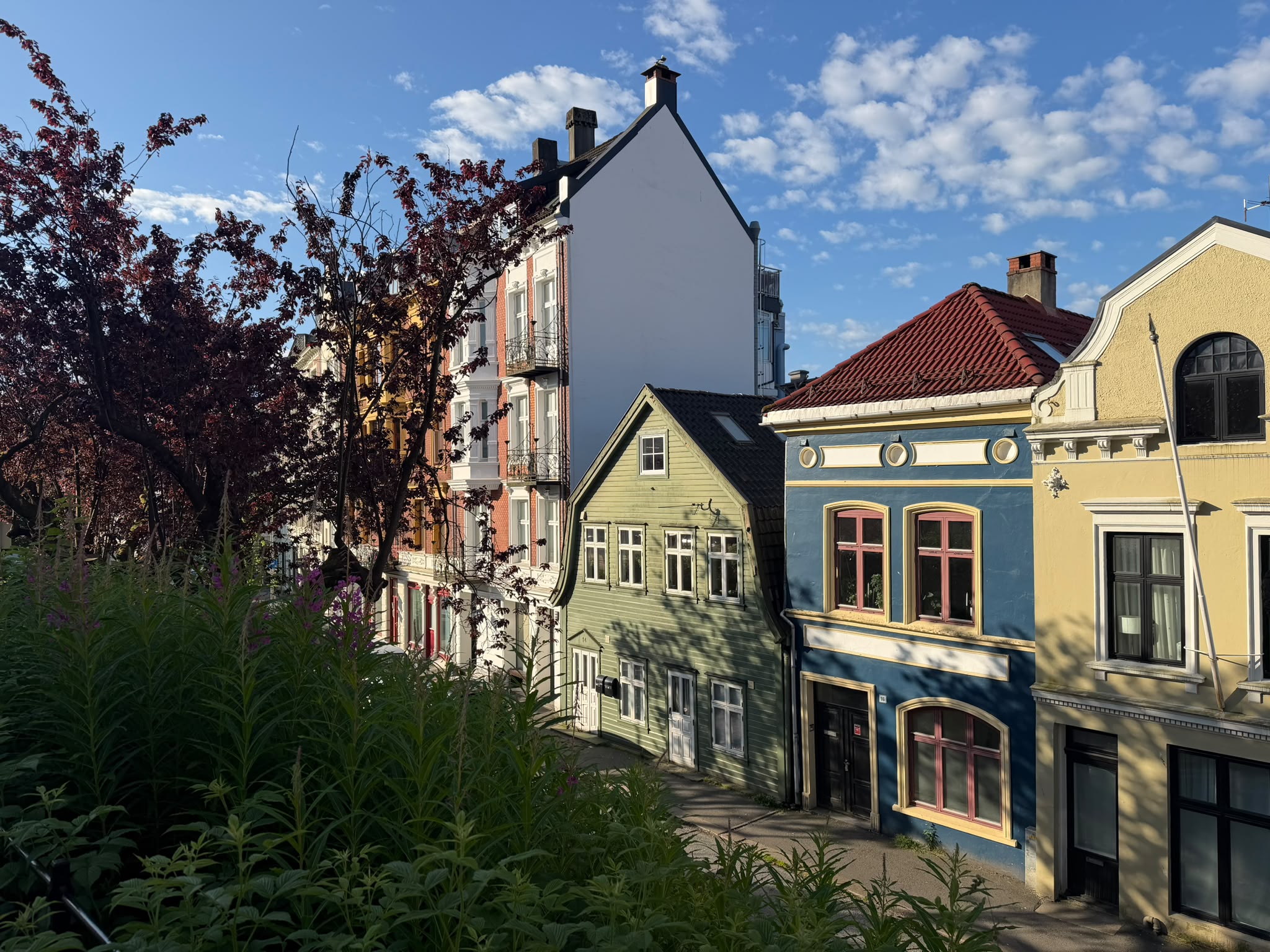
Bergen’s colorful wooden houses are among the city’s most distinctive architectural features Photo: Mate Koczka
Sustainability Below the Surface
Some of Bergen’s most practical environmental measures remain nearly invisible to visitors.
In the city center, an underground pneumatic waste network—known locally as bossnettet—allows residents and businesses to deposit sorted waste into street-level inlets. Moving waste underground reduces the need for conventional collection activity in narrow historic streets.
Food waste is another focus. Visit Bergen reports that 86 percent of its members in the food-service sector have introduced measures to reduce waste. Participating hotels and restaurants use smaller plates, replenish buffets in smaller quantities, offer surplus food through Too Good To Go, or replace buffets with made-to-order breakfasts. In some hotels, untouched surplus food prepared for guests becomes a staff meal rather than being discarded.
Locally produced ingredients can shorten supply chains. Although “local” alone does not guarantee a low environmental footprint. The more important principle is measurement: understanding what is discarded, why it is wasted, and how purchasing and serving practices can be changed.
Visit Bergen’s website also identifies businesses through a Green Travel label, helping visitors find accommodations, attractions, and operators with recognized environmental certifications.
For travelers, a lower-impact stay in Bergen begins with choices that support the city’s broader strategy. This includes arriving outside the busiest summer period, remaining for more than one night, using public transportation, choosing certified businesses, ordering only what can be eaten, and spending time beyond the most congested central landmarks.
As Ulsten put it, the interests of visitors and residents must “go hand in hand.” In Bergen, that balance is not a slogan. It is the work itself.
Click here for discounted accommodations in Norway
Join the community!

Join our community to receive special updates (we keep your private info locked.)